
5 Mistakes to Avoid With Garage Door Spring Repair
The five costliest garage door spring repair mistakes happen after you’ve decided to hire someone, not before. Agreeing to replace one spring when both are worn, accepting a verbal quote, skipping questions about the spring’s cycle rating, ignoring the cables, and not testing the balance afterward are what turn a $200 fix into a $700 surprise. If you’d rather skip the guesswork entirely, call Marlow Garage Door Repair at (512) 883-4374 and we’ll walk you through what your door actually needs.
Mistake #1: Replacing Only One Spring When Both Are the Same Age
Garage doors with torsion springs almost always have two: one on the left, one on the right. They were installed on the same day, they’ve lifted the same number of times, and they’ve worn at nearly the same rate. When one snaps, the other isn’t far behind. That’s not a sales tactic; it’s basic metallurgy. A spring that’s been coiled and uncoiled 10,000 times is near the end of its lifespan, whether it snapped today or is quietly waiting for next month.
In Los Angeles, where garage doors get cycled multiple times a day because the garage doubles as a workshop, gym, or storage unit, paired failure is predictable. We’ve pulled into driveways in Silver Lake and Mid-City where a homeowner had one spring replaced six weeks earlier and the second one snapped as we were giving the door a once-over. The math is simple: a single spring replacement typically runs $150-$290 in the LA market, but replacing both at once usually lands between $220 and $450 total, because the tech is already there, the door is already open, and the labor overlaps. Doing them separately means paying the trip charge and setup labor twice.
Ask the tech this before work starts: “Are both springs the same age, and what would you recommend if this were your door?” If they shrug and say “your call,” get a second opinion. A straight answer means they’re thinking about your next six months, not just their next invoice.
Mistake #2: Accepting a Verbal Quote Before the Old Spring Comes Off
The dangerous moment isn’t when a DIYer grabs a winding bar. It’s when a homeowner says “just fix whatever’s broken” and the tech starts removing the old spring without putting a number on paper. Once the spring is off the shaft, you’re committed. The door won’t close, the tech is mid-job, and suddenly the quote has “flexibility.” That’s how a $180 spring replacement becomes a $425 job with a list of extras that were never discussed.
At Marlow, we hand over a written price before any wrench turns. Not an estimate, not a ballpark, not a “we’ll see how it goes.” The number on the invoice matches the number you agreed to, every time. That’s our standard, and we put it in writing because a garage door spring repair in Los Angeles shouldn’t feel like a negotiation at a used car lot.
We hear from customers in neighborhoods from Studio City to Inglewood who’ve been burned by the opposite. One woman in Van Nuys told us a previous company quoted $160 over the phone, then hit her with $680 because “the brackets were worn too.” Worn brackets are a real thing, but they should be in the quote before work starts, not discovered after the spring is off. Ask for the written price before anything comes apart. If the tech hesitates, that’s your answer.
Mistake #3: Not Asking About the Spring’s Cycle Rating
A garage door spring isn’t measured in years. It’s measured in cycles, and one cycle is one full open and close. Standard springs from the factory are often rated for 10,000 cycles, which sounds like a lot until you do the math: four cycles a day means that spring is done in about seven years. In a busy Los Angeles household where the door goes up for every school run, grocery trip, and weekend bike ride, 10,000 cycles can burn through faster than the warranty.
Upgraded springs rated for 25,000 cycles or more usually cost $40 to $80 extra per spring, and they extend the lifespan to a decade and a half or more. That’s not an upsell; it’s the cheapest insurance a garage door can have. The upgrade pays for itself the first time you don’t pay a weekend service call because a spring snapped at 9 p.m.
Here’s the catch: most techs won’t mention cycle ratings unless you ask, because the standard spring is what’s on hand and the job moves faster that way. At Marlow, we stock both and we’ll tell you the difference without being prompted. Whether you have a Chamberlain, Genie, Clopay, or Amarr door, the spring math is the same. Ask: “What’s the cycle rating on the replacement you’re quoting, and what’s the upgrade cost for a higher-rated one?” The answer tells you a lot about who you’re dealing with.
Mistake #4: Ignoring Cable Condition During a Spring Swap
Your garage door has two main systems doing the heavy lifting: the springs above the door and the cables that run down the sides. They work as a pair. When a spring fails, the cables often get slammed, frayed, or stretched in the process. If a tech replaces only the spring and never looks at the cables, you can end up with a door that works for three weeks and then drops a cable, which jams the door sideways and can bend a track or shatter a panel on the way down.
This one hits close to home with Los Angeles garages because so many of them are older construction. Homes built in the 1960s and 70s throughout the Valley and West LA have doors that have been through decades of heat, coastal air, and cycles. A frayed cable next to a brand-new spring is a failure waiting for the second week of ownership.
A proper spring repair includes a cable inspection as part of the job, not as an optional add-on. The tech should pull the bottom bracket, check for rust, kinks, and unraveling strands, and tell you honestly whether the cables have life left or should be replaced while the door is already apart. At Marlow, we flag cable issues before we ever open the spring, because the last thing we want is a callback two weeks later for something we could’ve caught in two minutes. If you’d like the full picture on what cable repairs involve in the LA area, see our garage door cable repair in Los Angeles page.
Mistake #5: Skipping the Post-Repair Balance Test
A correctly balanced garage door should feel nearly weightless when you lift it by hand. Disconnect the opener, grab the handle, and raise the door to about waist height. It should stay there on its own. If it creeps up, the springs are set too tight. If it drops, they’re set too loose. Either condition shortens the life of the springs and forces the opener motor to work harder every single cycle.
Your tech should do this test before they pack up. They should also open and close the door fully at least twice, watch the cables wind evenly, and listen for any grinding or popping from the spring. In our experience, the balance test gets skipped more often than homeowners realize, especially on jobs where the tech is running behind and the invoice is already written.
Here’s what a properly balanced door feels like: you lift it with one hand and it moves smoothly, with no heavy spots and no sudden lunges. When you let go at chest height, it either stays put or drifts only an inch or two. That’s the goal. If the tech you hired doesn’t offer to let you see the test yourself, ask for it. Any reputable garage door spring repair in Los Angeles should welcome the question. It’s a 60-second check that tells you whether the job was done right or rushed.
When to Call a Pro
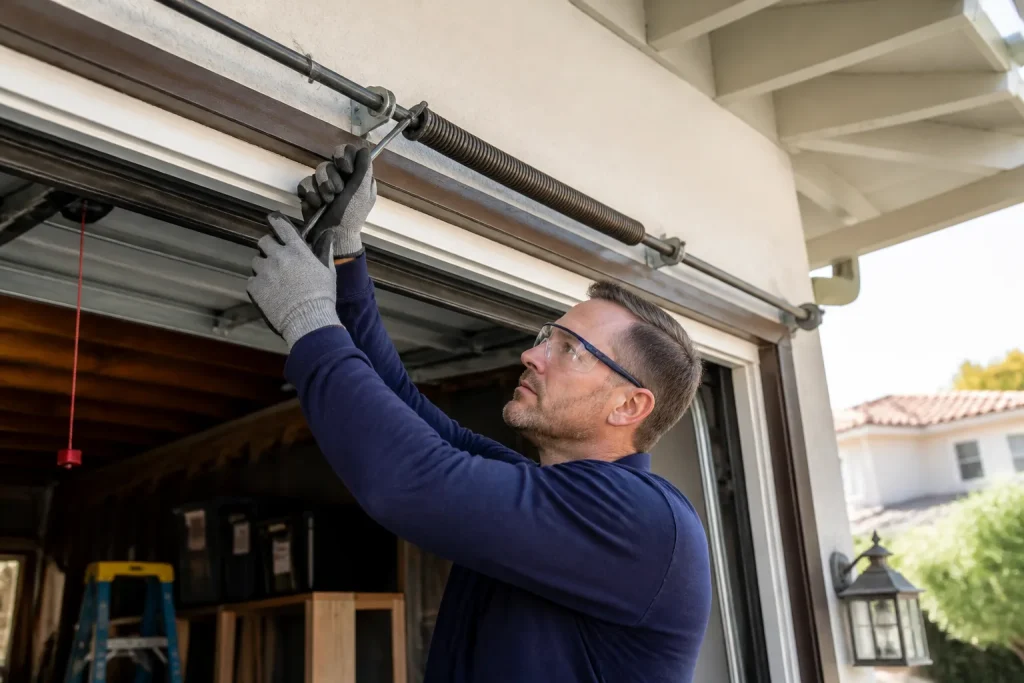
Garage door springs are under enormous tension, and the torsion spring above your door holds enough stored energy to cause serious injury if it releases unexpectedly. Replacing or adjusting a spring without the right winding bars and training is genuinely dangerous, which is why we frame this entire guide around hiring well rather than doing it yourself. If your spring is snapped, the door is stuck halfway, or the cables are dangling, step back and call someone who does this daily.
For related spring and door issues, you can see what full repair coverage looks like on our garage door spring repair in Los Angeles page, or start with garage door repair in Los Angeles if you’re not sure what the problem is. We work on doors from eight major brands including Chamberlain, Genie, Clopay, and Amarr, so the tech who shows up already knows your door.
The Bottom Line
Spring repair mistakes cost money because they compound: a cheap spring wears out twice as fast, a skipped cable inspection turns into a jammed door, and a verbal quote becomes a surprise invoice. The five mistakes above, changing one spring instead of two, accepting a verbal quote, ignoring cycle ratings, skipping cable checks, and overlooking the balance test, are all avoidable with two or three direct questions before the work begins.
If you’re in Los Angeles and you want a spring repair done right the first time, Marlow Garage Door Repair gives you a written price before any work starts, a Done Right Promise on every job, and a live person on the phone 24/7. Call (512) 883-4374 for a free estimate.
Frequently Asked Questions
Single spring replacement in the LA market typically runs $150 to $290, while replacing both springs at once usually lands between $220 and $450 including labor. Upgrading to higher-cycle springs adds roughly $40 to $80 per spring. You’ll get the exact written price before any work starts when you call Marlow at (512) 883-4374.
Yes. If both springs were installed together and one has snapped, the other is statistically near failure too. Replacing both in one visit costs less than doing them separately because you’re not paying the setup labor and trip charge twice.
A standard 10,000-cycle spring lasts about seven to nine years at four cycles per day in a typical Los Angeles household. A 25,000-cycle upgraded spring can last 15 years or more. Ask your tech about the cycle rating before agreeing to a replacement.
Disconnect the opener and lift the door manually to waist height. It should stay in place or drift only an inch. If it falls or rises on its own, the balance is off and the springs need adjustment. A good tech will do this test with you before leaving.
Written by the team at Marlow Garage Door Repair.
Need Garage Door Help?
Call Marlow Garage Door Repair - licensed & insured, here with fast after-hours help in Los Angeles.
(512) 883-4374