
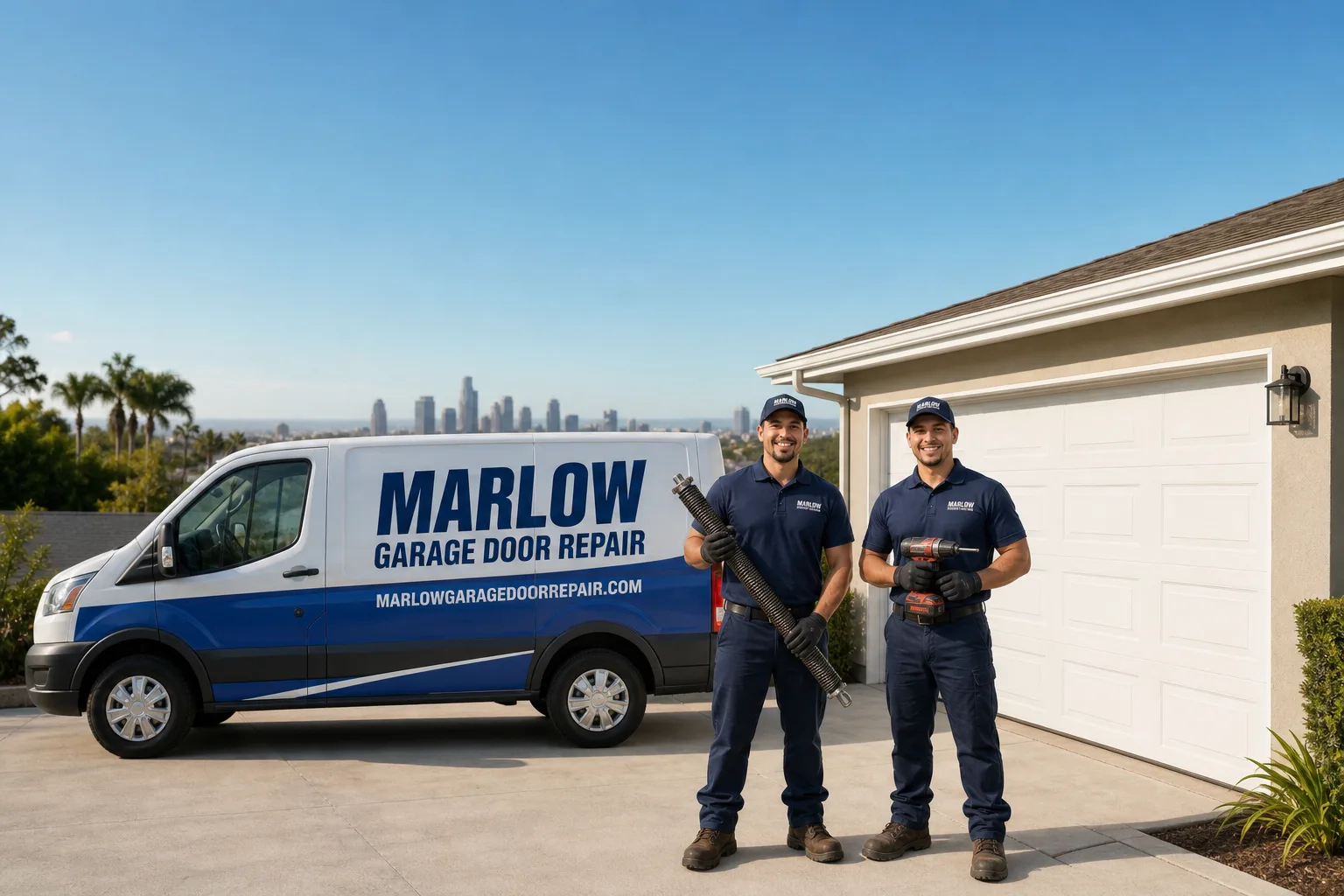
Full 25-point door and opener safety check with every visit - springs, cables, rollers, tracks, and your LiftMaster or Chamberlain opener included
You get a price before we start. It does not change when the truck arrives.
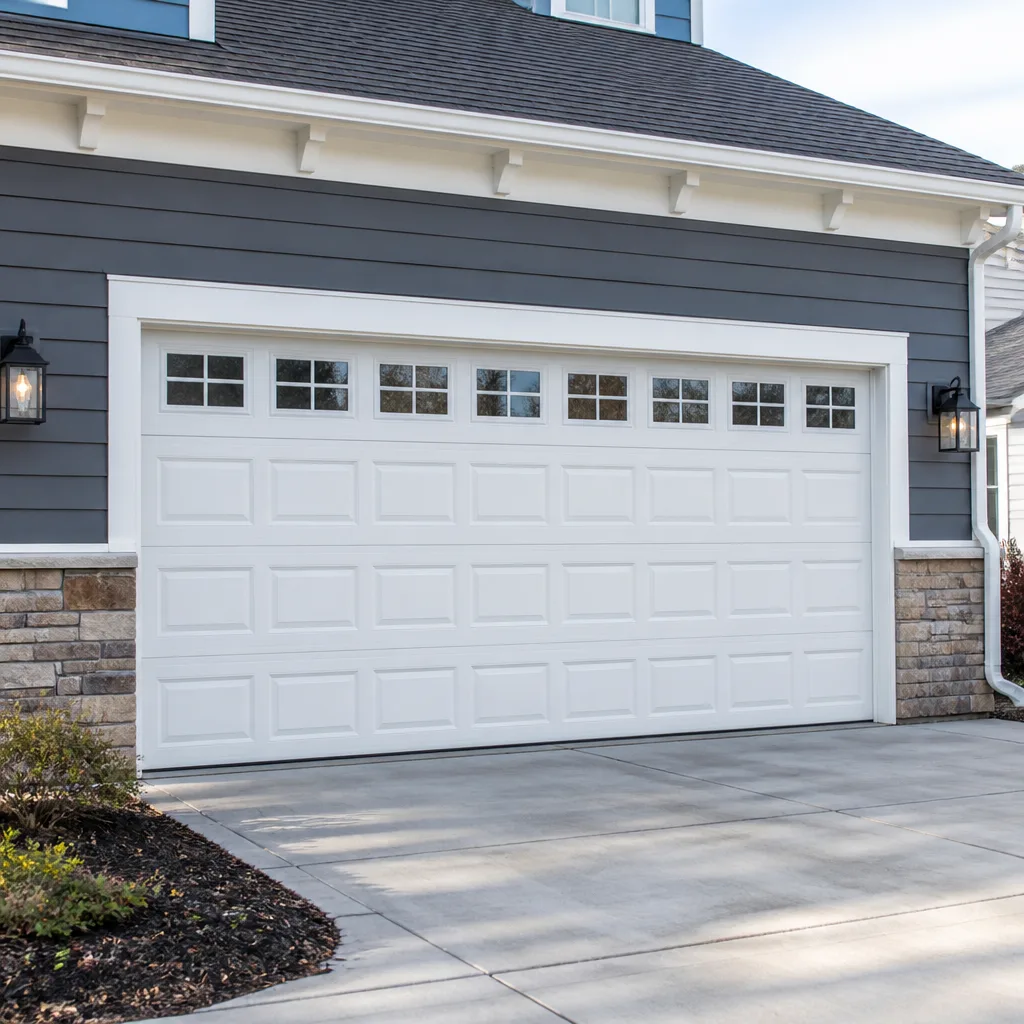
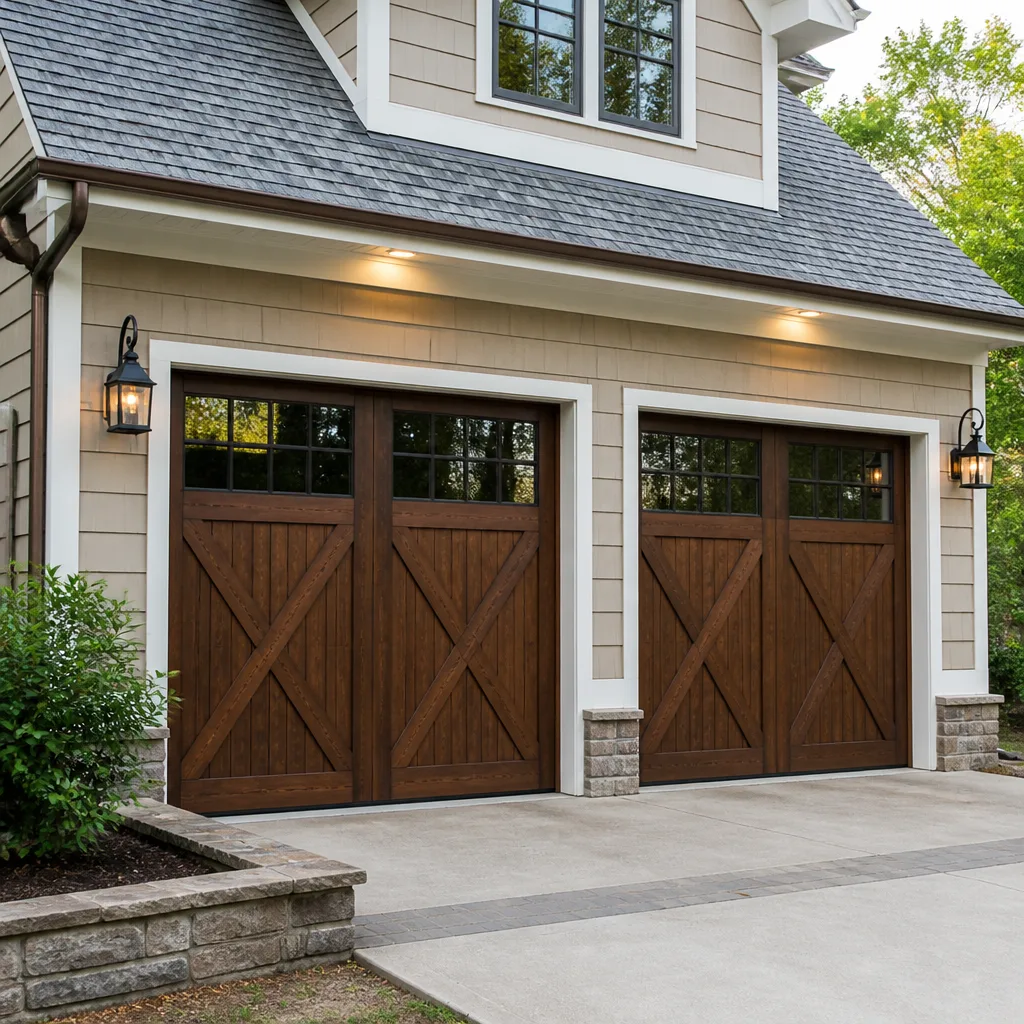
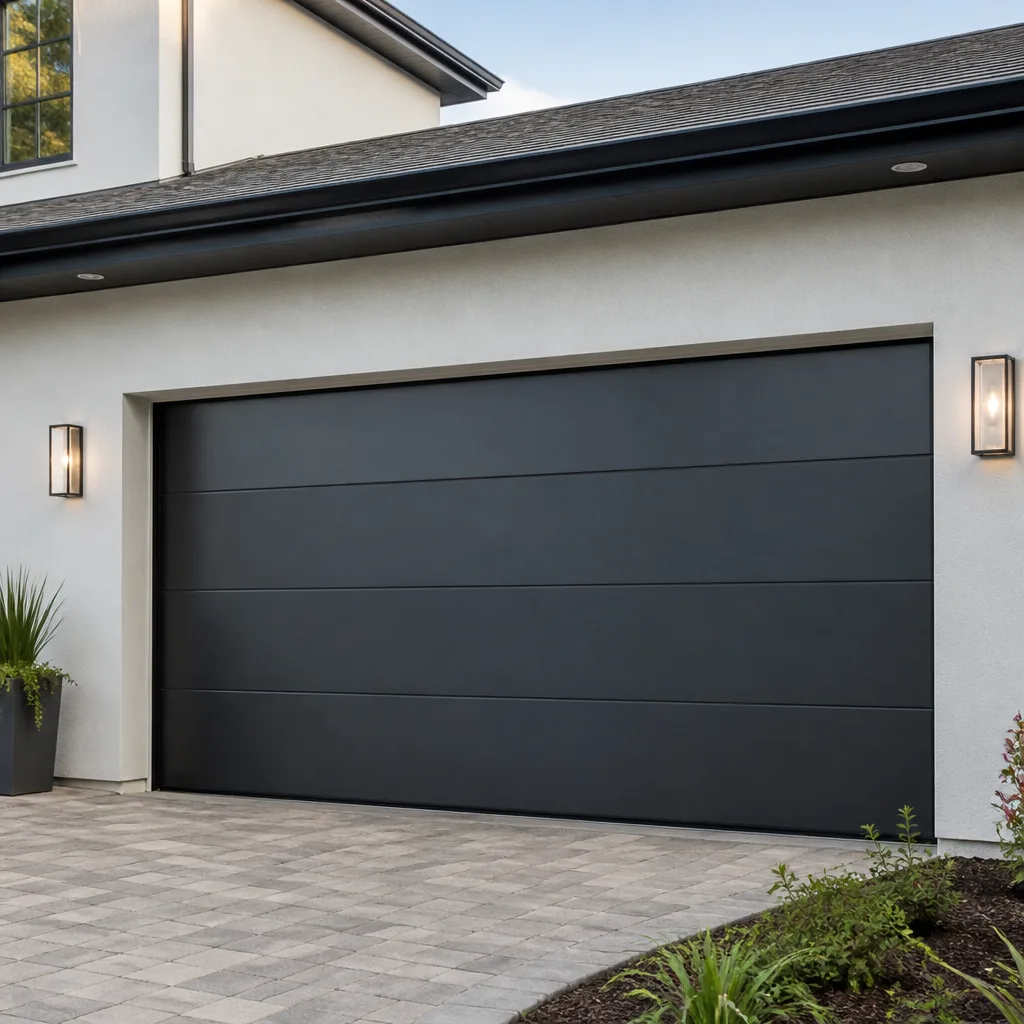
 Before
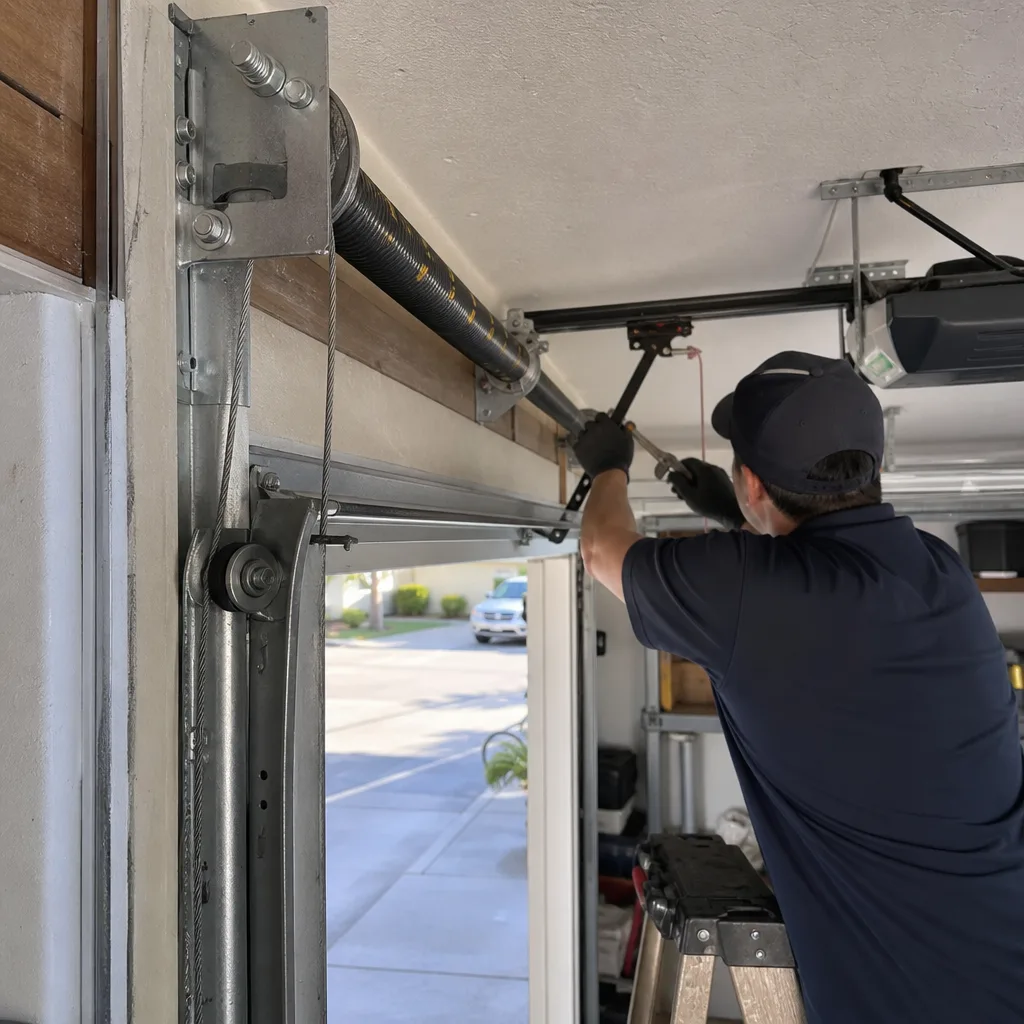 After
After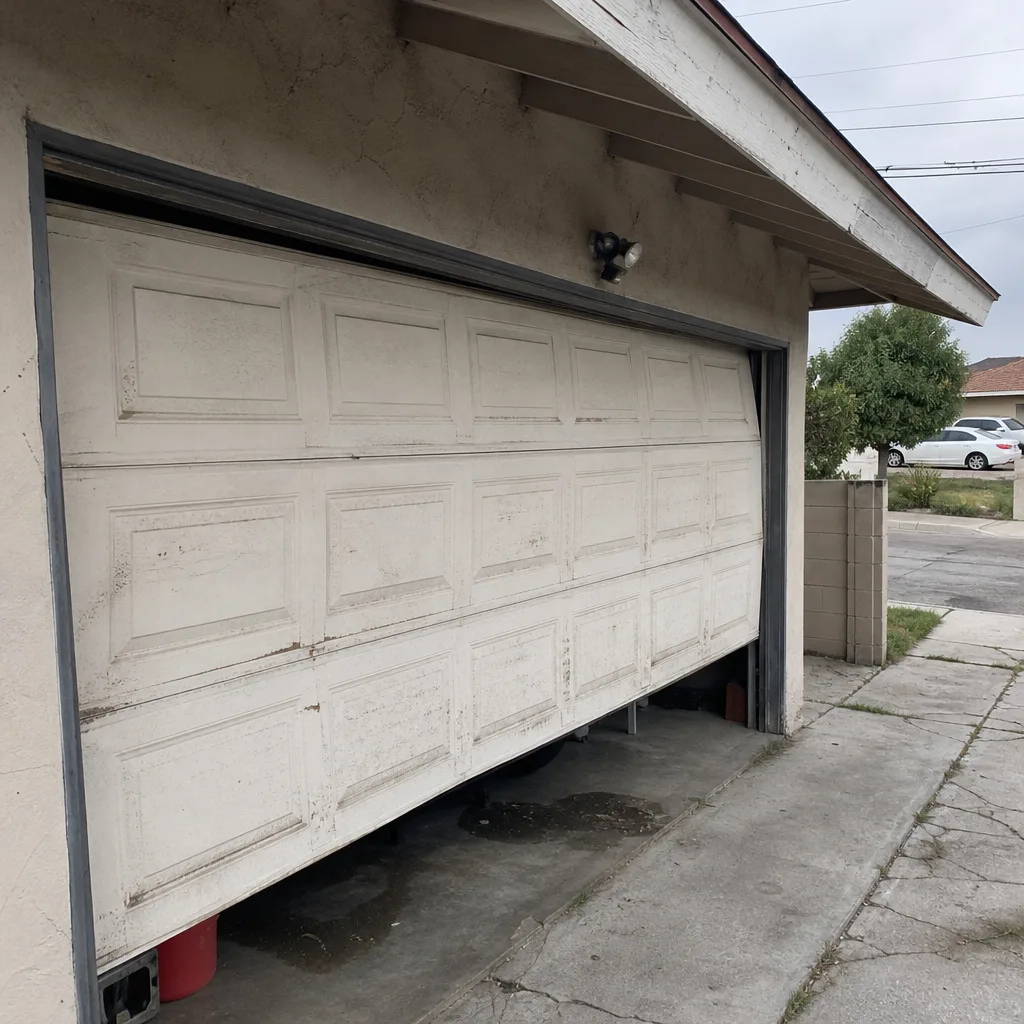 Before
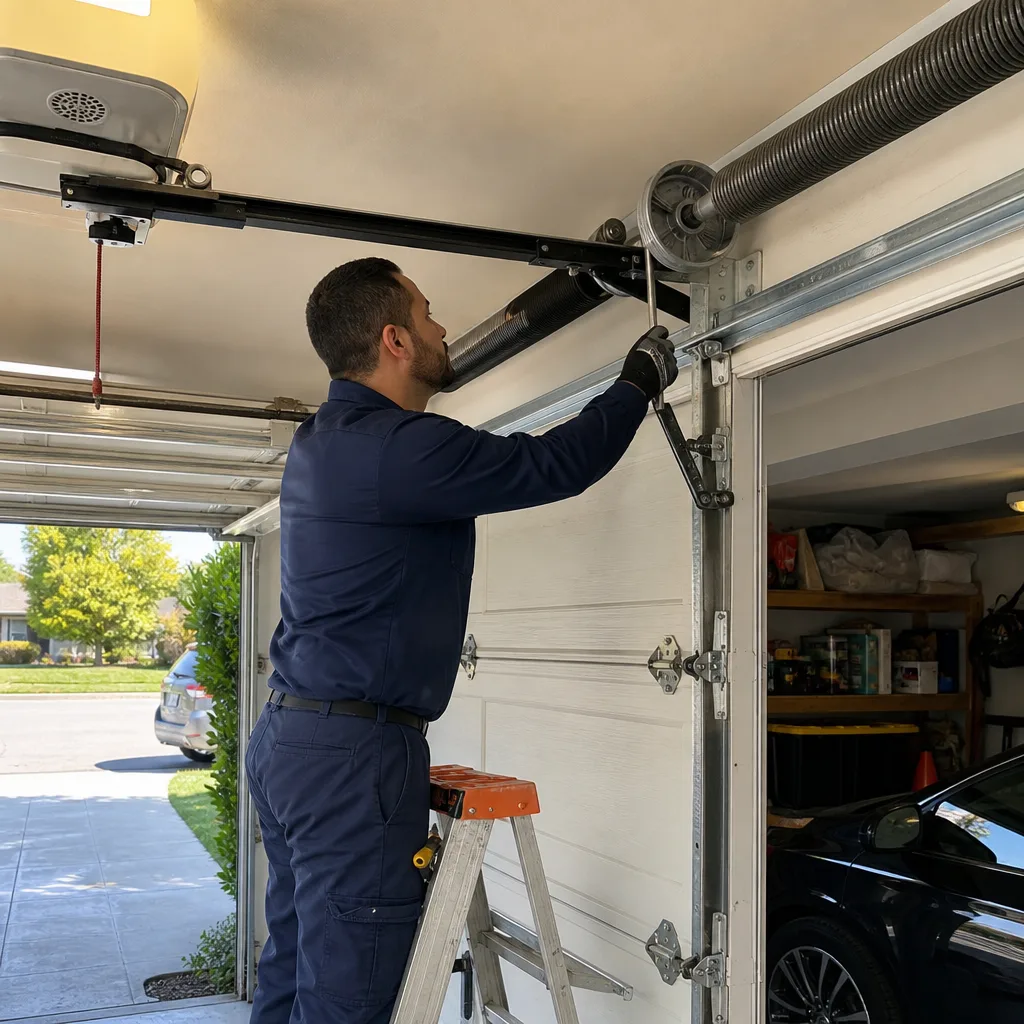 After
After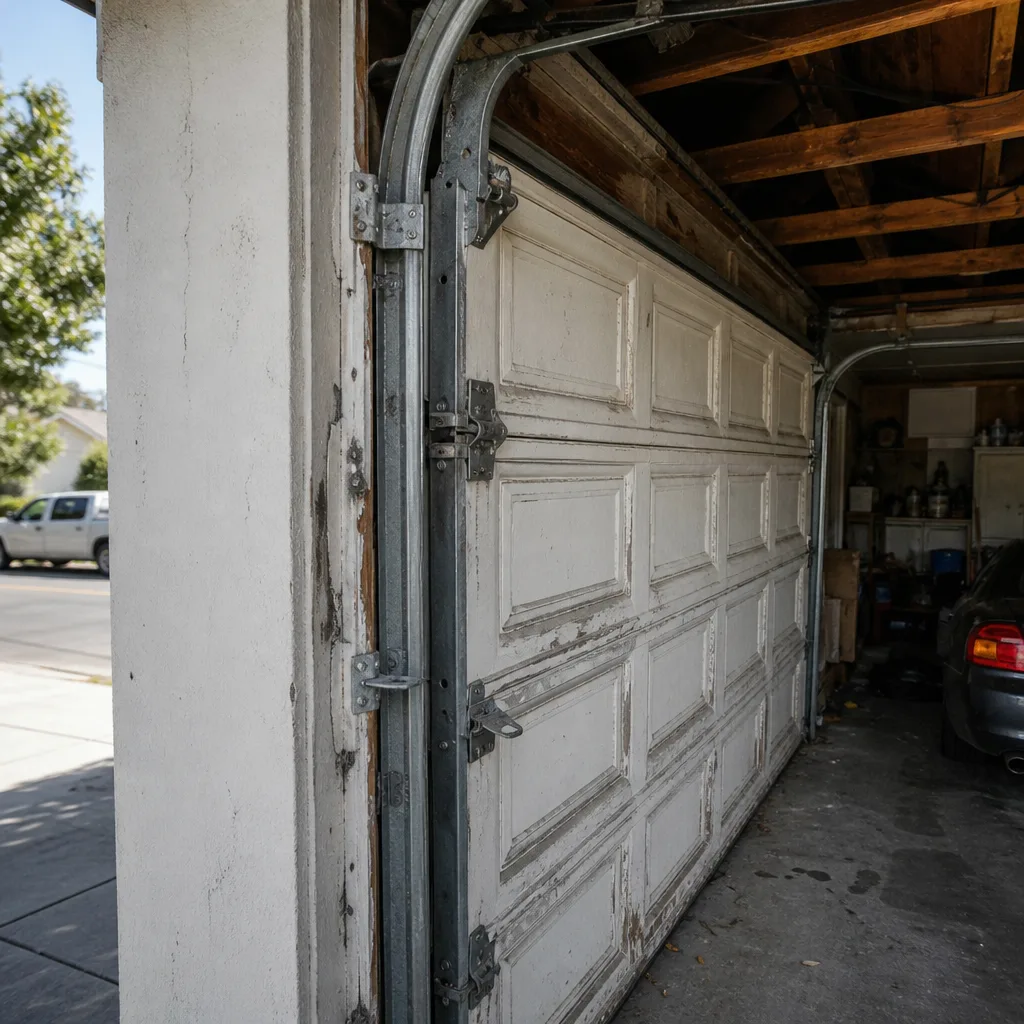 Before
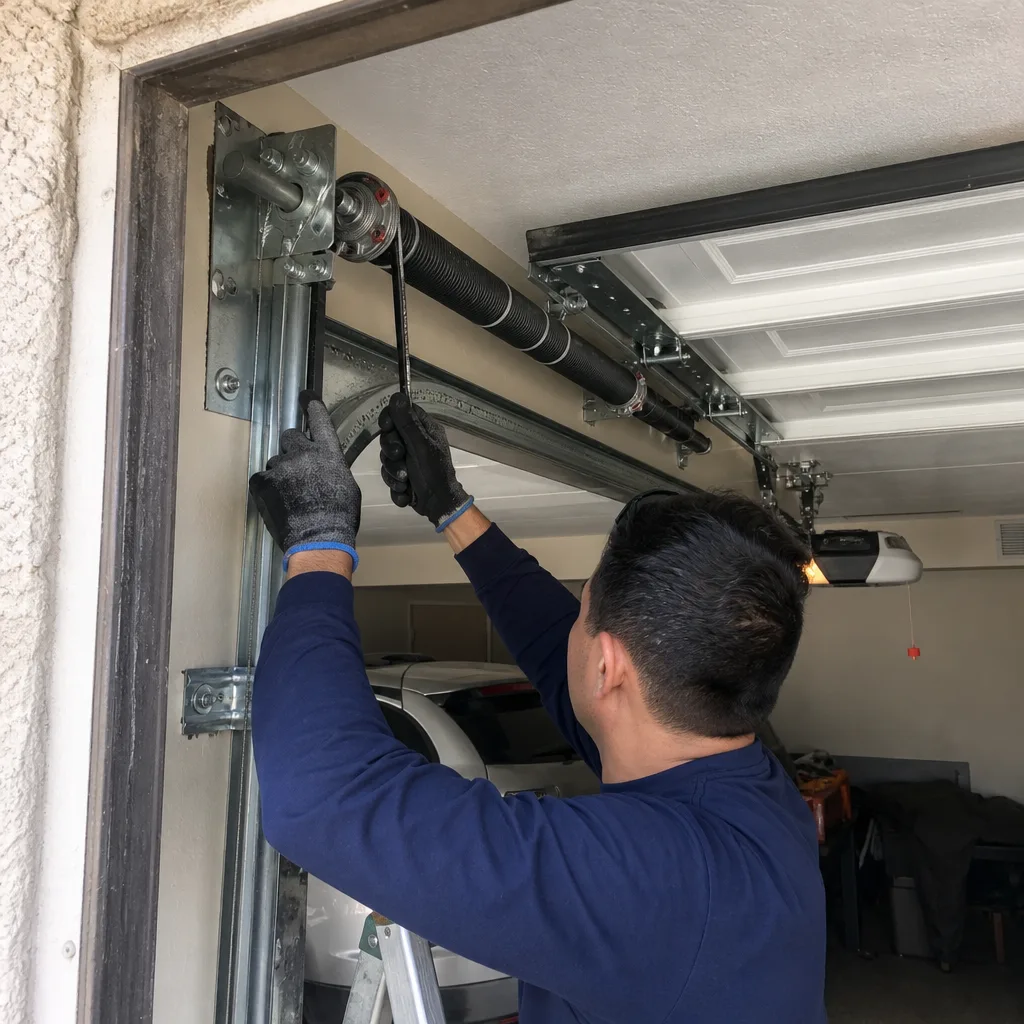 After
AfterBroken Garage Door Spring
What’s Happening
A broken garage door spring almost always explains why your door won’t open, fell hard when it closed, or suddenly feels like it weighs 400 pounds. Springs do the heavy lifting on every cycle, and when one snaps, your door isn’t going anywhere safely under its own power.
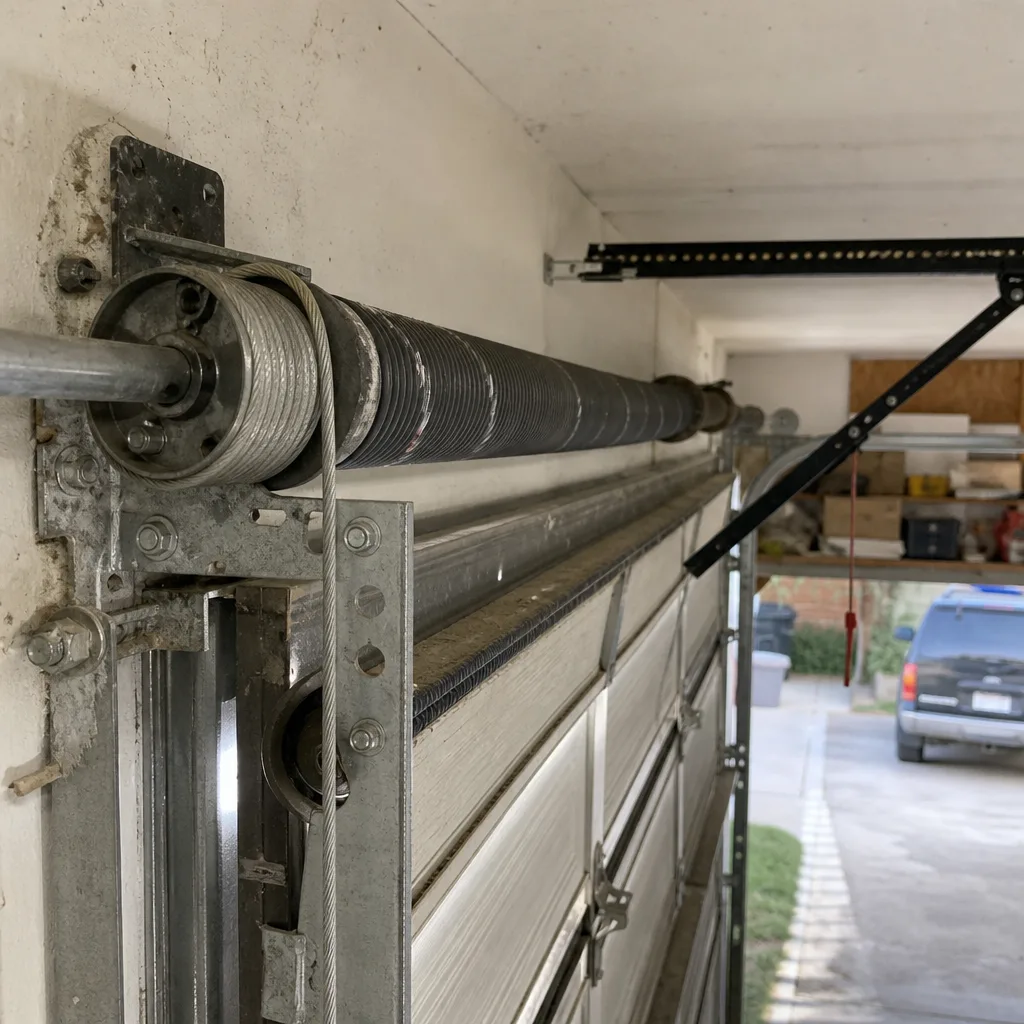
Most residential garage doors run on one of two spring types: torsion springs (the horizontal bar mounted above the door, wound tight around a metal shaft) or extension springs (the long coiled springs that run along each side track). Either one can fail without much warning. You may have heard a loud bang – like a gunshot from inside the garage – right before the door stopped working. That sound is the spring releasing all its stored tension at once. If the door was up when it broke, it likely dropped. If the door was closed, the opener may still run but the door won’t budge, or it will lift only a few inches before the motor strains and stops. Both scenarios point to the same root cause: the spring is no longer doing its job, and right now your door is relying entirely on the opener motor and cables to hold it. That’s not a situation you want to leave unattended.
Why It Happens
Metal Fatigue from Normal Cycling
Garage door springs are rated for a set number of open-and-close cycles, and they age out whether you notice or not. Standard springs on most residential doors are rated for around 10,000 cycles – roughly seven to ten years of average use. When that limit is reached, the coils weaken and snap. If your door is older and you’ve never replaced the springs, this is almost certainly what happened. Look at the torsion spring above the door: if you see a visible gap in the coil or the spring is clearly in two pieces, metal fatigue is the answer.
Rust and Corrosion Eating the Coils
Springs live in garages, which are not exactly climate-controlled spaces. Humidity, temperature swings, and road salt tracked in on tires accelerate rust. Rust increases friction on every cycle, which shortens the spring’s lifespan significantly, and it can cause a coil to snap well before it reaches its rated cycle count. You’ll usually see reddish-brown staining along the coils before failure. A spring that looks heavily corroded is one that is close to breaking even if it hasn’t yet.
Improper Spring Size or Tension
Springs are sized to the exact weight of your specific door. If a previous technician installed a spring with the wrong tension rating – or if the door panels were changed at some point without adjusting the springs – the wrong spring ends up working harder than it should on every cycle and wears out faster. You might notice the door felt slightly heavy or uneven for a while before the break. That imbalance is a warning the system was already under stress.
Cold Weather Stress
Metal contracts in cold temperatures, and that makes already-fatigued coils more brittle. Most spring failures happen in late fall and winter for exactly this reason. If your spring snapped on a cold morning after the door sat overnight, that’s not a coincidence. Cold weather didn’t break a healthy spring – but it absolutely pushed a worn one over the edge.
What to Do Right Now
- Stop using the door immediately. Do not try to open or close it manually or with the opener. A door with a broken spring is no longer counterbalanced. It can drop suddenly and with serious force. This is not a “use it carefully” situation – it’s a stop-completely situation.
- Disengage the automatic opener if it’s still running. Pull the red emergency release cord hanging from the opener rail. This disconnects the door from the opener so the motor doesn’t keep straining against a door it can’t move. Do not then try to lift the door yourself.
- Look but don’t touch the spring. You can safely look at the spring from a few feet away to confirm there’s a visible break, gap, or separation. Do not attempt to handle, re-wind, or reattach any part of the spring. Torsion springs store enormous mechanical energy even when broken, and the hardware around them – cables, drums, cones – is under load. A trained technician with the right tools handles this, not a homeowner with a wrench.
- Photograph what you see. Take a clear photo of the broken spring and the area around it. Note whether it’s the single horizontal spring above the door or one of the side springs along the track. This helps your technician arrive prepared with the right parts.
- Call your local Marlow Garage Door Repair team. The sooner you call, the sooner a tech is on the way with the right spring for your door. A real person picks up every call, any time of day or night – no voicemail, no callback queue. That number is (512) 883-4374.
How We Fix It
When your local Marlow Garage Door Repair technician arrives, the first thing they do is measure and inspect the full spring system – not just the broken coil. Spring size, door weight, cable condition, drums, and hardware all get checked before anything is replaced. Replacing one spring without checking the other is a shortcut we don’t take.
The repair falls under our Garage Door Spring Repair service. After the inspection, you receive a written price before any work begins – that number is locked, and the invoice will match it exactly. No revisions at the end, no surprises when we hand you the receipt.
Most spring replacements are completed in under two hours. Once the new spring is installed and tensioned correctly, the technician tests the door’s balance and adjusts the opener force settings to match. The job is covered by the 365-Day Done Right Promise: if anything with the repair isn’t right within a year, we come back and fix it at no charge, in writing, no fine print. Before leaving, we send before-and-after photos and a digital invoice you can pay directly from a link on your phone.
Frequently Asked Questions
A broken spring is a real safety risk, and waiting is not a good idea. A door with no working spring is no longer counterbalanced – it can fall unexpectedly, and the cables and opener that are now holding its full weight aren’t designed to carry that load indefinitely. Keep everyone away from the door until it’s repaired. Call us at (512) 883-4374 and we’ll get a tech headed your way.
Yes – your local Marlow Garage Door Repair team handles spring repairs as the urgent jobs they are. A live person answers every call around the clock, and we dispatch based on current availability in your area. Call (512) 883-4374 now and we’ll give you a real arrival time you can track, not a four-hour window.
No. The written price is delivered after the technician inspects your door and before any work begins – and that price is what you pay. This is how every Marlow job works, on every call, without exception. If the scope changes in any way, you’re told and asked before we proceed.
If your door uses two torsion springs, replacing both at the same time is almost always the right call. When one spring breaks from age or fatigue, its partner is almost certainly at the same point in its lifespan – and a second failure in a few months is a very common outcome when only one spring is replaced. Your technician will inspect both and explain what they find before any work starts.
Get It Fixed
Your door is stuck and the spring is the reason. Your local Marlow Garage Door Repair team carries the parts, knows the brands – LiftMaster, Chamberlain, Genie, Clopay, Amarr, Wayne Dalton, Craftsman, and Raynor – and shows up ready to work. Call (512) 883-4374 now or book online. A live person picks up every time.
Written by Jaylen Ross, Owner & Lead Technician, Marlow Garage Door Repair, serving communities nationwide since 2002.
What Our Customers Say
"Safety sensors realigned. Tech texted before arriving and after finishing."
- Candice L."Quote came by text before the visit and didn't change."
- Holly T."Good repair and easy booking. The ETA slipped by about 20 minutes, but the text updated before I even noticed."
- Dave M.