
Full 25-point door and opener safety check with every visit - springs, cables, rollers, tracks, and your LiftMaster or Chamberlain opener included
You get a price before we start. It does not change when the truck arrives.
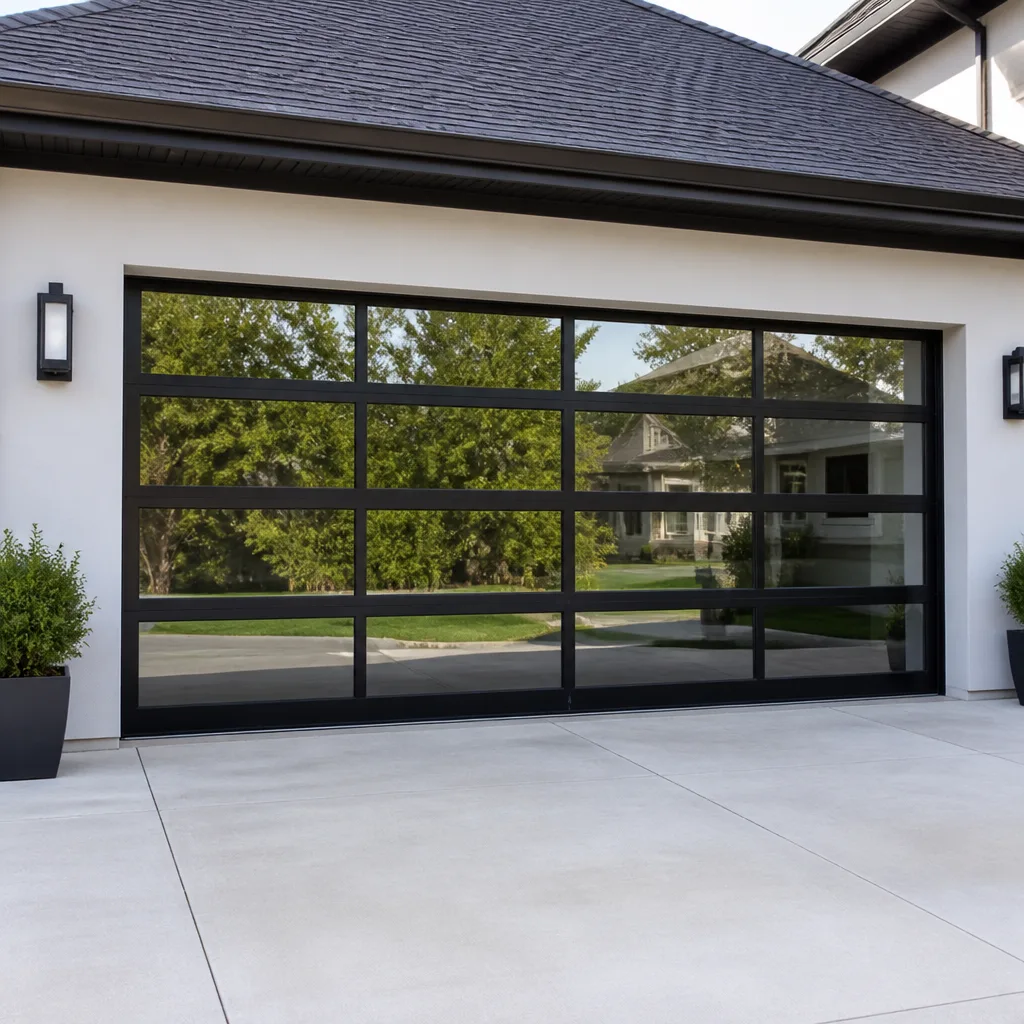
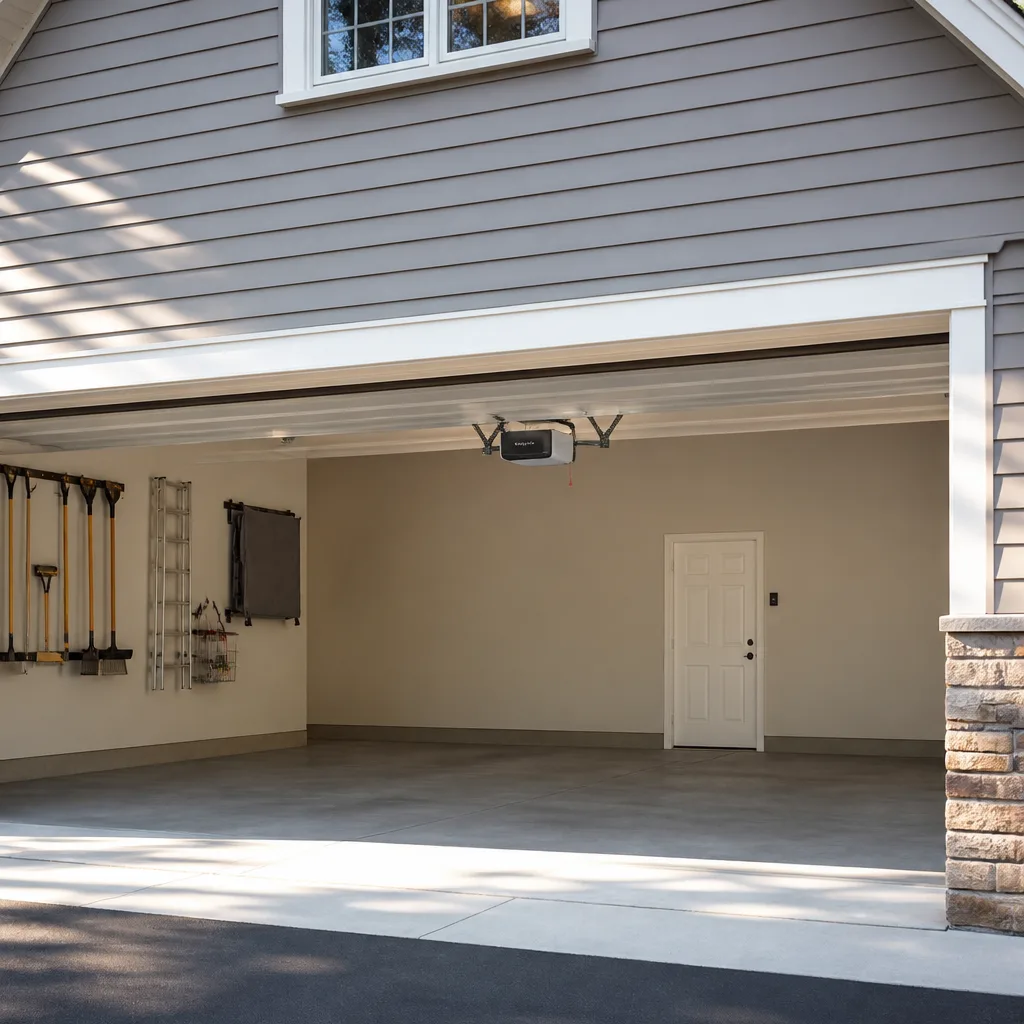
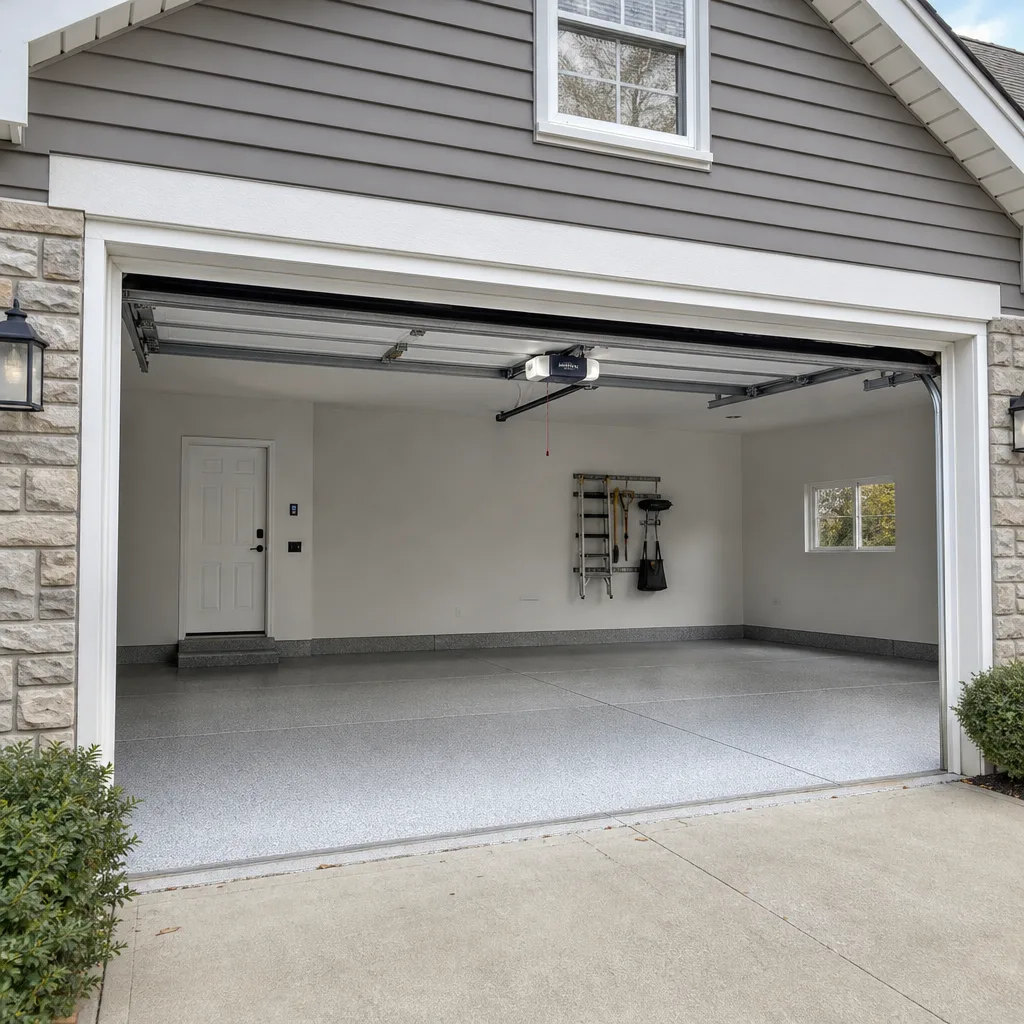
 Before
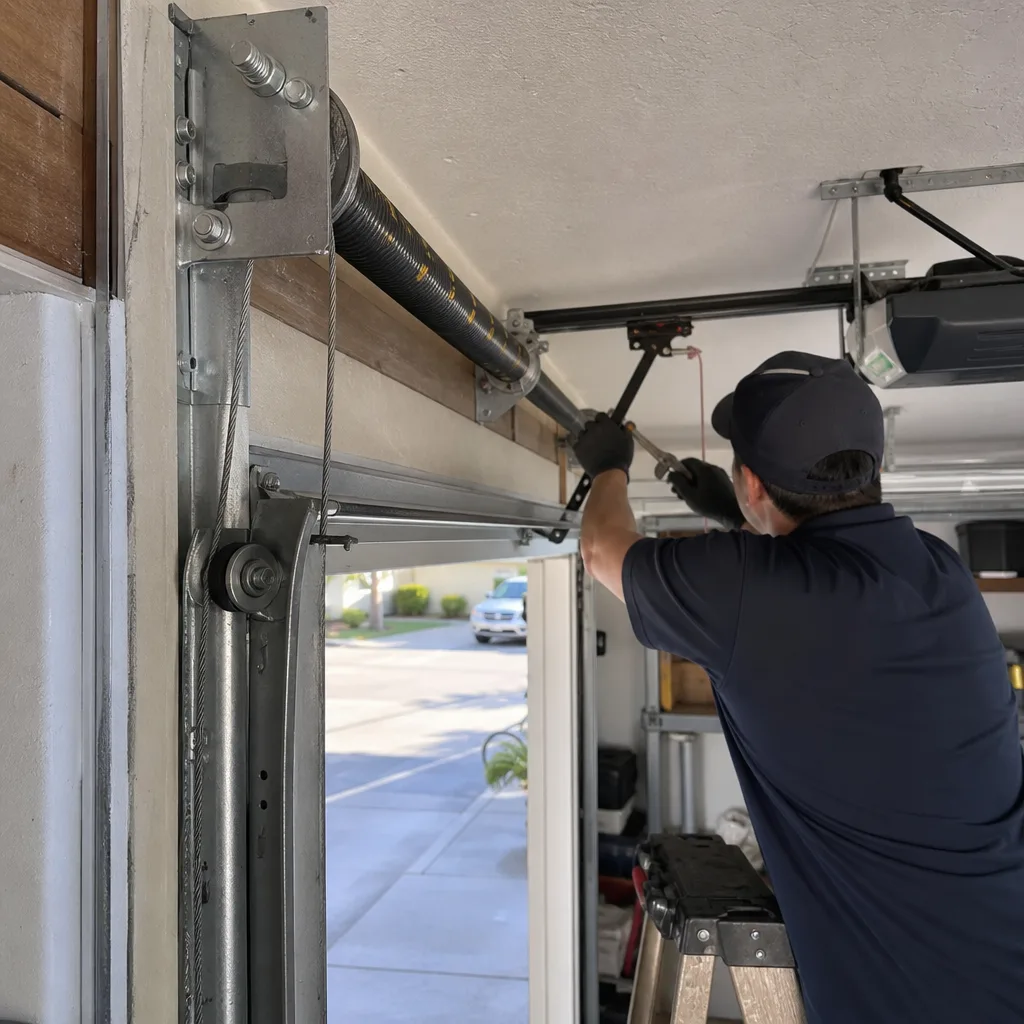 After
After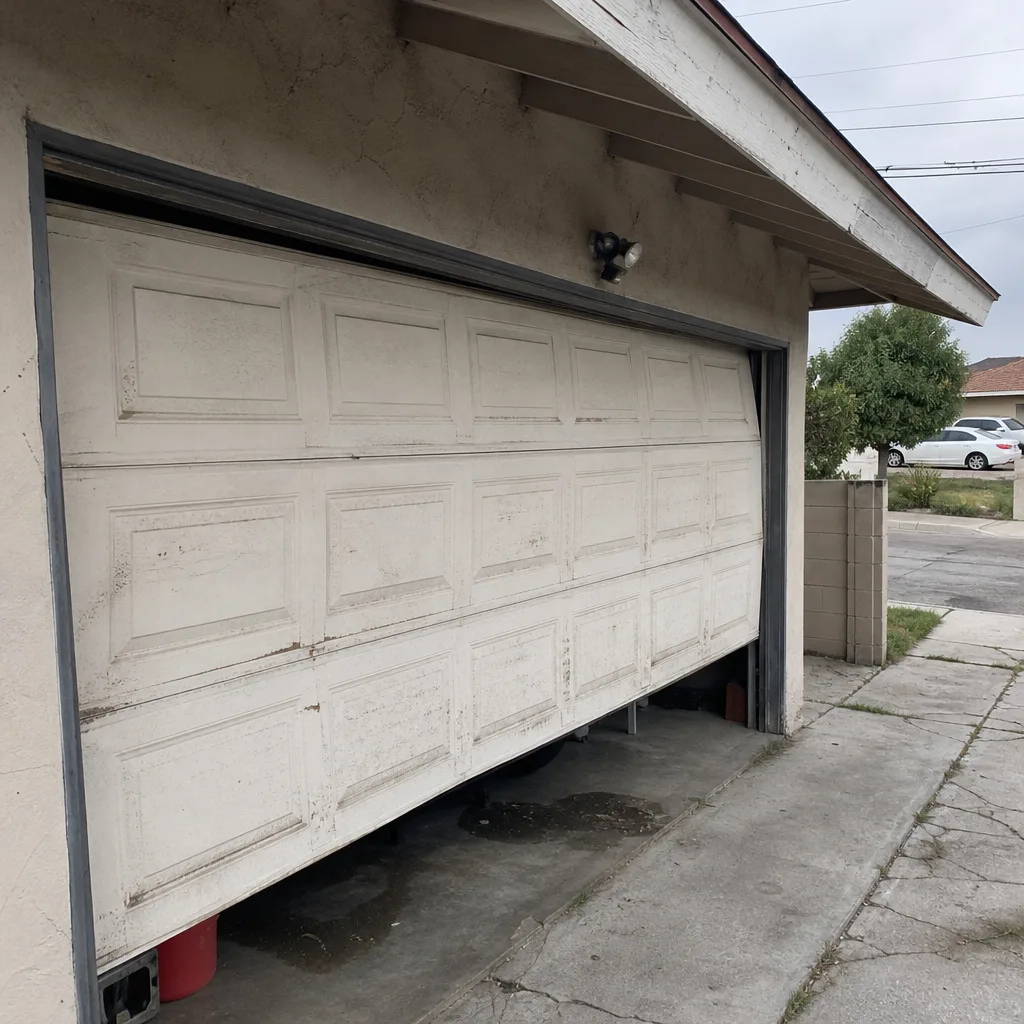 Before
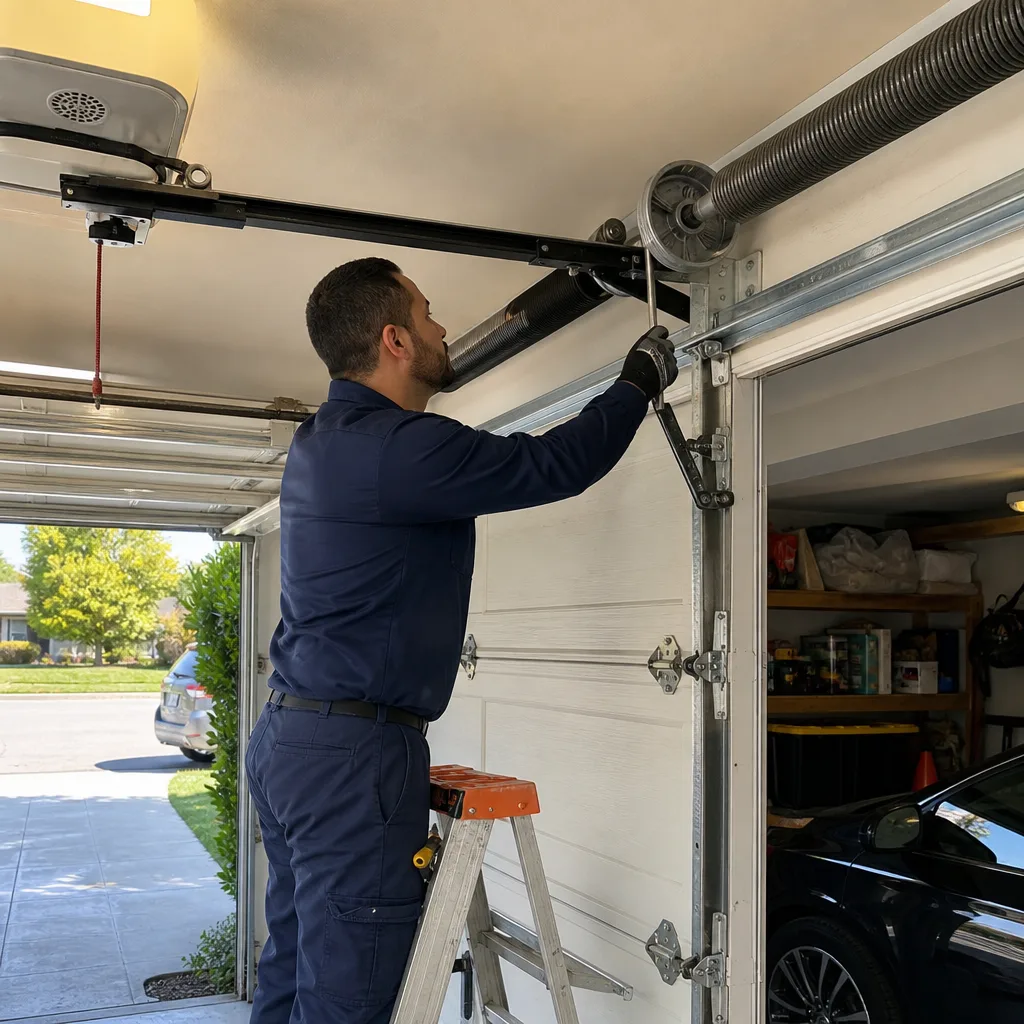 After
After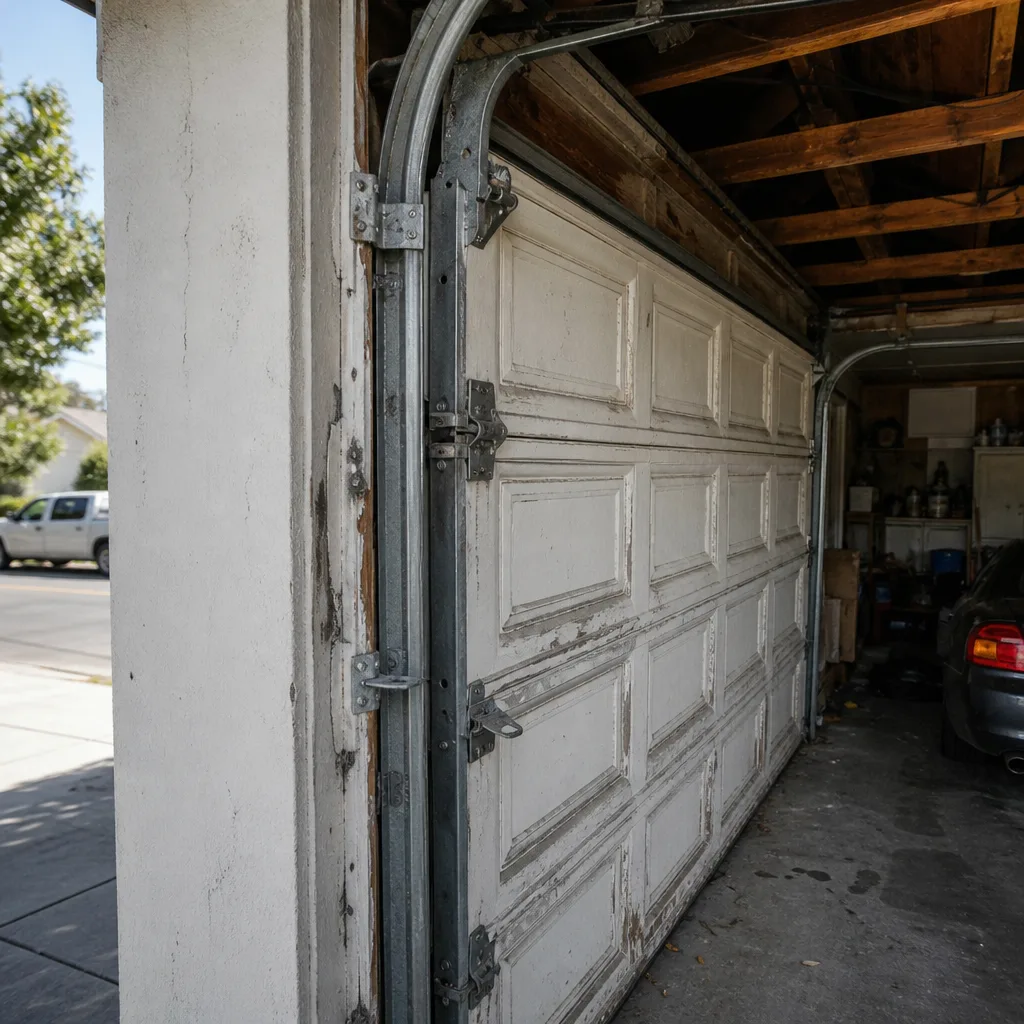 Before
 After
AfterGarage Door Won’t Close All the Way
A garage door that stops short of the floor almost always means one of three things: something is blocking the safety sensors, the close-limit setting is off, or there’s a mechanical problem with a spring or cable that’s keeping the door from traveling its full range. Most of these are fixable the same day.
The door isn’t being stubborn. It’s doing exactly what it was designed to do – stopping when it detects resistance or confusion. The problem is that “resistance” could mean a leaf in front of a sensor, a cable that’s jumped its drum, or a spring that’s lost tension. Each one looks a little different, and each one has a different fix. Here’s how to read what your door is telling you.
Why It Happens
Misaligned or Dirty Safety Sensors
Two small sensors sit a few inches off the ground on either side of your door frame – one sends an infrared beam, the other receives it. When they’re misaligned, dirty, or blocked, the opener interprets that as an obstruction and reverses or stops the door before it reaches the floor. The tell is simple: look at the sensor lights. If one is blinking or showing amber instead of steady green, the beam isn’t making a clean connection. Sometimes a spider web or a smudge of grease is enough to trigger it.
Incorrect Close-Limit Setting
Every garage door opener has a close-limit adjustment – a setting that tells the motor exactly how far the door needs to travel before it’s considered “closed.” If that limit is set too short, the door stops a few inches off the ground even when nothing is physically wrong. You’ll usually see this when the door stops at the same height every single time, with no reversing, no noise, no drama – it just parks there. LiftMaster, Chamberlain, Genie, and Craftsman openers each have their own adjustment method, typically a dial or button on the motor unit.
Worn or Broken Springs
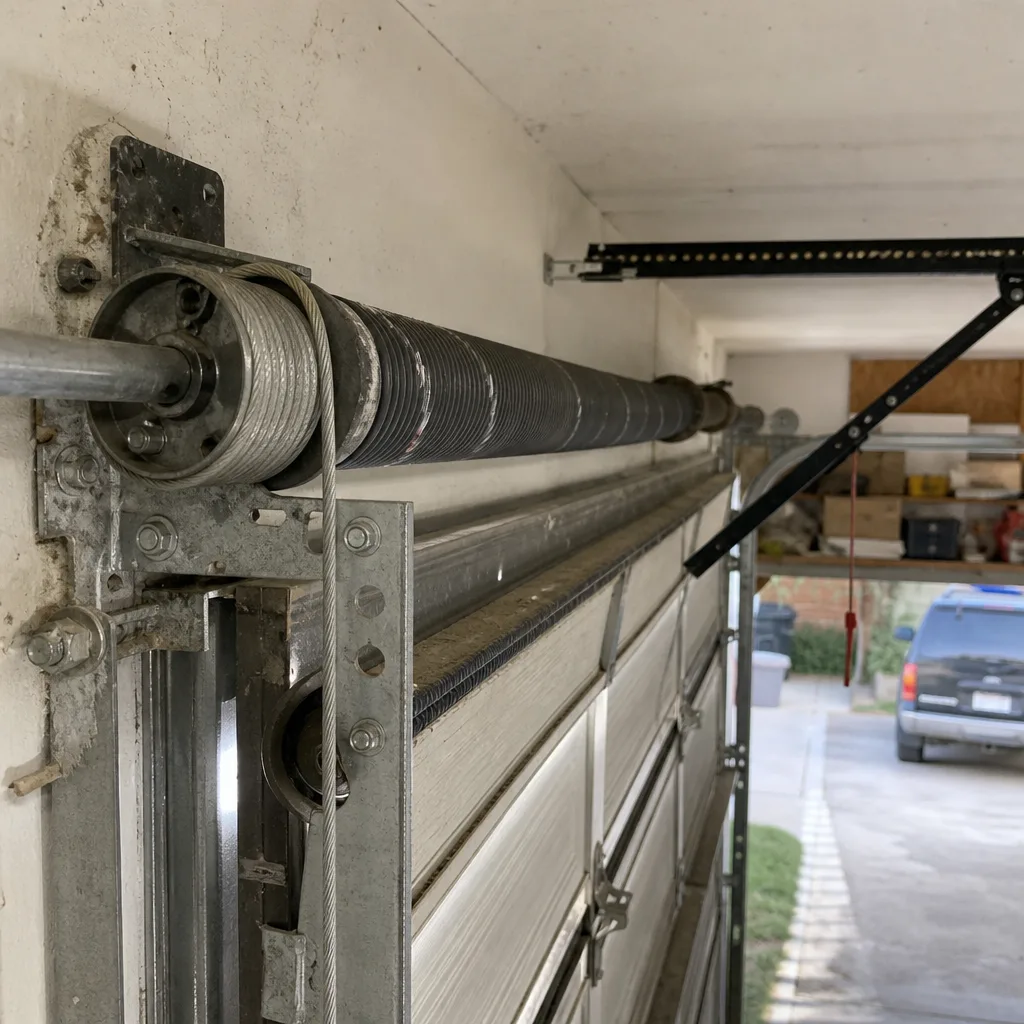
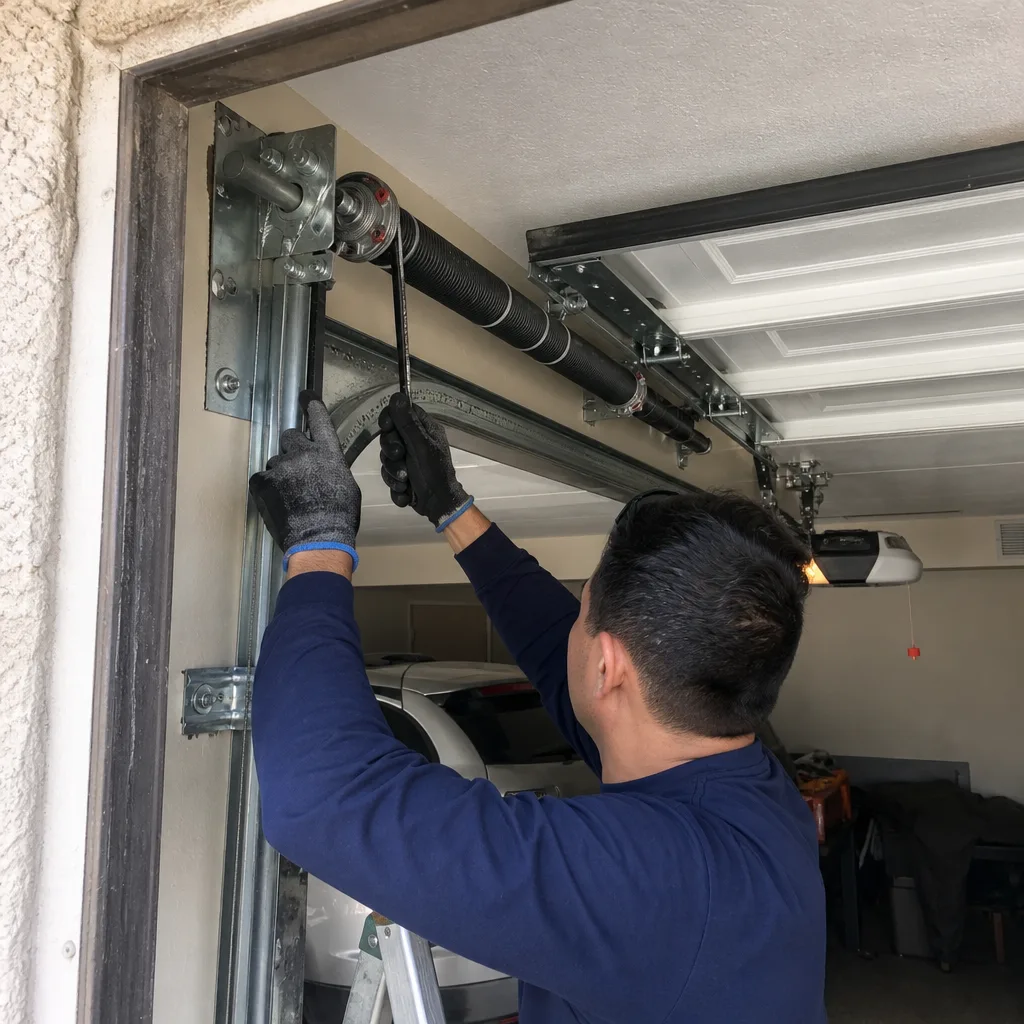
Torsion springs and extension springs counterbalance the weight of your door. When a spring loses tension or breaks, the opener motor is doing more work than it should, and many openers will cut out mid-travel rather than strain through it. You might hear a loud bang when a spring breaks – people often describe it as a car backfiring. If the door is heavy when you lift it manually (with the opener disconnected), a spring problem is likely. Stop using the door and call. Springs are under extreme tension and are genuinely dangerous to handle without the right equipment and training – this is not a repair to attempt yourself.
Frayed or Jumped Cable
Lift cables run from the bottom corners of the door up to the spring system. If a cable frays, snaps, or slips off its drum, the door loses balanced support on one side and can’t complete a full close. You’ll often see the door sitting crooked at the bottom, with one corner higher than the other. Sometimes you can spot the cable hanging loose or coiled at the side of the door. Like springs, cables are under significant tension – leave them alone until a technician is on site.
What to Do Right Now
- Stop cycling the door. If something mechanical is wrong – a spring, a cable, a bent track – running the opener repeatedly can turn a small repair into a bigger one. Hit the wall button one more time to see if it completes the close, and if it doesn’t, leave it.
- Check the sensor lights. Walk to both sensors near the floor. Both indicator lights should be solid, not blinking. If one is amber or blinking, gently wipe the sensor lens with a dry cloth and check whether the mounting bracket has shifted. A small nudge back into alignment often solves it immediately.
- Look for an obvious obstruction. A garden tool handle, a trash can, a child’s bike – anything sitting in the door’s path will trigger the safety reverse. Clear the area and try once more.
- Disconnect and manually lower the door if it’s stuck open. Pull the red emergency release cord hanging from the trolley. Then lower the door slowly by hand. If it feels unusually heavy or drops fast, stop immediately – that’s a sign the spring system isn’t holding it correctly. Prop it open with a stepladder and don’t stand under it.
- Take a photo before you call. A quick photo of where the door is stopping, the sensor lights, and any visible cable or hardware helps your local Marlow Garage Door Repair technician arrive with the right parts. It takes 30 seconds and can save a second trip.
How We Fix It
When your local Marlow Garage Door Repair technician arrives, the first thing they do is run the door through its full travel while watching the hardware, listening to the motor, and checking sensor alignment. That diagnostic pass usually points to the cause within a few minutes.
If sensors are the problem, they realign and test them. If the close-limit needs adjustment, they dial it in for your specific opener – whether it’s a LiftMaster, Chamberlain, Genie, Raynor, or any of the other eight brands we’re trained on. Spring and cable problems fall under our garage door spring repair and garage door cable repair services. Both are handled on the same visit when parts are available.
Before any of that work starts, you get a written price. Not an estimate that might change – a locked number you agree to before we touch anything. That’s how every Marlow job works, with no exceptions. The repair itself typically takes between 45 minutes and two hours depending on what’s needed. And every fix is backed by the 365-Day Done Right Promise – if it’s not right, we come back and make it right, in writing, for a full year.
Frequently Asked Questions
Yes, in most cases it is. An open or partially open garage door is an entry point for intruders and wildlife, and if the issue is a broken spring or frayed cable, the door itself can be unstable. Don’t leave it propped open overnight or assume it can wait a few days. Call (512) 883-4374 and a live person will pick up right now, around the clock, to get a technician scheduled.
If the door is stuck partway open, it really shouldn’t wait – you’ve got a security gap and a mechanical system under stress. If it’s stopping an inch or two above the floor and you can manually close it all the way and latch it, you have a little more flexibility, but the problem will get worse. Call (512) 883-4374 to talk through what you’re seeing and find the earliest available time with your local Marlow team.
Your local Marlow Garage Door Repair team handles urgent repair calls and works to get to you as quickly as scheduling allows. When you call (512) 883-4374, a live person answers – not a recording, not a callback queue – and they can tell you exactly what availability looks like right now. You’ll get a live arrival time you can track, not a vague window.
No. The written price is agreed before any work starts, every time, with no exceptions. What you approve is what appears on the invoice – full stop. There’s no “diagnostic fee that gets absorbed if you proceed” ambiguity here: the number is locked before the first bolt turns. If the technician finds something additional during the repair, they stop and get your approval on a new written price before continuing.
Get It Fixed
Call (512) 883-4374 right now – a live person answers 24 hours a day, 7 days a week. Or book online and your local Marlow Garage Door Repair team will send you a live arrival time you can track. Written price before we start. 365-Day Done Right Promise on every repair.
Written by Jaylen Ross, Owner & Lead Technician at Marlow Garage Door Repair, part of the Relay Home Co. family of locally operated home-service businesses since 2002.
What Our Customers Say
"I could see the tech's name and ETA in the text. Showed up right when the tracker said. Cable repair done in under an hour."
- Omar B."Safety sensors realigned. Tech texted before arriving and after finishing."
- Candice L."Quote came by text before the visit and didn't change."
- Holly T.