
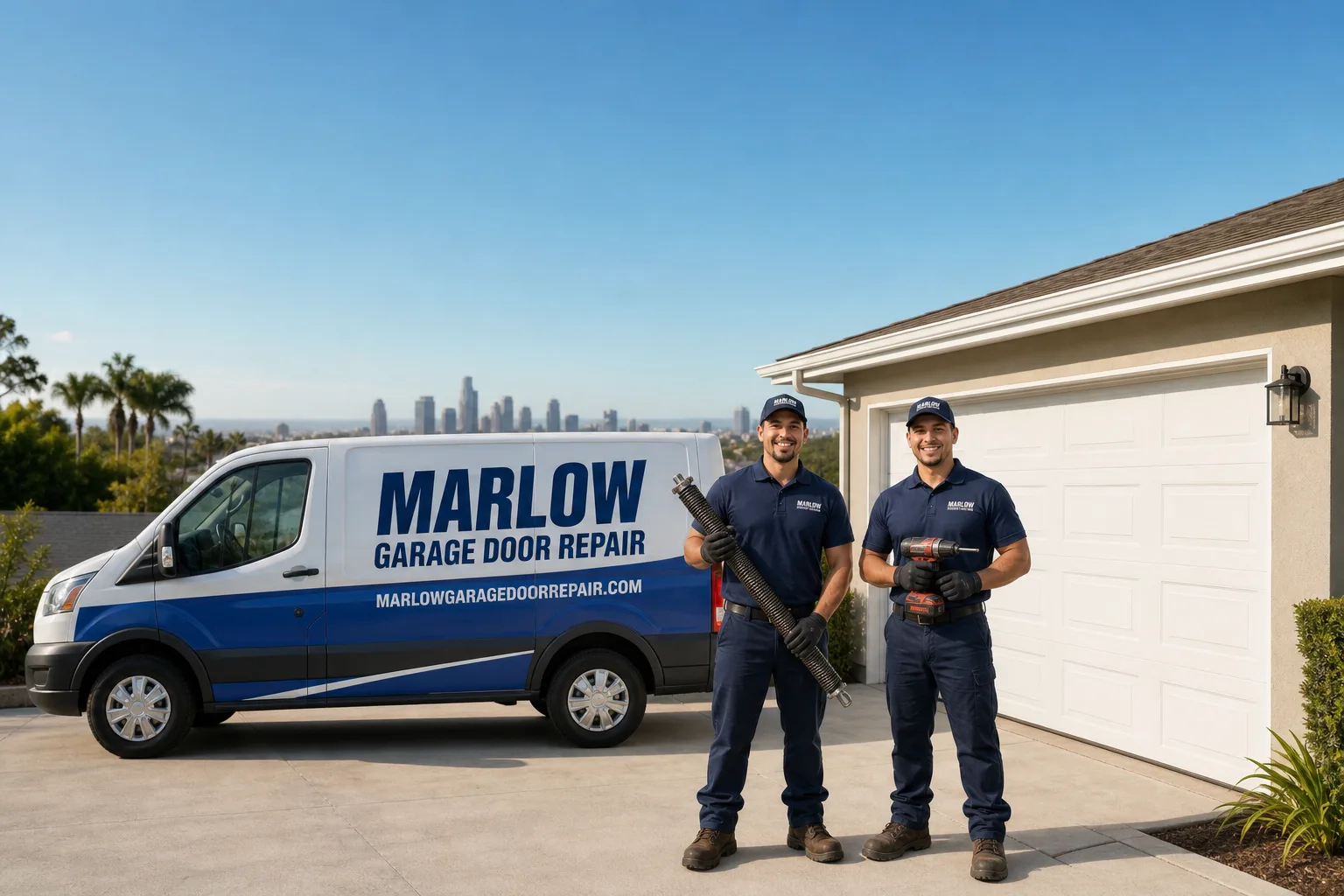
Full 25-point door and opener safety check with every visit - springs, cables, rollers, tracks, and your LiftMaster or Chamberlain opener included
You get a price before we start. It does not change when the truck arrives.
 Before
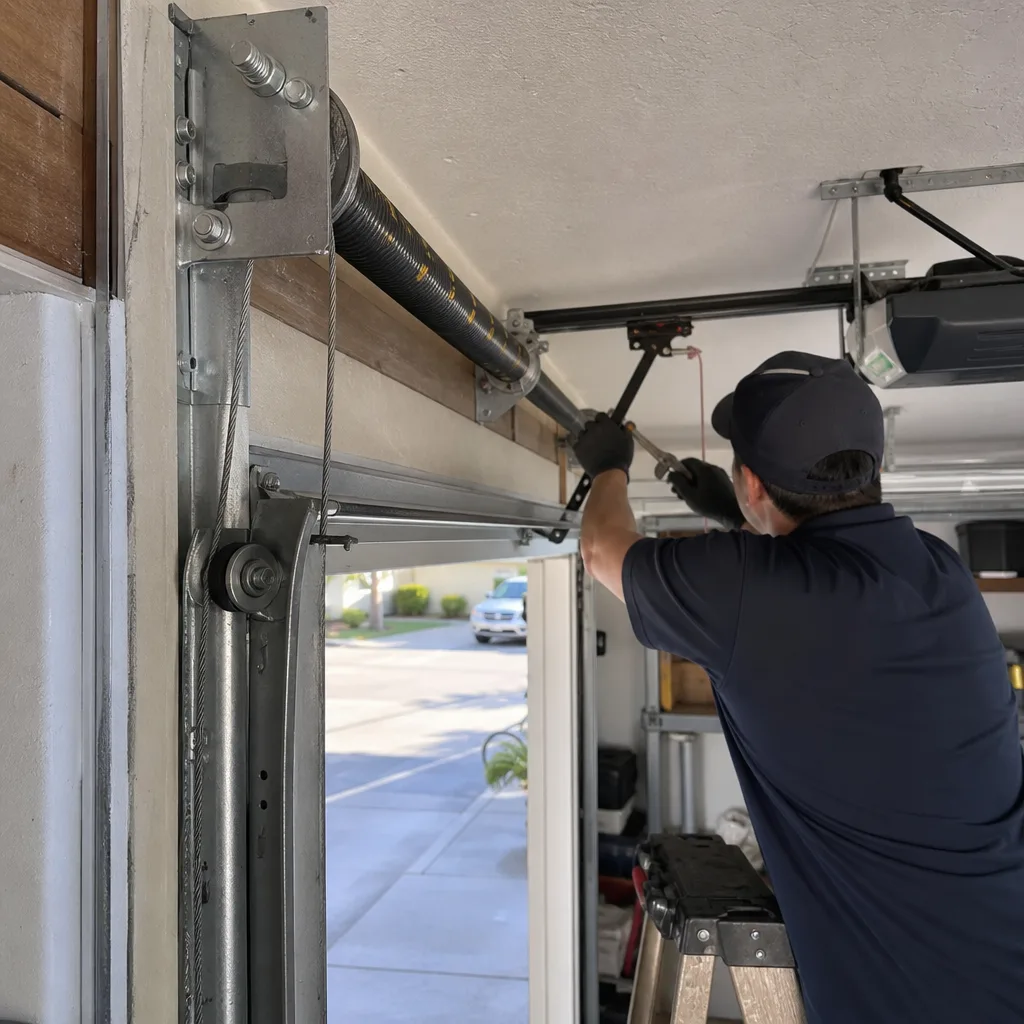 After
After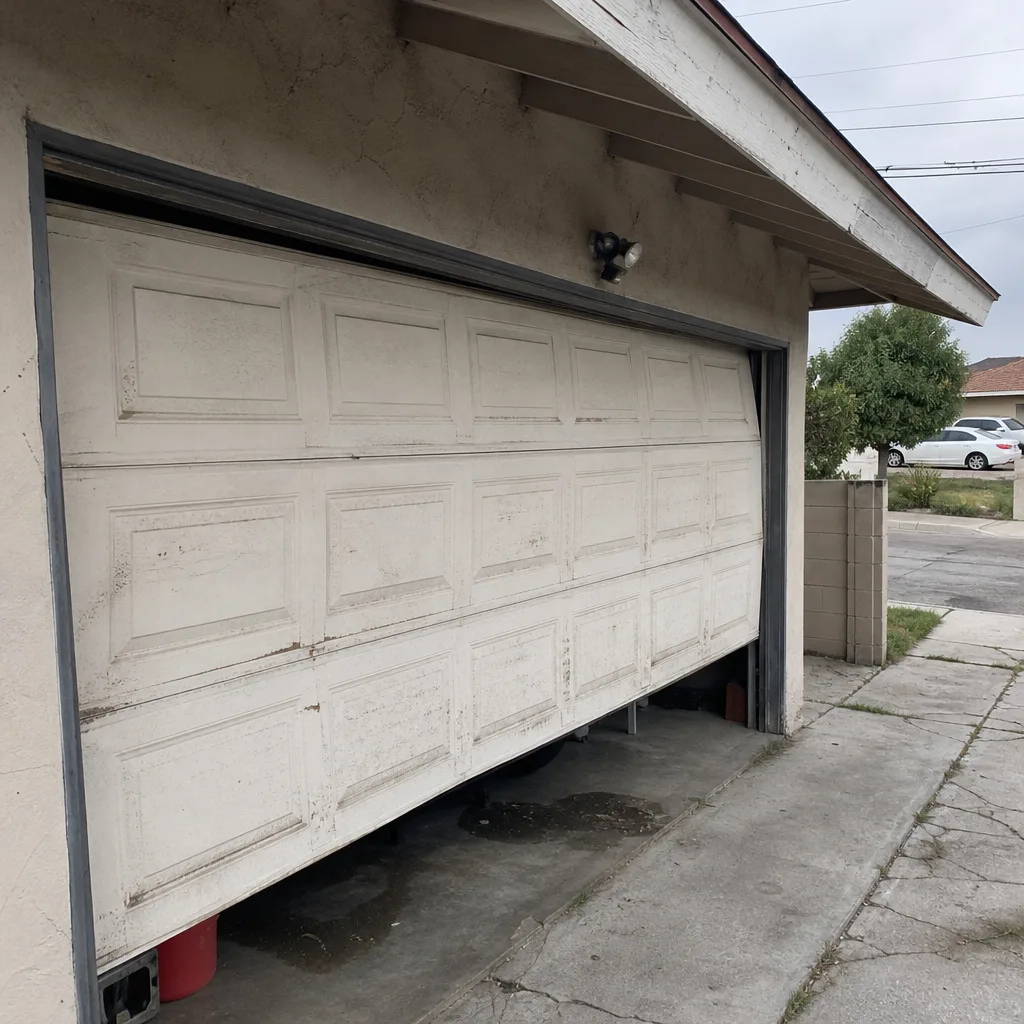 Before
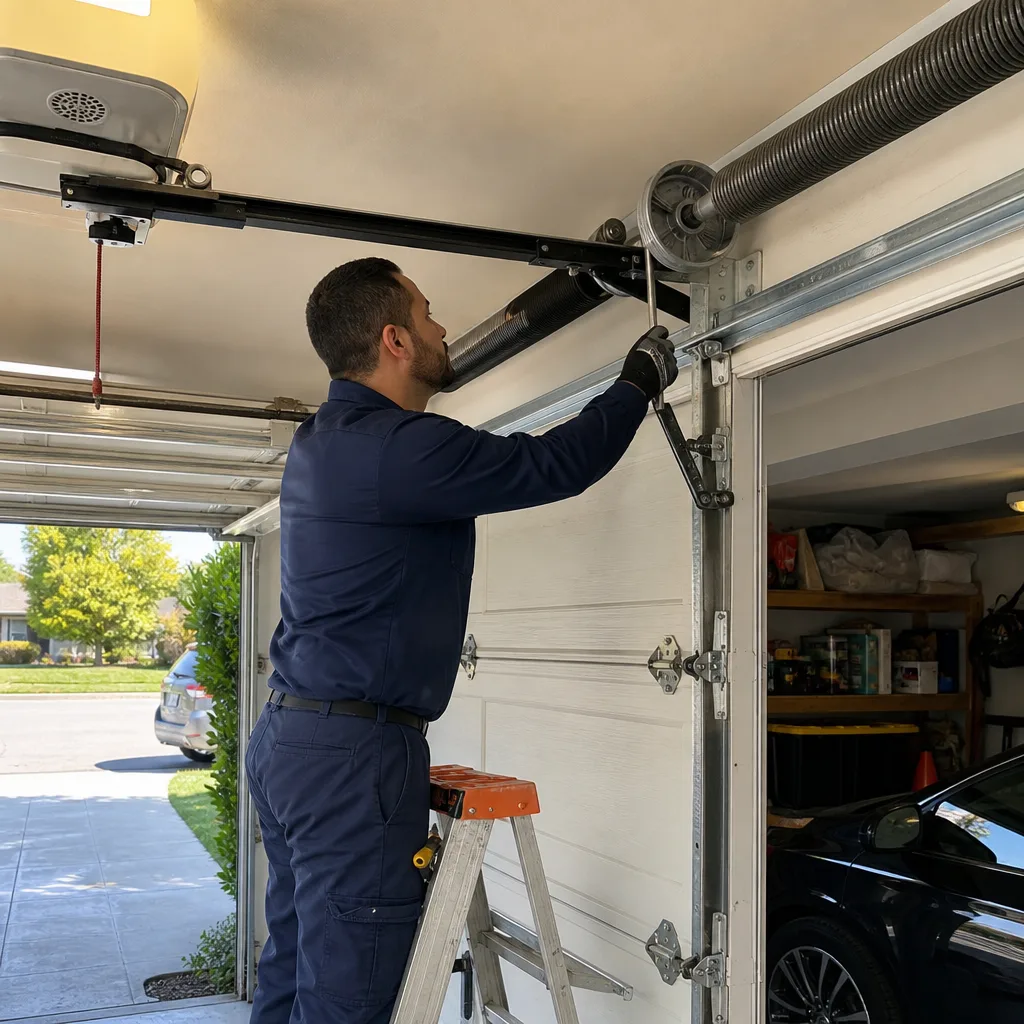 After
After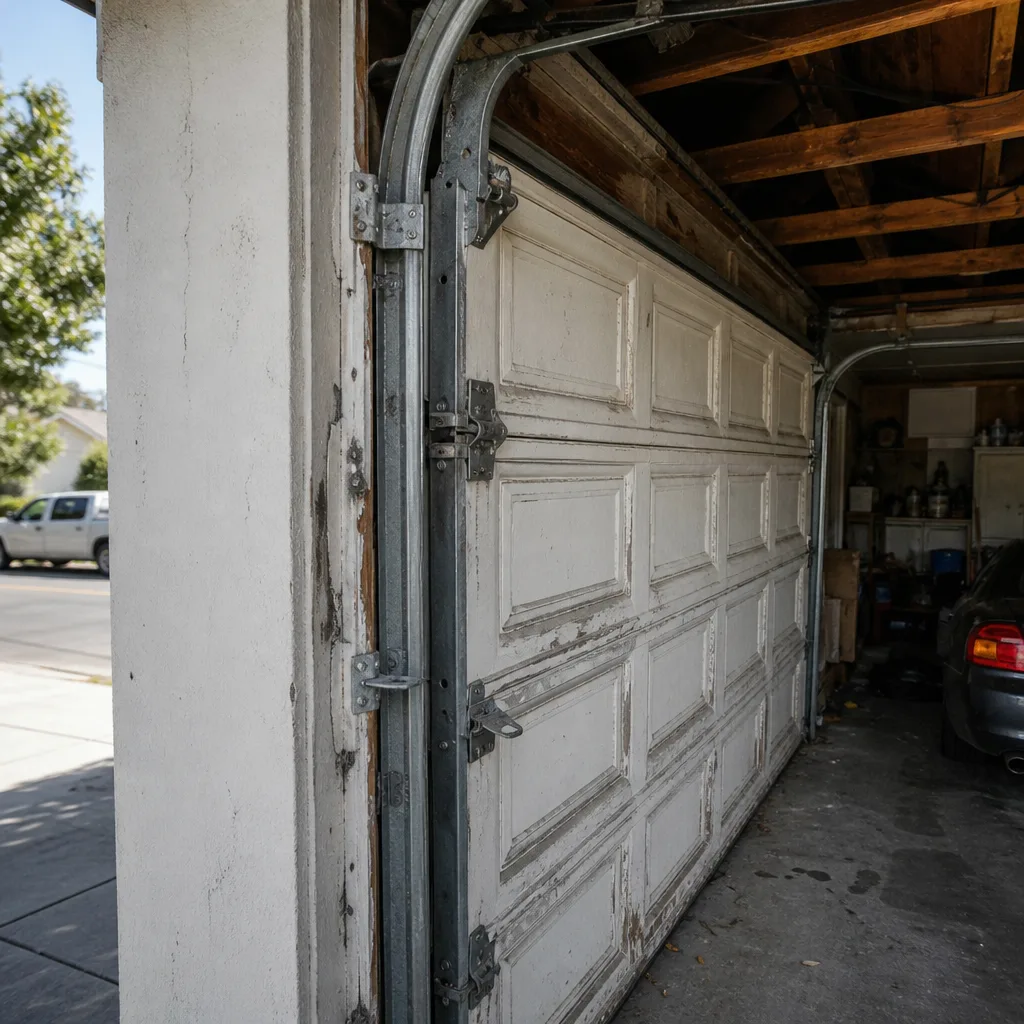 Before
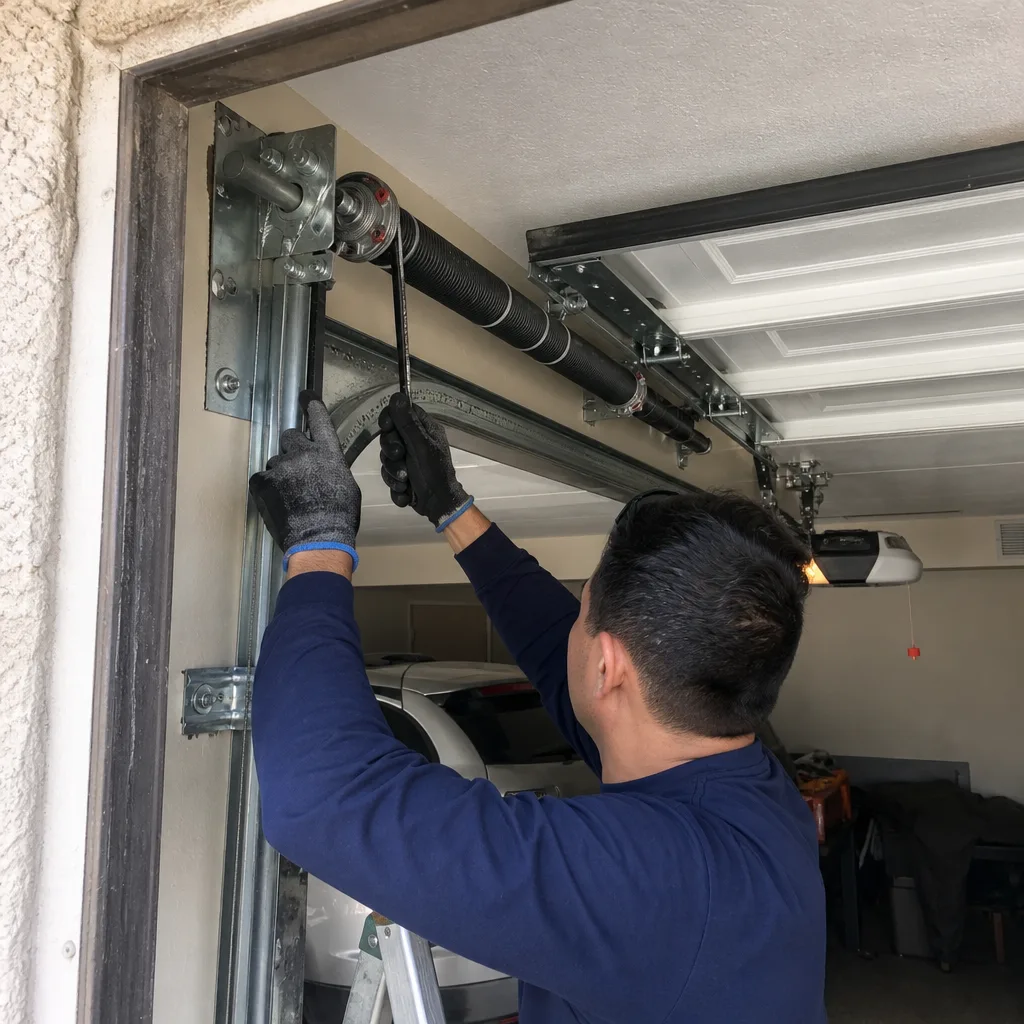 After
AfterLoud Grinding When the Door Opens
A grinding noise when your garage door opens almost always means metal is dragging against metal somewhere in the system – usually worn rollers, a dry or damaged track, or a spring assembly that’s starting to fail. It’s not a noise you should ignore or wait out. Left alone, grinding tends to get worse quickly, and what starts as a minor wear issue can turn into a door that won’t move at all.
The good news is that most grinding causes are diagnosable in under ten minutes once a trained tech looks at the door. Your local Marlow Garage Door Repair team has been fixing exactly this kind of problem since 2002, and the first step is always the same: a written price before any work starts, no exceptions.
What’s Happening
A loud grinding noise during door operation almost always means one moving part is working against another the way it shouldn’t be – either because a component is worn out, dry, misaligned, or broken. The door still moves because the opener is forcing it, but that force is doing damage with every cycle.
Garage doors move on a system of springs, cables, rollers, and tracks that are designed to work together with very little friction. When any one of those parts wears down or shifts out of position, the balance of the whole system changes. The opener compensates by working harder, the strain spreads to nearby components, and that grinding sound is the door telling you it’s running out of time to keep up.
Why It Happens
Worn or Broken Rollers
Rollers are the small wheels that run along the inside of the vertical track on each side of the door. Most are made of nylon or steel, and after years of use the bearings inside them wear smooth, crack, or seize up entirely. When that happens the roller stops rolling and starts dragging, which is exactly the metal-on-metal grinding sound most people describe. You can often see this yourself: look along the track while the door is stationary and check whether any roller is visibly cracked, chipped, or sitting at an angle instead of sitting flat in the track.
Dry or Damaged Track
The steel tracks that guide the door from floor to ceiling can bend from an impact – a bumper, a bike, a ladder that fell at the wrong moment – or they can simply dry out over time as the factory lubricant wears off. A bent track forces the roller to push sideways against the steel instead of gliding through it. If the grinding only starts at one specific height during the door’s travel and then stops, a bent section of track at that exact point is a very likely cause.
Spring Problems
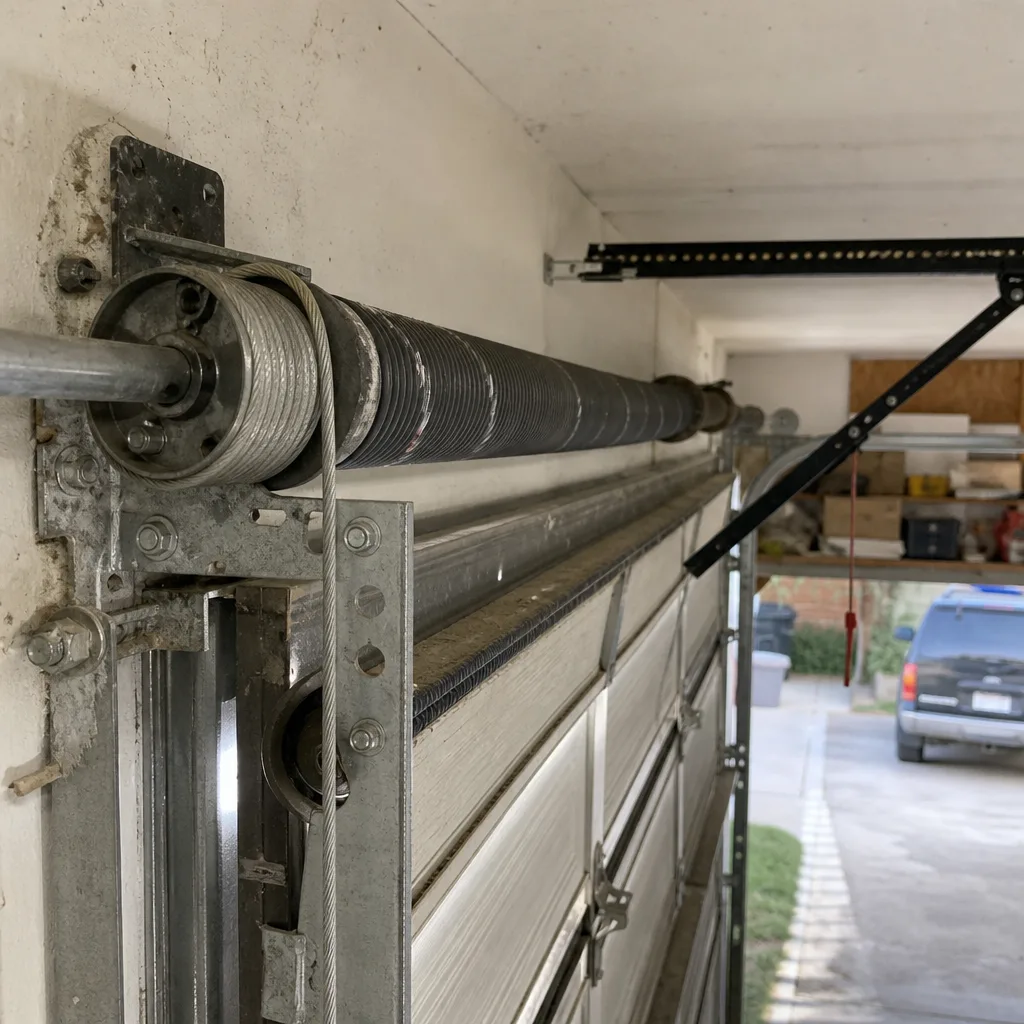
Torsion springs sit on a metal shaft above the door opening, and extension springs run along the horizontal tracks on each side. Both are under serious mechanical tension at all times. When a spring starts to lose tension unevenly, or when the coils begin to bind against each other or against the end bearing plates, you can hear a grinding or scraping sound that often comes from above the door rather than from the tracks. Stop using the door immediately if you hear grinding from the spring area, or if the door feels heavy when you try to lift it manually. Springs store enough energy to cause serious injury and this is not a component to inspect or adjust yourself. Call your local Marlow Garage Door Repair team at (512) 883-4374 and let a trained technician handle it.
Cable and Drum Friction
The lift cables run from the bottom corners of the door up to drums mounted on the torsion shaft. If a cable frays, slips off the drum, or wraps unevenly, it can rub against the door frame, the track hardware, or the drum housing itself. The resulting sound is often a lower, rougher grind or a scraping that changes pitch as the door moves. A frayed cable is also a safety issue because cables under tension can snap. If you see visible fraying or a cable that looks kinked or off-track, treat it the same as a spring problem: stop using the door and call.
What to Do Right Now
- Stop running the door. Every cycle on a grinding door adds wear. If it’s closed, leave it closed. If it’s open, leave it open. Forcing it back and forth while something is failing can turn a one-part repair into a two- or three-part repair.
- Take a photo or short video of the tracks and rollers. With the door stationary, look at both vertical tracks from the floor up. Note any visible bends, gaps between the roller and the track wall, or rollers that look cracked or tilted. A short video while the door moves – taken from a safe distance to the side, not from underneath – can help the technician see exactly where in the travel the noise starts.
- Do not apply WD-40 or household lubricant to springs or cables. It feels like the right call, but it can mask a more serious problem and create a slippery surface that makes an already-failing component harder to handle safely. If lubrication is needed, a technician will use the right product in the right places.
- Check the remote and the wall button. If the opener is straining harder than usual before the door moves – you’ll hear the motor laboring – note that too. It tells a technician whether the door’s mechanical resistance has already increased, which helps them triage the job before they arrive.
- Do not attempt to adjust, unwind, or remove any spring or cable component yourself. These parts are under high tension even when the door is fully closed. This is the one step on this list that is not optional – it’s a safety line, not a suggestion.
How We Fix It
When your local Marlow Garage Door Repair technician arrives, the first thing they do is run the door through a full cycle while they watch and listen. They’re not guessing – they’re confirming what the symptom points to before they touch anything. Most grinding diagnoses take less than fifteen minutes to confirm on-site.
From there, the repair path depends on what they find. Worn rollers are replaced as a set – swapping one while the others are equally worn doesn’t solve the problem. A bent track section is realigned or replaced depending on the severity of the damage. If the issue is in the spring assembly or cables, those are covered under our Garage Door Spring Repair and Garage Door Cable Repair services specifically, and the technician will walk you through exactly what they found and what it takes to fix it.
Before any work starts, you get a written price. That number doesn’t change when the invoice arrives – it’s the same number you agreed to, locked in writing before the first part comes off the truck. The repair itself typically wraps in one visit, and every job is covered by Marlow’s 365-Day Done Right Promise: if the fix isn’t right, we come back and make it right, at no charge, within a full year.
Frequently Asked Questions
It depends on where the grinding is coming from, but in most cases you should not keep using the door. If the noise is coming from the spring area or if the door feels heavier than normal to lift manually, stop using it immediately – those are signs of a failing spring or cable, both of which can fail suddenly and cause serious injury. If the grinding sounds like it’s coming from the tracks or rollers and the door still moves smoothly, there’s slightly more margin, but every additional cycle adds wear to surrounding parts. Call (512) 883-4374 and get it looked at the same day rather than letting it go.
Yes – your local Marlow Garage Door Repair team handles same-day repair calls, and someone answers the phone live around the clock, every day of the year. Call (512) 883-4374 and a real person will pick up, not a recording. When a technician is dispatched, you get a live arrival time you can track – not a four-hour window to sit and wait through.
No. The written price is given after the technician has looked at the door and confirmed the diagnosis – before any work starts. That price is what you pay. It doesn’t go up because the job took longer than expected or because a second part turned out to be involved. Upfront pricing is a non-negotiable standard on every Marlow job, not something that applies only on straightforward calls.
Marlow technicians are trained on eight major garage door brands – LiftMaster, Chamberlain, Genie, Clopay, Amarr, Wayne Dalton, Craftsman, and Raynor – and they stock common repair components for those systems. For a grinding diagnosis, the parts most often needed (rollers, cables, springs) are among the most frequently carried. If something specific to your door’s model needs to be sourced, the technician will tell you upfront and schedule the follow-up around your availability.
Get It Fixed
Call (512) 883-4374 and a live person answers – no voicemail, no callback queue. Your local Marlow Garage Door Repair team will confirm the cause, give you a written price before any work starts, and back the repair with the 365-Day Done Right Promise. Book online anytime and track your tech on the way.
Written by Jaylen Ross, Owner & Lead Technician at Marlow Garage Door Repair, part of the Relay Home Co. family of independently owned home-service businesses, serving communities across the country since 2002.
What Our Customers Say
"Safety sensors realigned. Tech texted before arriving and after finishing."
- Candice L."Quote came by text before the visit and didn't change."
- Holly T."Good repair and easy booking. The ETA slipped by about 20 minutes, but the text updated before I even noticed."
- Dave M.