
Last updated October 9, 2026
Full 25-point door and opener safety check with every visit - springs, cables, rollers, tracks, and your LiftMaster or Chamberlain opener included
You get a price before we start. It does not change when the truck arrives.
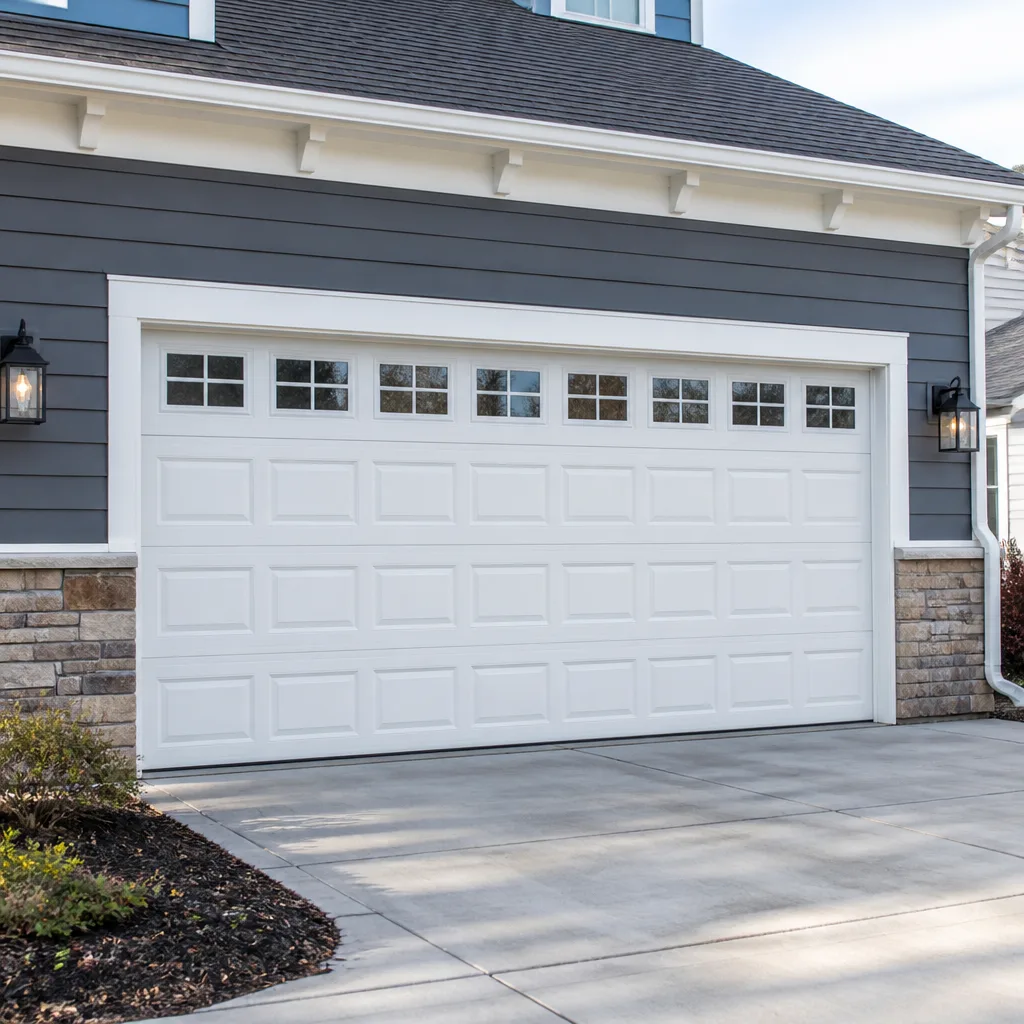
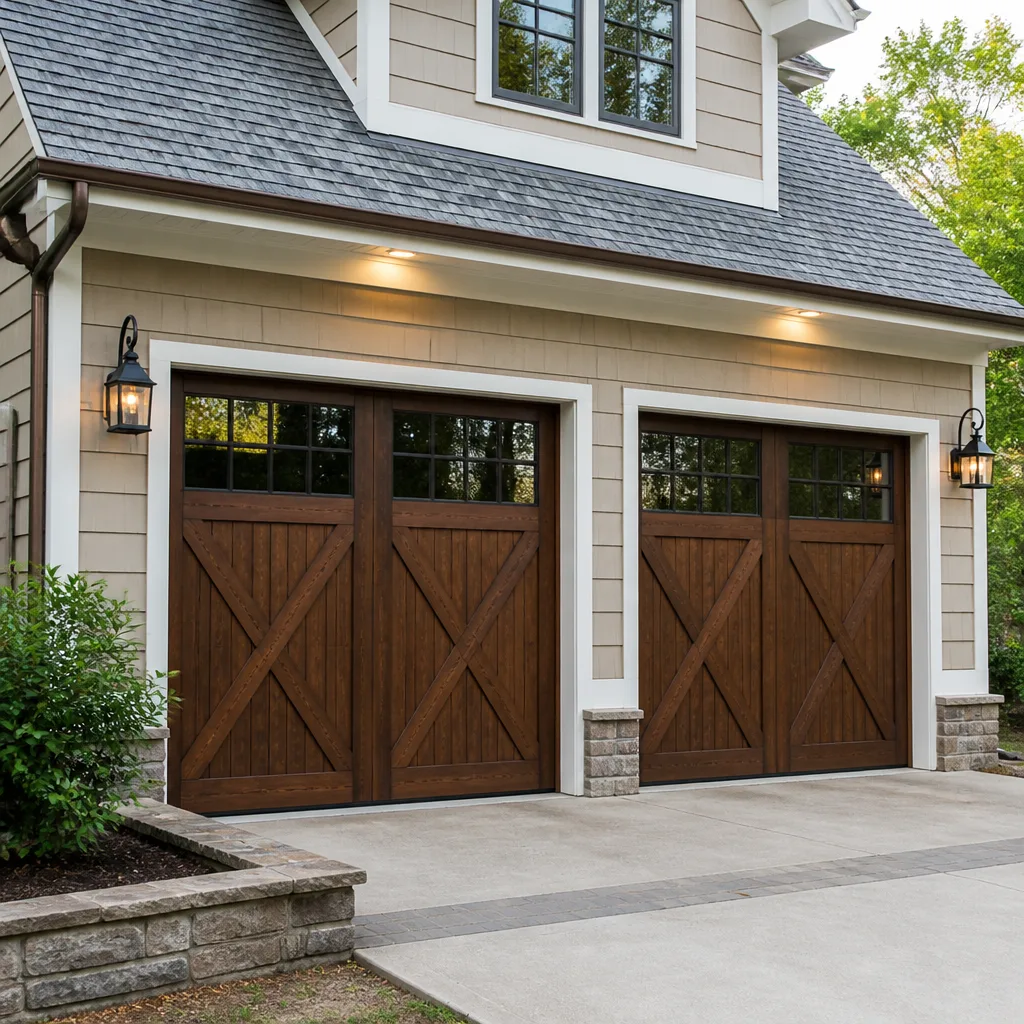
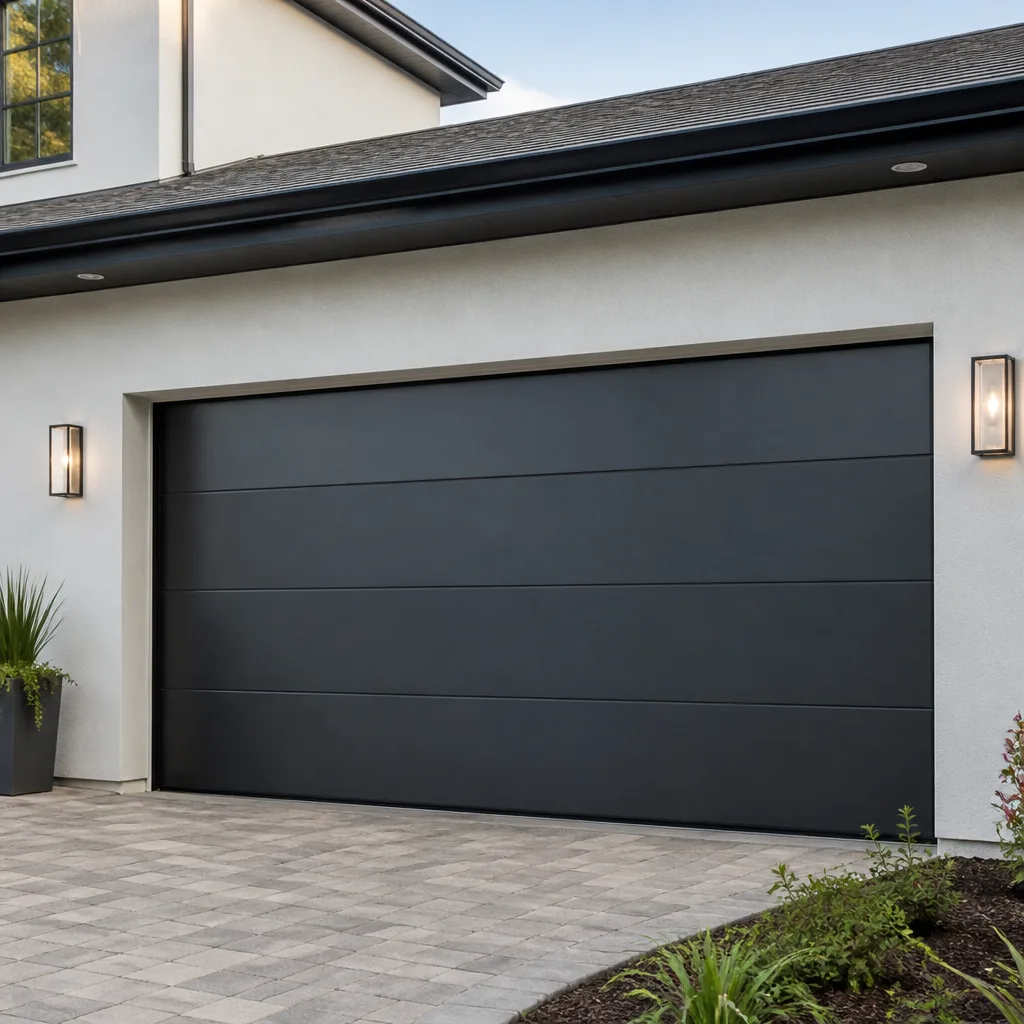
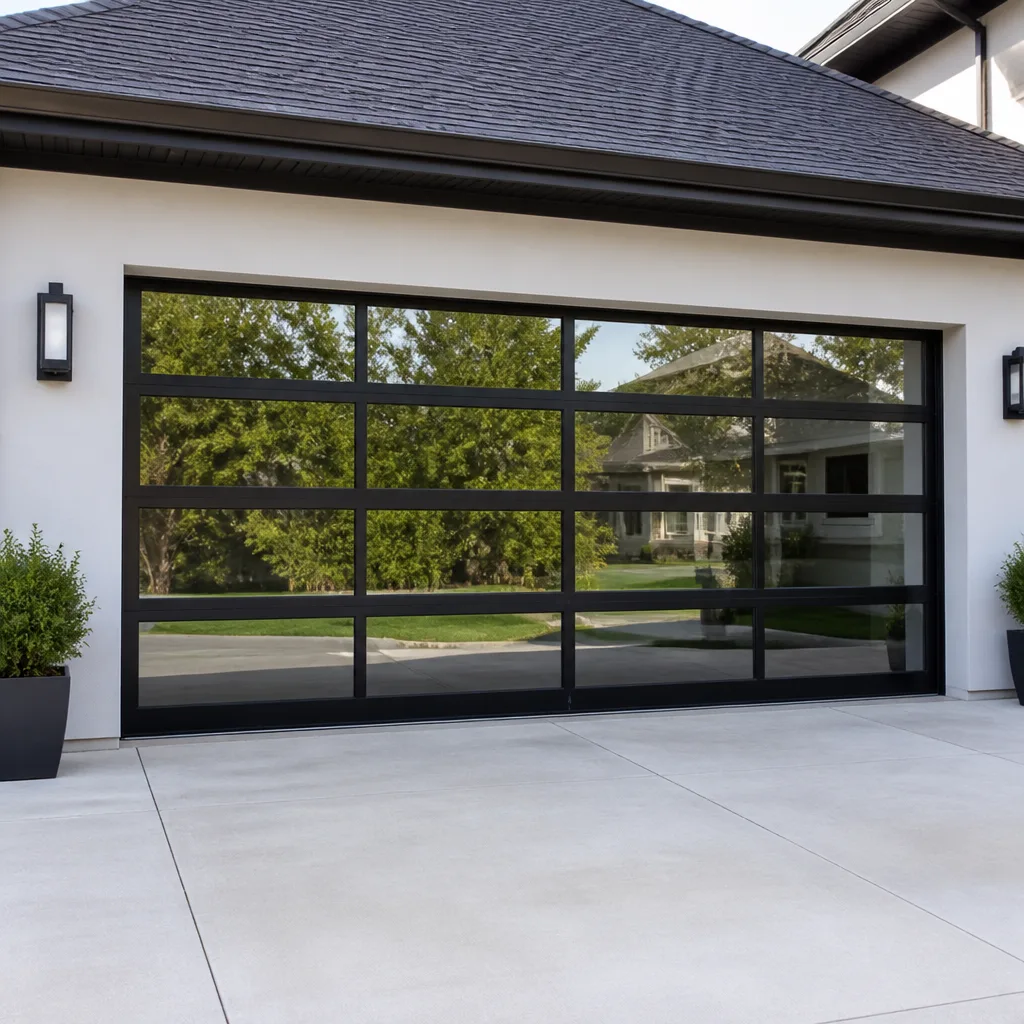
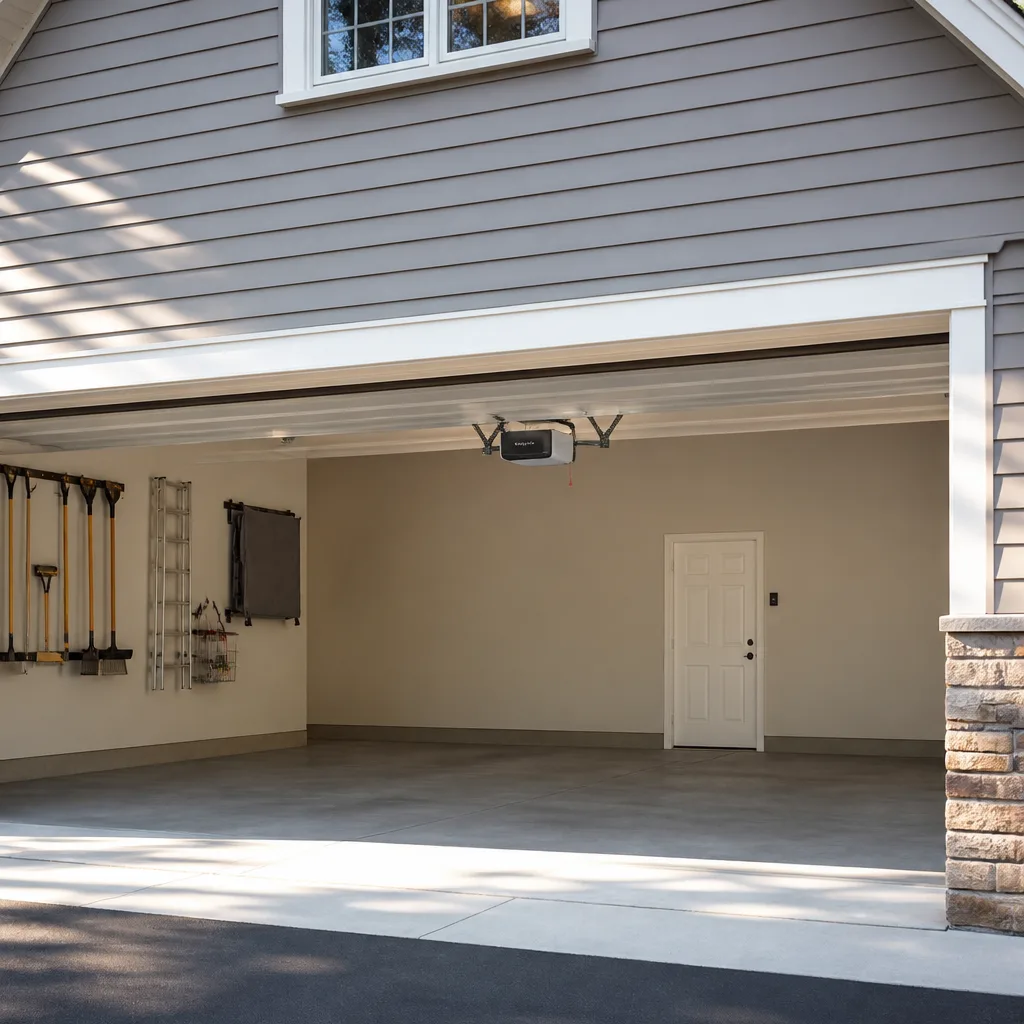
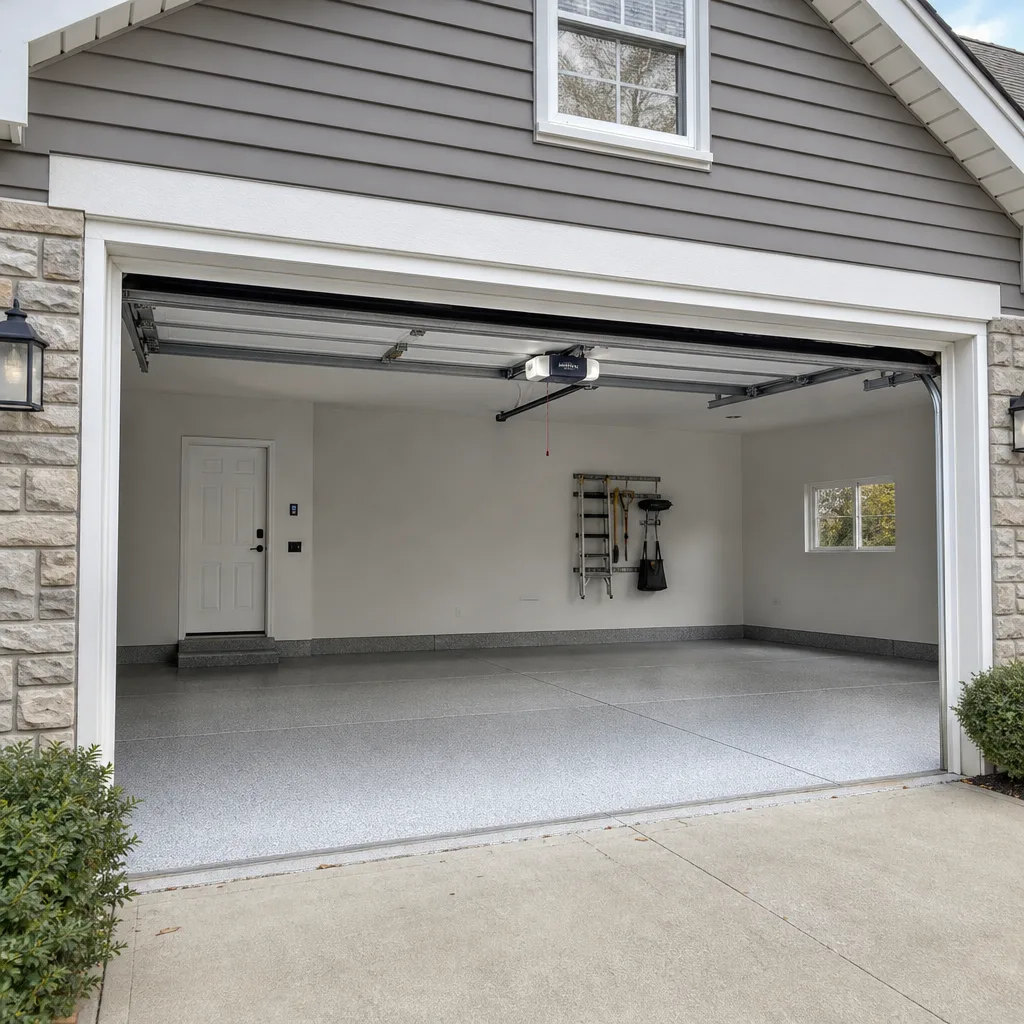
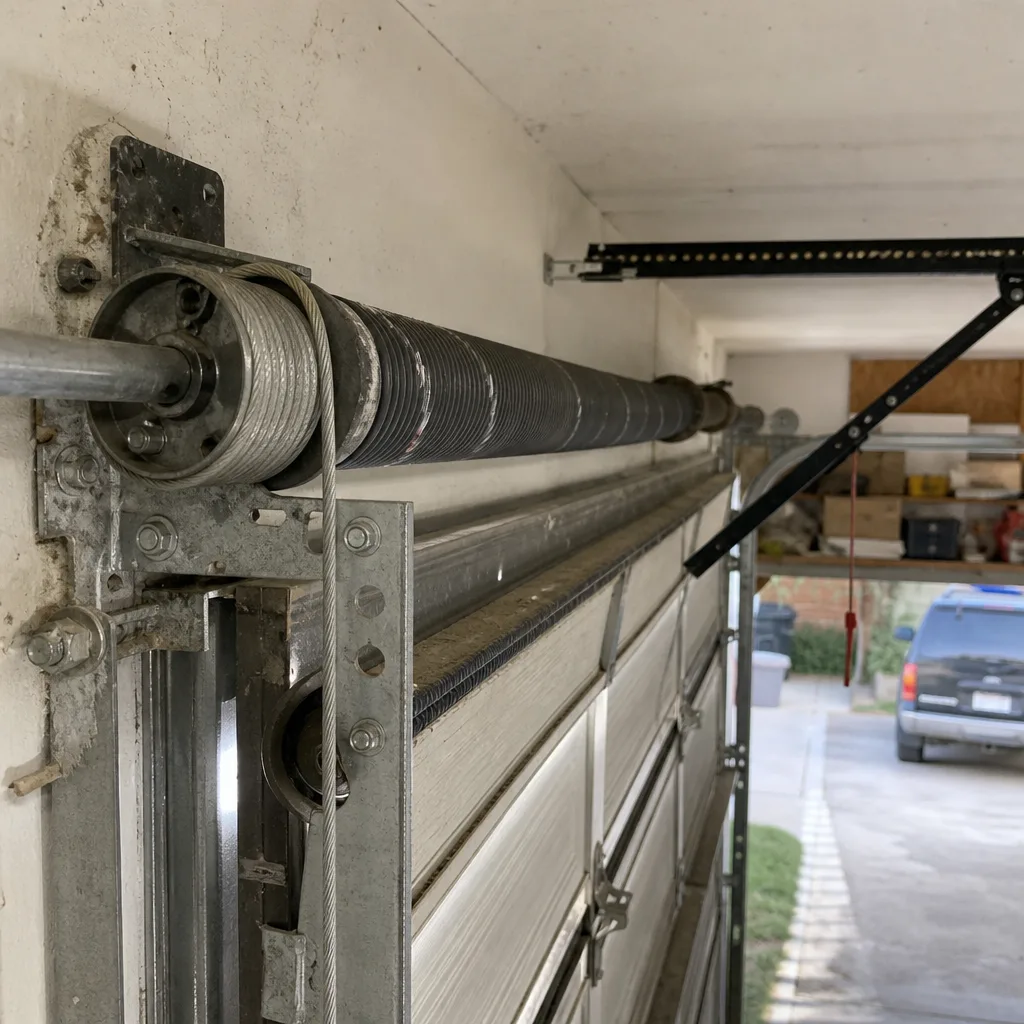 Before
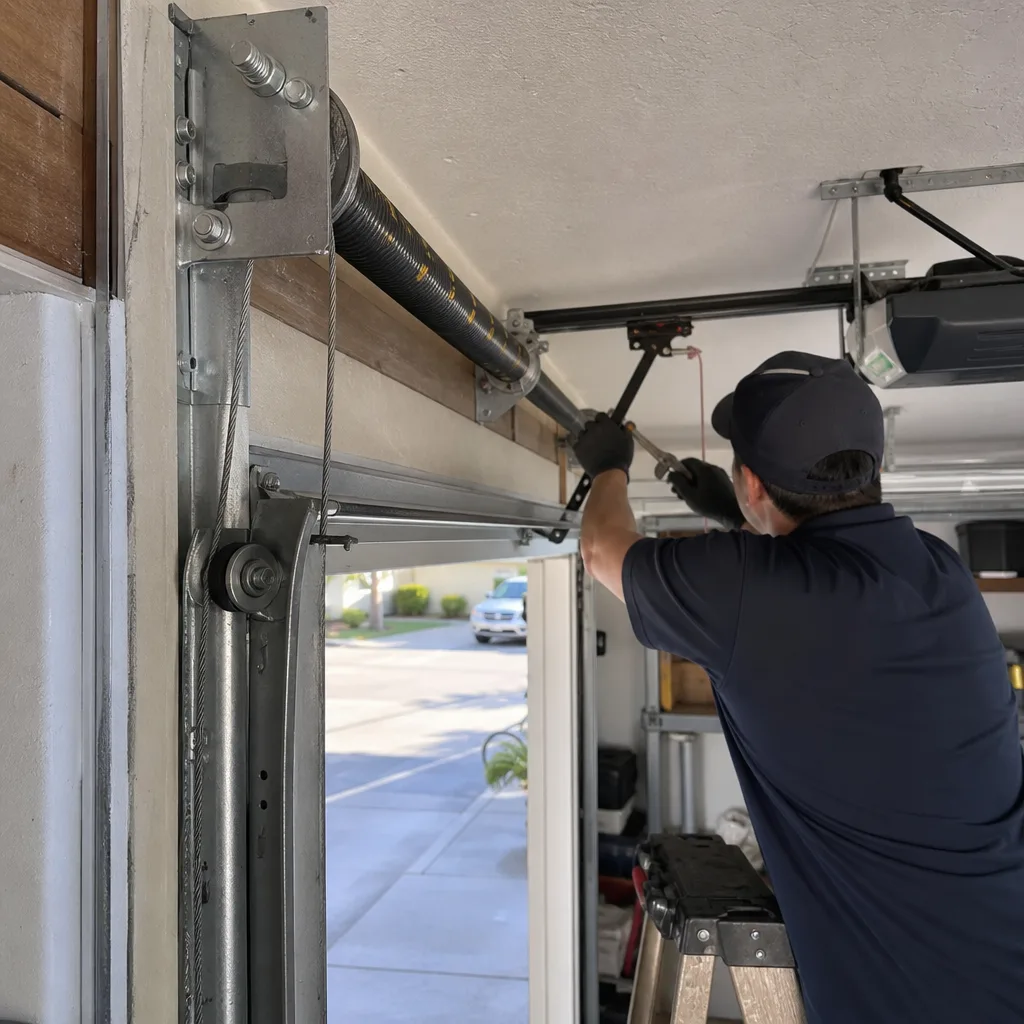 After
After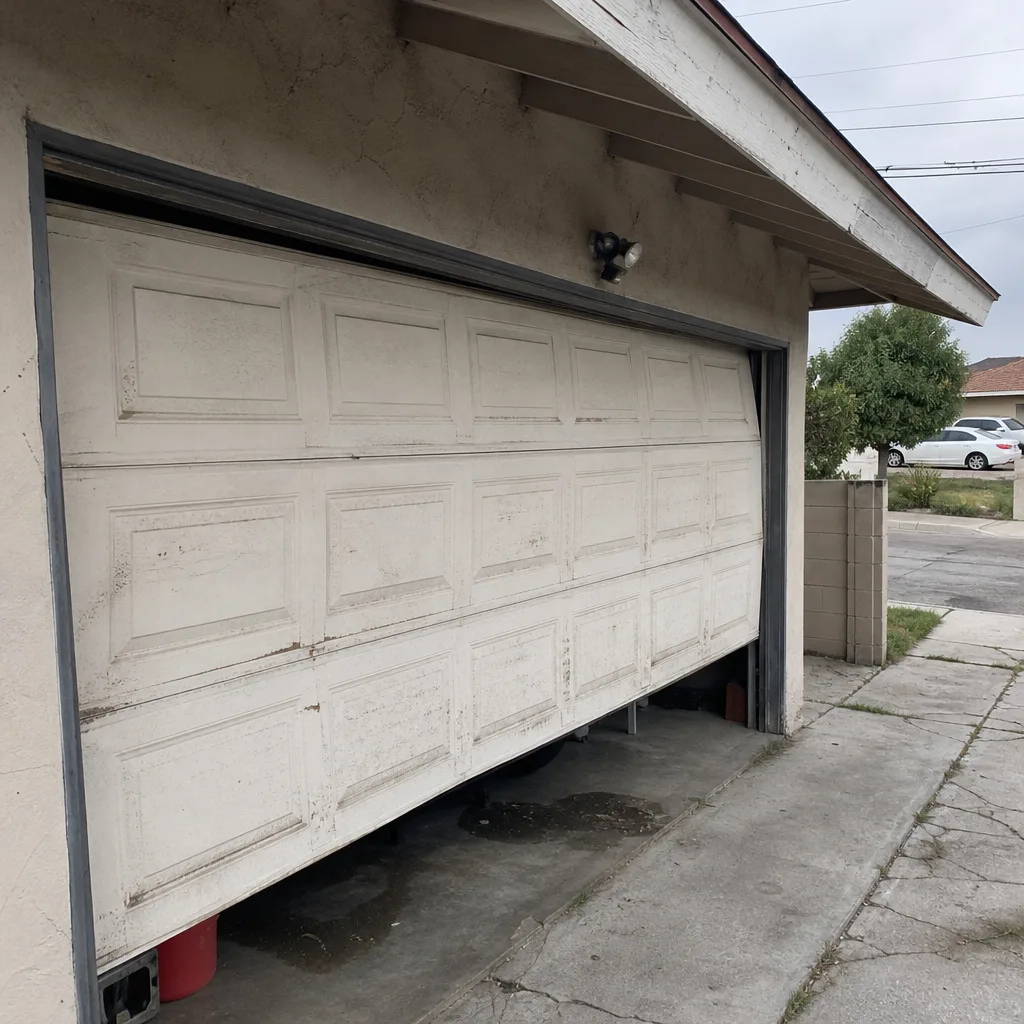 Before
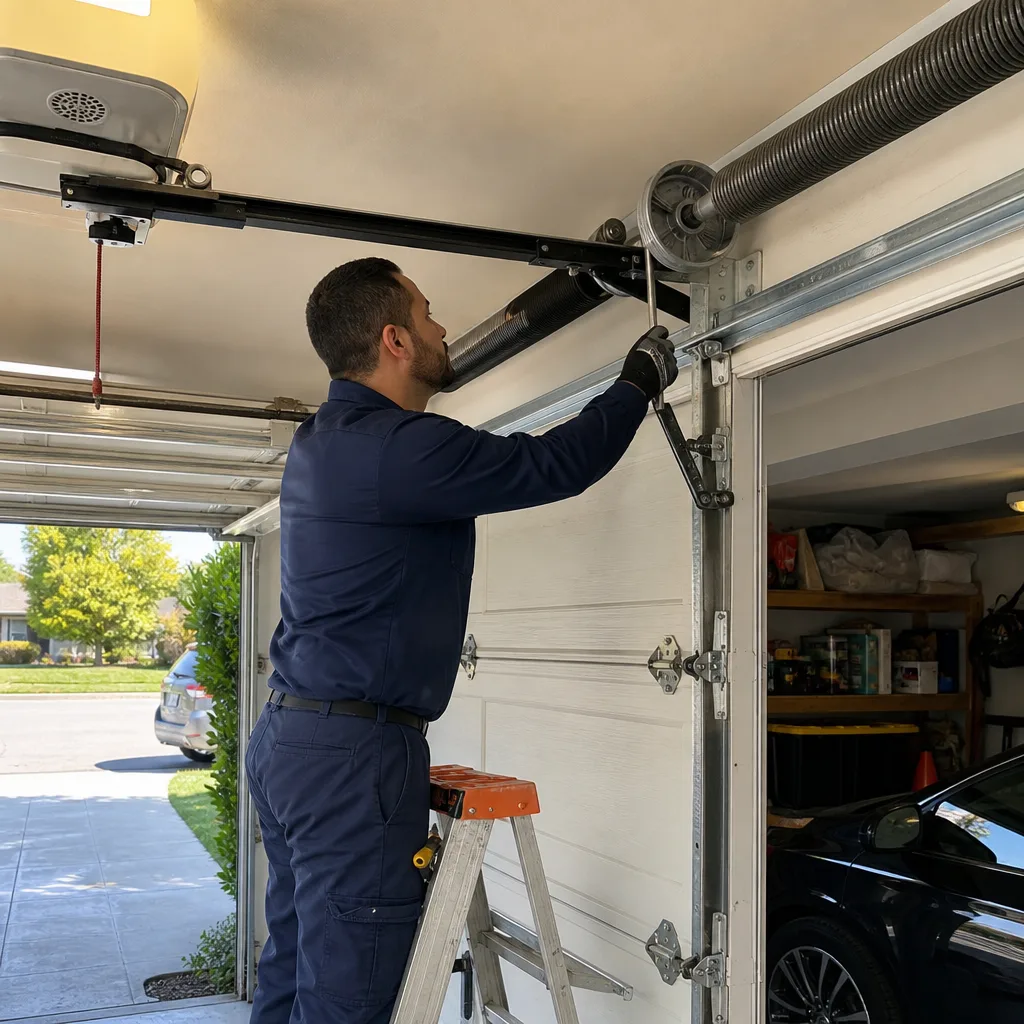 After
After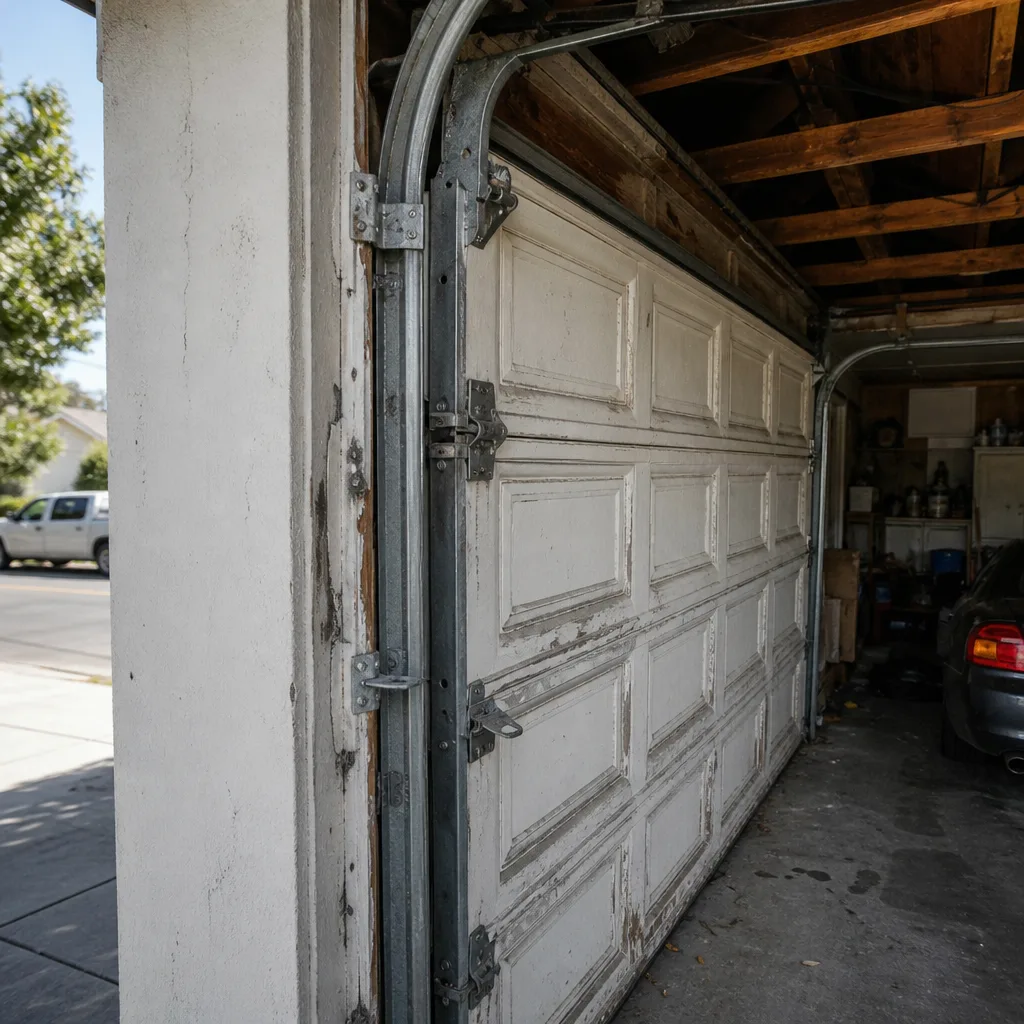 Before
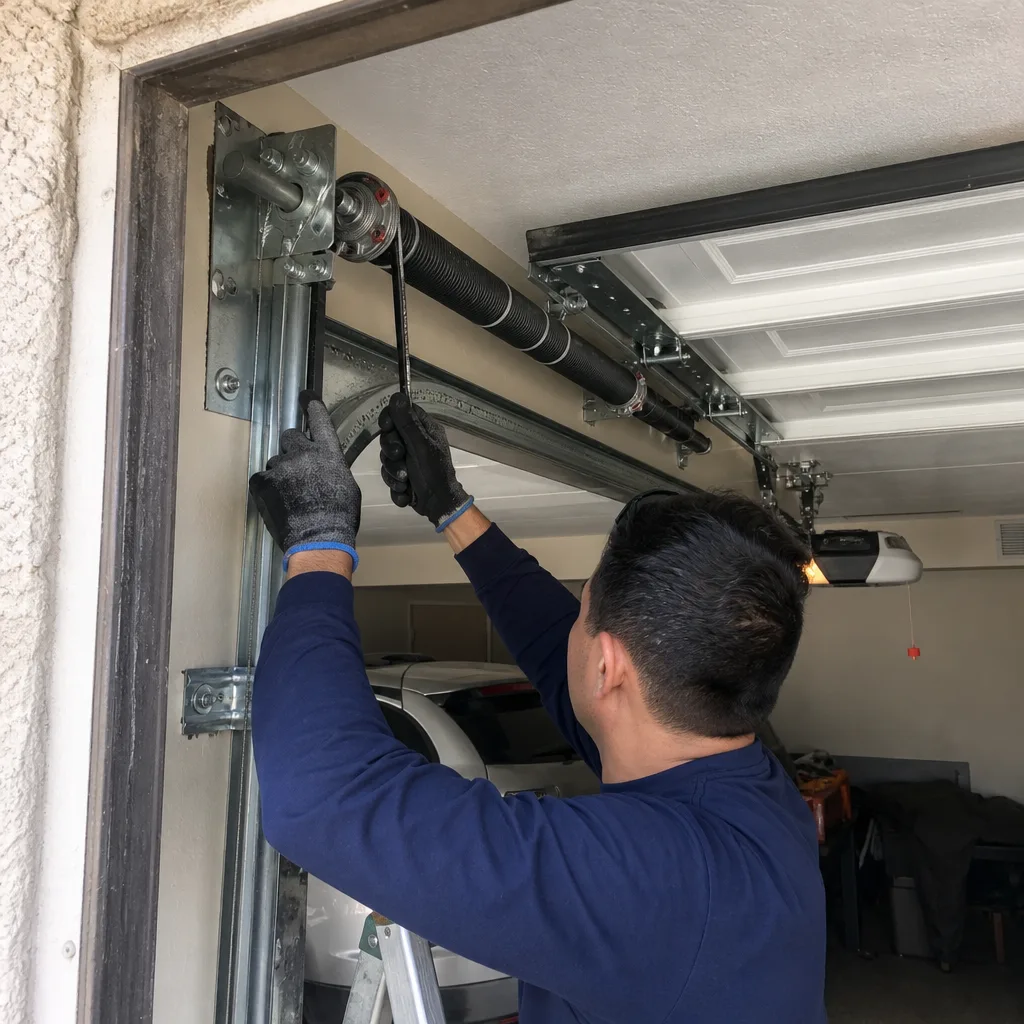 After
AfterThe Complete Garage Door Repair Guide for Los Angeles Homeowners
The average Los Angeles homeowner calls a repair tech only after the door has already shown three warning signs they didn’t recognize: a slight grinding sound on the way up, a door that hangs a half-inch crooked, a spring with visible rust at the coil. Caught in that first week, most of these issues run about $80 to fix. Ignored for another month, the same problems become a snapped spring, a derailed cable, or a door that won’t open at all, and the bill climbs past $400. This guide maps those failure patterns to real Los Angeles repair costs and timelines, so you know what you’re hearing, what it costs, and whether it can wait until Thursday or needs a tech in your driveway tonight.
Quick Answer
Our Garage Door Repair services in Los Angeles typically run $95 to $180 for minor fixes like sensor realignment or track adjustments, $150 to $290 for spring replacement, and $170 to $350 for cable repair. Most repairs can be completed the same day you call, provided the tech has the right parts on the truck. The cost driver in LA isn’t usually labor, it’s whether your door has been corroding quietly for months in coastal air, which turns a simple fix into a multi-part job.
Table of Contents
- How the LA Climate Changes Garage Door Failures
- The 6 Most Common Garage Door Repairs and What They Actually Cost in LA
- Garage Door Spring Repair: The Warning Signs You’re Missing
- Garage Door Cable Repair: What It Is and When You Need It
- Why LA’s Shifting Soil Causes Off-Track Doors
- What ‘Same-Day Repair’ Actually Means in LA Traffic
- How to Vet an LA Garage Door Company in 3 Minutes
- Common Mistakes to Avoid
- When to Call a Professional
- Frequently Asked Questions
How the LA Climate Changes Garage Door Failures
Los Angeles doesn’t have one climate. It has at least three microclimates that wear garage doors down in different ways, and a generic national repair guide misses this entirely. We see the same makes and models fail on different schedules depending on whether they’re installed in Venice, Sherman Oaks, or Redondo Beach.
Coastal neighborhoods like Venice, El Segundo, and Playa del Rey deal with marine-layer salt air that sits on metal components overnight. Rust forms faster on torsion springs in these ZIP codes than anywhere else in the county. A spring that might last eight years in Pasadena can snap in five or six near the beach. The failure mode is predictable: surface rust appears first, then deep pitting at the coil, then a sudden snap under tension, usually first thing in the morning when the door is cold.
Inland areas deal with the opposite problem. The San Fernando Valley, including neighborhoods like Encino, Woodland Hills, and Northridge, gets extreme heat and canyon dust. Dust works its way into roller bearings and hinge pins, creating a grinding compound that accelerates wear. Add the thermal expansion cycles of summer afternoons at 105 degrees and winter mornings dropping into the 40s, and metal tracks flex enough to work their mounting bolts loose over time.
Then there’s the third factor every LA homeowner should know about: seismic micro-shifts. Even small earthquakes, the magnitude 3 or 4 tremors most people barely notice, can shift a garage’s framing by a quarter inch. That small movement changes the geometry of the entire door system. Doors that were perfectly balanced begin to drift, cables wear unevenly, and springs take on uneven load. More on this in the section on off-track doors below.
For a complete breakdown of how these patterns play out across the city, see our Garage Door Repair in Los Angeles service page.
The 6 Most Common Garage Door Repairs and What They Actually Cost in LA
National averages are fine for national guides, but they don’t reflect what a technician in Los Angeles actually charges, or how long the job takes when traffic and parts availability are factored in. These are the six repairs we see most often across the metro area, with realistic local price ranges.
- Broken torsion spring replacement: $180 to $340. This is the most common failure and the one that cannot wait. A snapped spring means the door won’t lift without the opener straining itself into an early grave. Most LA homes use one of two spring types, and the parts are usually on the truck.
- Broken or frayed cable replacement: $170 to $300. Cables work with the springs, and when one snaps the door can drop hard on one side. Coastal homes in Los Angeles see this more than inland homes because salt air eats through the cable jacket.
- Track realignment: $95 to $180. Off-track doors are common after earthquake micro-shifts or when a car taps the bottom rail. This is a labor-focused repair with minimal parts, so the spread depends on how far the track has shifted and whether the mounting brackets need to be re-anchored.
- Sensor realignment or replacement: $85 to $160. Photo-eye sensors get knocked out of alignment by foot traffic, bicycles, or the occasional garbage can. If a sensor is actually faulty rather than just misaligned, it’s a parts swap, not a calibration job.
- Roller replacement: $90 to $180. Nylon rollers wear out and split, especially in valley homes where dust and heat combine. Replacing a full set restores smooth operation and reduces noise. Genie and Clopay doors often use proprietary roller sizes, so matching matters.
- Opener force adjustment or logic board repair: $110 to $250. If the door starts and stops mid-travel or reverses for no reason, it’s usually a force setting issue or a failing logic board. This is more common on older openers from brands like Amarr and Wayne Dalton that haven’t been serviced in a decade.
You’ll notice we didn’t include full door replacement. In Los Angeles, a complete new door installation runs $1,200 to $4,500 depending on size, material, and insulation requirements, and that’s a different job from a repair. If you’re on the edge between repairing and replacing, read our Garage Door Repair in Los Angeles guide for a breakdown of when each one makes sense.
Garage Door Spring Repair: The Warning Signs You’re Missing
A torsion spring, the horizontal coil above your door that does most of the lifting, fails in stages. It rarely snaps without telegraphing the problem first, but those signals are subtle. Here’s what to look and listen for in the weeks before a failure.
First, the rust. Walk out and look at the spring itself. Orange or brown discoloration at the coils isn’t cosmetic; it’s the steel losing its protective coating and beginning to pit. Salt air in coastal Los Angeles neighborhoods accelerates this dramatically. A rusted spring is a spring on a timer.
Second, the balance check. Disconnect the opener using the red emergency release cord, then manually lift the door halfway and let go. A healthy door stays put. A door that drifts downward has a spring that’s lost tension. A door that drifts upward may have been over-wound by a previous repair. Either way, the spring is no longer doing its job precisely.
Third, the noise. A bang that sounds like a firecracker going off inside the garage is a spring snapping. But before that, you may hear a creaking or groaning from above the door as it moves. That’s the coils binding and releasing against each other as the spring settles into a failure position.
Spring replacement in Los Angeles typically runs $180 to $340 depending on spring type and size. At Marlow, you’ll see the exact number before we start. We carry the common sizes on the truck for same-day repair, and we’re certified on eight major brands so the tech arriving already knows your specific door. For a deeper dive specifically on springs, see our Garage Door Spring Repair in Los Angeles page.
Garage Door Cable Repair: What It Is and When You Need It
Garage door cables are the braided steel lines that run alongside your door, connecting the bottom brackets to the torsion spring system. In plain terms: the spring does the heavy lifting, and the cables translate that lifting force evenly to both sides of the door. When one cable snaps, the door can drop unevenly or slam down on the corner where the cable gave way.
Cable failures are easier to spot than spring failures, which is why they cause fewer injuries. If you look at the cables while the door is closed, you should see tight, straight lines running parallel to the door’s edge. A cable that’s dangling, slack, or visibly frayed with individual wire strands poking out has already failed or is about to. Replace it before the door binds mid-cycle.
The Los Angeles angle on cable repair is corrosion. In coastal neighborhoods like Venice and El Segundo, the salt air that attacks springs also attacks cable jackets. Once the protective coating is compromised, the individual steel strands begin to corrode from the inside. A cable that looks fine on the outside can snap under load because it’s rusted internally. This is why a spring and cable that look equally old often need replaced together, even if only one has failed.
Cable replacement in Los Angeles runs $170 to $300. Like spring work, it’s a same-day repair in most cases because the parts are standard. Full details on this service are on our Garage Door Cable Repair in Los Angeles page.
Why LA’s Shifting Soil Causes Off-Track Doors
For The Complete Guide to Garage Door in Los Angeles, here’s something no national garage door guide tells you: Los Angeles is built on soil that moves. Between the earthquake swarms that roll through every few years and the natural settlement of expansive clay soil during drought-and-rain cycles, the concrete slab and framing around your garage shift in tiny increments. Those tiny shifts change the relationship between the door, its tracks, and the opener rail.
- The slab tilts slightly. A 1/4-inch difference across the width of the garage door opening is enough to change the track geometry. One side of the door now sits slightly higher than the other at the closed position.
- The door starts to bind. Rollers rub against the track on one side, creating drag. The opener compensates by pulling harder, which accelerates wear on the springs, cables, and opener gear.
- Bolts loosen. The constant small vibrations from passing traffic, nearby construction, and seismic activity work the track mounting bolts loose. A track that’s loose at the top can flex outward, and the rollers can pop out of the track entirely.
How do you know it’s a soil-settling issue and not just a bad cable or spring? A settling door usually shows uneven gaps at the bottom corners when closed, visible gaps between the track and the wall at certain points, and a door that’s noisy in one direction but not the other. A cable or spring problem, by contrast, usually reveals itself through the components themselves: rust, fraying, or imbalance when you do the manual balance test.
If your door is binding and you live in an older LA neighborhood with mature trees and established soil movement, like parts of Eagle Rock or Hancock Park, have the track geometry checked before you replace the opener. A track realignment runs $95 to $180 and often fixes the binding, while a new opener can cost $400 to $800 and won’t fix the underlying geometry problem at all.
What ‘Same-Day Repair’ Actually Means in LA Traffic
Every garage door company in Los Angeles says they offer same-day service. What that means in practice depends entirely on where you live and where the tech is coming from. Here’s a realistic breakdown by region, based on how traffic actually flows in this city on a typical workday.
The Valley (Encino, Sherman Oaks, Northridge, Woodland Hills): A tech dispatched from a central Valley location can usually reach any Valley address in 45 to 75 minutes during midday. Morning rush hour on the 101 or 405 can push that past 90 minutes. Most Valley residents can expect a same-day visit if they call before noon.
The Westside (Santa Monica, Venice, Culver City, West LA): This is the most congested region for service calls. A tech coming across the 10 or through Sepulveda Pass during peak traffic can take 60 to 100 minutes to arrive. If you’re in Venice or Marina del Rey, expect same-day service but not necessarily immediate service. Mid-afternoon calls often roll into the evening window.
South Bay (Redondo Beach, Torrance, El Segundo, Manhattan Beach): The 405 corridor through the South Bay is bad but predictable. A tech can usually make it from a central dispatch point to most South Bay homes in 50 to 90 minutes. Coastal parking and tight alley garages can add time on the ground, but the road travel is more straightforward than the Westside.
At Marlow, same-day doesn’t mean we’ll squeeze you in whenever we get around to it. It means we give you a live arrival window you can track on your phone, the same way you’d track a rideshare. The Relay Visibility Guarantee means you see your tech on the way, you get before-and-after photos, and you pay from a digital invoice sent to your phone. A written price is always delivered before any work begins, so the number you see is the number you pay.
How to Vet an LA Garage Door Company in 3 Minutes
Los Angeles has more garage door repair companies per square mile than almost any city in the country, and the quality range is enormous. Some are excellent. Some are bait-and-switch operators who quote $49 service calls and then discover $600 worth of additional repairs once they’re in your garage. For more guides & resources, here’s how to filter them in three minutes, before you let anyone touch your door.
- Check the license. California requires garage door repair contractors to hold a valid license through the Contractors State License Board. Go to the CSLB website, search the company name, and verify the license is active. This takes 60 seconds and eliminates a large percentage of unlicensed operators immediately.
- Ask one specific question: “Will you give me the written price before any work starts?” If the answer is anything other than an immediate yes, end the call. Any company that can’t commit to a written price before starting work is planning to adjust the number after the door is in pieces on your driveway. This single question filters out more bad operators than anything else you can do.
- Confirm the guarantee in writing. Ask what happens if the repair fails in six months. A company with a real guarantee will state the terms clearly: coverage period, what’s included, and who pays for parts if the fix doesn’t hold. A guarantee that can’t be stated in one sentence isn’t really a guarantee.
At Marlow Garage Door Repair, the answer to that second question has been the same since 2002: yes, every customer gets a written price before any wrench turns, and every repair is backed by the 365-Day Done Right Promise. That promise is a full year of coverage in writing, not a verbal reassurance. If the repair isn’t right, we come back and make it right, free. That’s the standard Jaylen Ross set when he started this business, and it’s the same standard every tech works under today. We’re part of the Relay Home Co. family of independently owned, locally operated home-service businesses, and we hold every job to The Relay Standard.
Common Mistakes to Avoid
- Ignoring the balance test result. If your door drifts when you release it manually, the spring is failing. Waiting means you’ll eventually be calling for an emergency repair instead of a scheduled one, and emergency calls in Los Angeles cost more.
- Lubricating a rusted spring. Surface rust on a torsion spring isn’t fixed by spraying it with WD-40. The spring is compromised structurally, and lubrication just makes it quieter while it continues to degrade. A rusted spring needs replacement, not maintenance.
- Forcing a door that’s binding. If the door is grinding against the track on one side, don’t keep cycling it. Every open-and-close cycle puts additional load on the opener gear, the cables, and the spring. Stop using the door and get the track checked.
- Replacing the opener when the problem is the spring. A door that won’t lift isn’t necessarily a dead opener. In LA, we see more spring failures than opener failures at a rate of about three to one. The $85 diagnostic is cheaper than a $500 opener replacement that doesn’t fix the problem.
- Accepting a phone quote without an in-person inspection. A company that quotes you a spring replacement over the phone without seeing the door is guessing. In coastal LA, the spring isn’t the only thing that’s corroded; the cables, brackets, and bearing plates may need attention too. A real quote requires eyes on the equipment.
- Choosing the cheapest quote without checking the guarantee. A $99 spring replacement with no written guarantee is more expensive than a $220 replacement backed by a 365-day warranty, because the first one is likely to fail again within the year and you’ll pay twice.
- Waiting for a broken door to become an emergency. Garage doors in Los Angeles fail on their own schedule, and that schedule rarely aligns with yours. A door that’s showing warning signs is cheaper to fix now than when it strands your car inside the garage at 7 a.m. on a Monday.
When to Call a Professional
Some garage door work is genuinely DIY-able: tightening a loose bolt, cleaning the photo-eye lenses, replacing the remote battery. But torsion springs under tension, cables under load, and doors that have come off their tracks are not in that category. A torsion spring releases with enough force to seriously injure someone who doesn’t know how to work with it safely. Cables run through pulleys under continuous tension and can whip if they release. If your door is binding, off-track, or has a snapped spring or cable, stop using it and call a professional. Marlow Garage Door Repair offers free estimates in Los Angeles: call (512) 883-4374 and we’ll give you a written price before any work begins.
Frequently Asked Questions
Minor repairs like sensor realignment or track adjustments run $85 to $180, while spring replacement runs $180 to $340 and cable replacement runs $170 to $300. The final price depends on what’s actually failed, what else has worn alongside it, and whether you’re in a coastal area where corrosion has spread beyond the primary failure point. Call (512) 883-4374 for an exact quote, estimates are free.
Yes, most repairs are same-day if you call before early afternoon. In Los Angeles, arrival time depends on your neighborhood: Valley and South Bay locations usually see us within 60 to 90 minutes, while the Westside corridor can run longer during peak traffic. You’ll see your tech’s live arrival window on your phone once the appointment is booked.
No. The written price you receive is the price you pay. At Marlow, we deliver a written quote before any work starts, and that number is locked. If we find something additional during the repair, we show you the updated price and get your approval before continuing. The invoice will always match the agreed number.
In most cases, yes. We stock the common spring sizes, cable lengths, rollers, and sensor components on every truck. For less common parts, including some proprietary components on Amarr or Wayne Dalton doors, we may need to source the part and schedule a follow-up visit, which we’ll tell you about upfront before you agree to anything.
Run the balance test. Disconnect the opener with the emergency release cord and lift the door manually. If it’s heavy or drifts down, the spring is the problem. If the door lifts easily by hand but won’t open with the opener, the issue is the opener itself. This test takes thirty seconds and tells you which service you actually need to book.
Our technicians are certified on eight major brands: LiftMaster, Chamberlain, Genie, Clopay, Amarr, Wayne Dalton, Craftsman, and Raynor. That means the tech who arrives at your house already knows your specific door’s parts, tolerances, and common failure points before they walk up the driveway. Call (512) 883-4374 to schedule service.
The Bottom Line
Los Angeles garage doors fail in patterns that are specific to this city: salt-air corrosion near the coast, dust-and-heat wear in the Valley, and soil-driven alignment issues across every neighborhood. Recognizing those patterns early turns an emergency into a scheduled repair and keeps a four-figure replacement off the table. The practical takeaways here are simple: run the balance test monthly, treat rust on springs and cables as a replacement sign rather than a maintenance issue, and never accept a repair quote that isn’t in writing before work begins. When you’re ready for service, Marlow Garage Door Repair home is your starting point. We answer the phone 24/7, we send a background-checked, uniformed technician with a live arrival time you can track, and every repair is backed by the 365-Day Done Right Promise. Book online or call (512) 883-4374 for a free estimate in Los Angeles today.
Written by Jaylen Ross, Owner at Marlow Garage Door Repair, serving Los Angeles since 2002.