
Last updated October 9, 2026
Full 25-point door and opener safety check with every visit - springs, cables, rollers, tracks, and your LiftMaster or Chamberlain opener included
You get a price before we start. It does not change when the truck arrives.
 Before
 After
After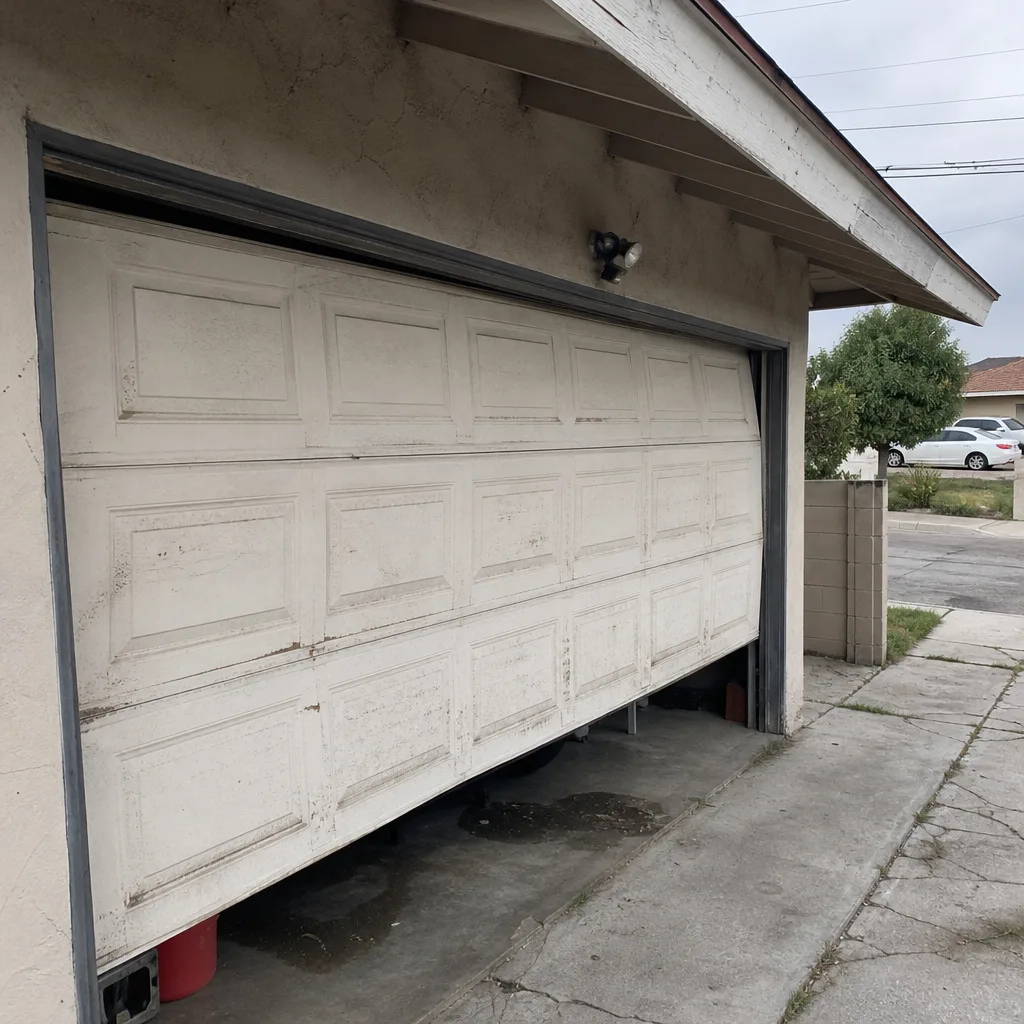 Before
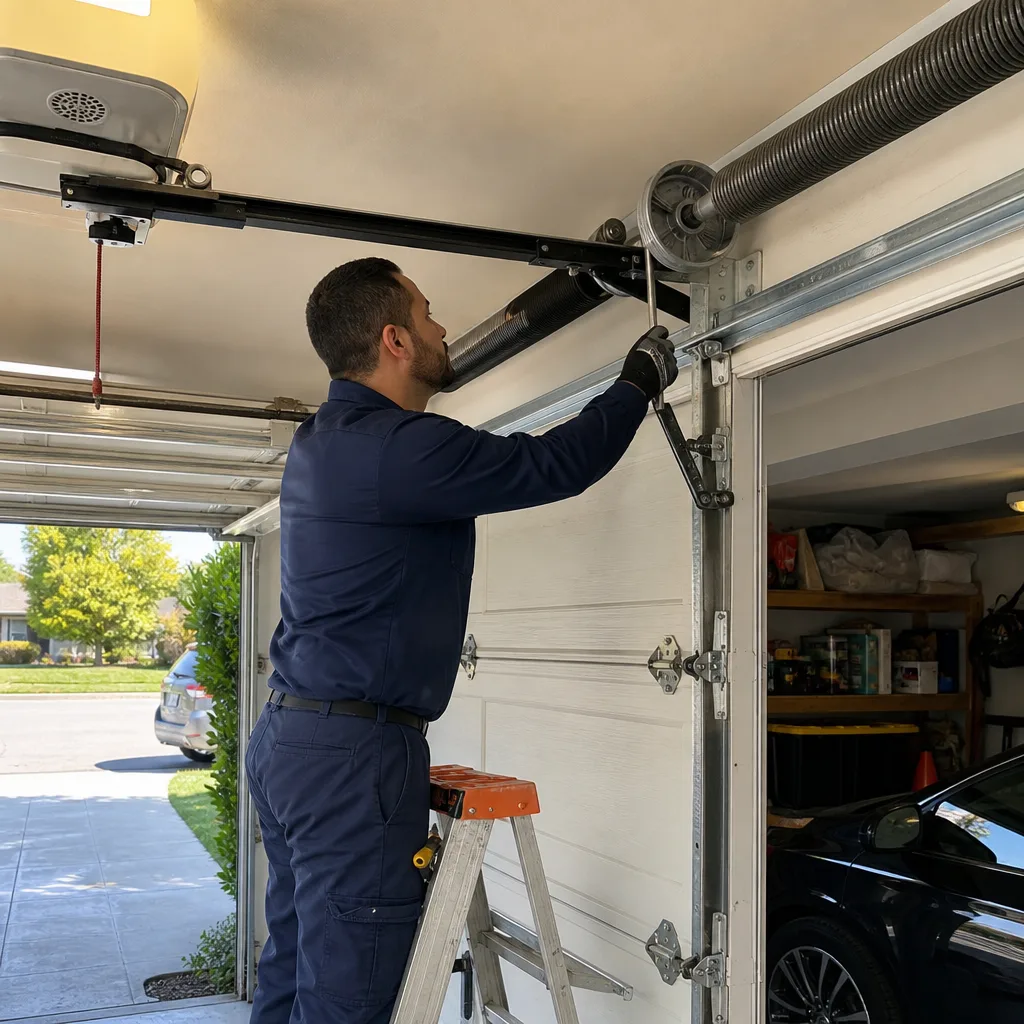 After
After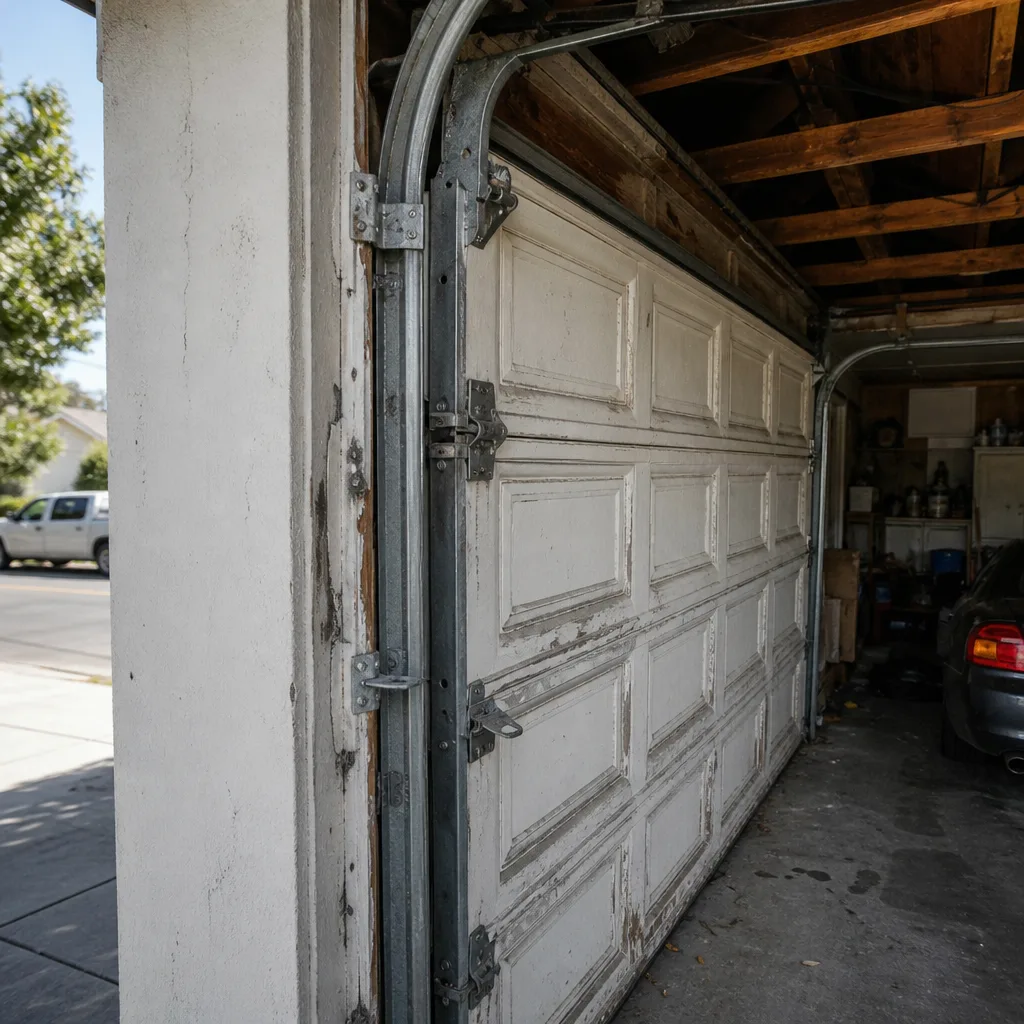 Before
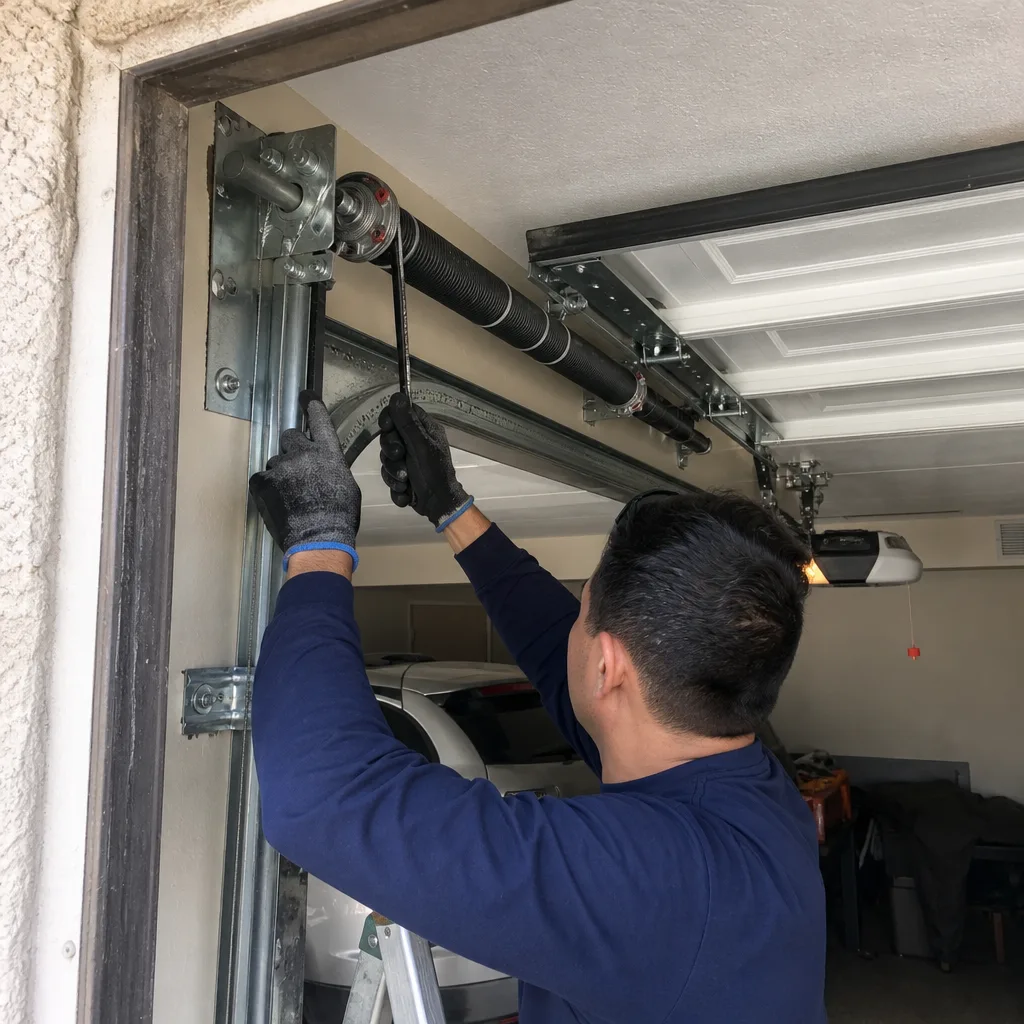 After
AfterThe Complete Guide to Garage Door in Los Angeles
The average Los Angeles homeowner replaces their garage door 18 months sooner than the national average. That’s not because our doors are built worse or because we use them harder. It’s because most garage door advice is written for Ohio, or Texas, or somewhere with four seasons and no marine layer. A garage door in Los Angeles deals with salt air near the coast, 70 mph Santa Ana gusts through the passes, seismic building codes, and HOA boards that care deeply about whether your panels are “warm white” or “sandstone.” This guide treats Los Angeles as its own category. You’ll learn what actually holds up here, what fails here, and what you can ignore from every generic online guide. For more guides & resources, visit our blog.
Quick Answer
A garage door in Los Angeles needs to be chosen and maintained for three conditions most guides never mention: marine-layer humidity near the coast that corrodes hardware, Santa Ana wind loads that stress springs and tracks, and earthquake code requirements that affect installation. The right door for a Venice bungalow is not the right door for a Sherman Oaks hillside, and the right opener for a West LA condo differs from what a Hollywood Hills mid-century needs. Plan on spending $1,200 to $3,800 for a quality replacement door installed, $150 to $290 for spring replacement, and $120 to $220 for cable work, with prices varying by neighborhood and door type.
Table of Contents
- How Los Angeles Climate Actually Affects Your Garage Door
- HOA Approval: What Passes on First Submission in LA
- Seismic and Wind Requirements Most Guides Skip
- Title 24 Energy Compliance: What Actually Gets Inspected
- Springs, Cables, and the LA Maintenance Problem Nobody Mentions
- Choosing an Opener That Survives LA Conditions
- How to Read an LA Permit History Before Buying a Home
- Common Mistakes to Avoid
- When to Call a Professional
- Frequently Asked Questions
- The Bottom Line
How Los Angeles Climate Actually Affects Your Garage Door
Los Angeles isn’t one climate. It’s at least five microclimates, and each one attacks your garage door differently. In Santa Monica, Venice, and Playa del Rey, the marine layer drips moisture onto metal hardware for 200-plus mornings a year. Steel torsion springs without proper coating rust from the outside in, and rusted springs snap. We’ve replaced springs in Venice that looked fine from a distance but crumbled when touched.
Inland neighborhoods like Tarzana, Woodland Hills, and Chatsworth get hammered by Santa Ana winds in October and November. Those gusts create wind-load pressure on the door face, which transfers stress to the hinges, rollers, and the torsion spring. A door rated for standard residential wind loads will flex under sustained 60 mph gusts, and that flexing loosens track bolts over time.
The third factor is salt. It’s not just beach houses. The salt-laced breeze travels two to three miles inland, affecting homes in Mar Vista, Culver City, and parts of Westchester. Aluminum components, particularly cable drums and bottom brackets, corrode faster than homeowners expect. If you live within three miles of the coast, galvanized hardware should be your minimum standard, and stainless is better.
So what holds up? For coastal Los Angeles, a steel door with a factory-applied rust-resistant coating, or a composite door that skips steel entirely. For the Valley, any quality door works, but you’ll want wind-rated reinforcements on the tracks and hinges. And everywhere in Los Angeles, you want nylon rollers instead of steel because they tolerate dry heat and dust without grinding.
HOA Approval: What Passes on First Submission in LA
Los Angeles has thousands of HOAs, and many of them review garage door changes with more rigor than the city reviews building permits. If you live in a planned community in Porter Ranch, a gated enclave in Calabasas, or a townhome complex in Playa Vista, you likely need written approval before touching your door.
Here’s what we’ve learned from hundreds of LA HOA submissions. The doors that pass on first submission share three traits: a color and panel style that visually matches the original build, a brand and model explicitly listed with the submittal, and a note confirming the door’s R-value if the garage is attached to living space. HOAs in Los Angeles tend to reject doors that look materially different from the original, even if the new door is objectively nicer.
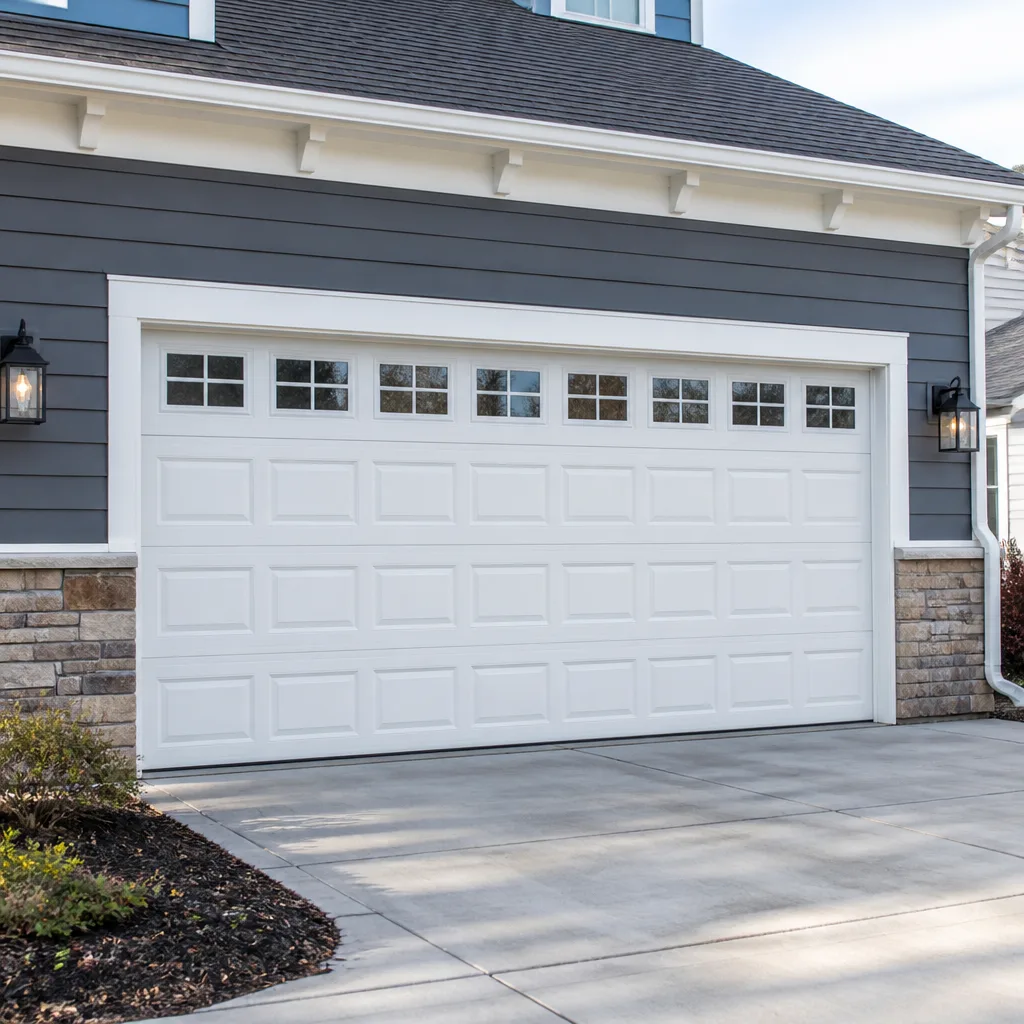
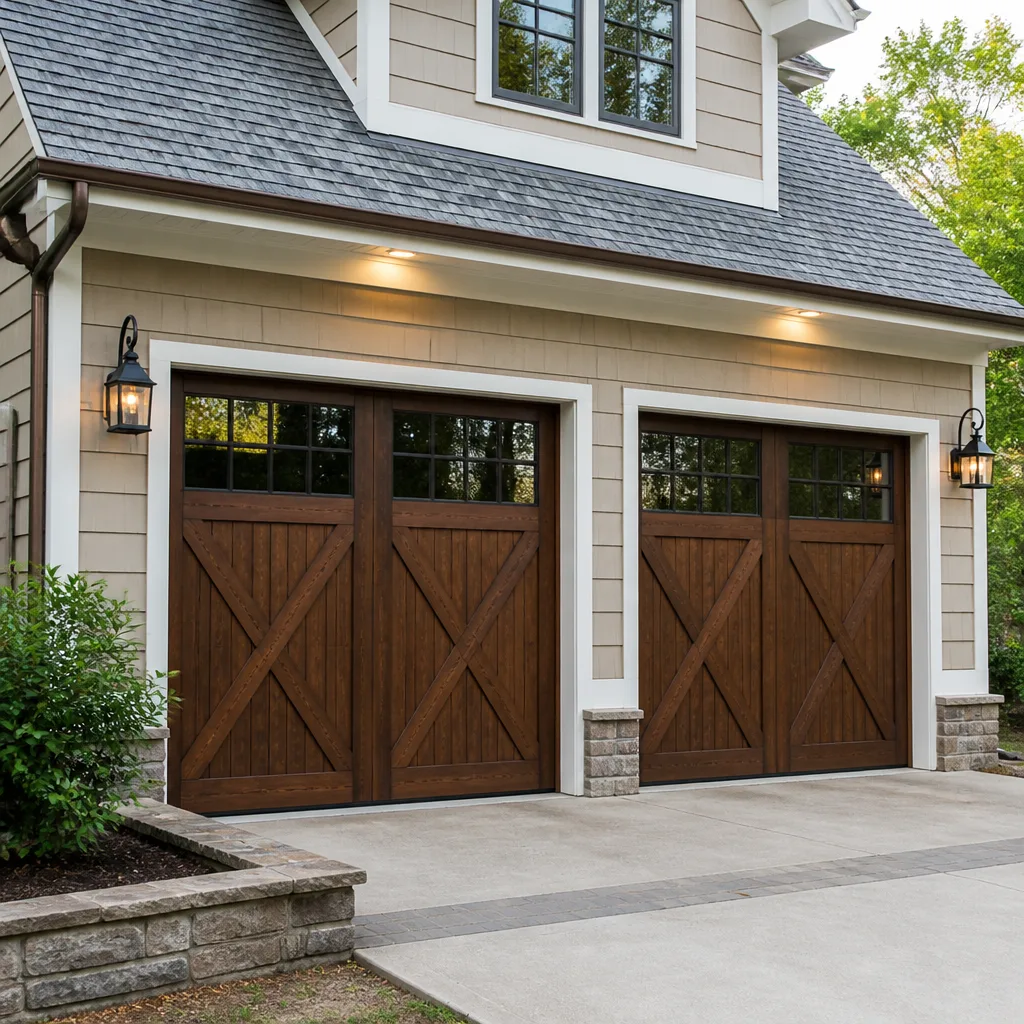
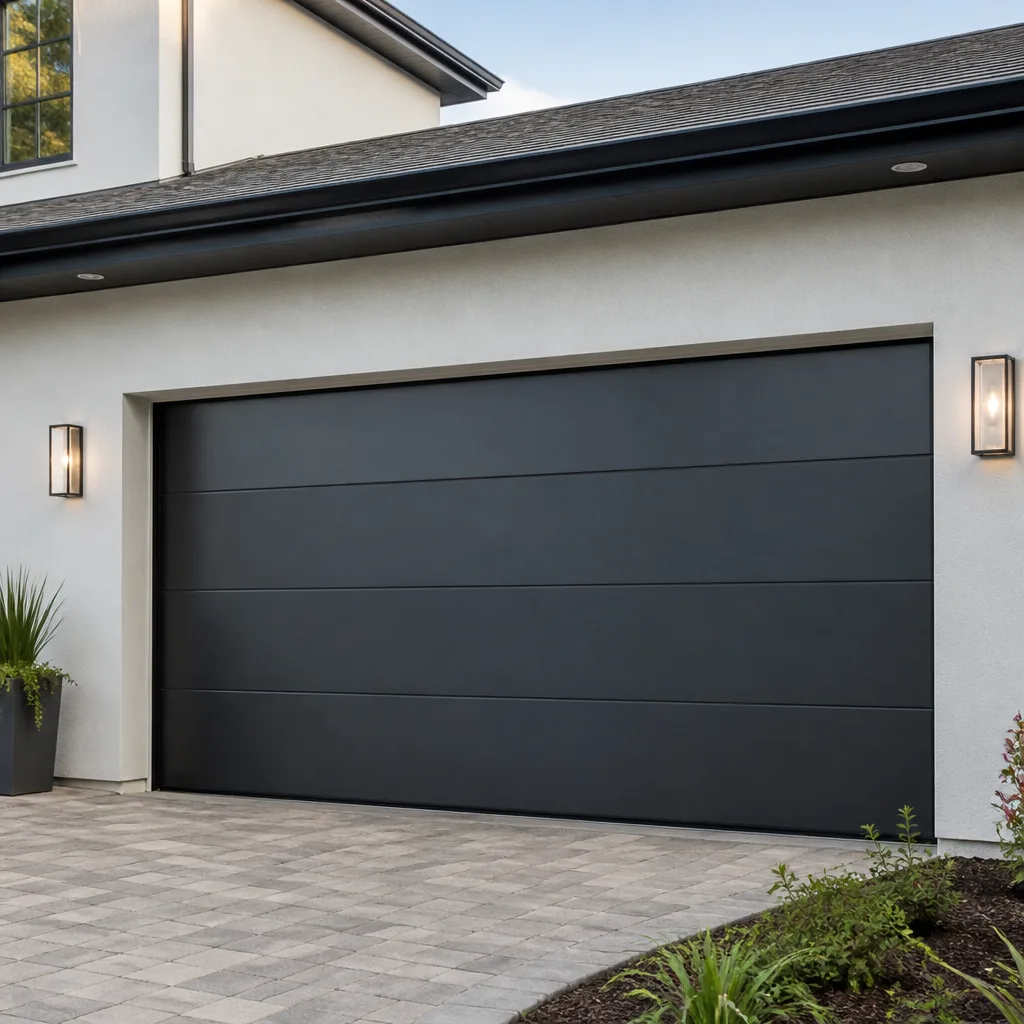
The styles that consistently clear review boards in LA communities are raised-panel steel doors in neutral tones, carriage-house steel doors that mimic wood without the maintenance, and flush doors for modern or Spanish-style homes. Avoid wood unless your community already has wood doors; many LA HOAs discourage real wood due to termite concerns and upkeep complaints.
Plan on two to four weeks for typical HOA approval in Los Angeles. Some boards only review submissions monthly. If you need a door replaced quickly because a spring failure left the door inoperable, many HOAs have emergency repair provisions. The process for that is a phone call to the management company, not a full submission, and we’ve walked dozens of Los Angeles homeowners through it.
We’re trained on Clopay and Amarr doors specifically because those two brands dominate LA HOA-approved lists. Their color palettes and panel profiles align with what boards in this city expect to see.
Seismic and Wind Requirements Most Guides Skip
Los Angeles building code requires garage doors to be installed as part of the structure’s lateral load path. In plain language: your garage door is part of your house’s earthquake resistance. If the door opening is braced incorrectly, or if the door is too heavy for the framing, seismic forces have an extra path to damage the structure. This is not theoretical. The 1994 Northridge quake sheared garage door hardware in dozens of homes, and code tightened afterward.
The practical implications for a Los Angeles homeowner are threefold. First, the door weight matters. A solid wood door on a mid-century home in the hills may exceed the original framing capacity, which matters when the ground shakes. Second, track and bracket anchoring must meet current code. A handyman who installs a door with lag screws into drywall anchors has created a seismic hazard, not a working door. Third, springs and cables need to be matched to the door mass precisely. An undersized spring on a two-car door in Los Angeles is a spring that breaks early under repeated Santa Ana loading.
Wind is the quieter cousin. The City of Los Angeles requires residential garage doors to resist wind loads based on exposure category. Canyon-adjacent neighborhoods like Brentwood Glen, Mandeville Canyon, and parts of Studio City get stronger gusts than flatland neighborhoods. The fix is usually straightforward: heavier-gauge track, additional jamb brackets, and a strut across the top section. None of it is visible from the street, and all of it keeps your door in its tracks during the next wind event.
If you’re buying a home in Los Angeles, ask the inspector whether the garage door track shows signs of drift or elongated bolt holes. That’s the telltale sign of wind and seismic stress accumulating over years.
Title 24 Energy Compliance: What Actually Gets Inspected
California’s Title 24 energy code applies to garage doors when the garage is attached to conditioned living space. The rule is straightforward: the door must meet a minimum R-value, and the installation must include proper weatherstripping and insulation where applicable. An R-value of R-6 to R-9 is common for attached garages in Los Angeles.
But here’s the gap between the code and reality. City inspectors in Los Angeles rarely spend more than two minutes on a garage door during a final inspection. They check that the door matches what was permitted, that the safety sensors work, and that the auto-reverse engages. They do not typically pull out a thermal camera or verify R-value stickers. That doesn’t mean compliance is optional. It means the burden is on you to buy the right door, because the inspector may not catch a non-compliant one, but your energy bill will.
The bigger Title 24 factor for Los Angeles garages is ventilation. Many attached garages in this city have no ventilation, and a sealed, insulated door can trap heat. A garage that bakes at 110 degrees in August transfers heat into the living space above or beside it. If you’re upgrading to an insulated door, consider adding passive vents or a low-voltage exhaust fan, especially if your garage faces south or west.
For detached garages, which are common in older Los Angeles neighborhoods like Highland Park, Eagle Rock, and Leimert Park, Title 24 is quieter. Detached garages typically don’t trigger R-value requirements unless they contain conditioned space. That said, an uninsulated metal door on a detached garage gets brutally hot in summer, and if you store anything temperature-sensitive in there, you’ll feel it.
Springs, Cables, and the LA Maintenance Problem Nobody Mentions
Los Angeles has mild temperatures almost year-round. That sounds like great news for garage door longevity, and in some ways it is. But it creates a specific lubrication problem. In colder climates, garage door lubricants change viscosity with the seasons, and homeowners are reminded to re-lubricate by squeaking doors in winter. In Los Angeles, that seasonal cue never arrives. Doors stay quiet while lubricant slowly dries out, and by the time you notice friction, the rollers and hinges have already worn.
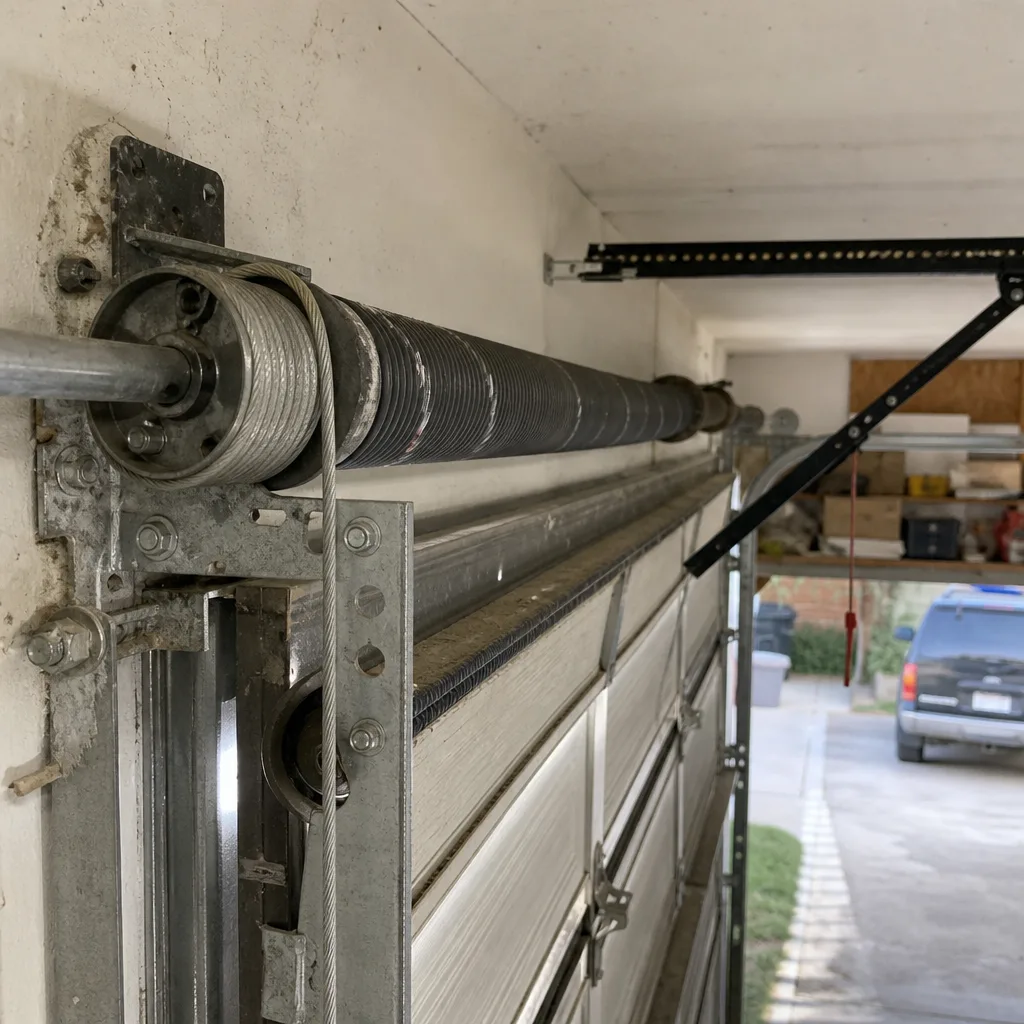
The fix is a twice-yearly lubrication schedule. Spring and fall. Use a silicone or lithium spray, not WD-40, and target the rollers, hinges, torsion spring, and bearing plates. We recommend pairing it with a visual inspection, and this is the one maintenance task that meaningfully extends spring life, which matters because a torsion spring, the horizontal coil above your door that does most of the lifting, has a finite life measured in cycles. In Los Angeles, where many homeowners use their garage as the primary entry, doors cycle more than national averages.
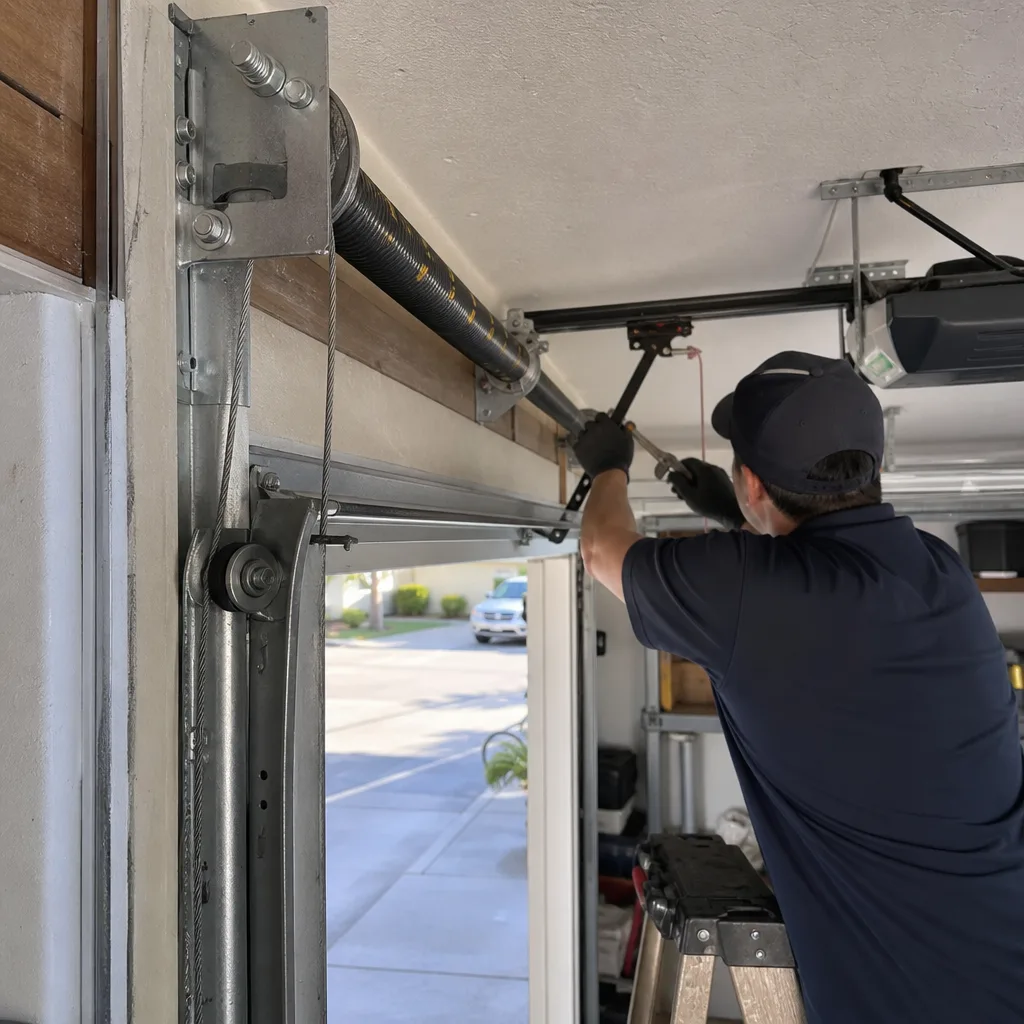
When a spring breaks, you’ll know. It sounds like a gunshot, and the door won’t lift. A broken cable is quieter: the door becomes crooked, or won’t raise evenly, or one side droops. Both are dangerous to repair without training. Torsion springs hold enormous tension, even when broken, and cables run under load. We handle Garage Door Spring Repair in Los Angeles and Garage Door Cable Repair in Los Angeles daily, and we’ve seen the injuries that happen when homeowners attempt these fixes with improvised tools. Don’t do it.
Spring replacement on a standard two-car door in Los Angeles typically runs $150 to $290, depending on whether you need one spring or two, and whether you choose standard or high-cycle springs. High-cycle springs cost about 30% more and last roughly twice as long, which makes them the smarter buy in a city where doors cycle constantly. Cable replacement runs $120 to $220, and the labor overlaps with spring work if both fail together, which happens more often than you’d think in Los Angeles.
Choosing an Opener That Survives LA Conditions
Garage door openers in Los Angeles face two unusual adversaries: power fluctuation and heat. The city’s electrical grid, particularly in the Valley during summer peaks, delivers voltage dips that stress opener circuit boards. Cheaper openers fail earlier here than in places with more stable grids. The second issue is attic or garage heat. An opener mounted in a south-facing garage in Los Angeles can bake at 140 degrees in August, which degrades capacitors and motors over time.
For Los Angeles, we recommend belt-drive openers over chain-drive. Belts run quieter, which matters in attached garages where bedrooms sit above or beside the door, and they handle heat without stretching the way older chain systems do. Look for an opener with DC motors, which draw less current and tolerate voltage fluctuation better. LiftMaster and Chamberlain dominate the Los Angeles market for good reason: parts are stocked locally, and every technician in the city knows how to service them.
Smart-home integration is standard now. If you book everything from your phone, you’ll want an opener with native app control, not a bolt-on kit. MyQ-compatible openers from LiftMaster and Chamberlain work without extra hardware, and the app gives you open/close alerts, which matters in a city where delivery theft from open garages is a real concern in neighborhoods from West Adams to North Hollywood.
On the budget end, a quality opener in Los Angeles starts around $250 for the unit and $150 to $300 for installation. High-end models with battery backup, camera integration, and ultra-quiet operation run $500 to $800 installed. Battery backup is undervalued in LA. Our power outages rarely come from storms; they come from fires, earthquakes, and grid strain, and in those moments, a door that still opens is a door that lets you leave.
How to Read an LA Permit History Before Buying a Home
Los Angeles keeps permit records online through the Department of Building and Safety’s search portal, and any address in the city can be looked up in minutes. When you’re buying a home, pull that history and look specifically for garage door work. If the door was replaced without a permit, that’s not automatically a dealbreaker, but it’s information you want before you inherit the door.
Here’s what to look for. A permitted door replacement means the work was installed to code at the time, including seismic anchoring. An unpermitted replacement may be perfectly fine, or it may be the cheapest door the prior owner could find, installed by someone who skipped the wind bracing. You can’t always tell from the curb. The permit history tells you whether the city ever reviewed it.
In our experience, homes in Los Angeles that sold during the 2020 to 2022 boom are the most likely to have unpermitted or hasty garage work. Sellers were racing, and buyers were waiving contingencies. The garage door was low on the priority list. We’ve inspected doors in Leimert Park, Echo Park, and Van Nuys that were installed with incorrect springs for the door weight, misaligned tracks, or sensors mounted too high, all violations that a permit inspection would have flagged.
If you’re buying, add a garage door evaluation to your inspection checklist. If you already own and you’re unsure whether your door is code-compliant, Garage Door Repair in Los Angeles includes a safety and code review with every visit, and we’ll tell you honestly what needs fixing and what can wait. We’d rather you know than guess.
Common Mistakes to Avoid
- Choosing a door based on a photo from a Texas or Florida home. Those photos don’t account for LA’s seismic anchoring requirements, coastal corrosion, or HOA expectations. The door might look great and fail early.
- Skipping HOA approval to save time. In many LA communities, an unapproved door triggers a violation letter and a forced replacement. That’s a $2,000 mistake to save four weeks.
- Buying the cheapest possible spring. A $75 economy spring on a two-car door in Los Angeles may last 18 months. A high-cycle spring costs more upfront and avoids a second service call.
- Using WD-40 on rollers and hinges. It’s a solvent, not a lubricant, and it strips existing lubrication. Silicone or lithium spray is the right product for garage doors.
- Ignoring rust on cables or bottom brackets. Rust is visible long before failure. If you see it in a coastal neighborhood like Mar Vista or Westchester, get it evaluated before the cable snaps under load.
- Mounting the opener without checking garage heat. South-facing and west-facing garages in Los Angeles hit 130-plus degrees. A cheap opener mounted there dies young.
- Assuming the inspector will catch everything. LA final inspections are quick, and the inspector’s checklist is not your warranty. You own the consequences of a non-compliant install.
When to Call a Professional
Garage doors have a few components you should never touch yourself. Torsion springs, extension springs, and lift cables are under enough tension to cause serious injury or death if handled incorrectly. If your spring breaks, your cable frays, or your door hangs crooked, that’s a professional job, full stop. The same goes for any work involving the track alignment or the auto-reverse safety system, because those systems are what keep the door from crushing a person or a pet.
For everything else, the test is honest: if you’re comfortable replacing rollers or tightening brackets, that’s reasonable homeowner work. If you’re not sure, or if the door doesn’t behave after the fix, read our DIY vs Professional Garage Door Repair guide or call someone who does this every day. Marlow Garage Door Repair offers free estimates in Los Angeles, call (512) 883-4374. You’ll get a written price before any work starts, and you’ll never pay a number you didn’t agree to.
Frequently Asked Questions
A garage door replacement in Los Angeles typically costs $1,200 to $3,800 installed, depending on door size, material, insulation, and whether you need new tracks or just panels. Steel doors run $1,200 to $2,500, composite and carriage-style doors run $2,000 to $3,800, and custom wood can exceed $5,000. At Marlow, our written price is locked before work begins, and the invoice matches the quote, every time. Call (512) 883-4374 for an exact number on your home.
A standard torsion spring lasts 7,000 to 10,000 cycles, which translates to about 5 to 7 years for the average Los Angeles homeowner who uses the garage as the main entry. High-cycle springs last 15,000 to 20,000 cycles, roughly 10 to 14 years in typical LA use. Coastal humidity and Santa Ana wind stress can shorten those numbers, especially in neighborhoods near the ocean. If your door sees heavy daily use, high-cycle springs make financial sense.
Yes, in the sense that current Los Angeles building code requires garage doors to be installed with seismic anchoring that ties the door opening into the structure’s lateral load path. If your home was built before the 1994 Northridge earthquake and the door hasn’t been replaced since, it may not meet current anchoring standards. A retrofit is not always required, but it’s worth evaluating, especially for hillside homes.
No, if your Los Angeles HOA governs exterior modifications, and most do. Working around the HOA risks a violation notice and a forced replacement at your expense. The exception is emergency repair when a door is inoperable, and many HOAs have a fast-track process for that. Check your CC&Rs first, and if the door is broken and creating a security risk, contact your management company about the emergency path.
It depends on whether your garage is attached to living space and how you use the garage. For attached garages in Los Angeles, an insulated door with an R-6 to R-9 rating helps with Title 24 compliance and keeps adjacent rooms cooler. For detached garages used only for parking, insulation matters less for energy and more for comfort and noise. If you store tools, paint, or electronics in your garage, insulation will protect them from LA’s summer heat spikes.
Check the manufacturer’s data plate on the door, which lists the wind-load rating, and inspect the track for extra bracing or struts. If you live in a canyon or hillside neighborhood in Los Angeles and your door lacks visible reinforcement, have it evaluated before the next wind season. We inspect wind bracing as part of every Marlow Garage Door Repair home visit, and we’ll tell you if your door is under-braced for your exposure.
The Bottom Line
Los Angeles is not a generic market, and your garage door shouldn’t be chosen on generic advice. Coastal salt air, Santa Ana wind loads, seismic code, HOA review boards, and Title 24 all shape what works and what fails in this city. The right door for a Culver City condo is not the right door for a Porter Ranch house, and the cheapest spring is rarely the smartest buy. Whether you’re maintaining an old door, replacing it, or evaluating a home you’re about to buy, the details matter. Get a written price, know your spring cycles, check your permit history, and when something breaks or sounds wrong, call someone who knows Los Angeles doors specifically. We’re here when you need us.
Written by Jaylen Ross, Owner at Marlow Garage Door Repair, serving Los Angeles since 2002.