
Last updated October 9, 2026
Full 25-point door and opener safety check with every visit - springs, cables, rollers, tracks, and your LiftMaster or Chamberlain opener included
You get a price before we start. It does not change when the truck arrives.
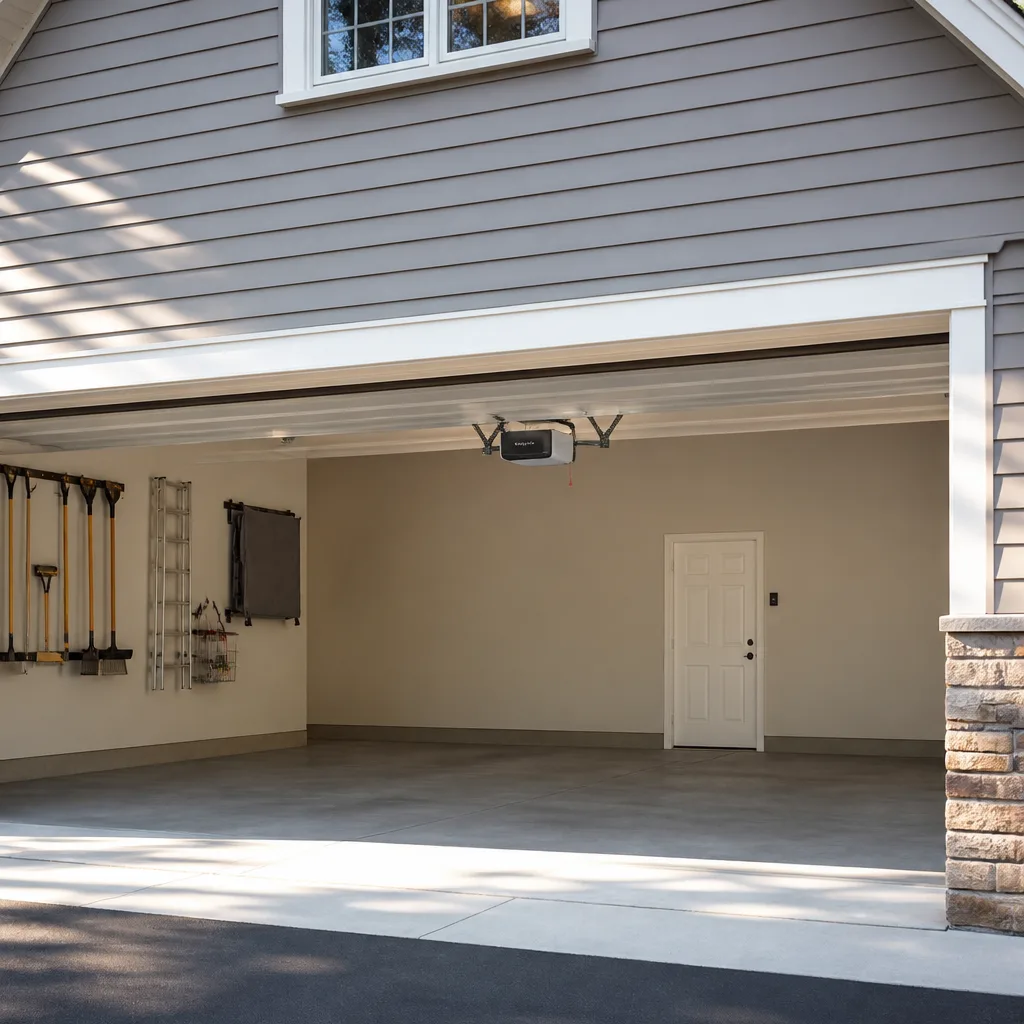
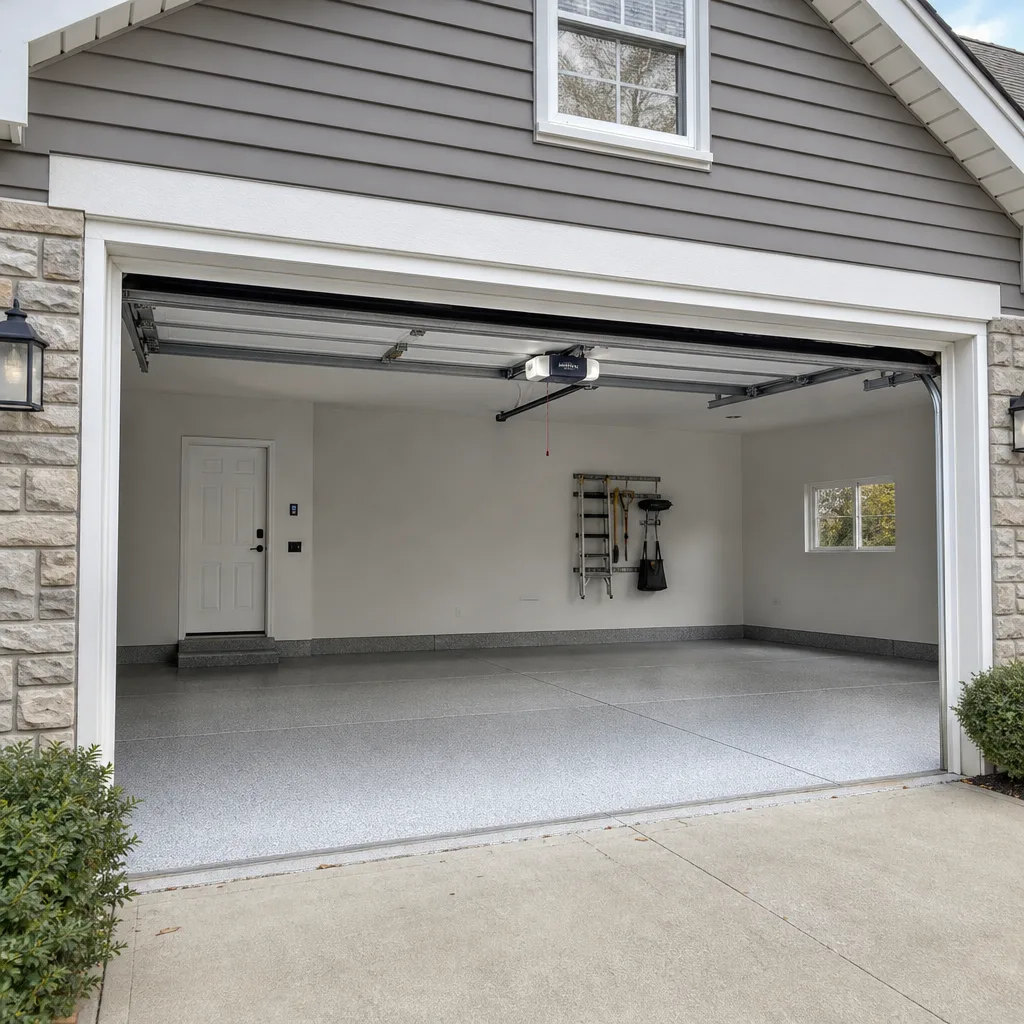
 Before
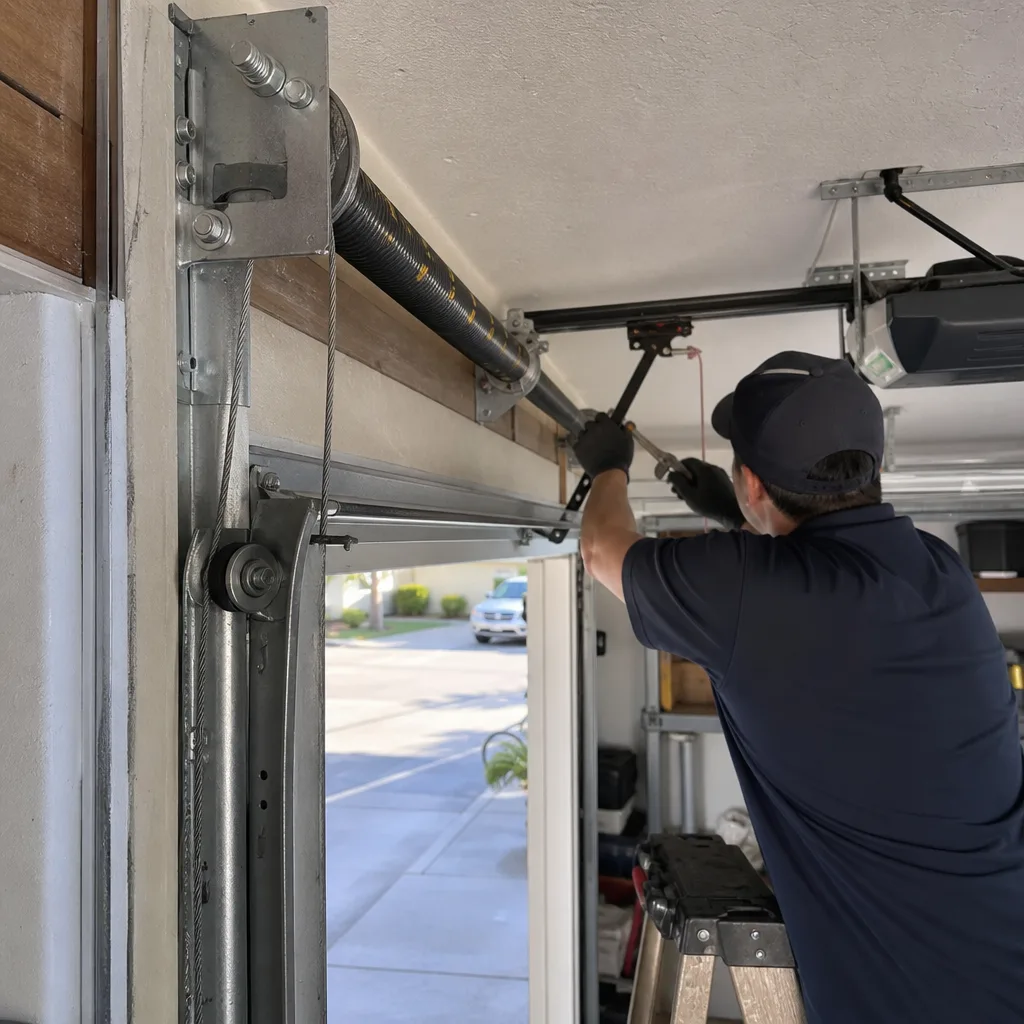 After
After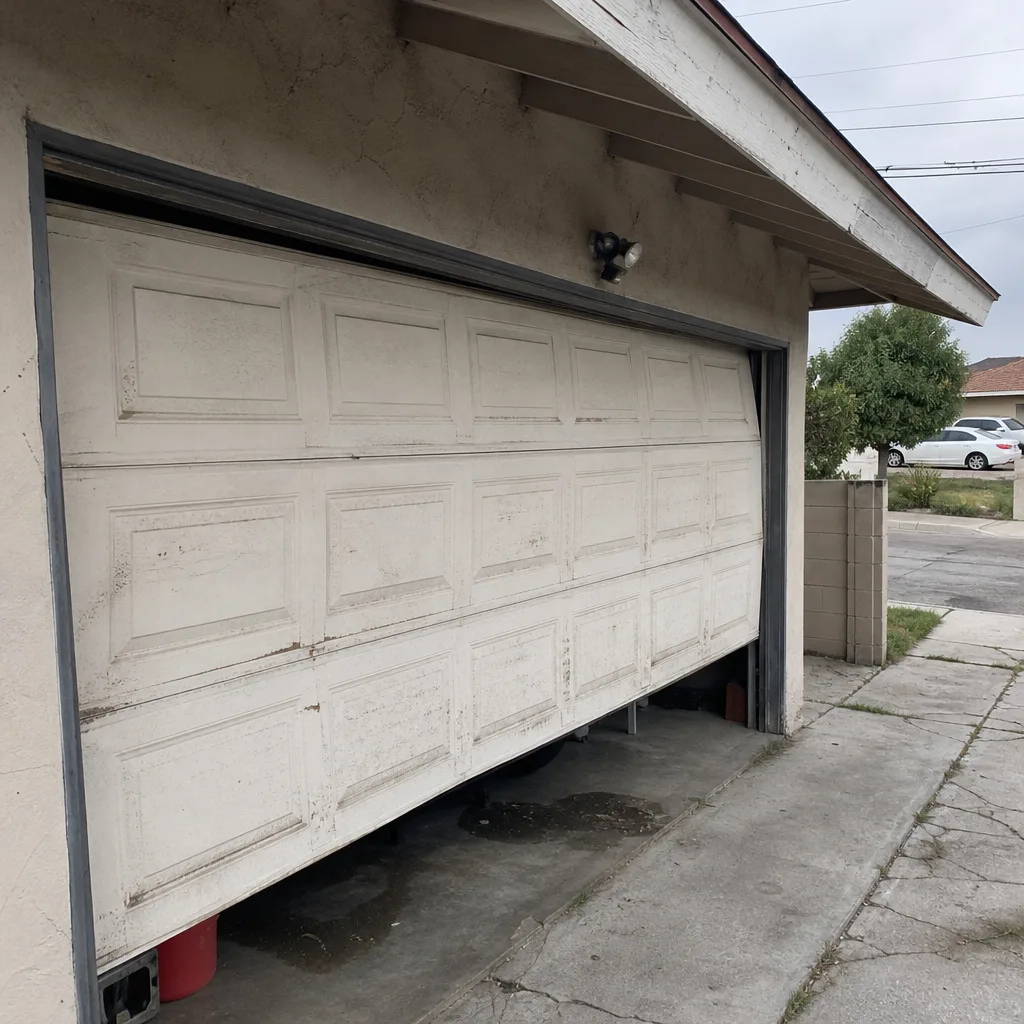 Before
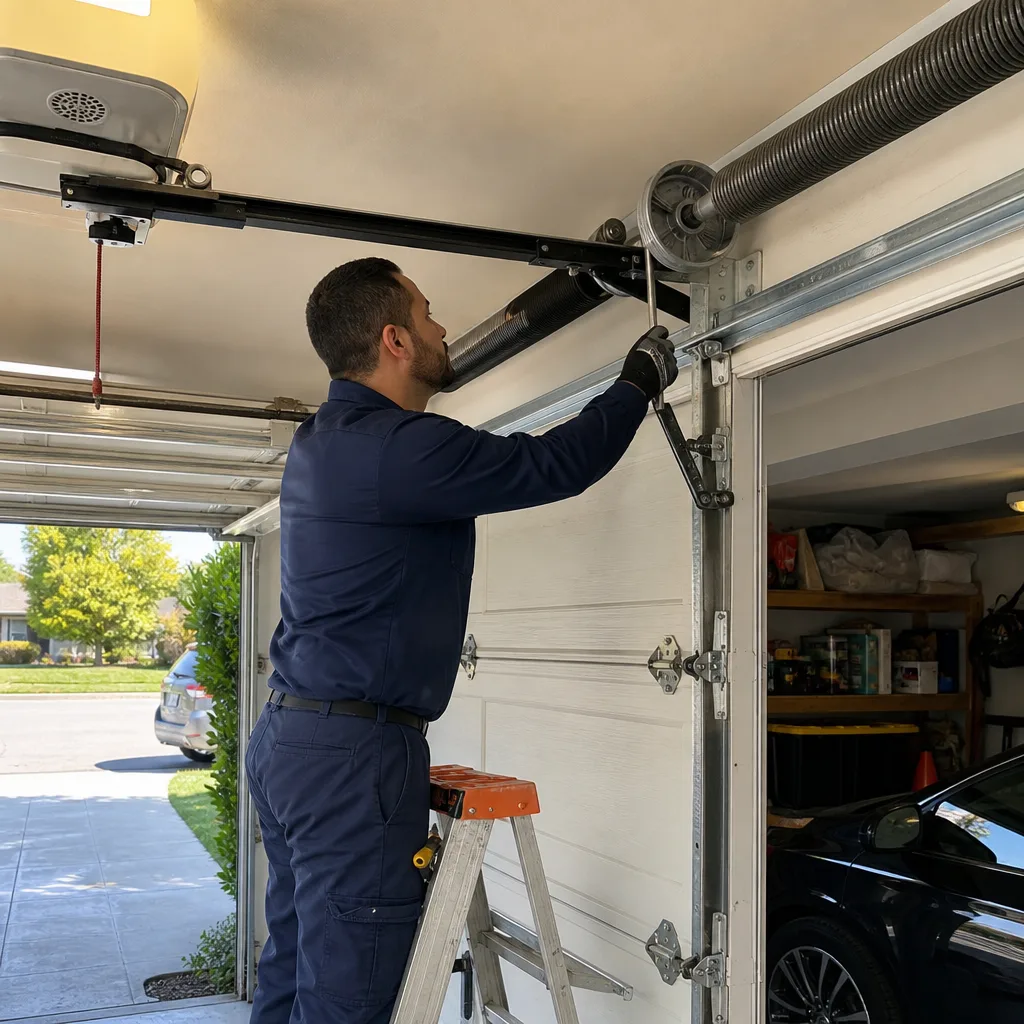 After
After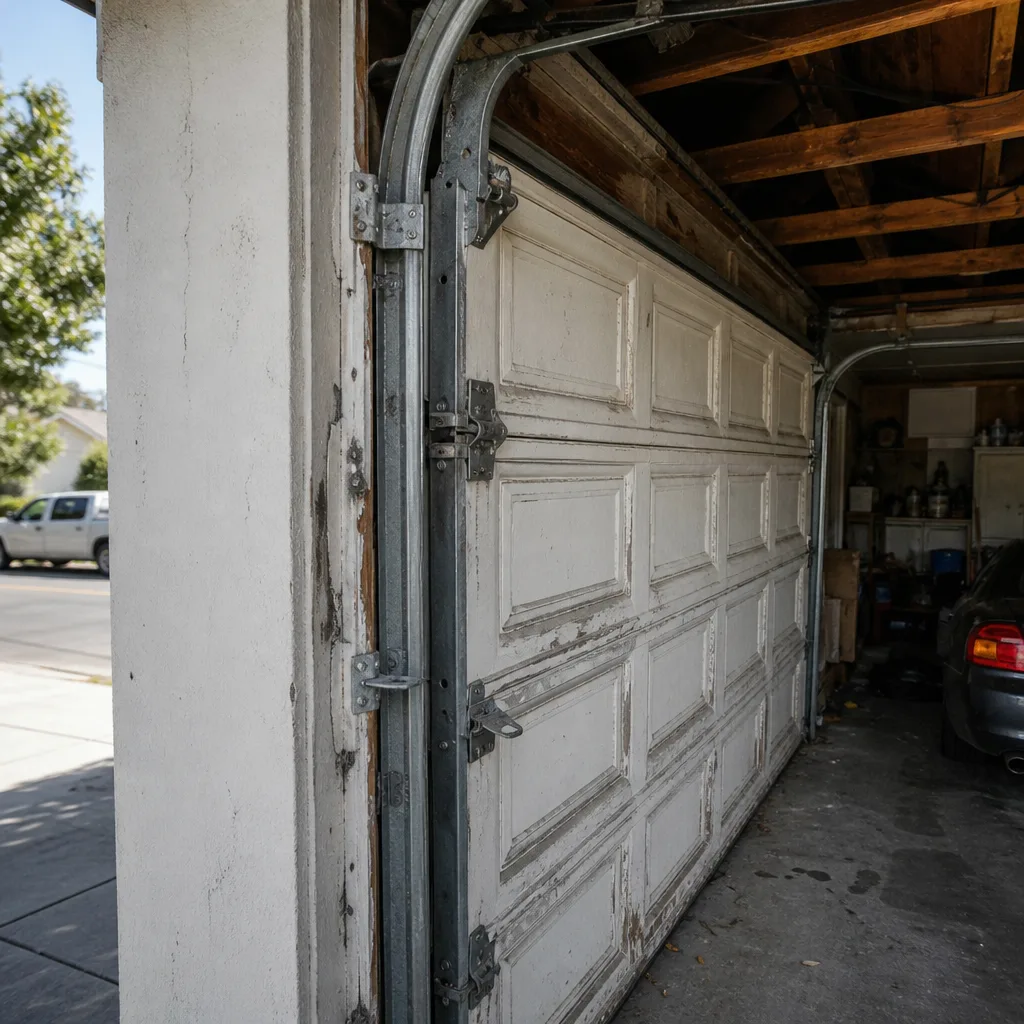 Before
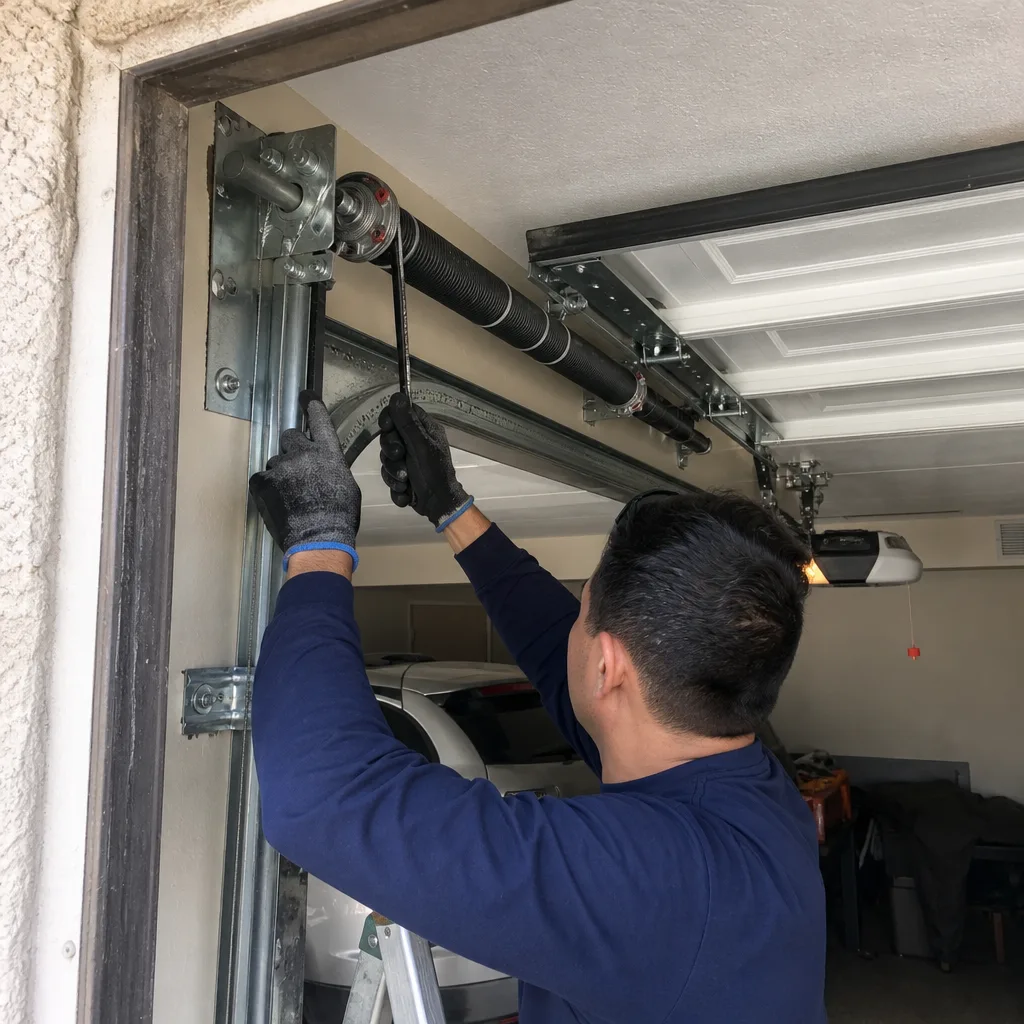 After
AfterDIY vs Professional Garage Door: The Los Angeles Homeowner’s Decision Guide
A torsion spring stores roughly the same kinetic energy as a .44 Magnum round when fully wound, and it happens to be the single most common garage door repair that sends DIYers to the emergency room at Cedars-Sinai on a Saturday afternoon. This guide walks Los Angeles homeowners through the real decision between DIY vs Professional Garage Door Repair: What’s Safe to Do Yourself, with actual numbers, actual code references, and the liability questions most videos on YouTube conveniently skip. By the end, you’ll know exactly which repairs you can handle safely, which ones should never touch your weekend, and how to price the difference before you commit.
Quick Answer
For Los Angeles homeowners, DIY garage door work is only worth it for low-risk maintenance tasks like replacing a bottom seal, swapping remote batteries, or lubricating hinges and rollers. Anything involving the torsion spring, lift cables, or door track alignment should go to a pro, not just because of the injury risk but because California disclosure laws and homeowner’s insurance policies make unpermitted or botched DIY work far more expensive than the labor you’re trying to save. In LA specifically, a spring replacement done wrong can block a sale years later, and your insurer will not cover a garage door injury if the work wasn’t performed by a licensed contractor.
Table of Contents
- What California Actually Considers Safe DIY Garage Door Work
- The Torsion Spring Problem: Why This One Part Changes Everything
- How Your Homeowner’s Insurance Treats DIY Garage Door Repairs in LA
- The Permit Trigger: Which Repairs Are Legal Without One in Los Angeles
- Real Cost Comparison: DIY Parts, Time, and Risk vs a Flat Professional Rate
- Three Questions to Ask Before Starting Any Garage Door Repair
- The Task-by-Task Split: DIY vs Pro for 12 Common Repairs
- Common Mistakes to Avoid
- When to Call a Professional
- Frequently Asked Questions
- The Bottom Line
What California Actually Considers Safe DIY Garage Door Work
We’ve seen plenty of Los Angeles homeowners who assume if a YouTube video exists, the task is fair game. That assumption holds for roughly a third of garage door maintenance. The rest sits on a spectrum from bad idea to genuinely dangerous, and California’s disclosure requirements make the line between them sharper than in most states.
Here’s what’s genuinely safe for a competent DIYer in Los Angeles:
- Replacing the bottom seal or weatherstripping. This is a no-tension task. You unbolt the old strip, slide in the new one, and you’re done in 30 minutes. A replacement seal runs $15 to $40 at any hardware store in Burbank or Glendale. At Marlow Garage Door Repair home service calls, we’re honest about this one: if your only issue is a cracked seal, DIY is reasonable.
- Swapping remote batteries or reprogramming a keypad. No tools, no risk, no permit. Chamberlain and LiftMaster both publish step-by-step pairing instructions on their sites, and the process takes under five minutes.
- Lubricating hinges, rollers, and the opener chain. A can of white lithium grease costs about $8. This extends hardware life if done twice a year, and it’s about as dangerous as oiling a bicycle chain. Skip the spring coils themselves, which don’t need lubrication and shouldn’t be touched.
- Tightening visible bolts on the track brackets. If you can see a loose bolt and reach it from a stepladder without leaning against the door, tightening it is fine. Snug, not wrenched.
What’s notably not on the safe list: anything involving the cables that run up either side of the door. Those cables are under constant tension from the springs, even when the door is open. A frayed cable doesn’t just snap the cable, it releases the spring’s stored energy through whatever is in the way. In our experience serving neighborhoods from Echo Park to Woodland Hills, cable failures are the second most common reason homeowners call after the fact to undo damage from a DIY attempt.
The Torsion Spring Problem: Why This One Part Changes Everything
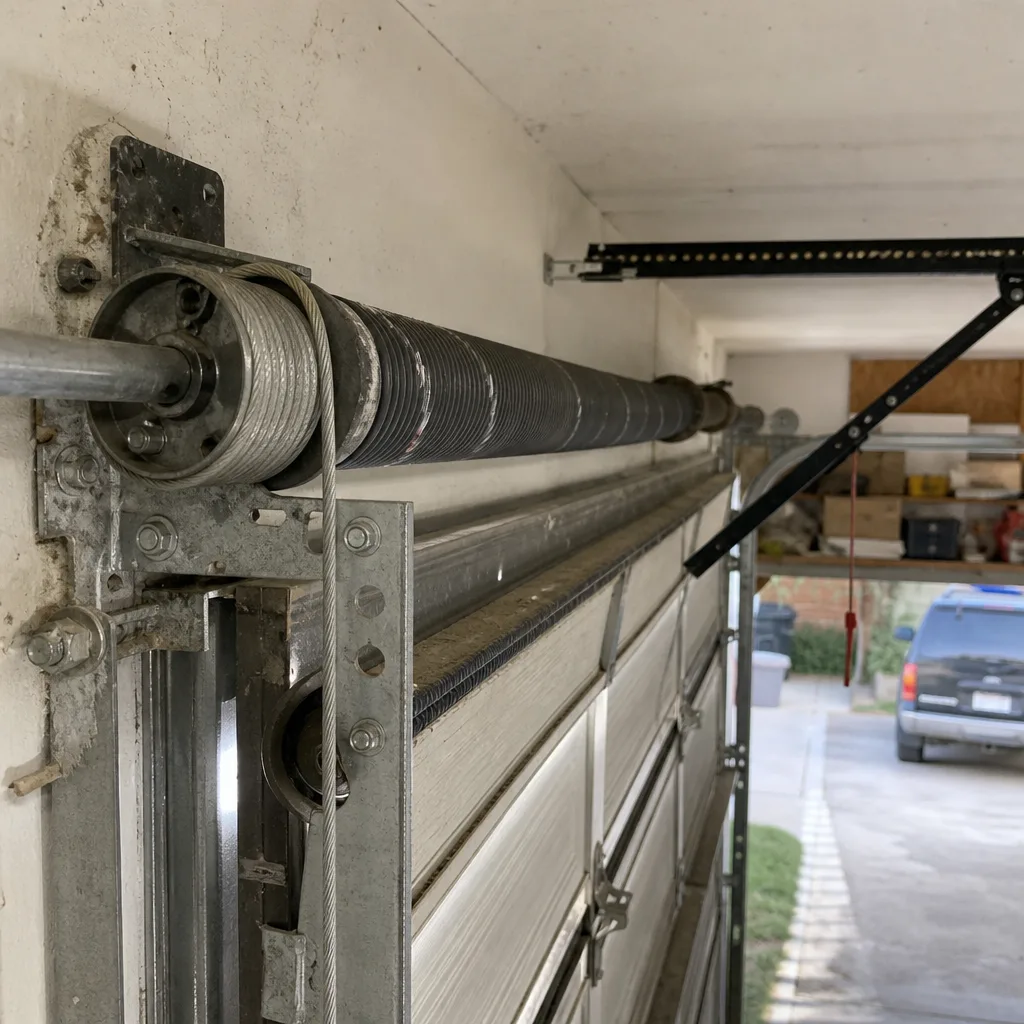
A torsion spring, the horizontal coil mounted above your garage door, does most of the lifting on every cycle. It’s wound tightly enough to counterbalance a 150 to 300 pound door, and when it breaks, it releases that stored energy in a fraction of a second. That’s the physics. The practical version: this is the part that makes DIY vs Professional Garage Door Spring Repair: What’s Safe to Do Yourself one of the riskier decisions in home maintenance.
Here’s what actually happens in Los Angeles when a torsion spring repair goes wrong:
- The winding bar slips out of the cone while the spring is under partial tension. A 18-inch steel bar becomes a projectile moving at speeds that fracture forearms and orbital bones. We’ve heard the same story from customers in Pasadena and Long Beach: “The video made it look easy.”
- The homeowner replaces one spring when the door actually needs both. Torsion springs are rated for a specific number of cycles, and on a two-spring door, both wear down on the same schedule. A mismatched new spring next to a fatigued old one will cause uneven door weight distribution, which bends the track over time. Fixing that later costs more than the second spring would have.
- The spring is wound in the wrong direction. Left and right springs are mirror images. Installing them reversed isn’t just ineffective, it’s the setup for a catastrophic failure the first time the door opens under load.
Professional spring replacement in Los Angeles typically runs $150 to $290 per spring depending on spring type and door weight, and includes recalibration of the door’s balance. That last part matters: a spring that’s wound too tight or too loose changes how your opener motor bears the load, and a motor that’s fighting the door burns out years early. You’ll see the exact price before any work starts when you call a company like ours, which is not how DIY pricing works. The $60 spring kit at the hardware store becomes a $400 ER copay plus a missed day of work plus a new spring anyway when the winding bar slips.
Safety note: we describe how this repair works so you understand what you’re paying for, not so you’ll attempt it. Torsion springs are under enough tension to kill or maim. A trained professional uses rated winding bars, the correct spring gauge, and a torque-calibrated process that exists for a reason.
How Your Homeowner’s Insurance Treats DIY Garage Door Repairs in LA
This is the section most DIY cost comparisons ignore entirely, and it’s the one that matters most in California. Homeowner’s insurance policies in Los Angeles are written with specific language about unlicensed work, and that language gets enforced when a claim involves injury or property damage from a repair you performed yourself.
Here’s the practical reality:
- Medical payments coverage applies to guests and household members, not to the policyholder’s own injuries. If you hurt yourself doing a DIY spring replacement, your health insurance covers you, not your homeowner’s policy. Your deductible applies, and depending on your plan, so does a significant coinsurance amount. If a family member is injured by the door after your DIY repair fails, the insurer will investigate whether the work was performed by a licensed professional. If it wasn’t, expect the claim to be challenged.
- Property damage from a garage door collapse after DIY work is a coverage gray zone. Standard HO-3 policies in California exclude damage caused by “faulty, inadequate, or defective workmanship.” That exclusion is broad enough to catch a garage door that falls on your car six weeks after you replaced a cable yourself. The insurance company’s position will be simple: the professional you didn’t hire is the reason the door failed.
- Professional work shifts liability to the contractor’s insurance. A licensed garage door company in Los Angeles carries general liability coverage. If their repair fails and damages your property or injures someone, you have a clear path to recovery that doesn’t involve your own premiums going up. That’s part of what you’re paying for, and it never shows up in a DIY cost comparison.
There’s a second layer specific to Los Angeles real estate. California law requires sellers to disclose all known material defects and any unpermitted work on a property. At Garage Door Repair in Los Angeles service calls, we frequently hear from owners preparing to list who are walking back earlier DIY modifications because their listing agent flagged the disclosure risk. A garage door replacement done without permits becomes a negotiation chip for the buyer’s agent, and in a market as competitive as LA, that chip routinely costs sellers $5,000 to $15,000 at closing.
The Permit Trigger: Which Repairs Are Legal Without One in Los Angeles
Most garage door repair work in Los Angeles does not require a permit. Repairs to an existing door, including spring replacement, cable replacement, panel repair, and opener replacement, are considered maintenance under the Los Angeles Department of Building and Safety. No permit needed, no inspection required, no paperwork.
A full garage door replacement falls into a murkier category, and the murkiness is where DIYers get burned:
- Like-for-like replacement. If you’re swapping a 16×7 sectional door for another 16×7 sectional door in the same opening, LADBS generally does not require a permit. The structural opening hasn’t changed, the header hasn’t changed, the load path hasn’t changed.
- Resizing the opening. If your DIY vision involves widening the door opening or converting a single door to a double, you need a permit. That’s structural work on the header, and Los Angeles will want stamped drawings. Doing the work without one will surface at sale, and retro permits in LA come with fees that make the original permit cost look like a rounding error.
- Converting a carport to a garage, or adding a door where one didn’t exist. Same story, bigger permit. LADBS treats this as a change of use, and unpermitted changes of use are the single most common reason escrows fall apart in this city.
The financial risk of skipping a permit when one is required isn’t theoretical in Los Angeles. We’ve watched buyers walk away from houses in Silver Lake and Eagle Rock over unpermitted garage conversions, and we’ve watched sellers eat five-figure price reductions to keep the deal alive. The permit fee itself is usually under $500 for a straightforward door replacement. The cost of needing one after the fact starts at several thousand and goes up if the work needs to be torn out and redone.
Real Cost Comparison: DIY Parts, Time, and Risk vs a Flat Professional Rate
Let’s put actual numbers on the table for Los Angeles homeowners. Here’s what specific repairs cost DIY versus professional, including the costs most spreadsheets leave out:
- Torsion spring replacement. DIY parts: $50 to $90 per spring at a local hardware store, plus $25 to $40 for a pair of winding bars you’ll use once. Time for a first-timer: 2 to 4 hours, often spread across a weekend. Professional rate in LA: $150 to $290 per spring, installed, balanced, and covered by the 365-Day Done Right Promise. When we replace springs at Garage Door Spring Repair in Los Angeles calls, the job is done in about an hour, and if either spring fails within a year, the second visit is free.
- Cable replacement. DIY parts: $15 to $30 for the cable pair. Professional rate: $130 to $220. The hidden DIY cost here is the risk of snapping a cable under tension, which sends the door’s full weight onto whatever is beneath it. That’s a hospital visit in the worst case and a bent track in the best.
- Opener replacement. DIY parts: $180 to $450 for a Chamberlain or LiftMaster unit. Professional rate: $250 to $600 installed, including safety sensor alignment and force-setting adjustment. The DIY savings here are real if you’re comfortable with electrical work and ladder work. This is the one repair where a careful homeowner with a stud finder and a level can legitimately save money.
- Bottom seal replacement. DIY parts: $15 to $40. Professional rate: $90 to $140. This one’s worth doing yourself unless you’re already having us out for something else.
- Track realignment. DIY parts: none, this is labor-only. Professional rate: $110 to $180. The DIY risk here is that a track that’s off by even a quarter inch will eventually bend a roller stem or throw the door off balance, and the damage compounds every cycle until you notice the grinding.
The comparison most people miss isn’t the parts cost. It’s the compounding cost of a repair that’s 95% right. A garage door that’s slightly out of balance wears out its springs early, strains the opener motor, and chews through rollers. Something about the way Los Angeles homes sit on seismic retrofits and older foundations means doors in neighborhoods like Highland Park and Sherman Oaks go out of alignment more often than in newer construction, and a DIY fix that’s almost-right just sets up the next failure. The professional rate looks different when you factor in not doing it twice.
Every professional job at Marlow Garage Door Repair includes a written price before any work starts. That means the number we quote is the number on the invoice, full stop. No change-order surprises, no “we found something else while we were in there” pricing. It’s how Jaylen Ross has run this business since 2002, and it’s the reason Garage Door Cable Repair in Los Angeles calls come back to us when another issue pops up a year later.
Three Questions to Ask Before Starting Any Garage Door Repair
Before you touch anything on your garage door, run through these three questions. They’ll take you 30 seconds, and they’ll clarify whether you’re looking at a Saturday project or a phone call:
- Is any part of this repair under tension? Torsion springs, extension springs, and the lift cables are all under constant load. If the answer is yes, stop. The risk of a tension-release injury is not acceptable for the money saved, full stop.
- Will this repair be visible and questioned during a home sale? In Los Angeles, yes to almost anything structural. Unpermitted modifications, visibly misaligned tracks, or a garage door that doesn’t operate smoothly will all come up during inspection, and the buyer’s inspector will note every one of them.
- If this repair fails in three months, who pays? If the answer is “me,” you’ve identified the real cost. A professional repair includes a written guarantee, and under The Relay Visibility Guarantee, you know exactly what you’re getting before the work starts. DIY has no warranty but your own time and money.
Those three questions filter out roughly 80% of DIY garage door attempts. The remaining 20%, the seals and batteries and lubrication jobs, are where DIY genuinely makes sense.
The Task-by-Task Split: DIY vs Pro for 12 Common Repairs
Here’s the full breakdown, task by task, for Los Angeles homeowners who want the decision made explicit. We’ve organized it by risk level.
Safe DIY, no special tools, no real risk:
- Bottom seal or weatherstripping replacement
- Remote battery replacement
- Keypad reprogramming
- Hinge and roller lubrication
- Opener chain or belt tightening (on models with visible adjustment)
Borderline DIY, depends on your comfort with electrical or ladder work:
- Opener replacement (Chamberlain and LiftMaster both sell homeowner-friendly units with good instructions)
- Safety sensor realignment
- Remote control replacement and pairing
Professional required, no exceptions:
- Torsion spring replacement (the dangerous one)
- Extension spring replacement (still dangerous, just in a different direction)
- Lift cable replacement
- Track realignment or replacement
- Panel replacement on a two-car door (weight and balance complications)
Notice the pattern: the first list is maintenance, the second list is convenience, and the third list is anything under mechanical tension or load. Los Angeles climate plays a role here too. We get maybe 20 days of real rain a year, which sounds gentle, but the coastal air in places like Santa Monica and Mar Vista carries salt and moisture that corrodes cables and spring coils faster than inland intuition suggests. A bottom seal left cracked for a full rainy season lets water sit on the door’s bottom panel, and rust follows even in a dry city.
Raynor and Craftsman doors, common in mid-century homes across the San Fernando Valley, use spring systems that are particularly unforgiving to improvisation. We train our technicians on Raynor, Craftsman, Chamberlain, and LiftMaster systems specifically so the person showing up already knows what they’re walking into.
Common Mistakes to Avoid
- Using the wrong winding bars for a torsion spring. A screwdriver or a loose-fitting rod is not a rated winding bar. It will slip, and the spring will release whatever tension it holds into the nearest object, which is usually your hand or face.
- Replacing only one spring on a two-spring door. Both springs wear on the same cycle count. The old one will fail soon after the new one is installed, and the door will run unbalanced until it does.
- Skipping the permit on an opening resize or garage conversion. In Los Angeles, this mistake compounds at sale time. A retro permit costs multiples of the original fee, and unpermitted work gives the buyer’s agent leverage you can’t claw back.
- Assuming your homeowner’s insurance covers a DIY injury or a DIY-caused door failure. It usually doesn’t, and the exclusion language is written specifically to make sure it doesn’t.
- Lubricating the torsion spring coils. Springs don’t need lubrication. Oil collects dust and grime, which accelerates wear on the coil surface. Lubricate the hinges and rollers only.
When to Call a Professional
Call a professional the moment you see a gap in a torsion spring coil, a frayed cable, or a door that hangs crooked in its tracks. Call immediately if the door falls when you release it in the half-open position, which means the spring has failed and the door’s full weight is unmanaged. Call if you hear grinding from the opener motor that wasn’t there last month. Marlow Garage Door Repair offers free estimates in Los Angeles, call (512) 883-4374, and our technicians arrive with the parts already on the truck for the eight most common door brands in this city.
Frequently Asked Questions
No, routine repairs like spring replacement, cable replacement, and opener swaps are legal to do yourself in Los Angeles. What’s illegal is unpermitted structural work, like resizing a door opening or converting a carport to a garage, and that’s where DIYers create disclosure problems that surface at sale.
Professional spring replacement in Los Angeles typically runs $150 to $290 per spring, installed and balanced. DIY parts run $50 to $90 per spring, but the injury risk and the likelihood of a do-over make the professional rate the better value for most homeowners.
Your homeowner’s policy generally will not cover your own injury from a DIY repair, and it may deny property damage claims if the door failure traces back to your own faulty workmanship. Professional repairs shift that liability to the contractor’s insurance.
Yes, opener replacement is one of the more reasonable DIY projects if you’re comfortable with ladder work and basic wiring. Chamberlain and LiftMaster units come with clear instructions, and the job takes 2 to 4 hours for a first-timer. A professional install adds $70 to $150 in labor above the unit cost.
Generally no for a like-for-like replacement in the same opening. Yes if you’re resizing the opening, converting a carport, or changing the structural header. If your project changes the size of the opening, file the permit before the work starts; retro permits cost several times more.
The most common mistake we see is attempting a torsion spring replacement with the wrong tools: using a screwdriver or an unrated rod instead of proper winding bars. The spring releases its stored energy in a fraction of a second, and the tool becomes a projectile. Call (512) 883-4374 for an exact quote instead; estimates are free.
The Bottom Line
The more guides & resources we publish, the clearer it becomes: the DIY versus pro decision for Los Angeles garage doors isn’t really about parts versus labor. It’s about liability: what happens to your insurance claim, your home sale, and your body when a repair goes sideways. Low-risk maintenance like bottom seals, lubrication, and remote batteries is genuinely DIY territory. Everything under spring tension, everything involving cables, and everything structural should go to a licensed professional with a written guarantee. In a city where disclosure laws are strict and ER copays are high, the cheapest labor is the labor you don’t have to redo or recover from.
Written by Jaylen Ross, Owner at Marlow Garage Door Repair, serving Los Angeles since 2002.