
Last updated October 9, 2026
Full 25-point door and opener safety check with every visit - springs, cables, rollers, tracks, and your LiftMaster or Chamberlain opener included
You get a price before we start. It does not change when the truck arrives.
 Before
 After
After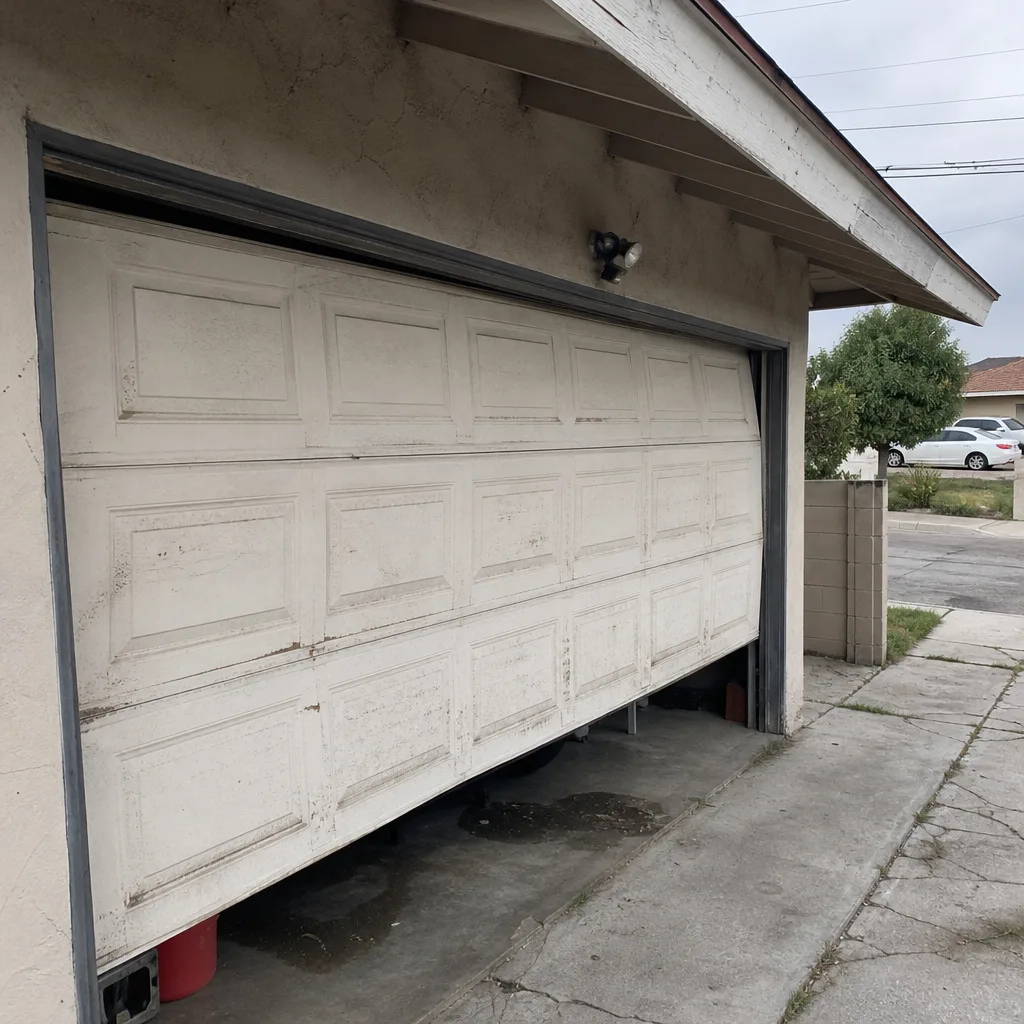 Before
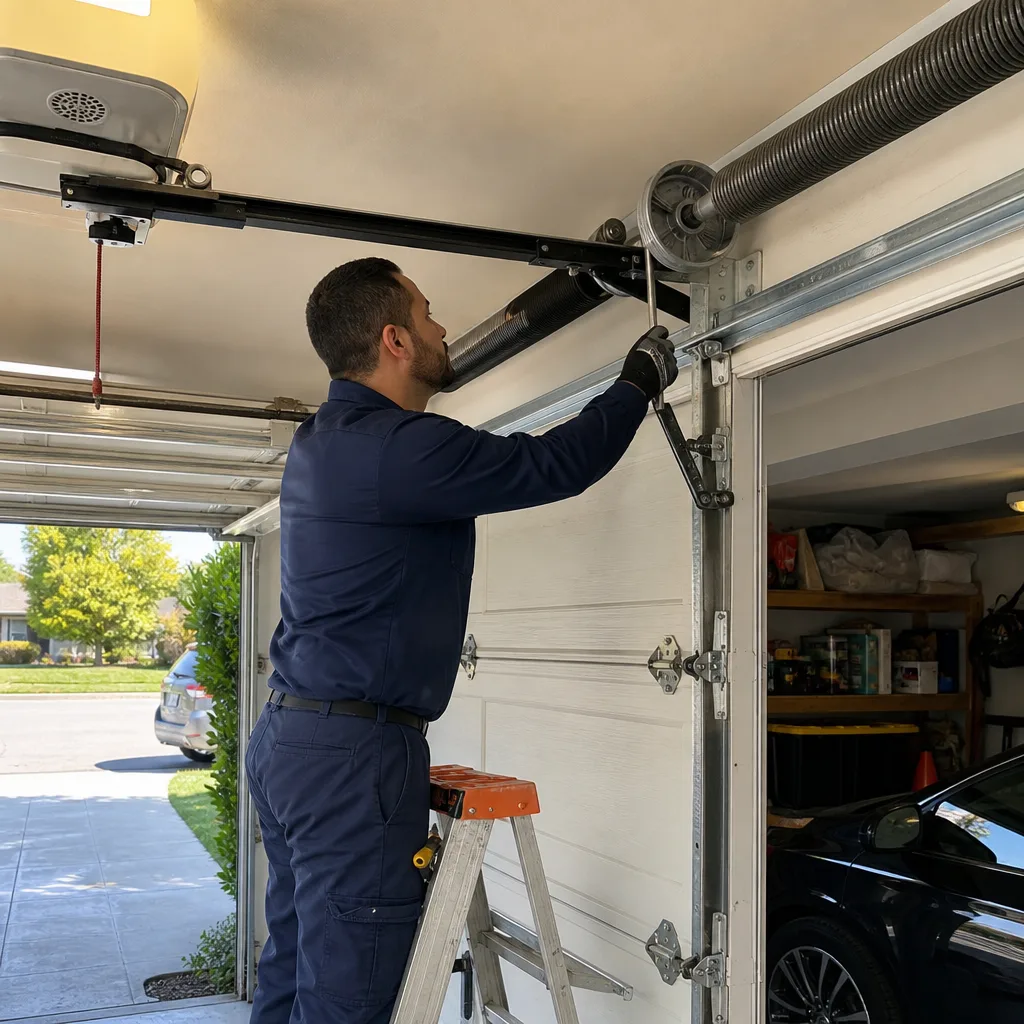 After
After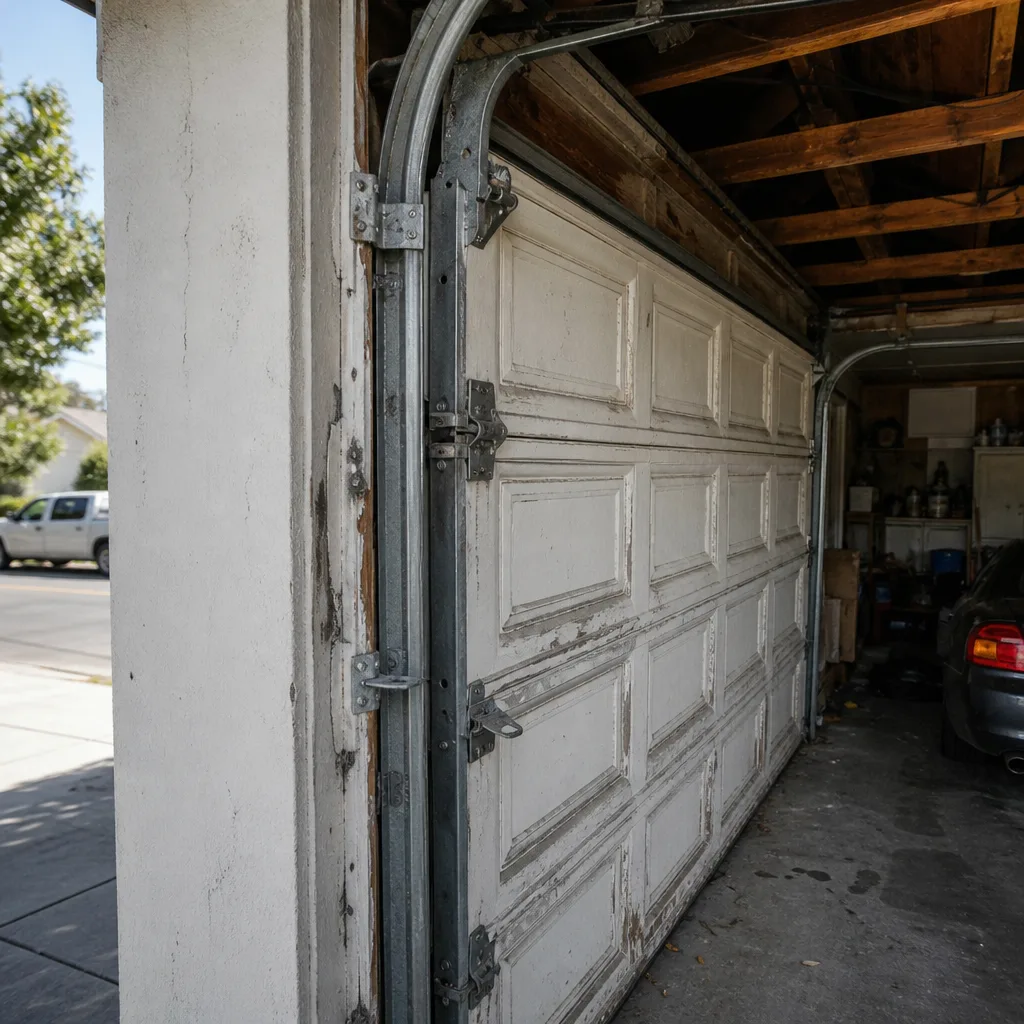 Before
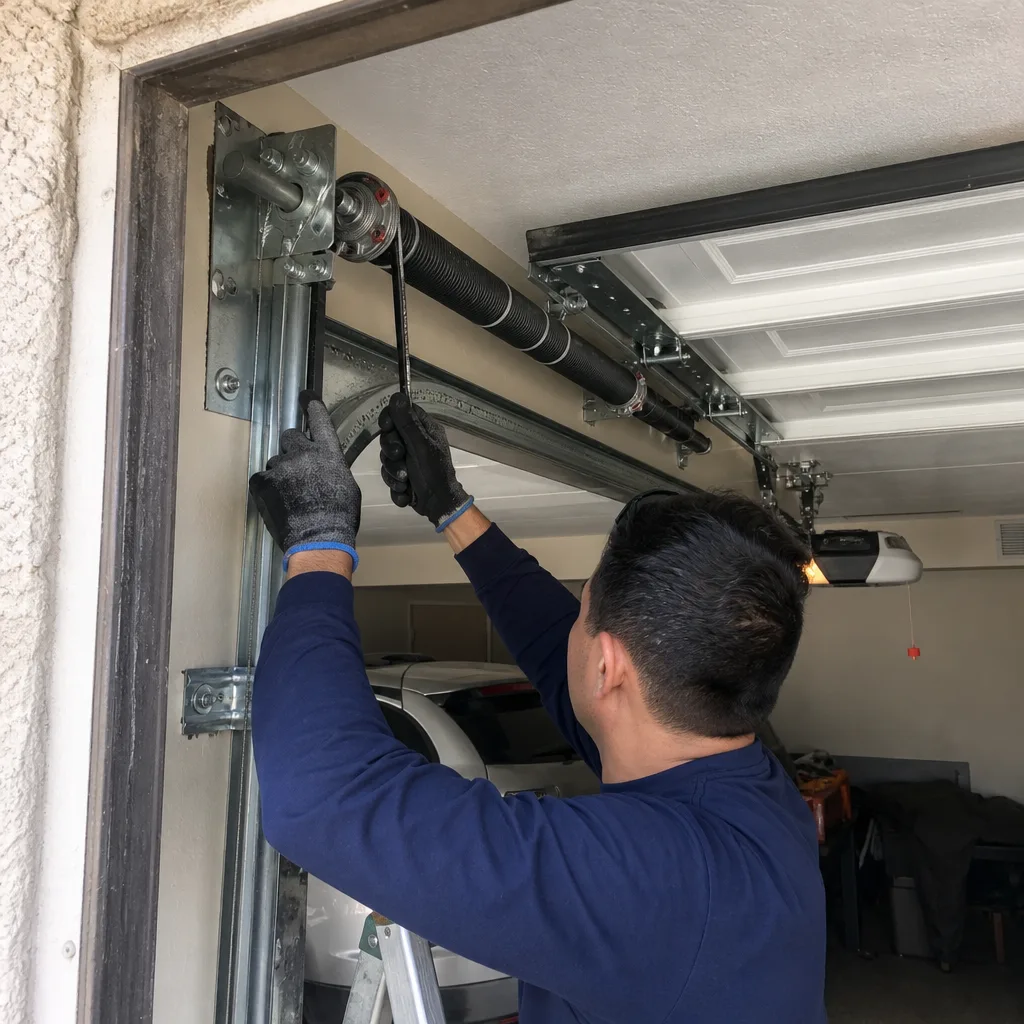 After
AfterDIY vs Professional Garage Door Spring Repair: What’s Safe to Do Yourself
A wound torsion spring holds roughly 100 foot-pounds of torque, enough force that a slip during unwinding has sent steel bars through drywall. The danger isn’t theoretical. It’s the reason even experienced DIYers who change their own brakes and wire their own outlets stop at garage door springs. This guide walks through the actual physics of why springs are dangerous, what “professional” specifically means in this context, and the spring-adjacent tasks you can safely handle yourself in Los Angeles. For actual repairs, see our Garage Door Spring Repair services.
Quick Answer
You should not repair or replace garage door torsion or extension springs yourself. The springs hold hundreds of pounds of stored energy even when the door is closed, and a single misstep with improvised tools causes severe injury every year. The safe DIY tasks are lubrication, visual inspection, and balance testing, while spring replacement belongs to a trained technician with winding bars, proper spring stock, and the experience to match springs to your door’s weight. In Los Angeles, professional spring replacement typically costs $150 to $290 per spring, and Marlow Garage Door Repair quotes the exact number before any work begins.
Table of Contents
- Why Garage Door Springs Are Dangerous: The Physics You Can’t See
- The Winding Bar Problem: Why Home Depot Doesn’t Stock the Only Safe Tool
- What You Can Safely Do Yourself: 4 Spring-Adjacent Tasks
- Extension Springs vs Torsion Springs: Why It Matters
- What ‘Professional’ Actually Means for Spring Work
- How to Get a Fair Price on Spring Replacement in Los Angeles
- Common Mistakes to Avoid
- When to Call a Professional
- Frequently Asked Questions
- The Bottom Line
Why Garage Door Springs Are Dangerous: The Physics You Can’t See
A garage door looks heavy when it’s closed, but the typical double-wide steel door only weighs 130 to 200 pounds. You can lift it yourself when the springs are working. The springs do the actual lifting, and the energy they store is what makes a casual repair attempt so dangerous.
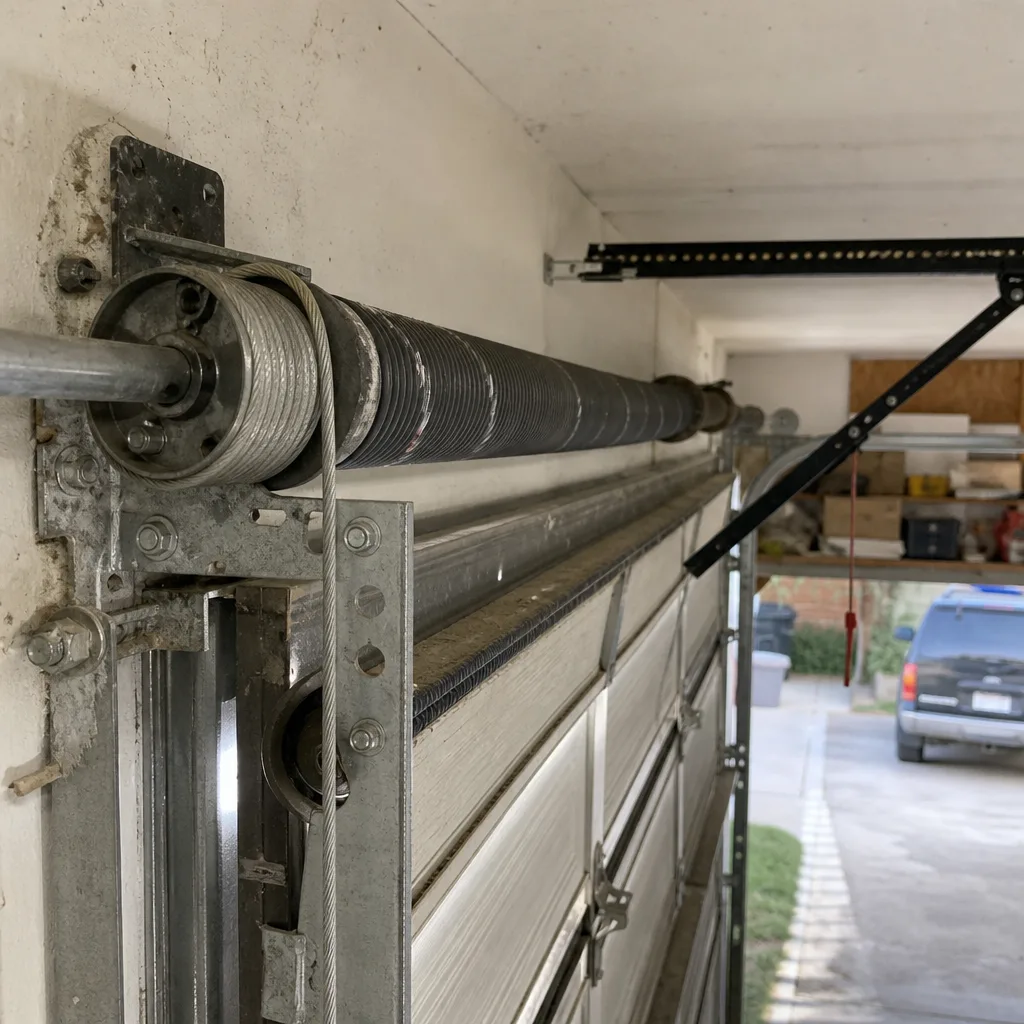
Here’s the part most guides skip: the energy is already stored right now, even with your door closed and parked. A torsion spring is wound under tension at all times. When you see a torsion spring above a closed door, those coils are not resting. They are twisted, and the winding cone at each end is locked in place against a stationary bracket. That cone is holding the entire wound spring from spinning free.
The physical quantity at play is torque, measured in foot-pounds. A wound residential torsion spring stores between 50 and 130 foot-pounds of torque depending on door weight and spring size. In practical terms, that means the spring is trying to rotate with the same force as a strong adult standing on the end of a one-foot wrench.
“Stored energy releases instantly” is not a warning about a slow leak. It describes what happens when a winding bar slips out of a winding cone. The cone snaps around with the full stored torque of the spring. The bar becomes a projectile. Garage door repair veterans in Los Angeles have seen bars lodge in sheetrock, shatter car windshields, and break hands. The force is directional, instantaneous, and completely unforgiving of a loose grip or an improvised tool.
The Winding Bar Problem: Why Home Depot Doesn’t Stock the Only Safe Tool
The specialized bars used to wind and unwind torsion springs are 18 inches of solid steel, precisely sized to fit the winding cone sockets. They are not on the shelf at Home Depot, Lowe’s, or any Los Angeles hardware store, and that absence is intentional. Selling the tool without the training would put the retailer in a difficult position, and more importantly, the tool is useless without knowing how many quarter-turns your specific spring requires.
The injury-causing action is almost always the same: a homeowner looks at the winding cone, sees a hole that looks about the size of a screwdriver shaft, and inserts a screwdriver or a pry bar. The connection feels snug for a second. Then the spring’s torque wins.
A screwdriver has a round or flattened shaft that does not seat in the cone. It slides out under load. A proper winding bar has a hex or rectangular profile that locks into the socket, and you use two of them, one inserted while you reposition the other. The technique keeps at least one bar under control at all times. A single screwdriver gives you one point of contact and zero control if the cone moves.
We’ve seen the aftermath in Los Angeles garages. The homeowner who uses a screwdriver is the one who ends up in urgent care with a crushed finger or a facial laceration. The tool choice is not a minor detail; it is the specific action that causes most spring-related injuries.
What Torsion Spring Winding Actually Involves
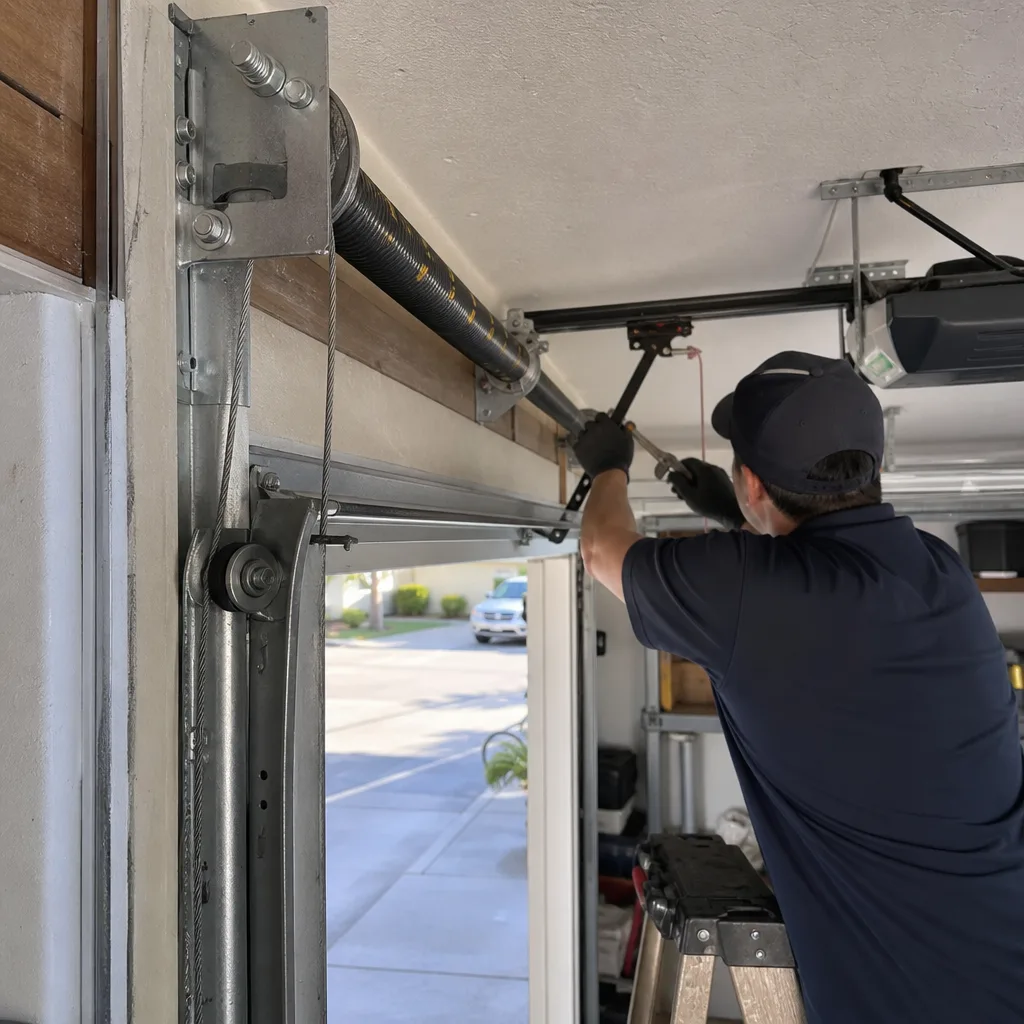
To understand why pros train for this, here is what unwinding a torsion spring requires, step by step:
- Clamp the door to the track so it cannot move.
- Insert one winding bar into a cone socket and apply pressure until the set screws can be loosened.
- Hold the bar firmly while removing the set screws completely.
- Use a second bar to take over the socket position, moving quarter-turn by quarter-turn.
- Repeat the hand-over process up to 30 times for a fully wound spring, depending on door size.
- At all times, at least one bar must be seated and under firm control.
Each of those steps happens under the full stored torque of the spring. One bar slip at step four is an instant, uncontrolled release. This is not a skill you develop on the first try.
What You Can Safely Do Yourself: 4 Spring-Adjacent Tasks
You don’t have to avoid everything connected to the spring. There are real maintenance tasks a homeowner can handle safely, and they will genuinely extend the life of the hardware. We’ll walk through each one.
1. Lubrication
The springs, hinges, and rollers on a Los Angeles garage door collect grit from dry air and coastal humidity depending on your neighborhood. A quick lubrication routine every six months reduces friction and helps the springs work smoothly. Use a silicone-based spray or white lithium grease, never WD-40, which is a solvent that strips existing lubricant. Spray the spring coils directly, then cycle the door once to distribute. You are touching nothing under tension during this task.
2. Visual Inspection
Stand on a ladder and look at the springs without touching them. You are looking for two things: a visible gap in the torsion spring coil, which means the spring has snapped, or rusty, fraying strands on the cables. Both are signs the professional is needed. The inspection itself is completely safe.
3. Balance Testing
This is the most useful test a homeowner can run. Pull the emergency release cord while the door is closed, then manually lift the door to waist height. A properly balanced door stays at waist height on its own. If it drops, the springs are losing tension. If it shoots up, they are over-tensioned. Either result tells you the springs are headed toward replacement. The test requires no tools and no contact with spring hardware.
4. Listening to the Door
Run the door up and down once and listen. A loud bang from above the door usually means a spring has snapped. Squealing means dry rollers or hinges. Grinding from the opener means the opener is struggling against a spring problem. You are diagnosing, not repairing, and that distinction keeps the task safe.
Extension Springs vs Torsion Springs: Why It Matters
Los Angeles homes built before the 1980s often have extension springs, which run along the horizontal tracks on each side of the door. They stretch and contract rather than wind, but the stored energy is the same class of danger. An extension spring under tension will whip through the air if it comes loose or snaps. The safety cable running through the center is there to contain the spring if it breaks, and older Los Angeles garages frequently lack that cable.
Torsion springs, mounted horizontally above the door opening, are the standard on newer installs and most Los Angeles replacements. They are safer when they break, because the spring typically stays on the shaft, but they are more dangerous to work on, because the winding process involves multiple hand-offs under direct tension.
Some homeowners assume extension springs are easier to replace because the parts are visible. The spring is attached to a pulley and cable system that carries the door’s weight when the spring is stretched. Releasing an extension spring without first clamping the door and relieving the tension is the classic cause of catastrophic injuries. Neither spring type is a safe DIY job.
What ‘Professional’ Actually Means for Spring Work
There is a meaningful difference between a garage door spring technician and a handyman who says they can do it. You want to know which one you are calling.
A competent spring tech arrives with:
- At least two sets of winding bars in the correct diameter for your cones.
- A spring scale or the experience to weigh your door and match spring wire size to door weight. The spring must be matched to the door, not just swapped for “the same size.” Doors get heavier over time with paint, added insulation, or struts.
- The manufacturer torque specifications for your specific door model. Over-winding a spring to compensate for a worn spring is a shortcut that shortens opener life and creates a door that flies up.
- A socket set, set screws on hand, and spare center bearing plates for the shaft. Torsion spring replacement almost always requires checking the center bearing and end bearing plates while the shaft is open.
- Experience with your door brand. A tech who works daily on Clopay and Amarr doors in Los Angeles recognizes the spring sizing charts and the specific bracket setups.
The technician’s training matters more than the door brand. What you are paying for is not the twenty minutes of labor; it is the recognition of what to do when the winding cone is seized, when the door weighs 30 pounds more than the label says, or when the shaft is slightly bent. Marlow’s techs are trained on eight leading brands including LiftMaster, Chamberlain, and Raynor, so the person arriving already knows your specific setup.
How to Get a Fair Price on Spring Replacement in Los Angeles
Spring replacement pricing in Los Angeles is surprisingly consistent once you know what a legitimate invoice looks like. Expect to pay between $150 and $290 per spring installed, with most torsion spring jobs landing in the $180 to $340 total range including both springs and labor. Extension spring replacements run slightly lower.
Here is the line-item breakdown you should see on a fair invoice:
- Springs: The springs themselves. A legitimate company lists the spring wire size, coil diameter, and length on the invoice. This is the specification, not just “springs.”
- Labor: One line item, usually a flat install fee that includes winding and balance testing.
- Parts check: Any replacement center bearing, end bearing plate, or cable. Some jobs need them, some don’t. If you see a long list of parts you didn’t discuss, ask.
The one line item that signals a bait-and-switch quote is a low spring price paired with a vague “service fee” or “tube and shaft adjustment” that raises the total by hundreds once the tech is on site. The written quote should be specific enough that the total matches the number you agreed to. At Marlow, the written price is locked before work starts, so the invoice matches the agreement every time.
Also ask whether the quote includes both springs. Standard practice is to replace both springs on a double-wide door even if one snapped, because they wear at the same rate. A quote for only one spring is a red flag that you will be paying for a second service call within months.
Common Mistakes to Avoid
- Using a screwdriver as a winding bar. This is the most common injury-causing action in garage door spring work. The shaft slips out of the cone under torque, and the cone spins with enough force to shatter bone.
- Replacing only the broken spring. On a two-spring door, the unbroken spring has the same mileage and fatigue as the one that snapped. You’ll be back for the second one within a year, and you’ll pay a second dispatch fee.
- Attempting spring work with the door open. The spring holds the least tension at the top of the track. A DIYer who tries to unwind a spring with the door up is fighting the maximum stored energy.
- Skipping the safety cable on extension springs. If an extension spring snaps without a containment cable, it becomes a projectile. Older Los Angeles homes often lack these cables entirely.
- Buying the cheapest spring online. Springs are sized in wire gauge increments. A spring that is one gauge off will make the door dangerously unbalanced. The savings disappears the first time the door crashes down.
- Winding the spring by the number of turns on the old spring. If the old spring was wound by a non-professional previously, it may be holding the wrong number of quarter-turns. You would be replicating a mistake.
- Waiting out a snapped spring. A door with one broken spring is now being lifted entirely by the opener and the remaining spring. Every cycle strains the opener motor, and you’ll likely end up paying for a gear replacement along with the spring.
When to Call a Professional
If you hear a snap from the garage, see a visible gap in a torsion spring, or can’t lift the door manually without the opener’s help, the spring has failed or is failing. Call a professional immediately rather than continuing to run the opener. The same applies to a frayed cable, a door that’s leaning in the tracks, or any time you see the door moving unevenly. In Los Angeles, Marlow Garage Door Repair offers free estimates and a written price before any work starts, so you’ll know the full cost before committing. Call (512) 883-4374 to talk to a live person any time, day or night.
Frequently Asked Questions
Garage door spring replacement in Los Angeles typically costs $150 to $290 per spring installed, with most two-spring torsion jobs landing between $180 and $340 total including labor. Extension spring replacements run slightly lower. Your specific price depends on door weight, spring type, and whether any bearing plates or cables need replacing while the shaft is open. Call (512) 883-4374 for a free, exact quote with a written price before work begins.
No. Torsion and extension springs store enough energy to cause severe injury, and the tools required for safe handling are specialized equipment that requires training to use correctly. The tasks you can safely do yourself are lubrication, visual inspection, and balance testing. For replacement, call a trained technician. Find more guides & resources on our blog.
Most garage door springs are rated for 10,000 cycles, which translates to 7 to 10 years for the average Los Angeles homeowner who opens and closes the door 3 to 4 times a day. Coastal humidity in areas like Santa Monica or Playa del Rey can shorten that lifespan if the springs aren’t lubricated regularly.
If a torsion spring breaks while the door is open, the door can slam shut with the full weight of the door because the spring is no longer counterbalancing it. The opener’s safety reverse may not stop it in time. If you hear a spring snap, do not operate the door manually or with the opener, and call for repair right away.
You should not. The opener motor is not designed to lift the full weight of the door without the spring’s help, and running it on a broken spring strains the motor gear, which can strip and add a second repair to the bill. Disconnect the opener and leave the door closed until a technician arrives.
Yes. Marlow’s technicians are trained on eight major brands including LiftMaster, Chamberlain, Genie, Clopay, Amarr, Wayne Dalton, Craftsman, and Raynor. When the tech arrives for your spring repair in Los Angeles, they already know your specific door’s setup. Cable repairs are also handled on the same visit.
The Bottom Line
Garage door spring repair is one of the few home tasks where the DIY answer is nearly universal: don’t. The physics are unforgiving, the tools are specialized, and the injury risk is concrete, not a liability disclaimer. What you should do is handle the safe maintenance, run a balance test twice a year, and keep an eye on the springs. When a spring fails, the decision is less about whether to call a professional and more about which professional to call. In Los Angeles, that means one with a written price, brand-specific training, and a 365-Day Done Right Promise on every repair. Marlow Garage Door Repair home offers exactly that, and the estimate is free.
Written by Jaylen Ross, Owner at Marlow Garage Door Repair, serving Los Angeles since 2002.