
Last updated October 9, 2026
Full 25-point door and opener safety check with every visit - springs, cables, rollers, tracks, and your LiftMaster or Chamberlain opener included
You get a price before we start. It does not change when the truck arrives.
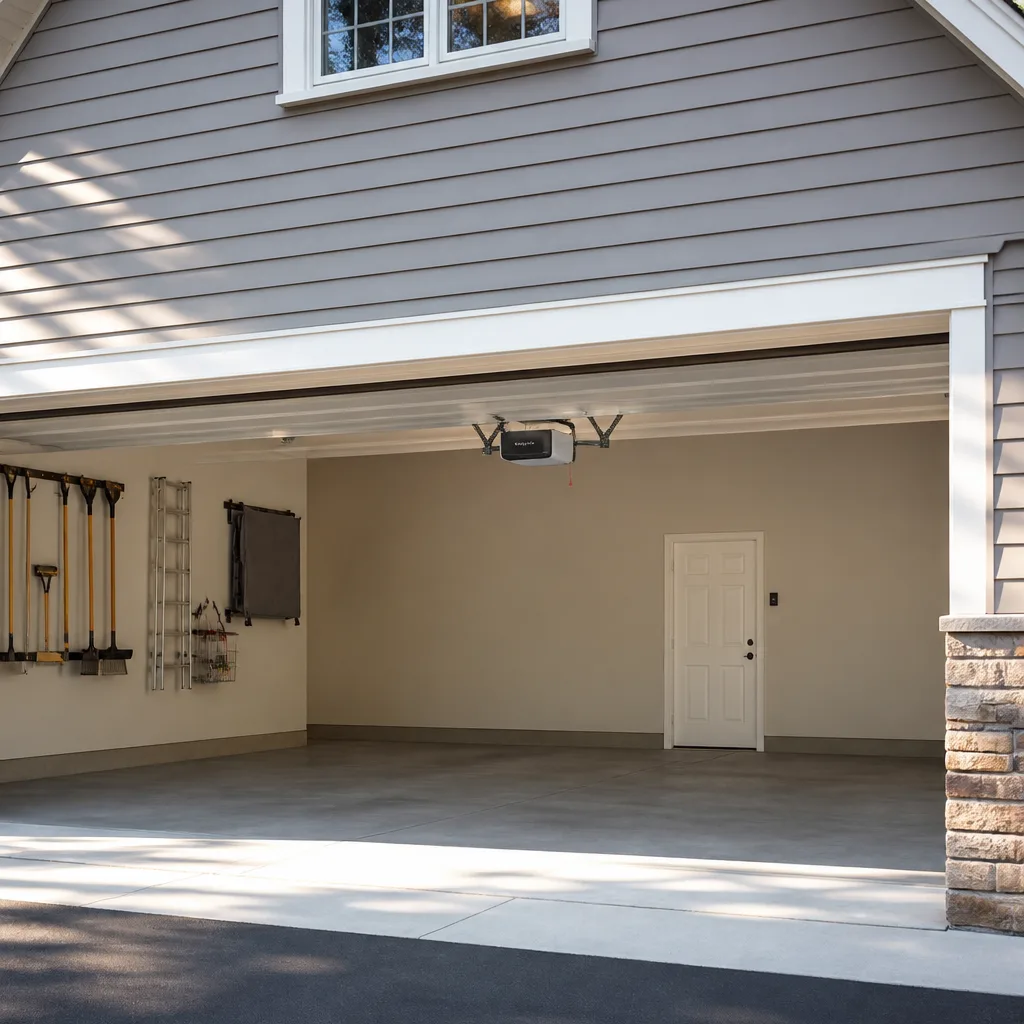
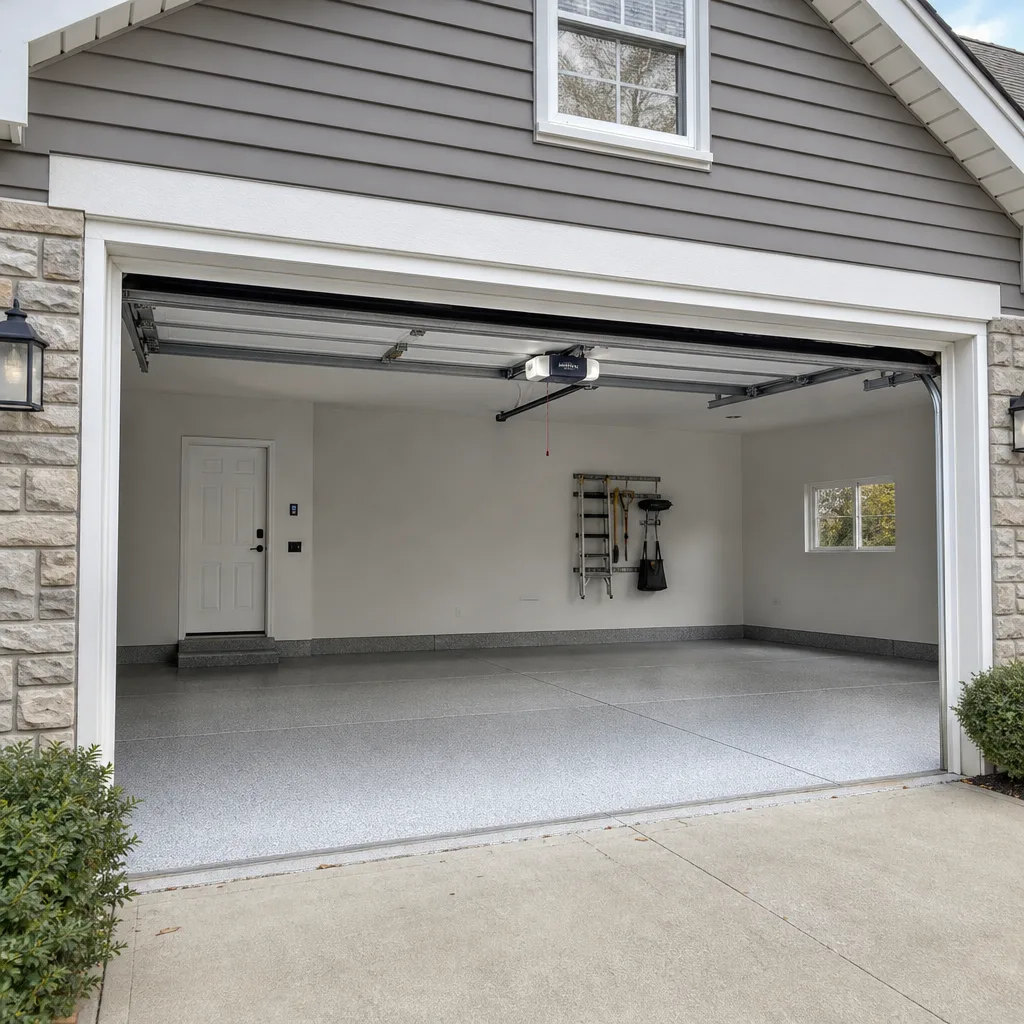
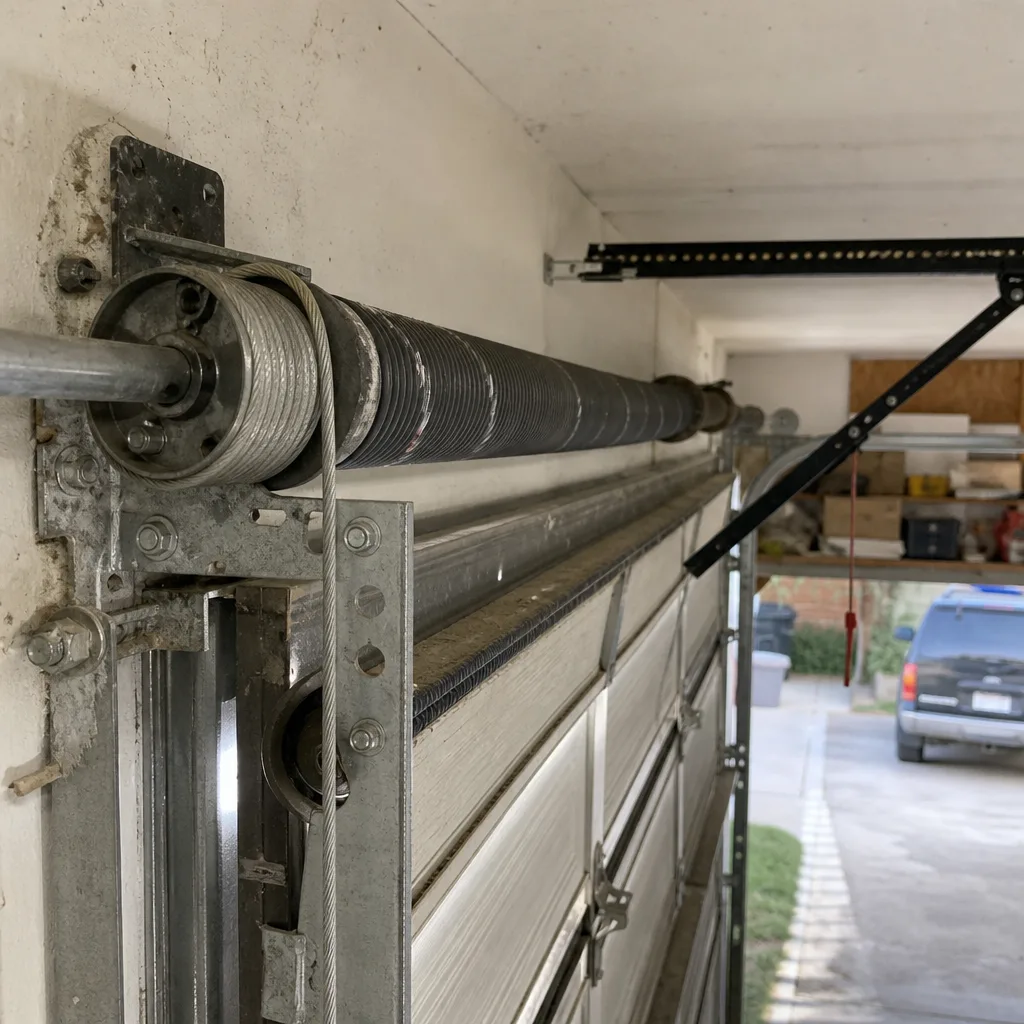 Before
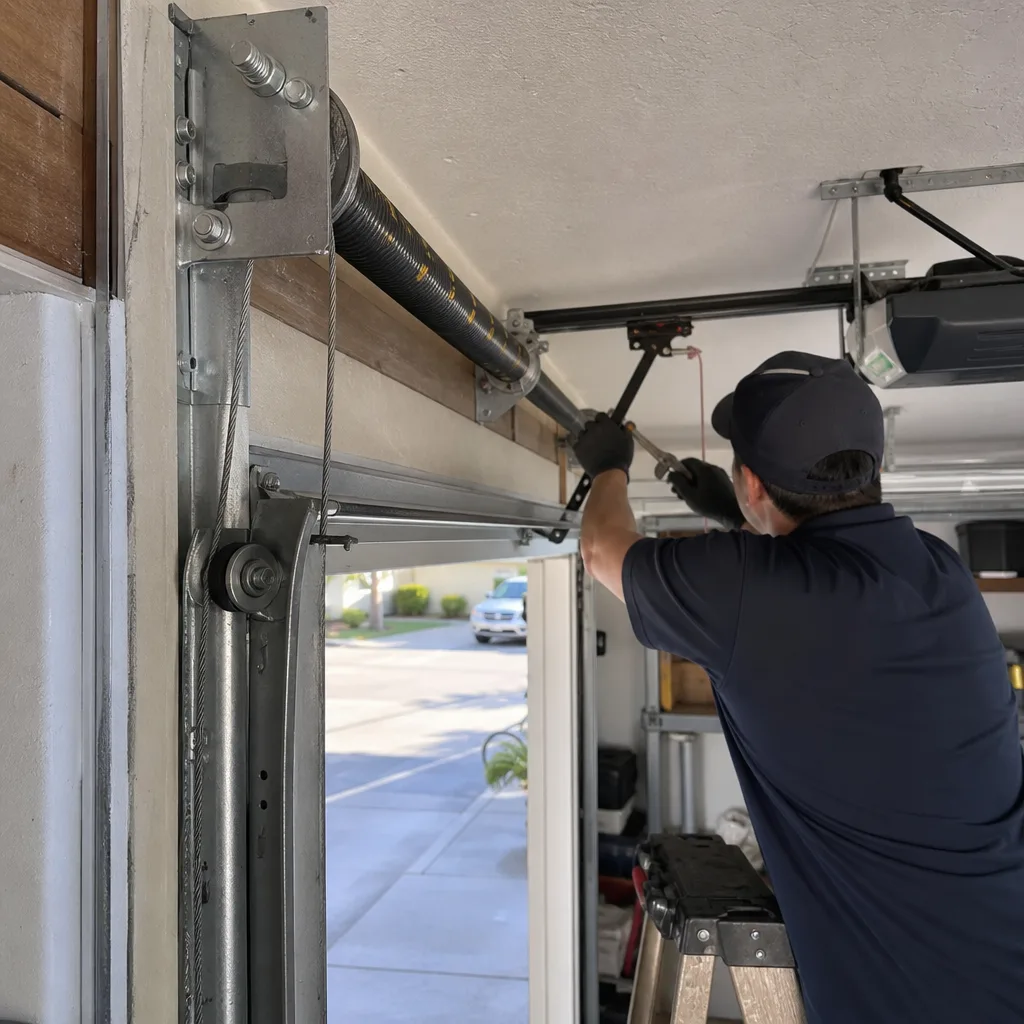 After
After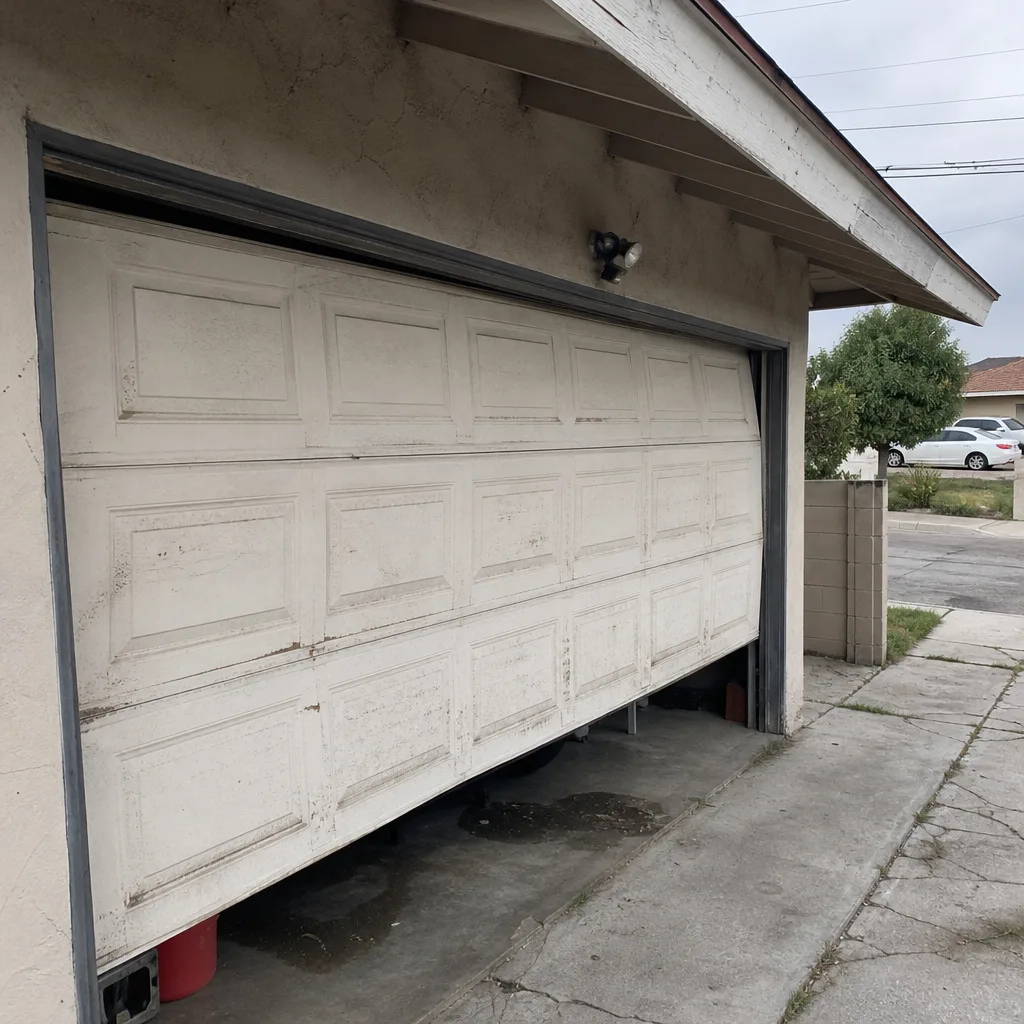 Before
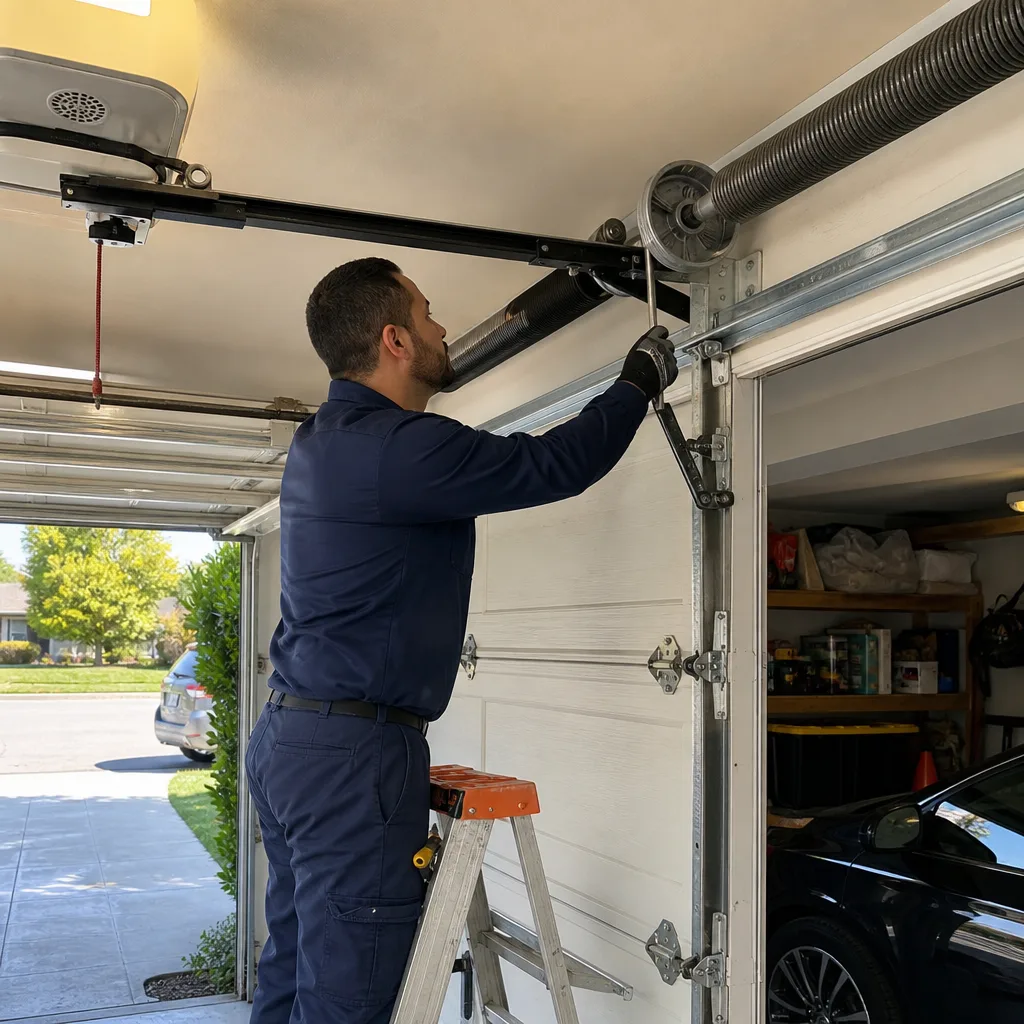 After
After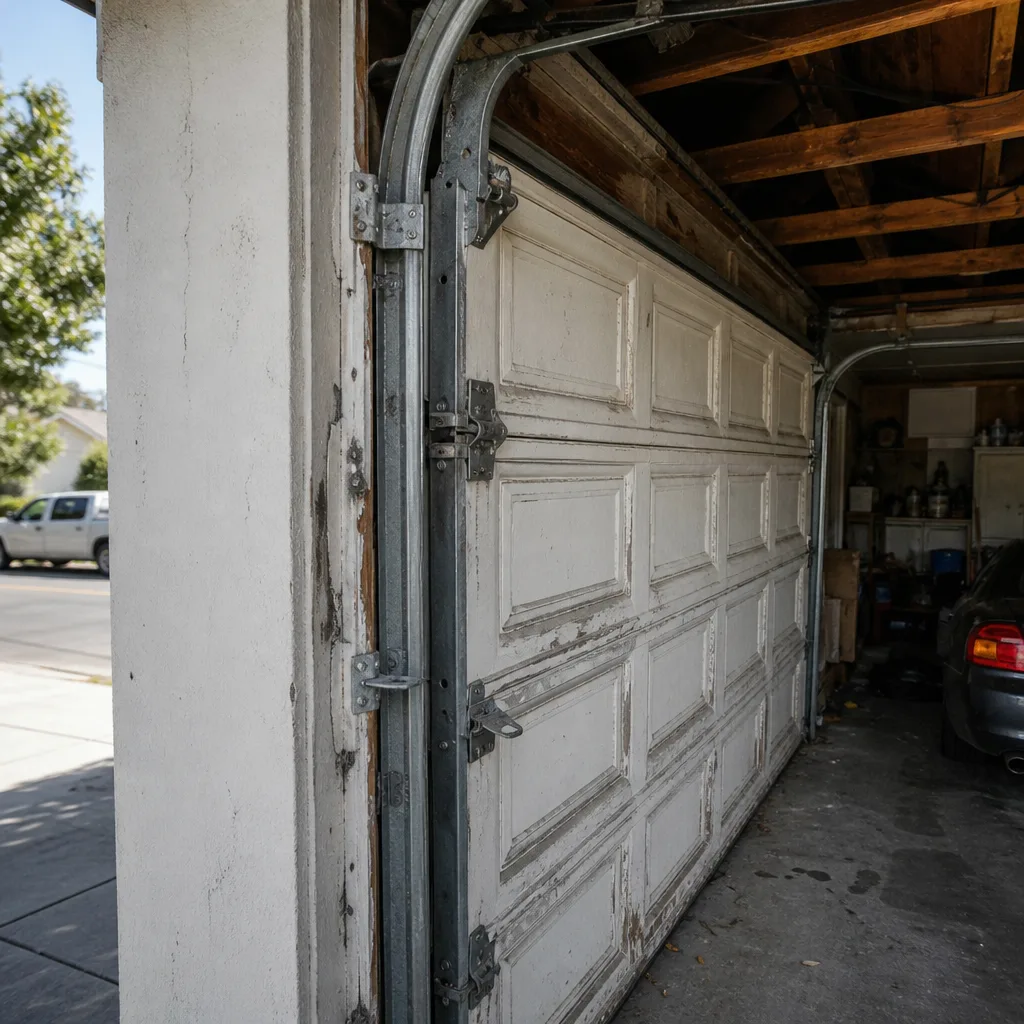 Before
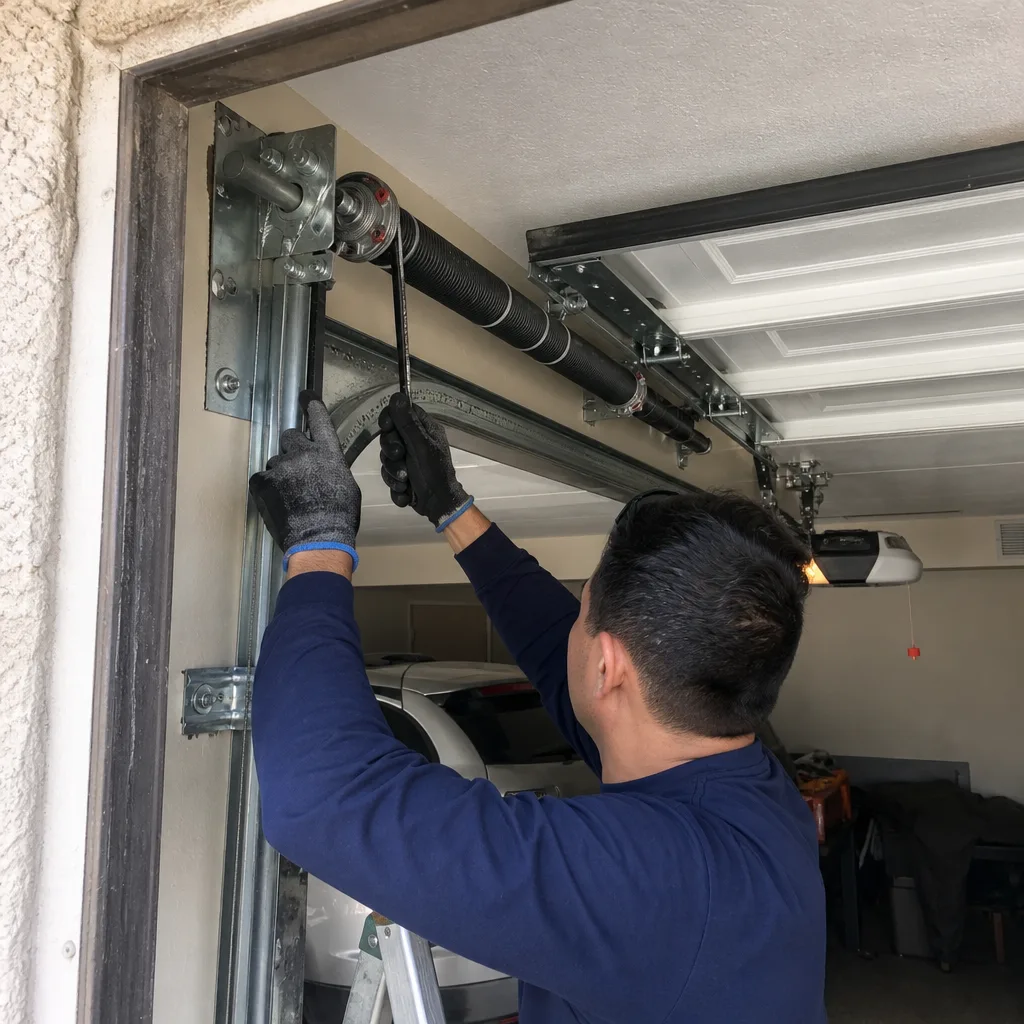 After
AfterDIY vs Professional Garage Door Cable Repair: What’s Safe to Do Yourself
Here’s a surprising stat most garage door guides won’t tell you: roughly 70% of what homeowners call a “cable problem” is actually a symptom, not the root cause. The cable snapped or slipped because a spring failed, a drum wore down, or the door came off its tracks. Which means the real conversation isn’t about whether you can replace a cable. It’s about whether the spring attached to that cable is about to release a thousand pounds of stored energy. This guide draws the line clearly: what’s genuinely safe to tackle on a Saturday afternoon in Los Angeles, and where the physics stop caring how handy you are. For related reading, see our DIY vs Professional Garage Door: The Los Angeles Homeowner’s Decision Guide.
Quick Answer
Garage Door Cable Repair services are only safe to DIY when the cable is disconnected from spring tension. Cable inspection, lubrication, and minor bracket tightening are fine for a capable homeowner. Anything involving cable replacement near a wound torsion spring, drum re-rewinding, or bottom bracket replacement under load should be handled by a trained professional. The dividing line is spring tension, not cable complexity.
Table of Contents
- How Garage Door Cables Actually Work
- The Real Danger: Stored Energy, Not the Cable Itself
- The Task-by-Task Safety Matrix
- What’s Safe to Do Yourself: Tools and Steps
- What Requires a Professional: The Hard Stop Line
- Los Angeles Homeowner Insurance and Liability
- Cost-Benefit: When DIY Beats a Service Call, and When It Doesn’t
- Common Mistakes to Avoid
- When to Call a Professional
- Frequently Asked Questions
How Garage Door Cables Actually Work
Garage door cables are the steel wires that run along both sides of your door, connecting the bottom brackets to the drums at the top. When you press the opener button, the motor turns a shaft at the top of the door. That shaft spins two drums, and those drums wind or unwind the cables. The cables then pull the door up or lower it down evenly. In Los Angeles, where most homes built after the 1960s use standard 7-foot sectional doors, this setup is nearly universal across LiftMaster, Genie, and Chamberlain installations.
The cable itself is a braided steel rope about ⅛ inch thick, usually rated to handle far more weight than your door actually exerts. It doesn’t stretch, and it rarely fails on its own. When we get calls in neighborhoods like Echo Park or Van Nuys about a “frayed cable,” the real culprit is almost always something else: a spring that’s lost tension, a drum that’s misaligned, or a panel that’s binding against the track. The cable wears because it’s rubbing, and it’s rubbing because the door isn’t lifting straight.
This matters for the DIY conversation because replacing a symptom without addressing the cause just means the new cable fails again in a few months. A capable homeowner can absolutely diagnose and inspect cables. But diagnosing correctly requires understanding the whole system, and that’s where the spring enters the picture.
The Real Danger: Stored Energy, Not the Cable Itself
A single torsion spring on a standard two-car garage door stores enough energy to lift roughly 200 to 400 pounds and fling it upward with violent force. When wound, that spring is under constant tension, even when the door is closed. The cables are what connect that tension to the door. If a cable snaps while the spring is wound, the spring releases its energy in a fraction of a second. The cable becomes a steel whip. The spring itself can spin the shaft fast enough to break fingers, hands, or whatever happens to be in the way.
The danger isn’t the cable. The cable is just steel wire. The danger is what the cable is attached to on the other end: a wound torsion spring. That’s why the DIY conversation is usually framed wrong. Most guides ask, “Can you replace a cable?” The better question is, “Is the cable you’re touching connected to a spring that’s still under load?”
In Los Angeles, the climate adds a wrinkle. Coastal moisture in areas like Venice and Santa Monica accelerates rust on cables and drums, so we see more corrosion-related wear than inland neighborhoods. Heat in the Valley causes metal components to expand and contract, which can loosen set screws on drums over time. A cable that looks fine in January can start fraying by August in Woodland Hills. None of this changes the safety equation, but it does mean LA homeowners should inspect cables more often than the national average would suggest.
The Task-by-Task Safety Matrix
Here’s the honest breakdown. For more guides & resources, visit our blog. This isn’t a list of warnings that everything is dangerous. It’s a clear line: some tasks are genuinely fine for a capable homeowner with basic tools, and some are not, no matter how many YouTube videos you’ve watched.
| Task | DIY Safe? | Why or Why Not |
|---|---|---|
| Visual cable inspection | Yes | Look for fraying, rust, loose brackets. Zero risk if you don’t touch anything under tension. |
| Cable lubrication | Yes | Spray silicone lubricant on the cable while the door is closed. Spring stays wound; no tension released. |
| Tightening a loose cable bracket | Yes, with caution | Only if the cable is slack and the bracket isn’t under load. Use lock pliers to secure the cable first. |
| Repositioning a slipped cable off the drum | Stop here | The drum only accessible when the spring is wound. This is where injuries happen. |
| Replacing a cable on one side | No | Requires unwinding the spring first. That’s professional territory. |
| Replacing a bottom bracket attached to the cable | No | The bottom bracket holds the cable under full door weight. Removing it wrong drops the door. |
| Re-winding a torsion spring | No | This is the single most dangerous DIY task in home repair. Full stop. |
If you’re ever unsure whether a cable is under load, close the door completely and look at the spring above. If it’s wound tight with visible gaps between the coils, assume the system is armed. Treat it like a loaded weapon. Don’t touch the cable.
What’s Safe to Do Yourself: Tools and Steps
For the tasks in the green zone, here’s exactly what you need and how to do it safely. This is the part most guides skip: they tell you what’s safe but not what tools actually work.
Visual Inspection
Close the door. Stand inside the garage and look up. Check both cables for frayed strands, rust spots, or shiny wear marks. Look at the drums at each end of the top shaft. They should be smooth and evenly wound. Check the bottom brackets where each cable attaches to the door. Loose bolts or a cable that looks like it’s about to slip off the bracket are red flags.
What you need: a flashlight, a step ladder, and five minutes. No special tools.
Cable Lubrication
Cables don’t need much lubrication, but in Los Angeles, where coastal salt air and Valley dust take turns attacking metal, a light coat of silicone spray every six months extends cable life. Use a silicone-based lubricant, not WD-40, which attracts dust and creates a sticky film. We’ve seen doors in Boyle Heights where WD-40 buildup actually caused the cable to bind against the drum.
- Close the door fully.
- Spray a light coat of silicone lubricant onto a rag, not directly onto the cable.
- Wipe the cable from top to bottom on both sides.
- Operate the door once to distribute the lubricant.
Tightening a Loose Cable Bracket
If a cable has gone slack but hasn’t fully come off the drum, you can sometimes re-secure it. This one requires judgment. If the door is partially open and the cable is taut, stop. Call a professional. If the door is fully closed and the cable is visibly loose, you can proceed.
- Close the door and disconnect the opener by pulling the red release handle.
- Place locking pliers on the track just below the bottom roller to prevent the door from moving.
- Loosen the set screws on the drum slightly.
- Pull the loose cable taut and reposition it in the drum groove.
- Tighten the set screws and remove the pliers.
- Reconnect the opener and test the door manually first.
For these tasks, you’ll need: a 7/16-inch wrench (most common size for set screws), locking pliers, a socket set, and silicone lubricant. Total tool cost: about $40 at any Los Angeles hardware store. Time: 20 to 45 minutes.
What Requires a Professional: The Hard Stop Line
Now for the line you don’t cross. When a cable has snapped entirely, come off the drum, or when the bottom bracket has failed, the repair requires unwinding the torsion spring. See our DIY vs Professional Garage Door Repair: What’s Safe to Do Yourself for a deeper breakdown. That’s not a skill question. It’s a physics question. A wound torsion spring doesn’t care if you’ve been working on cars for twenty years or if you’ve watched every video on the subject. It will release its energy in one violent motion if handled incorrectly, and the results are often permanent.
The professional process looks like this: the technician unwinds the spring using two solid steel winding bars, releases tension from the shaft, replaces the cable and any worn drums or bearings, then re-winds the spring to the exact number of turns specified for your door’s weight and height. On a LiftMaster or Chamberlain system, that’s typically 7 to 9 quarter-turns for a standard 7-foot door. Too few turns and the door won’t lift evenly. Too many and the spring’s lifespan drops dramatically. Get it wrong and the door can fly open or crash closed.
Marlow Garage Door Repair handles this work daily across Los Angeles, from Koreatown to Sherman Oaks. Our techs train specifically on eight major brands, including LiftMaster, Genie, and Clopay, so the person arriving at your door already knows how your specific system behaves. Every repair comes with a written price before work starts and is covered by the 365-Day Done Right Promise. If the fix fails within a year, we come back and make it right at no charge.
You can see a fuller breakdown of what’s involved on our Garage Door Cable Repair in Los Angeles page.
Los Angeles Homeowner Insurance and Liability
Here’s the part most DIY guides completely ignore: what happens if you attempt a repair and it goes wrong. In Los Angeles, homeowner’s insurance policies typically cover sudden and accidental damage to your home. They also typically exclude damage caused by negligent DIY repairs. If you attempt a cable repair on a door with a wound spring, the door slams down and damages your car, or the cable snaps and injures a family member, your insurer may deny the claim on the grounds that the damage resulted from unlicensed, unqualified work.
This isn’t a scare tactic. It’s the actual language you’ll find in most standard HO-3 policies, which cover the majority of single-family homes in Los Angeles. Insurance companies consider garage door spring and cable repair to be a “specialized trade” in the same category as electrical or gas work. A licensed, insured professional carries liability coverage that protects the homeowner if something goes wrong. A DIYer doesn’t.
Beyond insurance, there’s the question of what you’re actually saving. A typical cable repair by a professional in Los Angeles runs between $150 and $250, including parts and labor. The tools you’d need to do it safely, including winding bars, new cables, and replacement drums if needed, run $80 to $120. You save perhaps $100. You give up three hours on a Saturday, you take on the physical risk, and you void the implied protection of professional liability coverage. For most LA homeowners, the math doesn’t work. Which brings us to the cost breakdown.
Cost-Benefit: When DIY Beats a Service Call, and When It Doesn’t
Let’s be honest about the numbers, because that’s the only way to make a rational decision.
When DIY Clearly Wins
- Inspection and lubrication: $12 for a can of silicone spray, 15 minutes of your time. No professional charges less than $75 just to show up. DIY is the clear winner here.
- Tightening a loose bracket: If the cable is slack and you have the right wrench, this is a 20-minute fix. You’d spend more time on the phone scheduling a pro than doing it yourself.
- Silencing a squeaky cable: Lubrication solves 80% of noise issues. Zero reason to call anyone.
When Professional Clearly Wins
- Snapped cable or cable off the drum: Requires unwinding the spring. Professional cost: $150 to $250 in Los Angeles. Your risk: serious injury. The $250 is cheaper than an ER visit, and unlike the ER visit, it comes with our garage door spring repair expertise.
- Both cables needing replacement: Symmetrical wear usually means the spring is failing too. A pro replaces the whole assembly in one visit. A DIYer replaces cables, then pays for a spring replacement two months later. You’ve now paid twice.
- Bottom bracket failure: The door can drop during removal. Not worth the risk for a $30 part.
The honest calculus: the $50 in tools and three hours of work that a DIY guide promises only applies to the green-zone tasks. The moment you’re touching a cable attached to a wound spring, the value proposition collapses. A professional service call in Los Angeles costs what it costs because it includes liability coverage, trained hands, and a guarantee. That’s what the $175 to $250 is actually buying. You’re not paying for the cable. You’re paying for the knowledge of which spring to unwind, how many turns, and what to do if the drum’s been warped by six months of uneven loading.
Marlow Garage Door Repair gives you a written price before any wrench turns. The number we quote is the number you pay. No discovery fees, no “while we’re in there” add-ons. If you want to see how that works, start with our Garage Door Repair in Los Angeles overview.
Common Mistakes to Avoid
- Using WD-40 on cables or springs. It’s a solvent, not a lubricant. It strips away the protective coating and attracts dust. In dry, dusty LA summers, this accelerates wear. Use silicone spray instead.
- Watching the YouTube video where the guy unwinds a spring with a screwdriver. Those videos get views because they’re dramatic, not because they’re safe. The people who successfully did it were lucky, not skilled. The people who failed aren’t posting follow-up videos.
- Replacing one cable only. Cables wear in pairs. If one snapped, the other is close behind. Replacing one means you’ll be back in the garage in two months, frustrated and paying twice. Professionals replace both.
- Ignoring a slow-moving door. If your door is taking longer than usual to open or close, the spring is losing tension. That’s the early warning sign before a cable snaps. Address it now, while the repair is still simple and cheap.
- Assuming a snapped cable means the cable was defective. Cables snap because springs fail or drums misalign. If you replace the cable without addressing the cause, you’ve fixed a symptom and left the disease. The door will fail again.
- Working under a partially open door without securing it. Every year, people in Los Angeles are injured when a door they thought was stable comes crashing down. If you’re doing any repair, use locking pliers on the track or clamp the door in place. The door’s weight plus gravity doesn’t negotiate.
- Leaving the opener connected while working on cables. One accidental bump of the remote button on your keychain, and the door activates while you’re mid-repair. Always pull the red release handle and disconnect the opener before any cable work, even inspection.
When to Call a Professional
Call a professional if the cable is frayed or snapped, if it’s come off the drum, if the bottom bracket has failed, or if the door is moving unevenly or slowly. Also call if you’ve completed the green-zone inspection and found anything that doesn’t look right: shredded strands, a drum with deep grooves worn into it, or a cable that’s visibly losing tension. These are all early indicators that the spring is next. Marlow Garage Door Repair offers free estimates in Los Angeles, with live phone support 24/7 and a live arrival time you can track from your phone. Call (512) 883-4374 and a real person answers, day or night.
For those who prefer to handle the booking entirely on their phone, our online scheduling lets you see a written price before the tech arrives, know exactly who’s coming, and pay from a digital invoice link when the job’s done. That’s The Relay Visibility Guarantee, and it’s how we’ve operated since 2002.
Frequently Asked Questions
You can replace a cable yourself only if the cable is completely disconnected from any spring tension, which is rare. In almost all real-world cases, replacing a cable requires unwinding the torsion spring first, and that’s a job for a trained professional with the right tools. Call (512) 883-4374 for an honest assessment and a free estimate.
Professional cable repair in LA typically costs $150 to $250, including parts and labor for both cables. The exact price depends on your door’s weight, spring type, and whether drums or brackets also need replacement. Marlow Garage Door Repair gives you a written price before work starts, so the number we quote is the number on your final invoice.
Look for frayed steel strands, rust spots, a cable that looks slack when the door is open, or a door that opens unevenly with one side higher than the other. Also listen for a grinding or squealing noise when the door moves. Any of these means the cable is failing and the spring may be next. If you see fraying, don’t wait. Call (512) 883-4374.
Yes, lubricating cables is a safe DIY task as long as the door is fully closed and you’re not touching anything under spring tension. Use a silicone-based lubricant applied to a rag, not sprayed directly onto the cable. Do this every six months in Los Angeles to combat coastal moisture and Valley dust.
The door will continue to operate, but only on one functional cable, which puts uneven strain on the entire system. The remaining cable will wear faster, the door will pull to one side, and eventually the spring, drums, or track will fail. A $200 cable repair today prevents a $500-plus spring and track replacement in a few months.
Yes, our team covers the entire Los Angeles area, including the Valley, the Westside, Downtown, and the Eastside. Every job includes a written price before work begins and the 365-Day Done Right Promise, which covers the repair for a full year. Book online or call (512) 883-4374 any time.
The Bottom Line
The DIY question isn’t about whether you’re handy. It’s about whether the cable you’re touching is connected to a wound spring. Inspection and lubrication are genuinely safe, worthwhile tasks that every LA homeowner should do. Cable replacement, drum work, and anything involving the bottom bracket under load belong in professional hands, not because you couldn’t learn the procedure, but because the cost of getting it wrong is severe and permanent. If you’re in Los Angeles and your cable looks questionable, call (512) 883-4374 for a free estimate. A real person answers. You’ll get a written price before any work starts. And if you’d rather read more before deciding, start with our Marlow Garage Door Repair home page for the full picture.
Written by Jaylen Ross, Owner at Marlow Garage Door Repair, serving Los Angeles since 2002.