
Last updated October 9, 2026
Full 25-point door and opener safety check with every visit - springs, cables, rollers, tracks, and your LiftMaster or Chamberlain opener included
You get a price before we start. It does not change when the truck arrives.
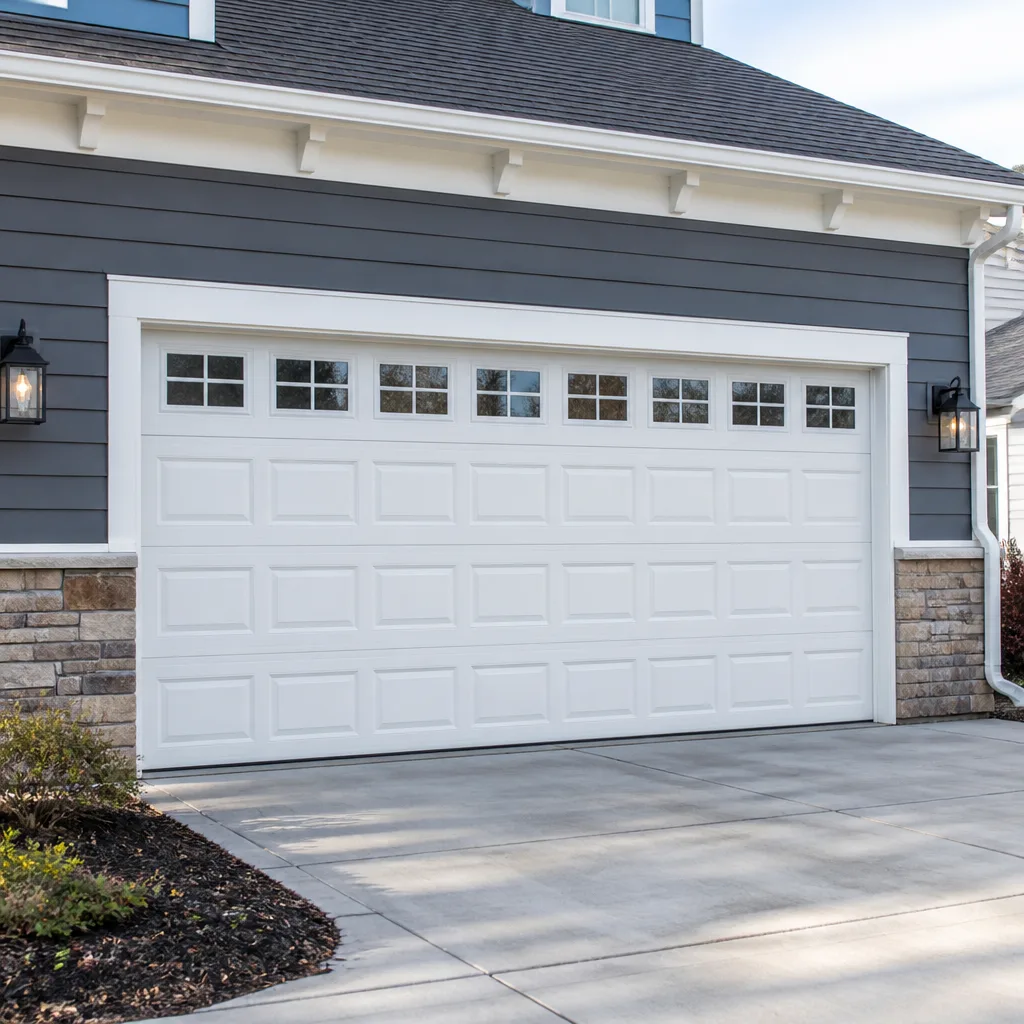
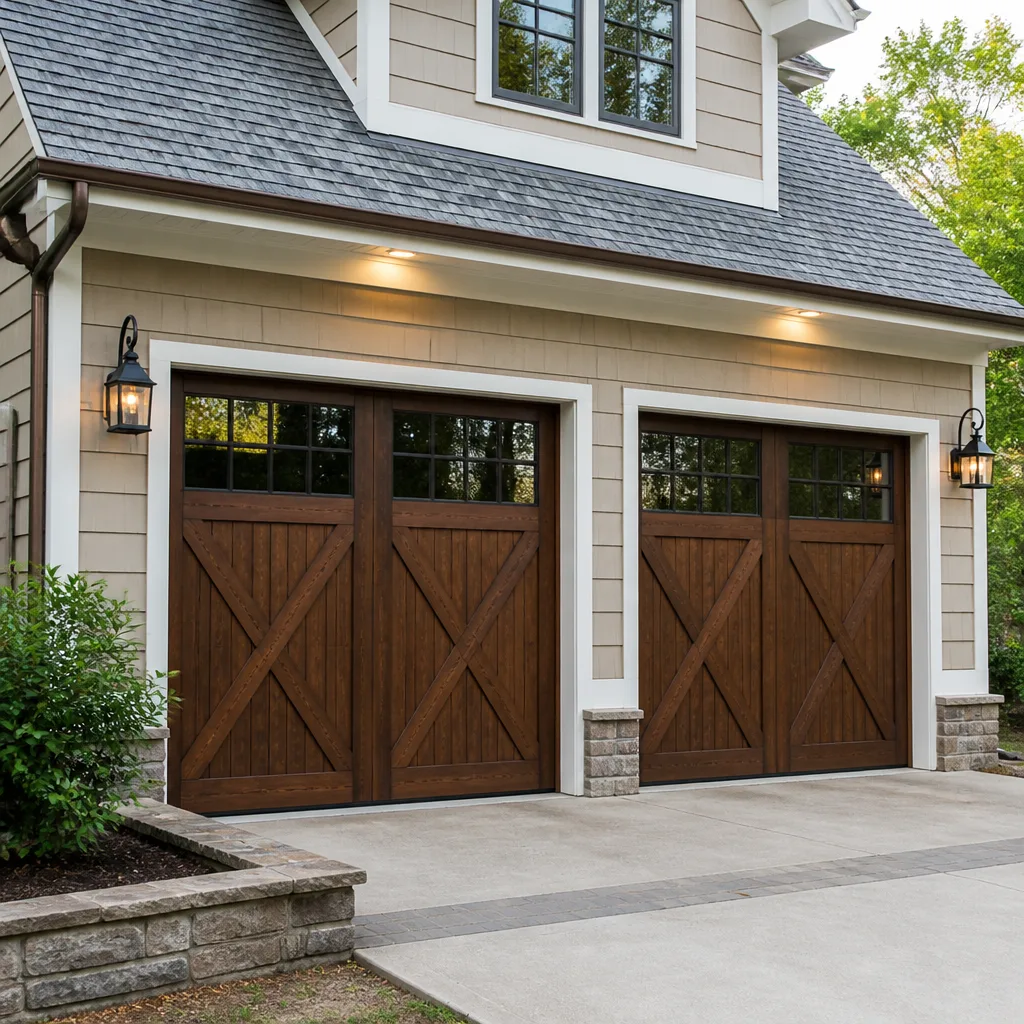
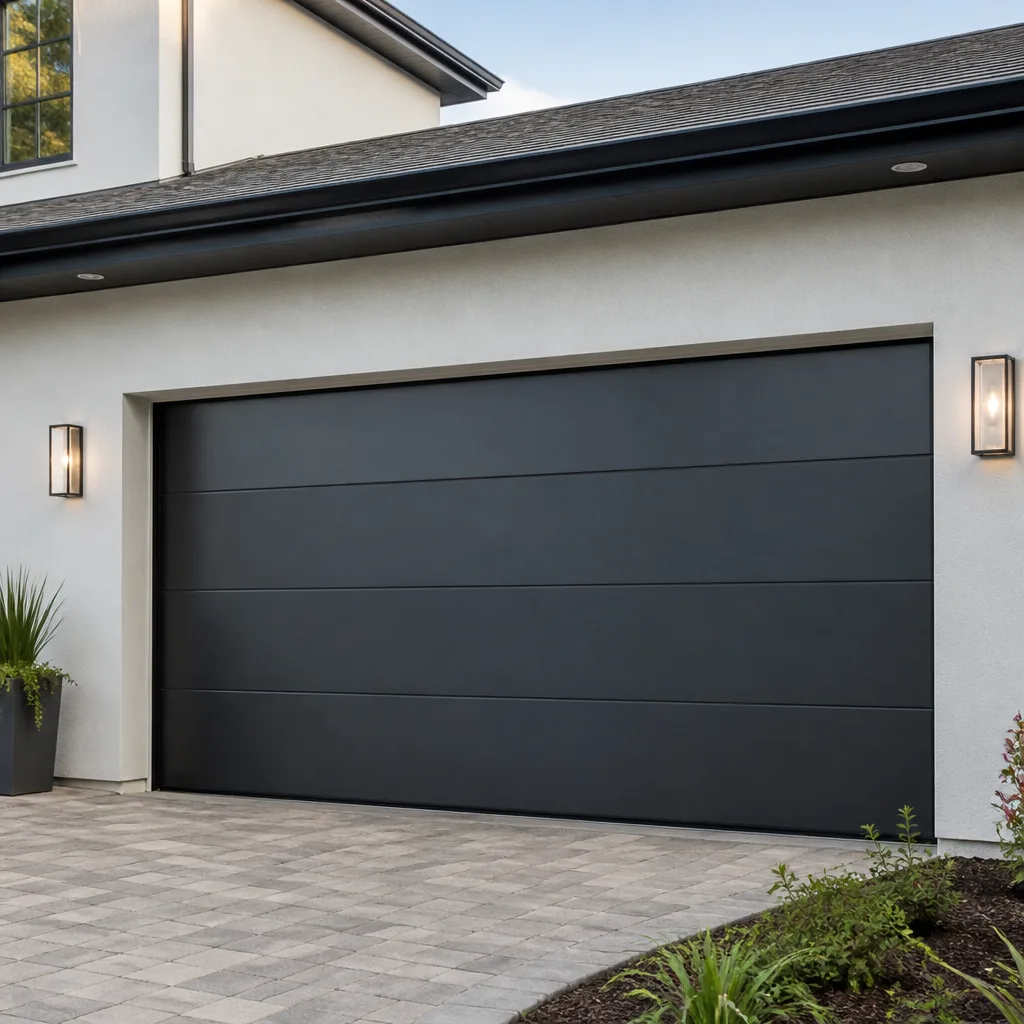
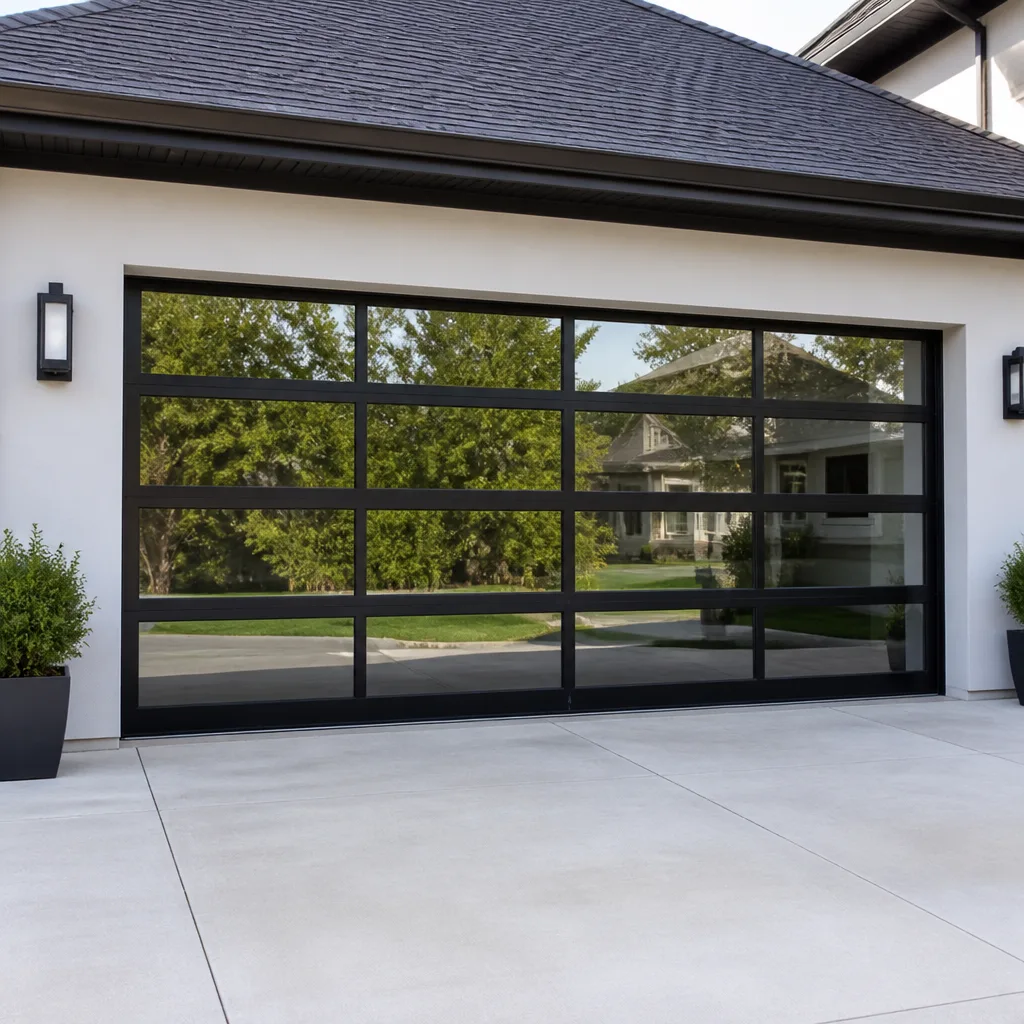
 Before
 After
After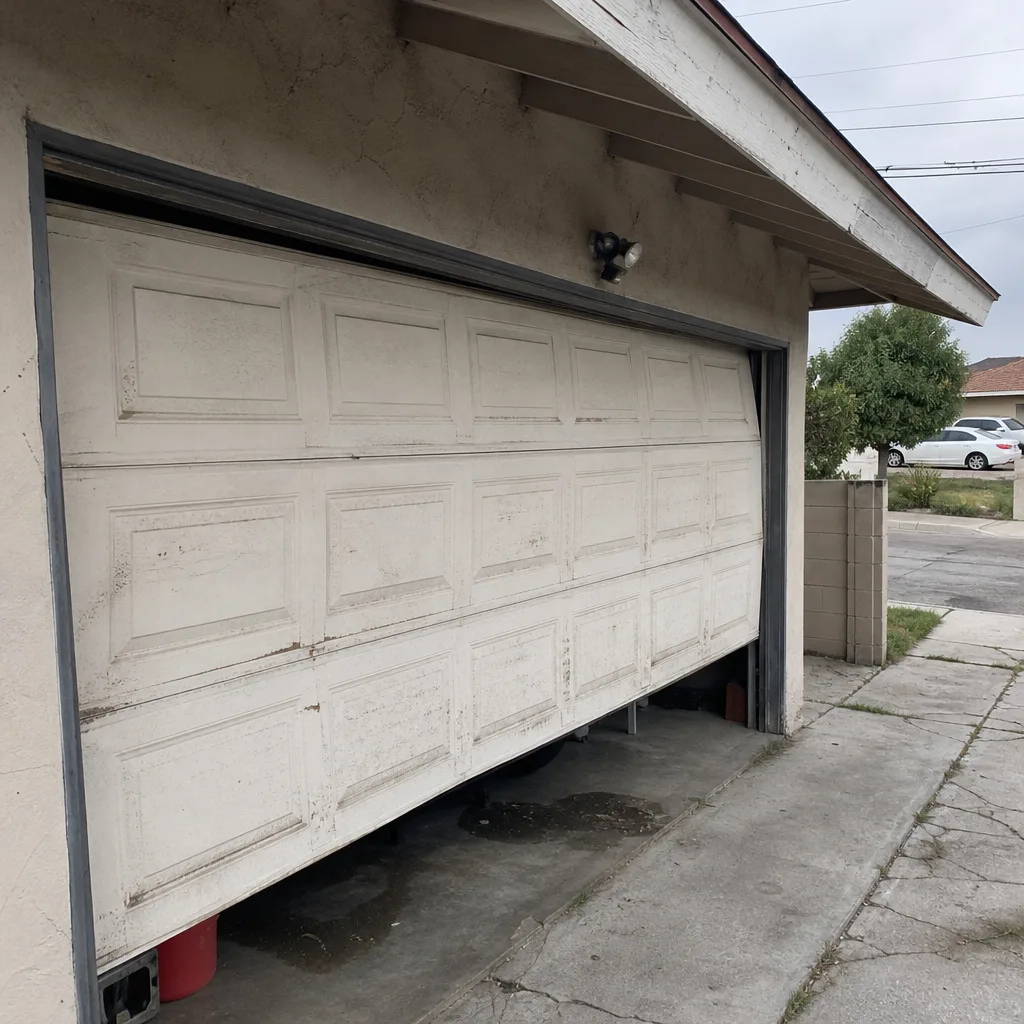 Before
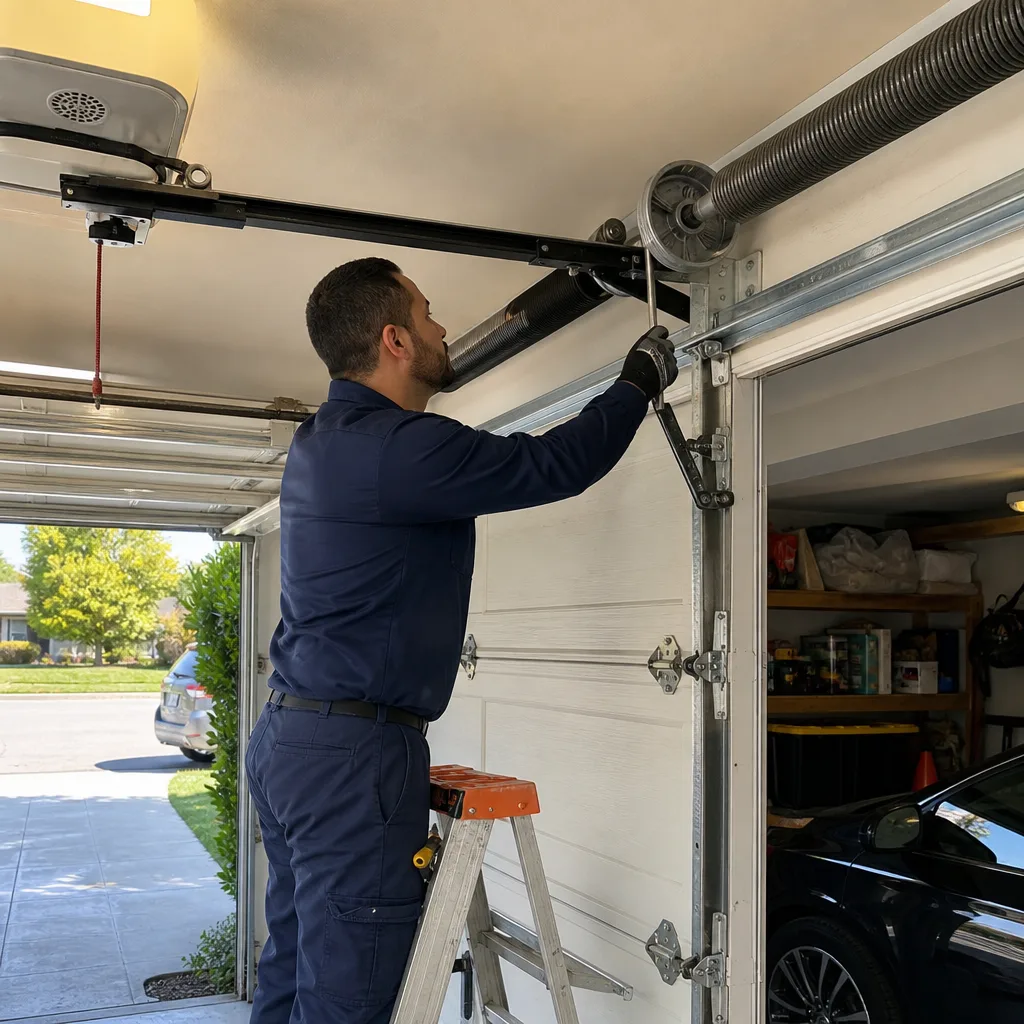 After
After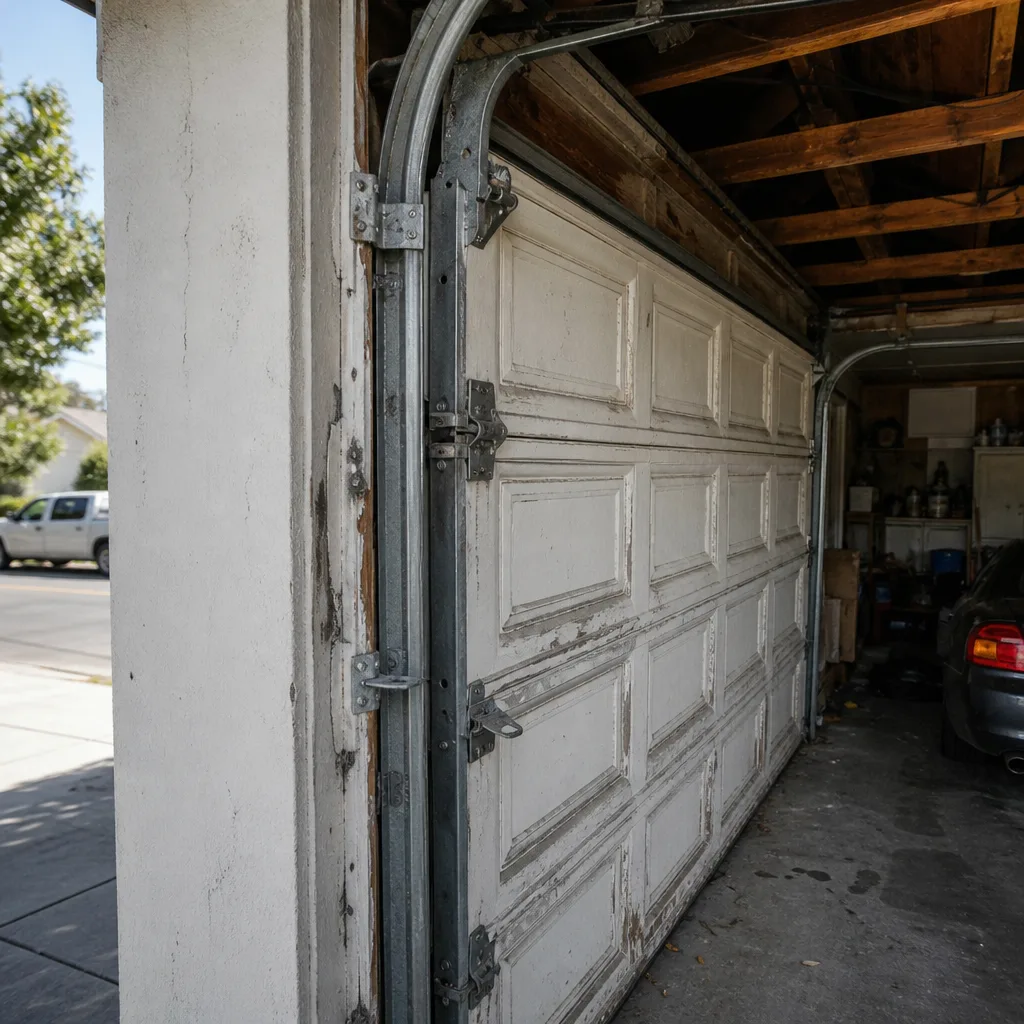 Before
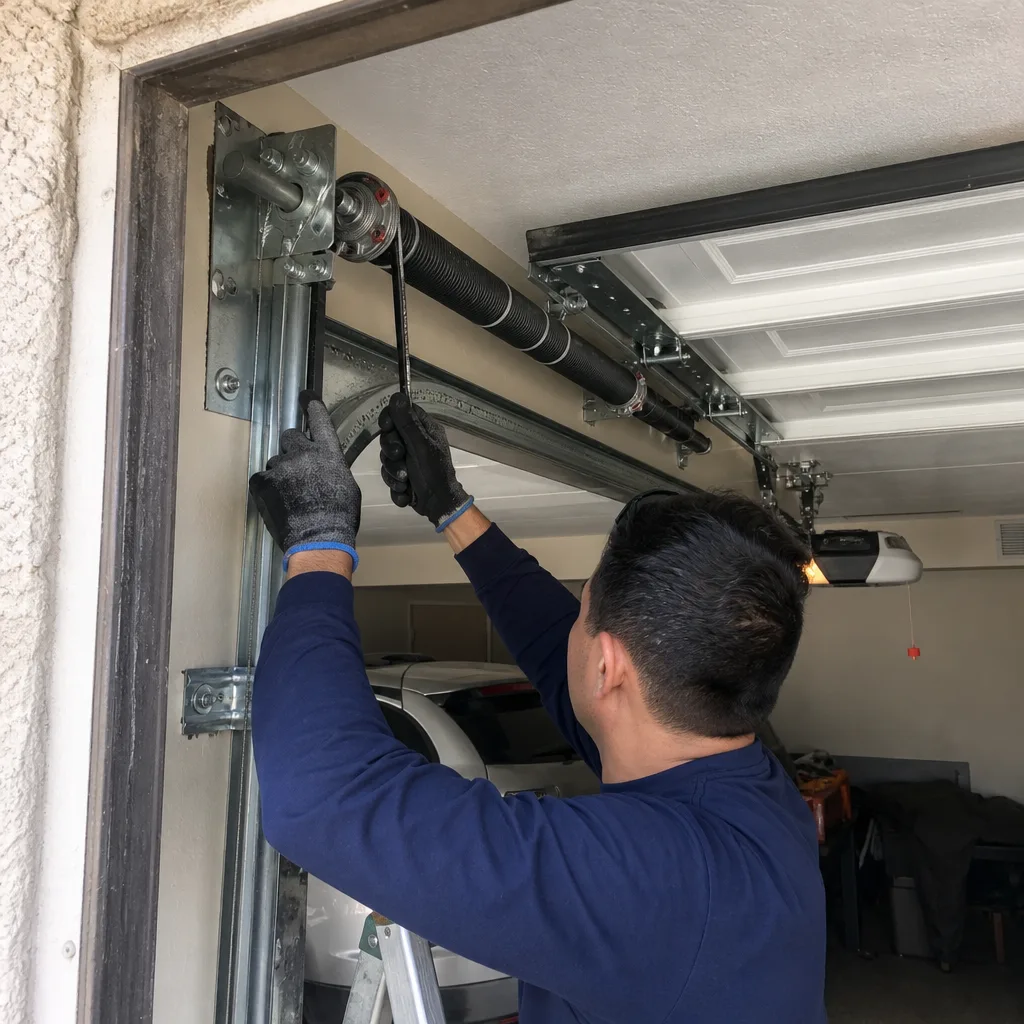 After
AfterThe Complete Garage Door Cable Repair Guide for Los Angeles Homeowners
A cable rated for 10,000 cycles in Ohio might give you 6,000 in Culver City – the salt air doesn’t care what the spec sheet says. Most garage door cable guides online were written by people who’ve never spent a August afternoon in Woodland Hills or a foggy January morning in Playa del Rey, unlike The Complete Garage Door Repair Guide for Los Angeles Homeowners. Those two neighborhoods, barely 20 miles apart, might as well be different planets when it comes to how fast your cables corrode. This guide explains what actually happens to garage door cables in Los Angeles specifically, what repairs cost here, and how to catch problems before your door comes off its tracks at 7 a.m. on a workday.
Quick Answer
Garage door cable repair in Los Angeles typically costs between $150 and $340, depending on whether you have torsion drum cables or extension side cables and whether the job requires a single cable or a matched pair. Because LA’s coastal micro-climates accelerate corrosion, cables here often fail well before their rated lifespan, especially in westside neighborhoods within five miles of the ocean. You can book our Garage Door Cable Repair services online or by phone, and a properly trained technician can diagnose and replace most cables same-day in under an hour.
Table of Contents
- Why Los Angeles Kills Garage Door Cables Faster Than Other Cities
- The Two Cable Types: Torsion Drum vs. Extension Side Cables
- How to Read a Cable’s Lay Pattern for Early Corrosion
- What Garage Door Cable Repair Costs in Los Angeles
- When Cable Replacement in LA Requires a Permit (and When It Doesn’t)
- What You Can Safely Check Yourself (and What You Shouldn’t Touch)
- Maintenance Timelines by Los Angeles Micro-Climate
- Common Mistakes to Avoid
- When to Call a Professional
- Frequently Asked Questions
Why Los Angeles Kills Garage Door Cables Faster Than Other Cities
Garage door cables are made of galvanized steel strands, usually 1/8-inch or 3/16-inch diameter, wound into a 7×7 or 7×19 configuration – seven strands twisted around a core, each strand made of multiple wires. That galvanization is a zinc coating designed to sacrifice itself before the steel underneath corrodes. In a dry inland climate, that zinc layer can last a decade. In Los Angeles, the story changes fast.
Here’s the thing most national guides miss: LA isn’t one climate. It’s at least four, and each one wears cables differently.
Within five miles of the Pacific – Venice, Santa Monica, Marina del Rey, Playa del Rey, parts of Culver City – the air carries marine chloride particles. That salt spray settles on everything, including the cable drums sitting just inside your garage header. Zinc corrodes rapidly in that environment, leaving exposed steel that frays within two to four years instead of eight to ten.
The San Fernando Valley – Woodland Hills, Reseda, Northridge, Canoga Park – has the opposite problem. Dry heat doesn’t cause much corrosion, but it bakes lubricants off the cable drums and bearings. When lubrication fails, the cable rubs against dry metal, and friction starts eating away individual wires. You’ll see this as what looks like fuzzy hair sprouting from the cable surface: individual wire strands breaking free.
Hillside neighborhoods – Silver Lake, Echo Park, Mount Washington, the Hollywood Hills – have their own issue. Garage doors installed on slopes often have slight track misalignment from soil movement over the years. A cable that’s even half a degree off its drum path wears unevenly, and the wear pattern will tell you exactly what’s happening if you know what to look for.
Inland communities like Pasadena, Glendale, and Burbank sit in a kind of middle zone, but temperature swings between summer highs and cooler nights cause condensation cycles that invite corrosion at a slower but steady pace. Bottom line: your cable maintenance schedule should be based on your micro-climate, not a manufacturer’s national average.
In our experience running cable repair calls across Los Angeles, we see westside cables failing at roughly half the lifespan of Valley cables, holding all else equal. That’s not a number you’ll find on a Chamberlain or Genie spec sheet.
The Two Cable Types: Torsion Drum vs. Extension Side Cables
Los Angeles housing stock spans roughly 120 years of building history, and that era matters. It determines which cable system your garage door uses and how it fails.
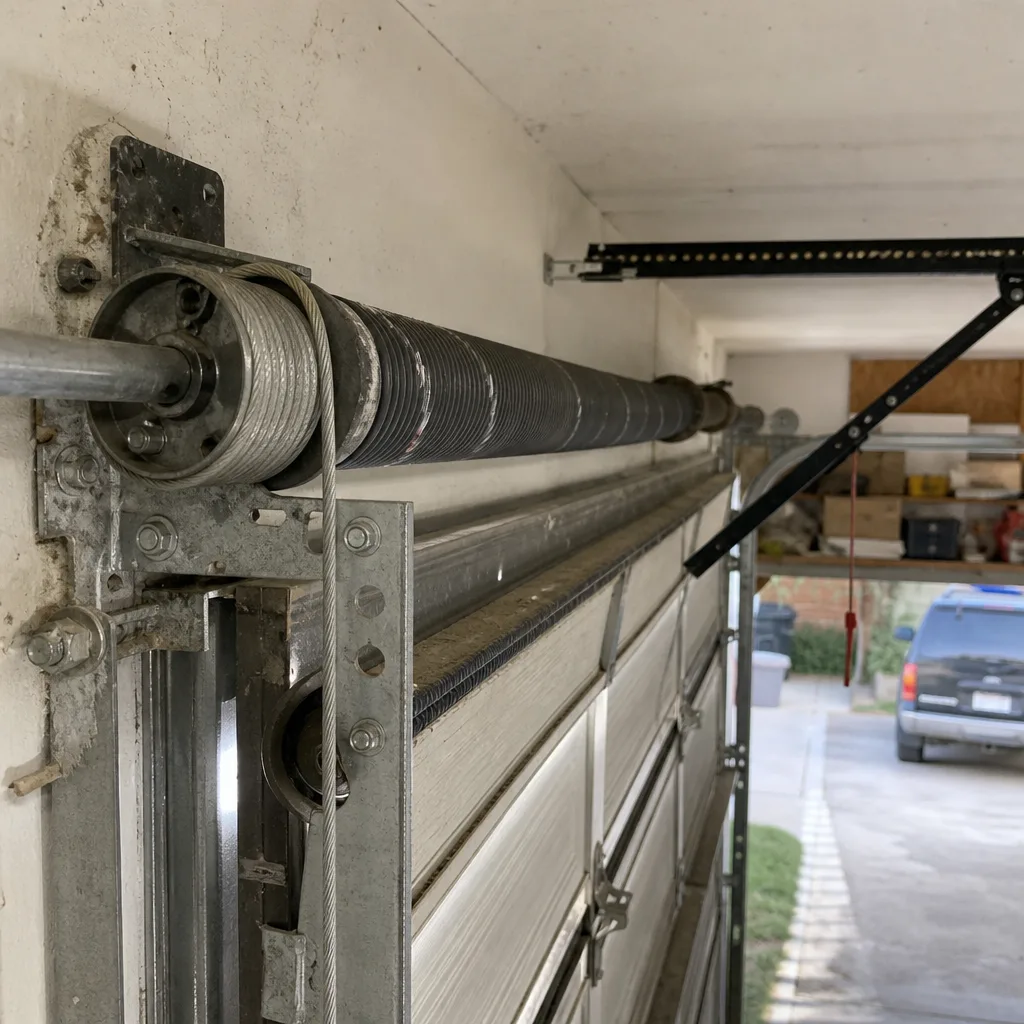
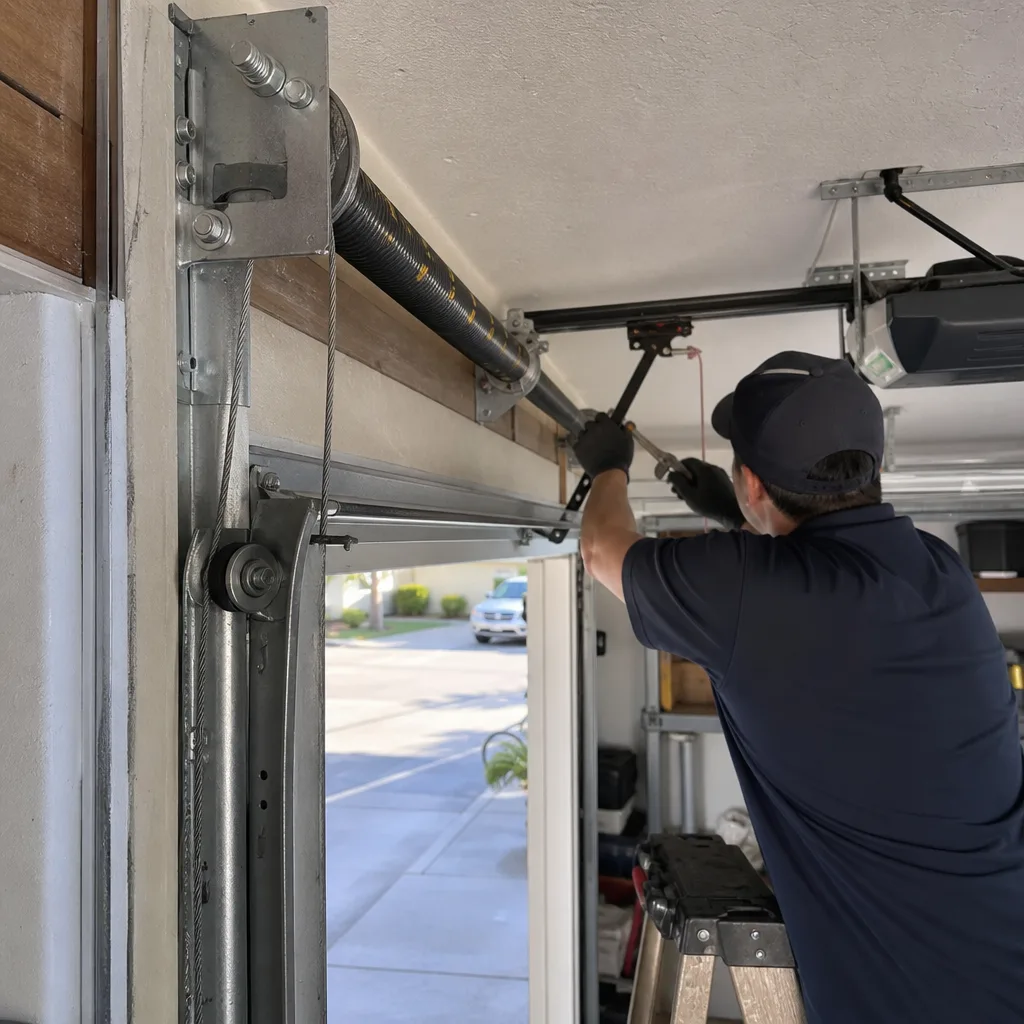
Torsion drum cables work with a torsion spring – the horizontal coil mounted above the door opening that stores lifting energy in its winding. The cables attach to drums at each end of the torsion tube and run down to the bottom roller brackets on either side of the door. When the spring unwinds, it turns the drums, which wind the cables and lift the door. Torsion systems are standard on doors built after roughly 1985, and they’re what you’ll find on the vast majority of LA homes with modern steel panel doors from Clopay or Amarr.
Extension side cables are part of an older system that stretches a long, thin spring along each horizontal track. These cables run vertically beside the door, attached to the bottom bracket and running up to a pulley near the front of the track. Extension systems show up most often on pre-1980s homes – Spanish Revival houses in West Adams, mid-century ranch styles in the Valley, Craftsman bungalows in Highland Park and Eagle Rock. For spring-related issues, see The Complete Garage Door Spring Repair Guide for Los Angeles Homeowners.
Here’s what that means practically:
- Torsion drum cables fail through fraying at the drum contact point or at the bottom bracket where the cable connects to the door. The failure tends to be sudden and dramatic: the cable snaps, the door drops on that side, and the whole panel jams in the track.
- Extension cables fail through unraveling or pulley wear. Their failure is often slower, with more visible warning signs like a sagging door on one side or a visibly loose cable before it gives.
- Torsion drums are a matched pair – when one cable fails, the other is usually close behind. Replacing both at once is standard practice and often required to keep the door balanced.
- Extension cables can sometimes be replaced individually, but measuring them correctly matters: they’re cut to exact lengths, and a cable that’s two inches off will cause uneven lift and premature wear on the opposite cable.
If you’re not sure which system you have, look at the space above your closed garage door. A horizontal rod with two round drums at the ends is torsion. Two visible springs running parallel to the door tracks on the ceiling is extension.
How to Read a Cable’s Lay Pattern for Early Corrosion
This is a two-minute visual skill that’ll save you from a surprise cable snap. Garage door cables are constructed in a diagonal “lay” – the visible external wires wrap around the core at an angle. The lay pattern is read from left to right when the cable hangs vertically under slight tension.
Here’s what to look for when you inspect with the door closed:
- Uniform sheen: A healthy galvanized cable has a consistent silver-gray finish with a subtle shine. No darker streaks, no dull patches. Walk through your garage with a flashlight once a month and glance at both cables. Takes 20 seconds.
- Rust bloom: The first sign of trouble on a coastal home is a matte, brownish-orange bloom that appears at the point where the cable wraps the drum. This is zinc oxide sacrificing itself. At this stage the steel underneath is still intact, but the cable’s life clock has started. Expect to replace within 12-18 months in west LA neighborhoods.
- Wire furl: Look closely for individual wire strands starting to lift away from the main cable body. This looks like a tiny loop or tuft of wire protruding along the cable’s length. On torsion cables it almost always appears first near the bottom bracket attachment – the highest stress point. On extension cables it shows near the pulley contact area at the top of the track.
- Flattening: Run your eyes along a cable that’s under slight tension with the door closed. A healthy cable maintains a consistent round profile. Flattening or an ellipse shape at any point means the internal strands have begun shifting, which precedes strand breakage. Do not touch the cable to feel it – visual inspection only.
- Wear valley at drum: With the door open (assuming it opens), look at the area of cable that was wrapped on the drum when the door was closed. A polished look or visible groove at that contact point means drum surface friction is eating the galvanization. On Clopay and Amarr doors, factory drums are machined to specific cable diameter – if a previous repair used a generic drum, you’ll see rapid localized wear here.
The key takeaway: once the zinc layer fails and wire furl appears, the cable is past saving. Lubricating a frayed cable doesn’t slow anything down, and a cable that’s down to 50% of its original wire count can fail without further warning. Cables, unlike springs, don’t give a final audible warning before they let go.
What Garage Door Cable Repair Costs in Los Angeles
LA labor rates run higher than national averages, and cable and drum replacement costs reflect that. Here’s what you should expect to pay for garage door cable repair in Los Angeles as of this writing:
| Repair Type | Typical Cost Range | What’s Included |
|---|---|---|
| Single torsion cable replacement | $95 – $170 | Cable only, one side |
| Matched pair torsion cable replacement | $150 – $290 | Both cables, proper drum seating |
| Single extension cable replacement | $85 – $150 | Cable only, one side |
| Extension cable pair + new pulleys | $140 – $270 | Both cables, pulley inspection/replacement |
| Cable + drum replacement (torsion) | $180 – $340 | Both cables, one or two drums as needed |
| Service call diagnostic (no repair) | $0 – $65 | Many LA shops credit this toward repair |
A few things specific to the LA market: service call fees are common with independent operators, but many will waive or deduct the trip fee if you approve the repair on the spot. Emergency or same-day calls in Los Angeles sometimes carry a $35 – $75 premium over standard scheduling, particularly after-hours or weekends. If the door fell off-center when the cable snapped, you may also need a track realignment at roughly $90 – $140 additional.
The critical number any reputable company gives you before sending a tech: a written, fixed price. Not an estimate range. Not a ballpark. A number. At Marlow, that means a written quote before any wrench turns, and a 365-Day Done Right Promise in writing that says if the repair doesn’t hold, we come back and make it right at no additional charge. That kind of guarantee is the difference between a shop that stands behind its cables and one that hopes you won’t call back.
When Cable Replacement in LA Requires a Permit (and When It Doesn’t)
Here’s the short answer: garage door cable replacement in the City of Los Angeles does not require a building permit. LADBS (Los Angeles Department of Building and Safety) classifies cable replacement as routine maintenance on an existing door assembly, which falls under their repair allowance, not new construction or structural modification. This applies whether you’re in a single-family home in Los Angeles proper, an unincorporated county area served by LA County Building and Safety, or one of the separate cities like Burbank, Glendale, or West Hollywood.
The permit requirements change, however, in these specific scenarios:
- Full door replacement: If the cable failure is part of a complete door swap – new panels, new tracks, new opener – some municipalities serving the LA area require a permit for that broader scope, particularly when the door is on a dwelling unit and changes materials or insulation. A cable-only job doesn’t.
- Structural modifications: If you’re enlarging the opening or moving the track position, that’s structural work requiring plans and a permit. Cable work stays within the existing opening and doesn’t trigger this.
- Historic districts and HOAs: The City of LA itself won’t require a permit for cables, but if you’re in a designated Historic Preservation Overlay Zone (HPOZ) like Angelino Heights or Windsor Square, an HOA or the HPOZ board may have its own review process for any exterior work, even minor. A cable is interior to the garage, so this is rarely an issue, but check your CC&Rs if you’re also replacing visible hardware.
- Rental properties: Landlord-tenant law, not building code, is the operative standard here. In Los Angeles, a non-functioning garage door is a habitability-adjacent repair under the RSO (Rent Stabilization Ordinance), meaning a landlord is responsible for prompt repair. Cable failures to the point of the door being unusable should be repaired within 30 days to avoid tenant complaints.
If you’re a renter in the City of Los Angeles and your landlord is dragging their feet, this is the one case where you might document the delay. For everyone else, no paperwork, no waiting on city inspection, just a same-day fix.
What You Can Safely Check Yourself (and What You Shouldn’t Touch)
We’re going to be direct here because this matters. The cables on a garage door are under enough tension to remove fingers or kill a person, and the springs they connect to store hundreds of pounds of lifting force. A snapped cable release at the wrong time has hit people hard enough to send them to the hospital. This is not a “watch a YouTube video and give it a shot” repair.
That said, there are safe inspection steps any homeowner should do monthly:
- Visual check with the door closed: Stand inside the garage, door down, and look at the cable from top to bottom on both sides. Check for the furl, flattening, and rust bloom patterns described above. Don’t touch anything.
- Lift test: With the opener disconnected, manually lift the door halfway. It should feel roughly weight-neutral and hold its position. If it drops or shoots up, that imbalance is stressing the cables and needs a professional.
- Listen during operation: Run the door through a full cycle. Grinding at the drum, or the sound of cable binding on itself, indicates the cable is not seating in the drum grooves properly.
- Check the bottom brackets: The cable termination at the bottom of the door should look tight with no bent metal. If the bracket is pulling away from the door panel, cable failure is imminent.
What you should not do: unwind a cable from a drum, loosen any bolts on the torsion assembly, repair a frayed cable with electrical tape or wire, attempt to splice a broken cable, or replace a cable on a door with the spring still wound. Torsion springs can’t be safely adjusted without proper winding bars and technique, and trying to shortcut this work has resulted in serious injuries and deaths in Los Angeles homes. Call a trained tech. For anyone looking for broader door repair context, our Los Angeles garage door repair guide walks through the full complaint-to-fix process.
Maintenance Timelines by Los Angeles Micro-Climate
Your cable inspection schedule should match where you live, not what a Chamberlain manual printed in 2019 says. Here’s the timeline we recommend for Los Angeles homeowners based on local wear patterns we see in the field:
Coastal Los Angeles (within 5 miles of the Pacific)
- Inspect cables monthly. The salt air is constantly at work, and the visible signs of corrosion appear within months, not years.
- Plan for replacement every 3 – 5 years on doors facing west or southwest, where sustained ocean exposure is highest. Venice, Santa Monica, and Marina del Rey homes routinely hit the low end of this range.
- Apply an exterior-grade clear lubricant to the drum area annually – a thin coat, not a soak. Look for a product that’s silicone-based and rated for outdoor use.
San Fernando Valley
- Inspect monthly, but for a different problem. The Valley’s arid heat dries out lubricants, so look for polished wear at the drum contact points and dry, noisy operation.
- Expected life: 5 – 8 years. Woodland Hills, Reseda, Tarzana, North Hollywood – the cables last longer, but pulley bushings and rollers don’t. When you lube the cable area, also check the pulley wheels spin freely.
- Re-grease the drum bearings twice a year with a lithium-based garage door grease. This is the single best preventive step Valley owners can take.
Hillside Neighborhoods (Silver Lake, Echo Park, Mount Washington, Hollywood Hills)
- Inspect every two weeks if your door tracks visibly drift. Hillside homes settle, and that settlement shows up first in garage door tracks. A door that’s slightly out of square wears cables unevenly.
- Expected life: 3 – 6 years depending on how much track shift has occurred. A door with noticeable drift can eat a cable pair in under three years.
- Have track alignment checked annually. This is a one-time annual expense of $90 – $140 that’ll double your cable life.
Inland (Pasadena, Glendale, Burbank, Alhambra)
- Inspect monthly. The temperature cycling between higher afternoon heat and cooler nights creates morning condensation on metal surfaces, which invites a slower but steady corrosion.
- Expected life: 5 – 7 years. This is the closest to national averages, but still lower because of air pollution and occasional coastal influence from the east wind pattern.
These are general patterns, not predictions for your specific door. But if you follow the inspection interval for your zone, you’ll catch a failing cable with weeks of runway, not a day.
Common Mistakes to Avoid
- Ignoring a little rust bloom – It’s not cosmetic. That’s the zinc layer dying, and by the time the cable frays, you’re measuring remaining life in weeks. On a Playa del Rey home, the full progression from bloom to broken cable can take under six months.
- Lubricating a frayed cable – Lubricant does nothing for broken strands. It masks the problem for a week or two and gives you a false sense of security. If you see wire furl, replacement is the only fix.
- Replacing only one cable on a torsion system – Torsion cables work as a pair, and a door that lifts unevenly for even two weeks staggers the wear on the new cable. Any reputable LA shop will recommend the pair.
- Wrong cable diameter from a discount kit – Big-box cable kits are generic. If the diameter doesn’t match your drum’s groove, you’ll get rapid wear at the drum contact point. On Clopay and Amarr doors specifically, we see this mismatch often enough that we check cable diameter against the drum on every call.
- Not fixing the underlying cause – A cable rarely fails on its own. Whether it’s a rusted bottom bracket, a dry bearing, or a track misalignment, replacing the cable without addressing the cause means you’ll be paying for another one sooner than you want.
- Waiting for the door to stop working entirely – By the time a cable snaps, the door often jams at an angle that can damage the lower panel, bend the roller brackets, and misalign the track. That $170 cable repair becomes $400-plus worth of secondary damage. Catch it early.
- Assuming the warranty covers cables – Most garage door manufacturers exclude cables from their lifetime or extended warranties. Cables are wear items, like brake pads. Plan for replacement as maintenance, not as a defect.
When to Call a Professional
If you see any of these, call a professional: wire furl on either cable, a visible rust bloom near the drum or bottom bracket, the door lifting unevenly or sagging on one side, a grinding noise at the drum, or the door jumped a track. Any one of these means the cable system has begun to fail and the safest play is a same-day inspection and replacement. You also want a professional if you’re not sure which cable system you have, or if the door is over 15 years old and the cables have never been replaced. That last one means you’re on borrowed time in most of Los Angeles. Marlow Garage Door Repair offers free estimates in Los Angeles – call (512) 883-4374 and you’ll get a real person on the line, 24/7, with no phone tree and no callback queue. Every one of our techs is background-checked, uniformed, and arrives with a live tracking link so you know exactly when they’ll be at your door. The written price quote is in your hands before any work starts, and the 365-Day Done Right Promise backs every cable we install for a full year.
Frequently Asked Questions
Expect to pay between $150 and $340 for most cable repairs in Los Angeles, depending on whether you have torsion or extension cables and how many need replacing. Single cables run $85 – $170, matched pairs $150 – $290, and cable-plus-drum jobs $180 – $340. Call (512) 883-4374 for a free, written quote – you’ll see the exact price before we start.
Yes, in most cases. A cable replacement on a torsion system takes 45 to 75 minutes once the tech is on site, and extension cable work is similar. We run same-day service across Los Angeles, and the live tracking link means you’ll see the tech’s exact ETA before they arrive. Most cable calls are wrapped the same afternoon.
No. The written quote is the final price. If additional issues surface during the repair – like a cracked drum or a bent bottom bracket – we stop, show you what we found, and give you an updated written quote before doing anything else. The number on the invoice will match the number you agreed to. No exceptions.
In coastal neighborhoods like Santa Monica or Venice, 3 to 5 years is typical due to salt-air corrosion. In the San Fernando Valley, 5 to 8 years is more common. Hillside homes with track shift issues may see failures at 3 years. Your specific micro-climate matters more than the manufacturer’s rating. Monthly visual inspection catches problems early.
Yes, our techs carry cables, drums, pulleys, and bottom brackets for the brands we service – Genie, Chamberlain, Clopay, Amarr, and more. Because we specialize in cable and spring work specifically, the truck is stocked for the most common LA door configurations. In rare cases with a very old or unusual door, we’ll source the part same-day and return to finish the job.
Yes. A cable that’s lost individual wires or shows visible furl is a failure in progress, and when it fails, it can drop more than a hundred pounds of door weight onto whatever is beneath it. Cables and springs are under high tension and should not be repaired by hand. If you see fraying or rust bloom, stop using the door and call a professional. Call (512) 883-4374 for a fast, safe fix.
The Bottom Line
Los Angeles garage door cables fail differently depending on where you live, and the fix is almost always faster and cheaper than the damage caused by doing nothing. Watch for the early signs – rust bloom near the drum, wire furl, uneven lifting – and don’t ignore them. When the time comes, get a written price before any work starts, make sure the shop replaces cables as a matched pair on torsion systems, and demand a guarantee that covers the work for at least a year. A cable replacement in Los Angeles should be a one-time, same-day fix that you don’t think about again for another three to seven years. For more guides & resources, visit our blog. Anything less is a repair shop that doesn’t stand behind its work.
Written by Jaylen Ross, Owner at Marlow Garage Door Repair, serving Los Angeles since 2002.