
Last updated October 9, 2026
Full 25-point door and opener safety check with every visit - springs, cables, rollers, tracks, and your LiftMaster or Chamberlain opener included
You get a price before we start. It does not change when the truck arrives.
 Before
 After
After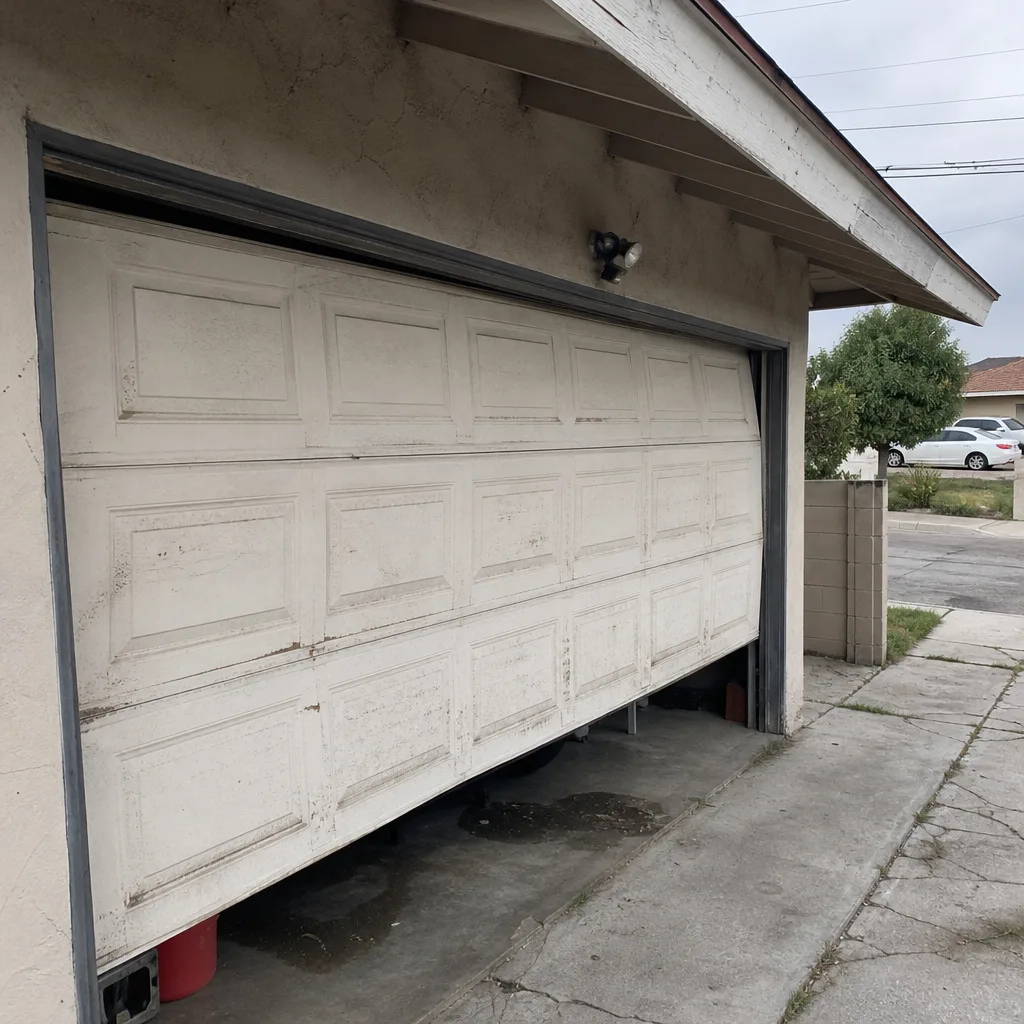 Before
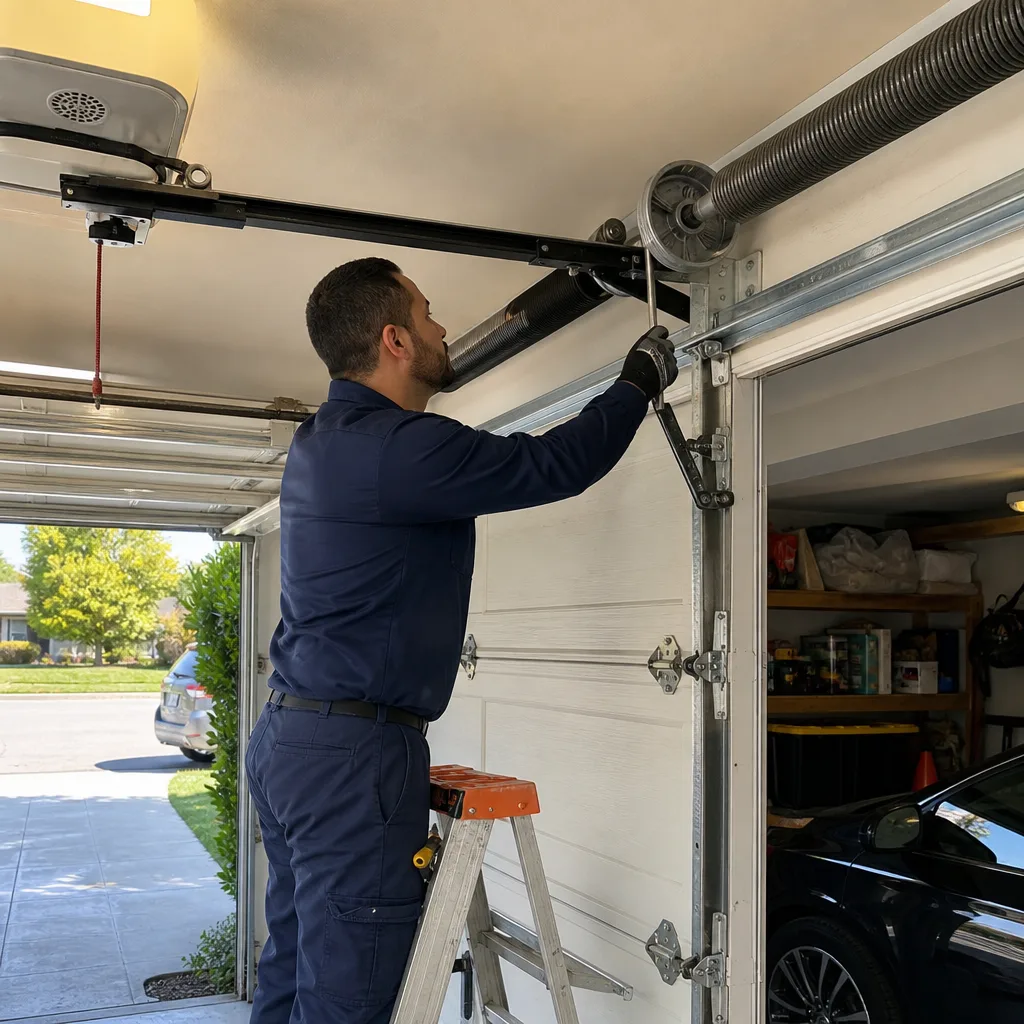 After
After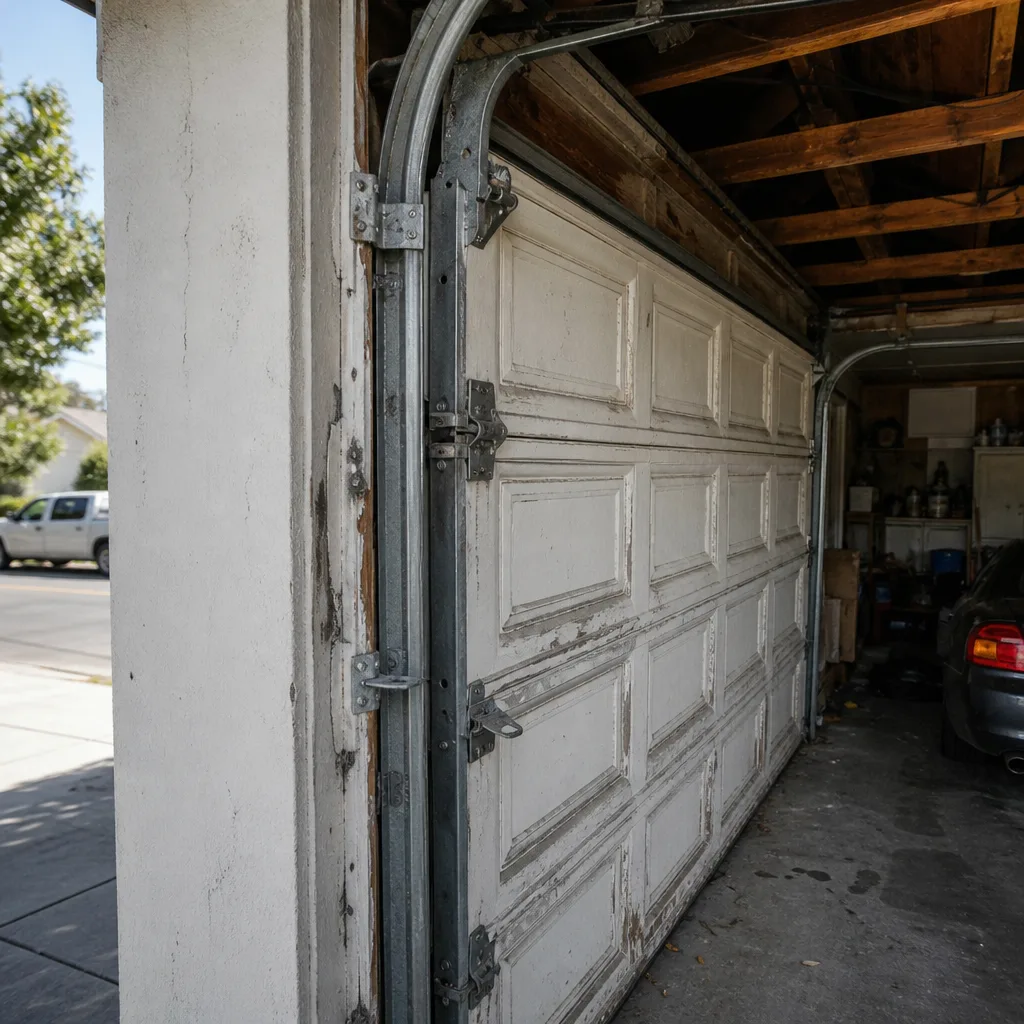 Before
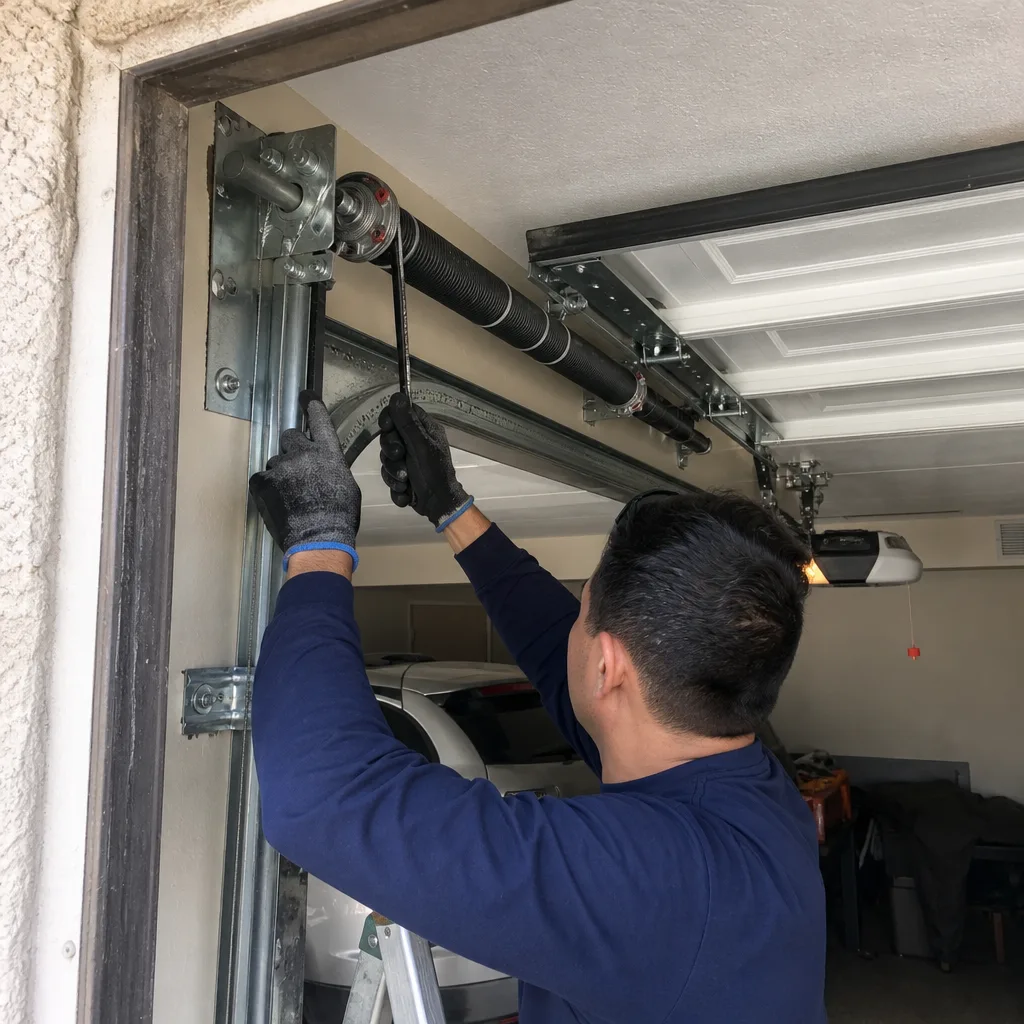 After
AfterHow Long Does Garage Door Cable Repair Take? Timelines and What to Expect
Telling a homeowner a cable repair takes “45 to 90 minutes” is like saying a drive across Los Angeles takes “20 to 90 minutes” – technically true, completely useless. The honest answer depends on which type of cable system your door runs, whether the cable snapped or just slipped off the drum, and what your door was doing when it failed. By the time you finish this guide from Marlow Garage Door Repair home, you’ll know exactly which timeline applies to your door, what adds time to the job, and the one thing responsible techs do after cable work that hacks who don’t bother with will happily skip.
Quick Answer
Our Garage Door Cable Repair services in Los Angeles typically take 60 to 150 minutes on site, depending on which cable system your door uses and whether the cable snapped, slipped off the drum, or is frayed but still holding. Expect about 60 to 90 minutes for a torsion drum cable repair and 90 to 150 minutes for extension spring cable work, which requires removing and re-balancing both springs. Most homeowners in Los Angeles can get same-day service if they call before noon, though a next-morning slot is sometimes smarter if you need parts your specific neighborhood doesn’t stock locally.
Table of Contents
- Why Your Cable System Changes the Timeline Completely
- Torsion Drum Cable Repair: What to Expect (60 – 90 Minutes)
- Extension Spring Cable Repair: The Longer Job (90 – 150 Minutes)
- What Adds Time: Snapped vs. Off-Drum vs. Frayed Cables
- The Re-Balancing and Test Cycle: Why Good Techs Add 15 Minutes
- Los Angeles Timing Realities: Traffic, Parts, and Peak Booking
- How to Block Your Calendar and Know When a Job Is Running Long
- Common Mistakes to Avoid
- When to Call a Professional
- Frequently Asked Questions
- The Bottom Line
Why Your Cable System Changes the Timeline Completely
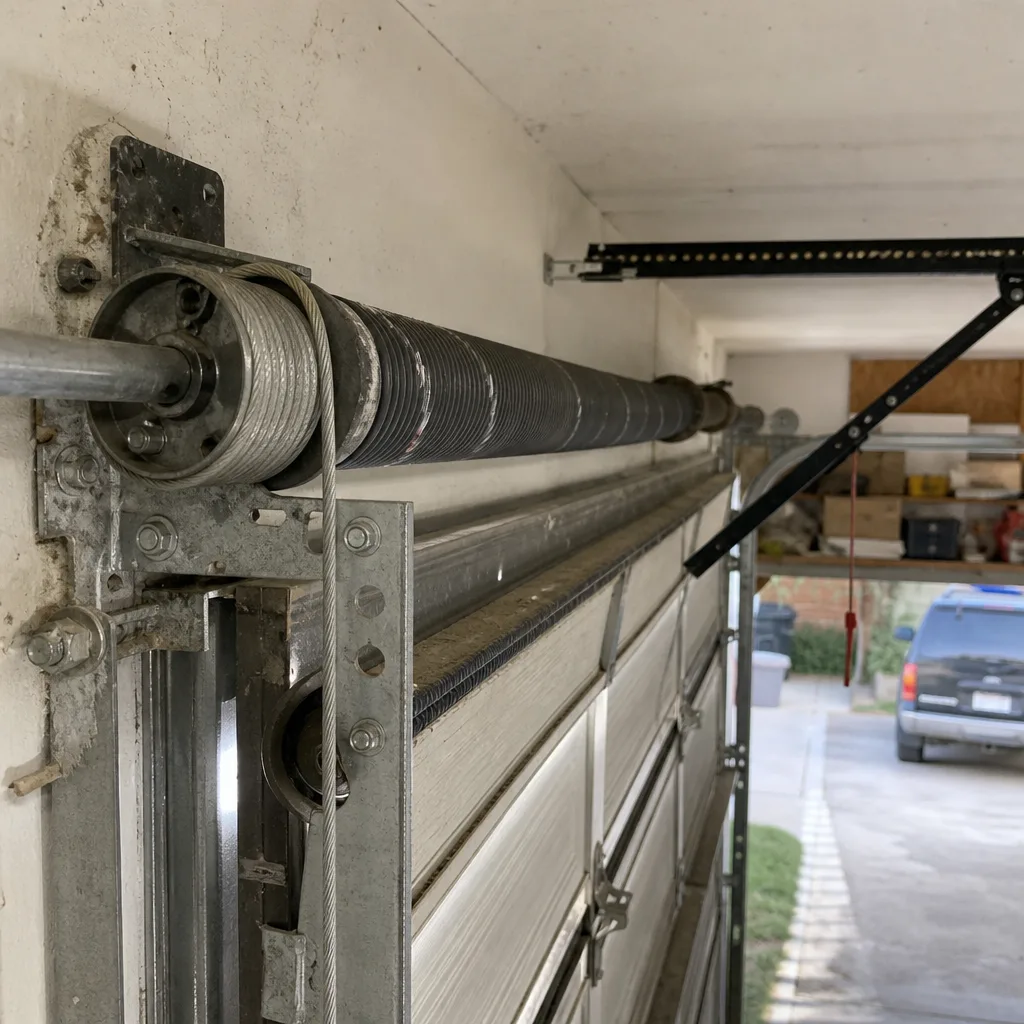
Your garage door has one of two lifting systems, and they are not interchangeable when it comes to repair time. The first is a torsion spring system – one or two horizontal coils mounted on a metal shaft directly above the closed door. Cables on this system wind around a drum at each end of the shaft. The second is an extension spring system – two long springs that stretch along the horizontal tracks on either side of the door, each with a cable running through the middle of the spring itself.
Here’s the thing no one tells you until the tech is already in your driveway: extension spring cable replacement is genuinely the longer job. It’s not a matter of skill or laziness. The cable physically passes through the spring, so you can’t remove the old cable without taking the spring off the track, and you can’t put the new cable in without re-mounting and re-tensioning that spring. Torsion cables, by contrast, wrap around a drum that sits outside the spring assembly entirely – the spring usually stays untouched during the cable swap.
In Los Angeles, where homes built before 1980 often still run extension spring systems and newer builds almost exclusively use torsion, your cable repair time is basically determined by the age of your house. A 1960s ranch in Valley Village with original extension springs is looking at the longer end of any estimate you’ll find here. A 2015 build in Playa Vista with a modern torsion system is looking at the shorter end.
Torsion Drum Cable Repair: What to Expect (60 – 90 Minutes)
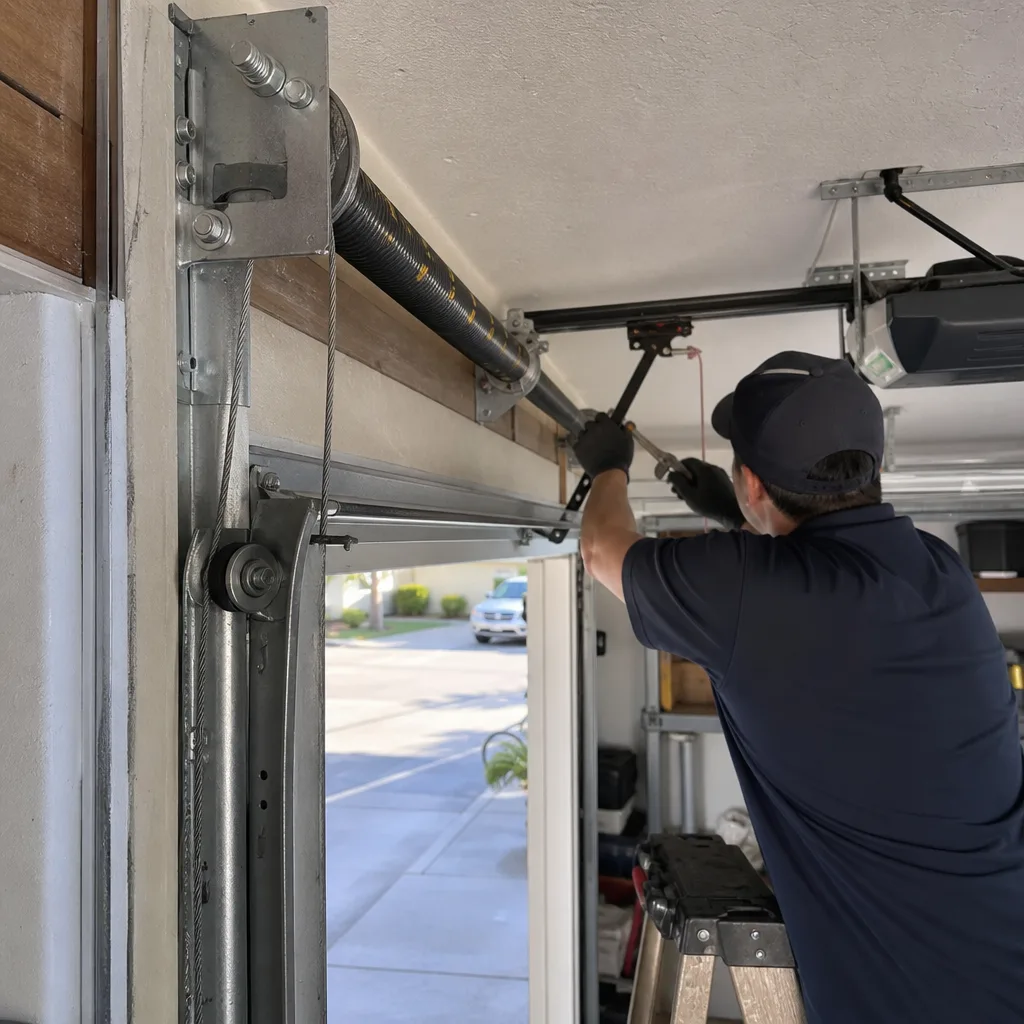
When the cable on a torsion system slips off the drum or snaps, you’re looking at 60 to 90 minutes from driveway to test cycle. Here’s how that time breaks down.
- Arrival and safety check (5 – 10 minutes): The tech confirms the door is secured and checks whether a broken cable has already thrown the door off balance. If the door is stuck halfway open, this step takes a few extra minutes because the door gets clamped before anyone touches the drum.
- Removing the old cable from the drum (10 – 15 minutes): Torsion drums sit at the end of the spring shaft. The old cable unwinds off the drum, and the tech inspects the drum itself for grooves, cracks, or sharp edges that would chew through the new cable within weeks.
- Installing and winding the new cable (15 – 25 minutes): The new cable gets anchored to the bottom bracket, fed up through the track, and wound evenly onto the drum. Even winding matters. A cable that overlaps itself on the drum will bind and snap within days.
- Set tension and test the lift (10 – 15 minutes): The tech manually cycles the door twice, checks both cables for equal tension, and confirms the door sits level when halfway open.
- Final run and cleanup (5 – 10 minutes): Three full open-close cycles under power, a lube pass on the drum if needed, and the work area is cleared.
That’s the clean version. Most torsion cable repairs in Los Angeles run close to the 60-minute mark when the drum is reusable and the cable snapped cleanly-see our article on How Long Does Garage Door Repair Take? Timelines and What to Expect for the full picture. If the drum is damaged or the bottom bracket is bent, add 15 to 25 minutes for parts replacement – more on that in the next section.
We’ve worked on torsion systems from LiftMaster, Chamberlain, Genie, Clopay, Amarr, Wayne Dalton, Craftsman, and Raynor, and the timeline above holds across all eight brands. What changes by brand is drum style and cable diameter, not the core procedure.
Extension Spring Cable Repair: The Longer Job (90 – 150 Minutes)
Extension spring systems are the slower repair because the cable and spring have to be disconnected together. If your door has two long springs running parallel to the track with a safety cable inside, this is your system. Here’s the honest timeline.
- Secure the door and release spring tension (10 – 15 minutes): The tech clamps the door in place and carefully releases tension from the extension spring. This step cannot be rushed. On older Los Angeles homes, the springs are sometimes corroded from decades of coastal air, which makes tension release slower and more delicate.
- Remove the old cable and inspect the spring (10 – 20 minutes): The cable threads through the center of the spring. The old one comes out, and the tech checks whether the spring itself is still good. If the spring is stretched or rusted, this is the moment the job scope changes – a spring that’s near failure will take a new cable with it, and the tech should flag that before proceeding.
- Install the new cable through the spring and re-mount (20 – 30 minutes): The new cable runs through the spring, the spring goes back on its bracket, and safety clips are reattached. This is the fiddly part of the job. Extension springs under tension are unforgiving if a bracket slips.
- Re-tension both springs evenly (15 – 25 minutes): Both springs need matching tension or the door will pull to one side. Getting this right often means two or three adjustments, which adds time but prevents the door from jamming within a week.
- Test cycling and balance check (15 – 20 minutes): More test cycles than a torsion repair, because extension systems are more sensitive to slight tension differences. The tech runs the door open and closed four to five times and may make small spring adjustments between runs.
Ninety minutes is the fast end. If both springs are tired and you approve a spring replacement while the door is open, the whole visit can stretch to two and a half hours. That’s still same-day work, and it’s still better than patching a cable onto aged springs that fail in a month. Our Garage Door Cable Repair in Los Angeles work includes this spring inspection on every extension system job, and the written price covers whatever we find before the wrench turns.
What Adds Time: Snapped vs. Off-Drum vs. Frayed Cables
The type of cable failure changes the repair time more than most homeowners expect. Not all cable problems are the same job, and the difference between “it snapped” and “it slipped off” can be 40 minutes.
- Snapped cable: A clean, single snap is actually the fastest repair. The old cable comes out in one piece, the new one goes in, and the job proceeds exactly as described in the sections above. Expect the shorter end of your timeline.
- Cable that has come off the drum: This looks less dramatic but often takes longer. When a cable slips off, the door usually drops unevenly, which bends hardware, roughs up the drum edge, and sometimes twists the cable into a knot inside the track. Untangling and inspecting for hidden damage adds 15 to 30 minutes.
- Frayed but not yet broken cable: The sneaky one. A frayed cable has sharp, loose strands that catch on the drum and bind inside the track. The tech has to carefully unwind it without letting the frayed section whip around under residual tension. More time, more care. Figure an extra 10 to 20 minutes.
- Both cables failed at once: If both sides go together, the door is likely wedged in the opening and possibly resting on one corner of the track. The tech has to re-align and secure the door before cable work even starts. This can push any repair toward the top of its time range.
In Los Angeles, we see a spike in off-drum failures every time the Santa Ana winds hit: people’s doors are frozen in place, but the cables actually popped off when a wind gust shoved the door sideways against the track. Your tech can tell the difference, and the repair path is not the same.
The Re-Balancing and Test Cycle: Why Good Techs Add 15 Minutes
After any cable repair, the door must be re-balanced. This is the part of the job you won’t see on a cheap quote, and it’s the part that determines whether the repair lasts six weeks or six years.
Re-balancing means running the door through a full open-close cycle and checking that it holds position at the halfway point, that both cables carry equal tension, and that the door doesn’t drift or shimmy on the way up. The tech makes small adjustments to the springs and drum until the door parks level and moves evenly. Then comes the test cycle: three full powered open-close runs while the tech watches the drums, listens to the motor, and checks that the safety sensors still trigger properly.
This takes 10 to 20 minutes. Hacks skip it, and those are the doors that come back with a snapped cable in a month. Our 365-Day Done Right Promise exists because we’d rather spend the extra quarter hour on the day of the fix than schedule a free return visit. The math is simple: any cable job under about 45 minutes on a torsion system probably skipped the test cycle. If your tech is in and out that fast, ask whether the balance was checked. You’re entitled to the answer.
Los Angeles Timing Realities: Traffic, Parts, and Peak Booking
You’re not booking a repair in a vacuum. You’re booking it in Los Angeles, where a job in Sherman Oaks and a job in Redondo Beach are the same 20-minute drive on paper and a 55-minute drive between 3 p.m. and 7 p.m. on any given Tuesday. Here’s what actually shapes your cable repair timing.
Traffic windows. Most garage door companies in Los Angeles run routes that avoid the 101 and the 405 at peak hours. If you want a repair between 4 p.m. and 7 p.m., expect your arrival window to flex around freeway conditions. Morning and early-afternoon bookings are generally more predictable. Our live arrival tracking means you’re not guessing where the tech is, but the freeway is still the freeway.
Parts availability by neighborhood. This is the under-discussed one. Torsion drum cables and extension spring cables are common parts, but drum styles vary by manufacturer and some older Los Angeles doors use drums that aren’t on every truck. In the San Fernando Valley and central LA, parts supply houses are dense, so a specialty drum is usually a 20-minute round trip. In the canyons, South Bay pockets, and the far east side, that same part might mean a 45-minute run. Our techs in Los Angeles run fully stocked trucks with eight major brand part kits – LiftMaster, Chamberlain, Genie, Clopay, Amarr, Wayne Dalton, Craftsman, and Raynor – specifically because we’d rather carry the parts than burn your afternoon hunting for them.
Peak vs. off-peak booking. Monday mornings and the day after a holiday are the busiest slots for garage repair in Los Angeles. If your cable fails on a Sunday night, you’ll usually find next-morning slots wide open. If it fails on a Monday at 7 a.m., you’re competing with every other door in your zip code. Same-day service is generally available for cable repair, but calling before noon makes the difference between a 1 p.m. slot and a 5 p.m. slot. Our Garage Door Repair in Los Angeles dispatch covers the city with same-day availability on cable work, and the phone is answered by a live person 24 hours a day, 7 days a week – a real person, not a recording.
How to Block Your Calendar and Know When a Job Is Running Long
Most cable repairs wrap within a two-hour visit. But you should block your calendar based on your system, not on a generic promise. Here’s a practical guide.
- If you’re fairly sure you have a torsion system (home built after 1995, spring above the door): block two hours total. The tech will likely be done in 60 to 90 minutes, but two hours covers a drum replacement or minor bracket work.
- If you have an extension spring system (two springs along the top track, home built before 1990): block two and a half to three hours. Cable-through-spring work is slower by design, not by accident.
- If you don’t know which system you have: look above your closed garage door from inside the garage. Coils on a bar above the door means torsion. Long springs along the track means extension. Takes ten seconds, and it changes your whole day’s plan.
How do you know a job is running long? Legitimate reasons include: the tech found a second damaged part (bent bracket, cracked drum), the door is wedged and needs careful re-seating, or the cable snapped inside the drum and has to be fished out. All of those can add 20 to 40 minutes. What shouldn’t add time: the tech leaving to “go get parts” without warning, sudden unexplained delays, or a tech working with no visible progress for half an hour. With our service, your written price is locked before work starts, and the live arrival window means you’re not sitting in an empty driveway wondering.
Common Mistakes to Avoid
- Assuming all cable repairs take the same time. Torsion and extension systems are different jobs on different clocks. If a company quotes you one flat time for all cable work, they haven’t asked enough questions about your door.
- Trying to re-seat a cable yourself. Garage door cables are under hundreds of pounds of tension. In Los Angeles, where many homes have steep driveways and older doors, a cable that lets go during DIY work can whip with enough force to cause serious injury. This is a trained-professional job, period.
- Letting a tech skip the re-balance cycle to “save time.” A cable install that isn’t followed by a balance check and test cycling is not complete. Fast is fine. Skipped steps are not.
- Waiting to book because the door still opens. A frayed cable is a failure waiting for the worst possible moment. In Los Angeles, that moment tends to be when you’re already late for work and the door is half open with the car inside.
- Accepting a verbal quote over a written one. The price you agree to should be the price on paper before any wrench turns. Verbal estimates are the most common source of surprise invoices in this trade.
- Booking around 4 p.m. on a weekday and expecting a tight window. Los Angeles freeways don’t care about your schedule. Morning bookings are more predictable, and a live arrival tracker makes the wait bearable.
- Ignoring your safety cable on extension systems. If you have extension springs, the cable inside the spring is a safety feature designed to contain the spring if it breaks. If that safety cable is missing or broken during an inspection, replace it in the same visit.
When to Call a Professional
Garage door cable work is not a DIY job. The cables on both torsion and extension systems hold significant tension, and a cable that releases unexpectedly can cause serious injury or property damage. If your cable is snapped, off the drum, or showing visible fraying, call a trained tech. If your door is stuck open or wedged unevenly, secure the area and keep people and pets away from it until a professional arrives. If you’re not sure whether the cable is the real problem – sometimes a door that won’t open has a spring issue or a track misalignment instead – a professional inspection answers that in minutes. Garage Door Cable Repair in Los Angeles from Marlow includes this diagnostic on every visit, and Marlow Garage Door Repair offers free estimates in Los Angeles – call (512) 883-4374.
Frequently Asked Questions
Cable repair in Los Angeles typically runs $125 to $225 for a single torsion cable replacement, and $180 to $320 when both cables need replacement. Extension spring cable work is usually $200 to $350 because the labor includes spring handling. You’ll get an exact written price from us before any work starts – call (512) 883-4374 for a free estimate on your specific door.
In most cases, yes. We run same-day cable repair dispatch throughout Los Angeles, and calling before noon significantly improves your odds of an early-afternoon slot. Our live phone line is answered 24/7 by a real person who can get you booked immediately, not a callback queue.
No. We give you a written price before any work begins, and that is the price you pay. If the tech finds additional damage during the repair – say, a cracked drum or bent bracket – you’ll see a revised written price and approve it before we proceed. The number on your invoice matches the number you agreed to, every time.
Yes. Our techs in Los Angeles run trucks stocked with cable kits, drums, brackets, and hardware for Genie, Clopay, Amarr, and Wayne Dalton systems, along with the other major brands we service. Most cable repairs are completed in a single visit because the parts are already in your driveway.
Not necessarily. On torsion systems, a cable can snap without spring damage, and the spring typically stays untouched during the cable swap. On extension systems, the cable passes through the spring, and if the spring is visibly corroded or stretched, a responsible tech will recommend replacing it during the same visit before it takes the new cable down with it.
Coastal moisture in areas like Venice Beach, Playa del Rey, and San Pedro accelerates cable and spring corrosion, which means older cables near the coast fail more often and sometimes take slightly longer to remove when corroded. Santa Ana wind seasons also cause a spike in off-drum cable failures across the city when gusts shove doors sideways against their tracks.
The Bottom Line
Your garage door cable repair timeline depends on the system your door runs and the failure you’re facing. A torsion drum cable repair takes about 60 to 90 minutes. An extension spring cable job runs 90 to 150 minutes. Off-drum and frayed cables add time; snapped cables on torsion systems tend to be the quickest fix. The re-balancing and test cycle is non-negotiable, and any repair that skips it is a repair you’ll re-pay for later. In Los Angeles, book your repair for the morning when freeways are friendlier, ask whether the parts are on the truck, and never accept a verbal quote over a written one. If you want a technician who shows up on a live trackable window, hands you a written price before any wrench turns, and backs the work with a 365-Day Done Right Promise, Garage Door Spring Repair in Los Angeles and cable work are what Marlow does every day.
Written by Jaylen Ross, Owner at Marlow Garage Door Repair, serving Los Angeles since 2002. Explore more guides & resources on our blog.