
Last updated October 9, 2026
Full 25-point door and opener safety check with every visit - springs, cables, rollers, tracks, and your LiftMaster or Chamberlain opener included
You get a price before we start. It does not change when the truck arrives.
 Before
 After
After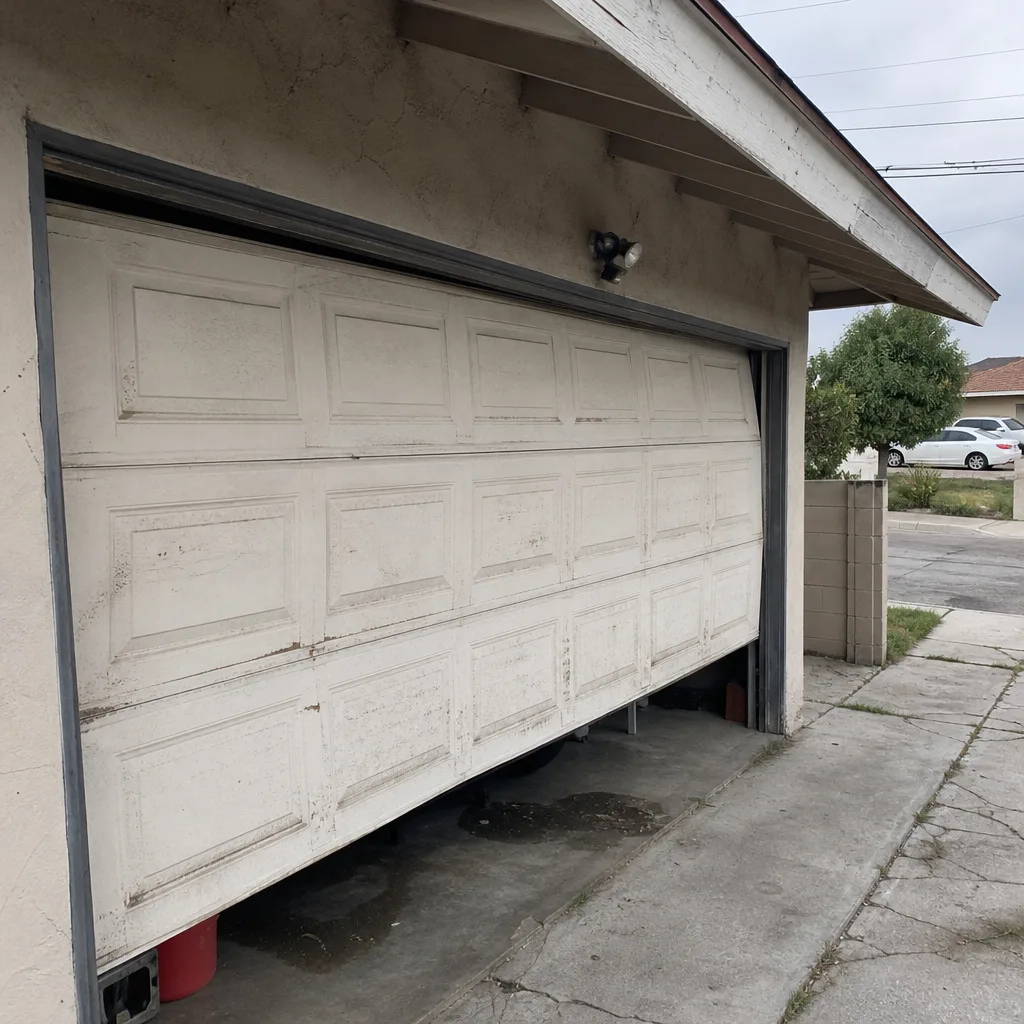 Before
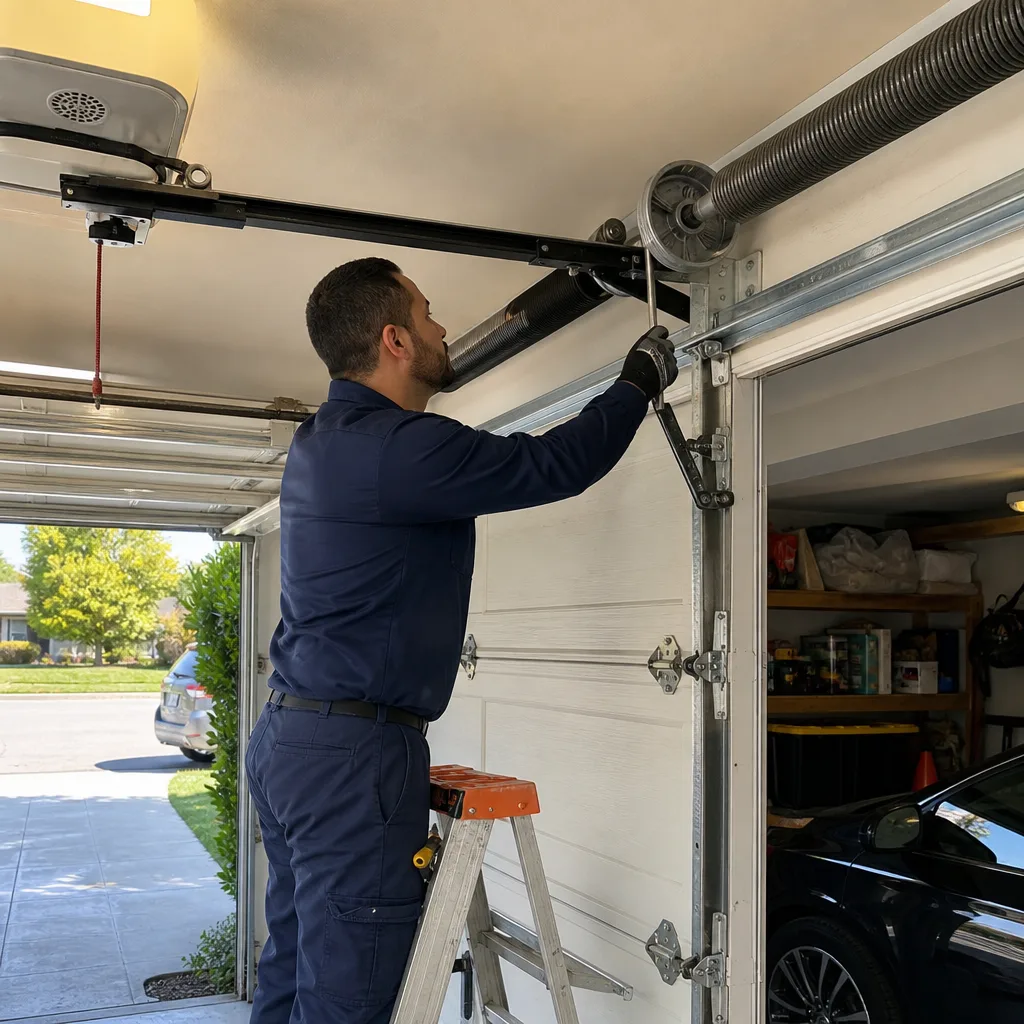 After
After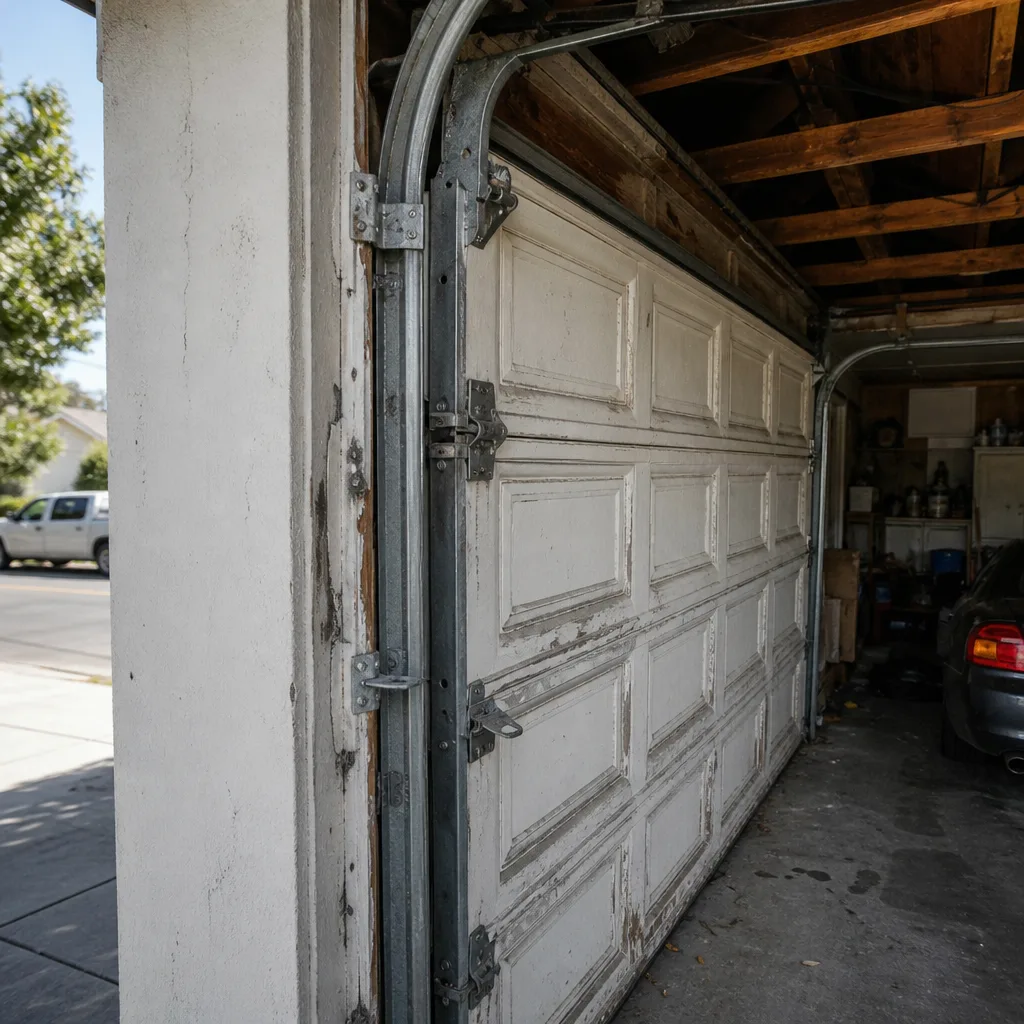 Before
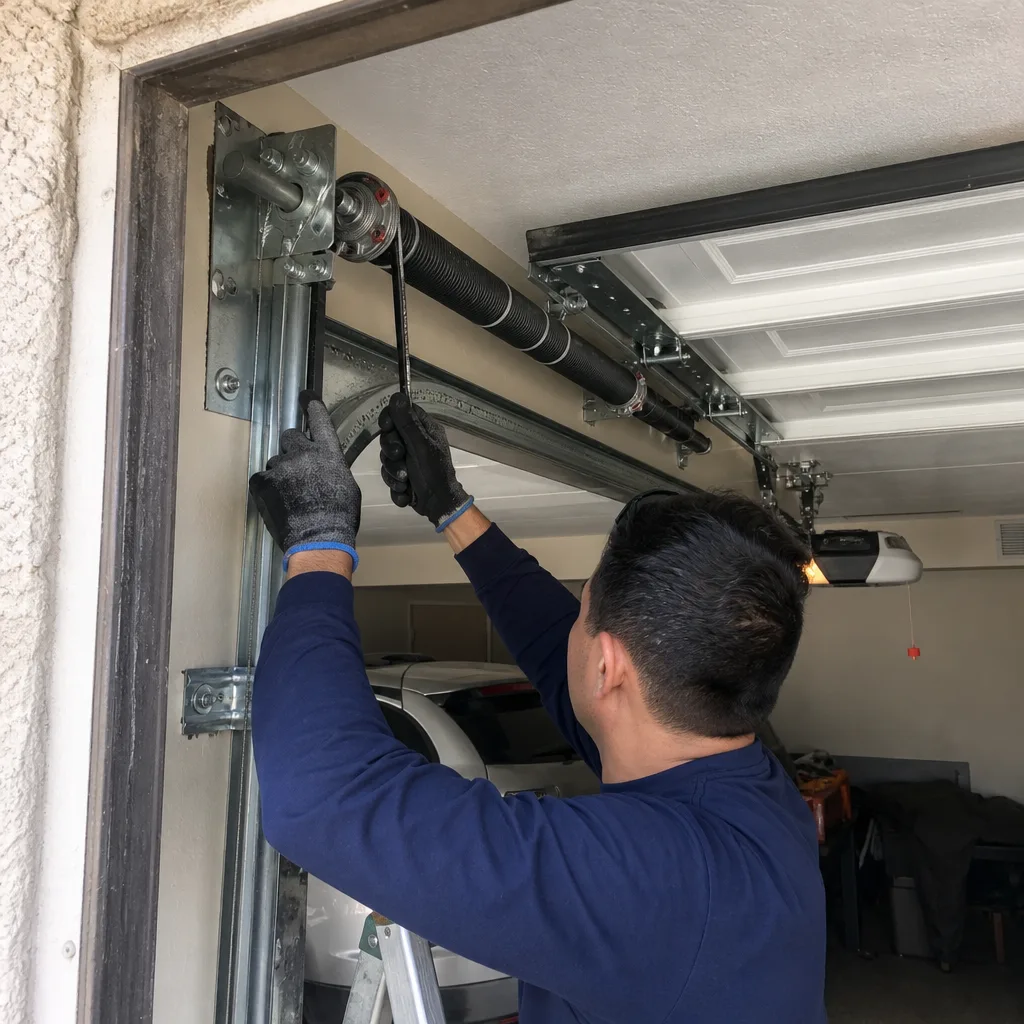 After
AfterGarage Door Repair Maintenance Checklist for Los Angeles Homeowners
Every November, our phones at Marlow Garage Door Repair light up with the same call: a garage door spring snapped overnight, and the car is trapped inside. The homeowner almost always assumes it was bad luck. It wasn’t. In Los Angeles, October’s Santa Ana winds pull every trace of moisture out of the air, and a torsion spring that hasn’t been lubricated since spring gets brittle enough to fail. We wrote this month-by-month checklist, part of our Garage Door Repair Maintenance Schedule: What to Do and When, because most maintenance guides treat LA like it has four seasons. It doesn’t. It has fire season, June Gloom, Santa Anas, and a handful of perfect weeks in between. This guide walks you through what to check, when to check it, and what you can safely handle yourself versus what belongs in the hands of a trained technician.
Quick Answer
A Los Angeles garage door needs monthly lubrication of springs and rollers from March through November, a photo-eye sensor cleaning every 6 weeks during wildfire season, and a track alignment check before and after Santa Ana wind events. If you follow this calendar, roughly 80% of the emergency repairs we see across Los Angeles simply never happen.
Table of Contents
- January & February: The Cool-Season Deep Check
- March & April: Spring Loading and Lubrication Reset
- May & June: June Gloom Corrosion Watch
- July & August: Wildfire Smoke Particulate Defense
- September & October: Santa Ana Pre-Flight
- November & December: Holiday Duty Cycle and Rain Prep
- The Right Tools and Lubricants for LA’s Two Climates
- DIY vs. Professional: Where the Line Is
- Common Mistakes to Avoid
- When to Call a Professional
- Frequently Asked Questions
- The Bottom Line
January & February: The Cool-Season Deep Check
Los Angeles gets its version of winter between December and February, with overnight temperatures dipping into the 40s in the Valley and occasional rain systems rolling in off the Pacific. This is the right time for the most thorough inspection of the year, because your door is about to work harder in spring and summer than any other stretch.
- Watch a full open-and-close cycle from inside the garage. Stand to the side, not directly under the door. You’re looking for hesitation, jerking, or any point where the door seems to fight the opener. A door that slows in one section of travel is telling you something about its balance.
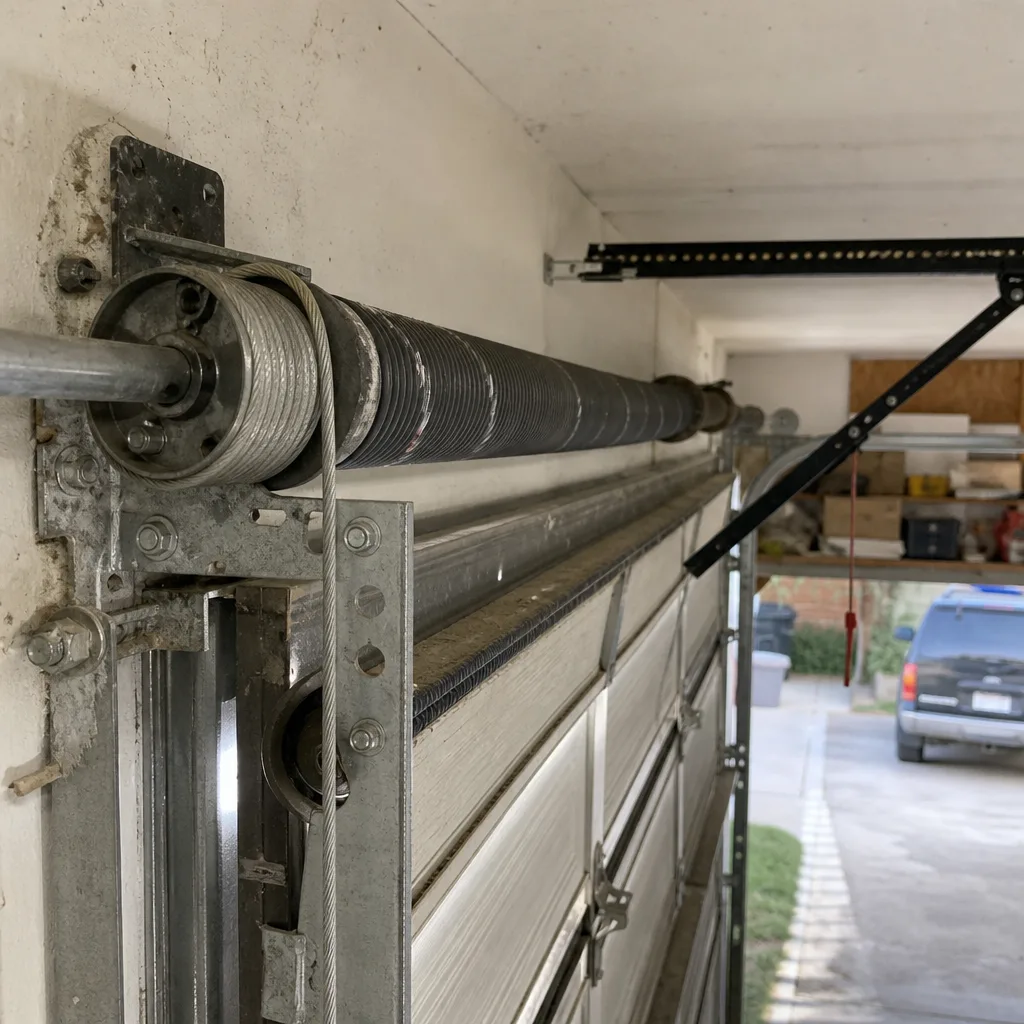
- Check the balance manually. Pull the red emergency release cord with the door closed, then lift the door by hand to waist height. It should stay put. If it drops, the torsion spring (the horizontal coil above your door that does most of the lifting) is losing tension or nearing failure. If it flies upward, the spring is over-tensioned. Both are repair calls, not maintenance.
- Inspect every roller. Nylon rollers with visible cracks or flat spots need replacement. Steel rollers on older doors are usually fine for the life of the door. Listen for grinding, which means the ball bearings inside are dry or corroded.
- Wipe down the tracks. Use a clean rag to remove any grit or old lubricant buildup from the vertical and horizontal tracks. Do not adjust track bolts yourself; if a track looks out of alignment, that’s a technician job.
In Los Angeles, this is also the season to test the door’s rain seal. Homes in Sherman Oaks, Studio City, and other Valley neighborhoods get more debris washing against the door than coastal properties do. A cracked bottom seal lets water and mice into the garage. We see rodent damage every winter in Los Angeles where the seal has gone soft and been chewed through.
March & April: Spring Loading and Lubrication Reset
By March, the marine layer is thinning out and daytime temperatures start climbing. This is the moment your garage door becomes the most-used appliance in the house, because you’re in and out more often as days get longer. It’s also the moment most Los Angeles homeowners forget about until something fails.
Your single most important task this month: lubricate every moving part. Use a lithium-based grease on the torsion spring coils and hinges. Use a silicone spray on the rollers, but only on the bearings, stem, and hinge points. Never apply any grease to the track itself. Greased tracks collect dust and grit, which grinds the rollers down faster. A dry track is a healthy track.
Do this monthly through November. We’re not talking about a deep service, just a quick pass. Five minutes with the right products prevents the majority of the spring failures we see in Los Angeles. A torsion spring that’s been lubricated every 30 days flexes smoothly as the metal expands and contracts. A dry spring develops micro-fractures at the coil, and those fractures eventually become the snap that traps your car in the garage.
Test the auto-reverse safety feature while you’re out there. Place a 2×4 flat on the ground under the door’s path and close the door. It should reverse within two seconds of touching the board. If it doesn’t, you have a safety issue that needs immediate professional attention. The photo-eye sensors were mandated on all garage doors since 1993 for a reason; a door that doesn’t reverse is a genuine hazard to children and pets.
May & June: June Gloom Corrosion Watch
June Gloom in Los Angeles means overcast mornings, 100% humidity near the coast, and a marine layer that doesn’t burn off until early afternoon in Santa Monica, Playa Vista, and Marina del Rey. For your garage door hardware, that’s rust weather.
Metal components that stay damp for hours every morning develop surface rust faster than you’d expect. Torsion springs are coated, but the coating wears thin at the coil ends. Hinges, brackets, and especially the bottom roller brackets on coastal Los Angeles homes need a quarterly check this time of year.
If you live west of the 405, adjust your lubrication schedule. The same lithium grease you use in the Valley can go lighter near the coast, because salty air and heavy grease combine into a paste that traps moisture against the metal. Use a thinner silicone lubricant on hinges and springs in coastal neighborhoods, and reapply every 3 weeks during June Gloom season. Inland Los Angeles, including Pasadena, Glendale, and the San Fernando Valley, can stick with lithium grease applied monthly.
Check for rust the way we do: run a finger along the bottom of each hinge. If it comes away with reddish-brown dust, clean the area with a dry rag and apply a thin coat of rust-inhibiting lubricant. If the rust has already eaten into the hinge pin, have it replaced. Hinges are cheap; a hinge failure mid-cycle bends the entire door panel.
July & August: Wildfire Smoke Particulate Defense
This is the Los Angeles maintenance item almost no checklist covers, and it’s the one we get called about most during fire season. Wildfire smoke carries particulate matter that settles on everything, including the photo-eye sensors on either side of your garage door opening. One dirty sensor and your door refuses to close, or worse, reverses for no reason.
The photo-eye sensors are the two small units mounted about six inches off the floor on each side of the door opening. They shoot an infrared beam across the threshold. If the beam is interrupted, the door won’t close. Smoke particulate builds an opaque film on the sensor lenses, and enough film blocks the beam completely.
Clean them every two weeks during wildfire season. That’s July through October in most of Los Angeles, but some years it starts in June. A dry microfiber cloth works without any cleaning product. Don’t use glass cleaner on the lenses; the residue can distort the infrared signal. If the sensor light is blinking after you clean it, the lens may have been jostled out of alignment. A technician can re-aim it in about ten minutes.
Smoke also accelerates roller degradation. Nylon rollers pick up smoke particulate the way a car’s cabin air filter does, and the grit embeds in the bearing housing. If you’re in a smoke-heavy Los Angeles neighborhood like Sylmar, Porter Ranch, or the foothills of La Cañada, listen for a dry, rattling sound when the door moves. That’s the sound of rollers crying for replacement.
September & October: Santa Ana Pre-Flight
The Santa Ana winds arrive in Los Angeles between September and November, with peak intensity usually in October. These aren’t just hot, dry gusts; they’re the mechanical stress test that reveals every weak point in your garage door system. The winds press against the full surface of a closed door, push debris across the threshold, and, most importantly, drop the ambient humidity to single digits for days at a time.
The few weeks before Santa Ana season is the single most important maintenance window on this entire calendar. Here’s the pre-flight routine we recommend for every Los Angeles homeowner:
- Lubricate the torsion spring, extension springs, and hinges. Do this even if you did it two weeks ago. The dry air accelerates moisture loss from any lubrication film, and a dry spring under repeated wind stress is the leading cause of the November emergency calls we described at the top of this guide.
- Inspect the weatherstripping around all three sides of the door opening. Santa Ana winds push dust, leaves, and sometimes embers against the garage. Loose or missing stripping lets it all inside. In high-risk fire zones like the Santa Monica Mountains and the foothills of the San Gabriel Valley, a well-sealed garage door is part of your home’s wider fire defense.
- Check the door’s wind resistance. With the door closed, push gently on the center of each panel from inside. A properly tensioned door with intact struts shouldn’t flex more than a fraction of an inch. If you can see the panel bow under pressure, the horizontal struts may be undersized or failing.
- Tighten every visible bolt and nut. Wind vibration works hardware loose over weeks. A socket wrench, fifteen minutes, and a walk around the door catches what becomes a loud rattle or a dropped bracket in high wind.
We’ve serviced doors all over Los Angeles, and the pattern holds every year. The homes that did their October pre-flight skated through Santa Ana season without a single call. The homes that skipped it became our November emergency list.
November & December: Holiday Duty Cycle and Rain Prep
Your garage door gets more openings and closes per day during November and December than almost any other time of year. Holiday deliveries, family visits, and the annual shuffle of decorations in and out of storage all add cycles. A door that opens four times a day for most of the year might cycle twelve times a day during the last two months. That accelerated duty cycle is exactly when minor issues become failures.
In November, do a quick listen-and-look every two weeks. A door that clunks, grinds, or hesitates under increased use is warning you. Catching it now means fixing a $12 roller instead of replacing a bent door panel later.
December brings LA’s first real rain events. The concrete apron just outside the garage door is ground zero for water intrusion. Check that the bottom rubber gasket seats fully against the concrete on both corners. Even a half-inch gap on the Valley floor lets water, leaves, and bugs in during a heavy downpour. If your concrete has settled over the years and left an uneven surface, a thicker bottom seal usually resolves it.
If you’re hosting holiday visitors, test the auto-reverse feature again. Guests unfamiliar with your garage are more likely to trigger the safety sensors accidentally, and the auto-reverse is the brake system that keeps a mistake from becoming a hospital visit.
The Right Tools and Lubricants for LA’s Two Climates
Los Angeles has two distinct climate zones for garage door maintenance: coastal and inland. What works in Mar Vista doesn’t hold up in Woodland Hills. Here’s what we use, and what you should keep in your garage:
- Lithium-based white grease. Best for torsion springs, extension springs, and hinges in inland Los Angeles. It holds up longer in dry heat and doesn’t thin out at 100 degrees. Apply monthly from March to November.
- Silicone spray lubricant. Best for coastal Los Angeles and anywhere within five miles of the ocean. Lighter than lithium, resists salt corrosion, and doesn’t turn into a sticky paste in humid conditions. Reapply every 3 weeks during June Gloom.
- Dry PTFE or Teflon-based spray. This is the all-purpose option for rollers, lock mechanisms, and the opener’s chain or screw drive. It leaves a dry film that doesn’t attract dust, which matters in Los Angeles where wildfire smoke adds constant particulate to the air.
- Microfiber cloths. For sensor lenses, track wiping, and cleaning. Never use paper towels on photo-eye sensors; they leave lint that scatters the infrared beam.
- Socket set with 3/8-inch and 7/16-inch sockets. These cover most garage door hardware. Don’t over-tighten bolts; snug is enough.
One more note on lubrication: the track is not part of this system. Nobody should be greasing the track, spraying the track, or oiling the track. The track guides the rollers, and the rollers are what need the lubrication. Greased tracks just collect the kind of Los Angeles grit that grinds doors down prematurely. This is the single most common misconception we encounter in garage door repair in Los Angeles.
DIY vs. Professional: Where the Line Is
There are things a homeowner can do safely, and there are things that genuinely carry risk. Los Angeles homeowners are famously handy, but we’ve also been called out to fix injuries and damage caused by well-meaning DIY repairs gone wrong. The line is simple:
Safe to do yourself: lubrication, sensor cleaning, weatherstripping inspection, visual checks, automatic reverse testing, and bolt tightening. These are all low-risk, no-specialty-tools tasks that make up about 80% of this checklist.
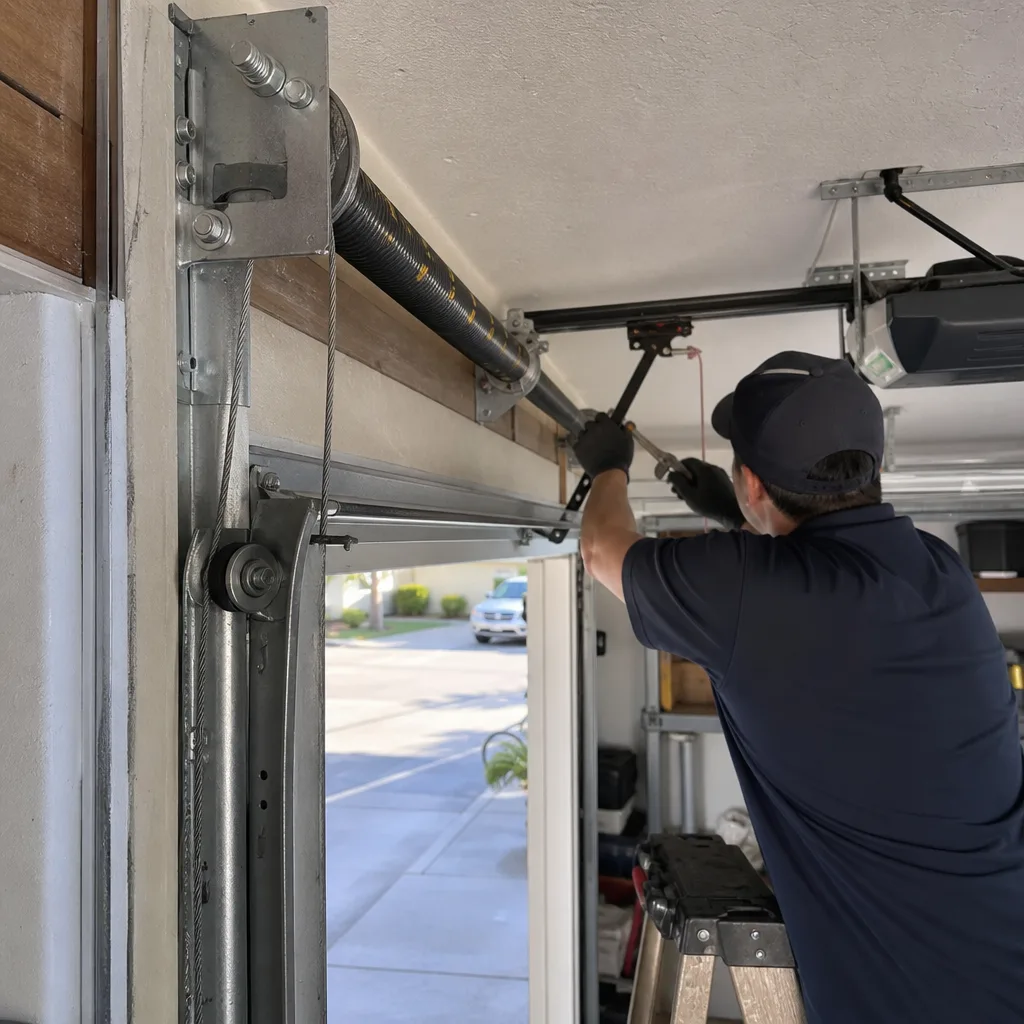
Not safe to do yourself: anything involving the torsion spring system. In Los Angeles, most single-car doors use a single torsion spring, and most double doors use two. These springs hold hundreds of pounds of tension, enough to break fingers, wrists, and arms if released improperly. At minimum, torsion spring work requires winding bars, not screwdrivers, and done wrong, it can send a spring flying with lethal force. If your spring is broken, visibly stretched, or shows gaps between the coils, that is a garage door spring repair in Los Angeles call, not a Saturday project.
The same rule applies to garage door cable repair in Los Angeles. Cables run under tension, and a cable that snaps while you’re near it moves faster than you can react. If you see fraying on any cable, the right move is to stop using the door and call a technician.
Warranty note: this matters. Many garage door manufacturers, including Amarr, Wayne Dalton, and Craftsman, require that any spring or cable work be performed by a qualified professional to keep the warranty valid. If you attempt a DIY spring replacement and the door later fails due to improper installation, the warranty on that door is void. Raynor and other brands carry similar stipulations in their written warranties. The maintenance tasks on this checklist won’t void anything; the repair tasks might.
Common Mistakes to Avoid
- Lubricating the track. This is the number one mistake every Los Angeles homeowner makes. Greased tracks become dirt traps, and dirt between the roller and track wears both down fast. Keep the track dry, always.
- Skipping lubrication entirely during summer. LA heat burns off lubrication faster than most people think. A spring that got greased in March and never looked at again is a November failure waiting to happen.
- Ignoring a slow-closing door. A door that closes noticeably slower than it opens is telling you the spring is losing tension. It’s not “just getting old.” It’s giving you a warning that most Los Angeles homeowners miss, and the repair after a full spring snap costs more than a mid-cycle tension adjustment.
- Using WD-40 on everything. WD-40 is a solvent and water displacer, not a long-term lubricant. It works in a pinch for frozen rollers, but it evaporates quickly and leaves metal dry. Use lithium or silicone instead.
- Testing the auto-reverse with a hand. Never test the auto-reverse feature by sticking your hand under the door. Use a 2×4 from the lumber section of any hardware store. A door that fails the test could break bones.
- Powering through a door that’s obviously off-track. Forcing an off-track door with the opener bends panels, damages rollers, and makes the eventual repair dramatically more expensive. If the door won’t move smoothly by hand, don’t force it with the motor.
- Forgetting the exterior keypad battery. This is a small one, but we hear it from Los Angeles homeowners constantly. The keypad dies, the homeowner assumes the opener is broken, and it’s actually a $7 battery. Replace the keypad battery once a year, same time you check your smoke detectors.
When to Call a Professional
Some maintenance reveals real problems, and the right response is a trained technician with the correct tools and parts. Call a professional if your door doesn’t stay at waist height when you test the balance, if there’s visible fraying on any cable, if the torsion spring shows gaps or signs of rust, or if the door makes a grinding sound that persists after lubrication. Any door that has come off its track is not a maintenance issue; it’s a repair call, and forcing it risks serious injury. Marlow Garage Door Repair offers free estimates across Los Angeles, and every repair starts with a written price before any work begins. Call (512) 883-4374 to book an inspection.
Frequently Asked Questions
Lubricate the springs, hinges, and rollers monthly from March through November. Coastal Los Angeles homeowners should use silicone spray and reapply every 3 weeks during June Gloom, while inland Los Angeles homeowners can use lithium-based grease on the same monthly schedule. Monthly lubrication is the single highest-impact maintenance habit for extending spring life and preventing emergency failures.
Intermittent reversal almost always points to photo-eye sensor issues. In Los Angeles, the most common causes are wildfire smoke film on the sensor lenses, direct sunlight hitting one sensor in the late afternoon, or slightly misaligned sensors after a minor bump. Clean both lenses with a dry microfiber cloth and make sure nothing is blocking the beam’s path. If the problem continues, call a technician at (512) 883-4374.
A spring near the end of its life shows warning signs: visible gaps or separation between coils, rust or corrosion on the coil surface, a loud creak that persists after lubrication, or a door that feels heavier than it used to when you lift it manually. If you notice any of these on your Los Angeles garage door, schedule a spring inspection before the snap that traps your car inside.
Yes, and Los Angeles homeowners experience this differently than almost anywhere else in the country. Smoke particulate settles on the photo-eye sensor lenses and blocks the infrared beam, causing the door to refuse to close. The same particulate gets into roller bearings and accelerates wear. Clean the sensors every two weeks during fire season and listen for dry, gritty roller sounds.
In Los Angeles, we recommend replacing both. Torsion springs are rated for a certain number of cycles, usually 10,000, and if one has reached the end of its life, the second is typically right behind it. Replacing only the broken spring means paying labor twice. Some brands like Amarr and Raynor consider spring replacement part of the door system warranty, which supports replacing both at once.
Spring replacement in Los Angeles typically runs $150 – $290 per spring, depending on spring type and door weight. Higher-cycle springs cost more upfront but last significantly longer. You should always see the exact written price before any work starts. Call (512) 883-4374 for a free estimate with no obligation.
The Bottom Line
Los Angeles doesn’t do four seasons, so your garage door doesn’t need four-season maintenance. It needs a wildfire-season sensor routine, a June Gloom rust check, a Santa Ana pre-flight, and monthly lubrication from March through November. That’s the entire system, and it takes maybe 20 minutes a month. The homes that follow this calendar avoid the emergency calls. The homes that don’t are why we stay busy in November and December. For more guides & resources, or if you’d rather have someone else handle all of it, Marlow Garage Door Repair is one phone call away. Free estimates, written pricing, and a 365-Day Done Right Promise on every repair.
Written by Jaylen Ross, Owner at Marlow Garage Door Repair, serving Los Angeles since 2002.