
Last updated October 9, 2026
Full 25-point door and opener safety check with every visit - springs, cables, rollers, tracks, and your LiftMaster or Chamberlain opener included
You get a price before we start. It does not change when the truck arrives.
 Before
 After
After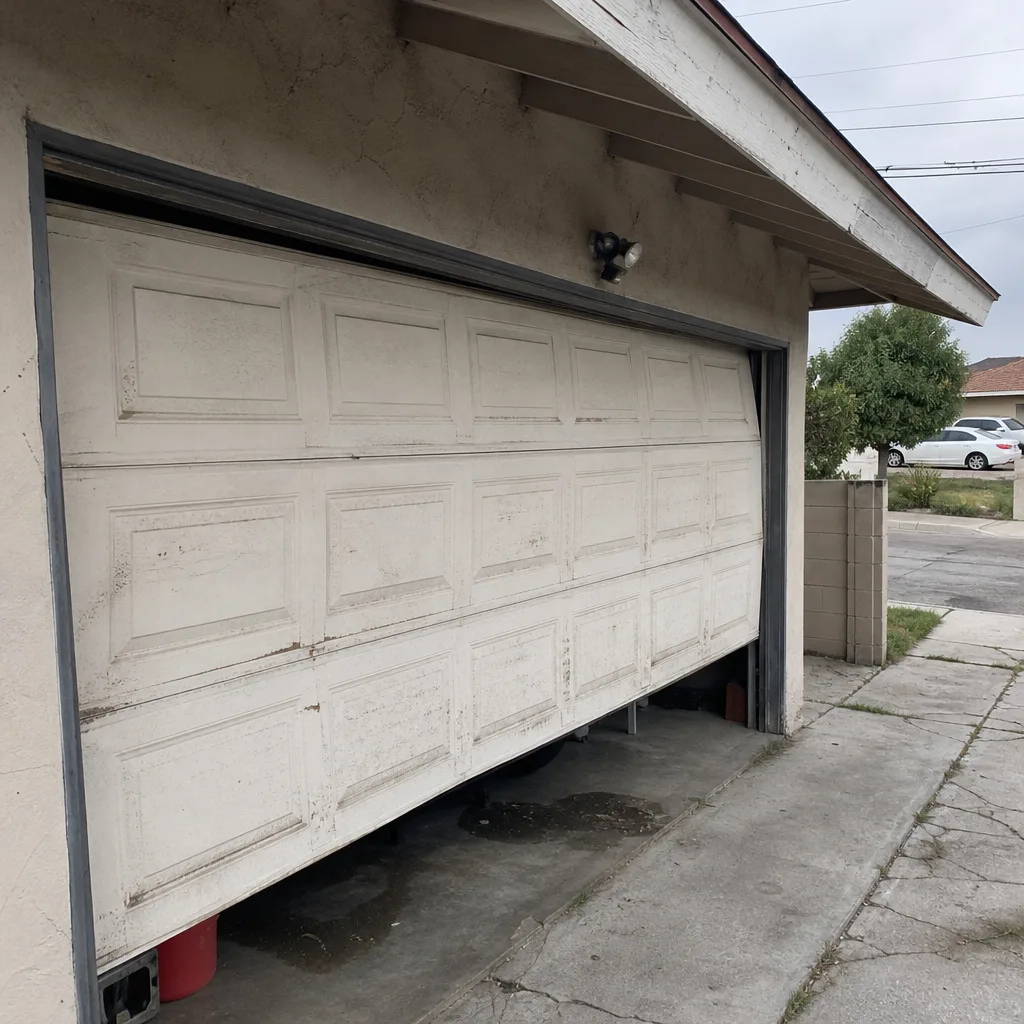 Before
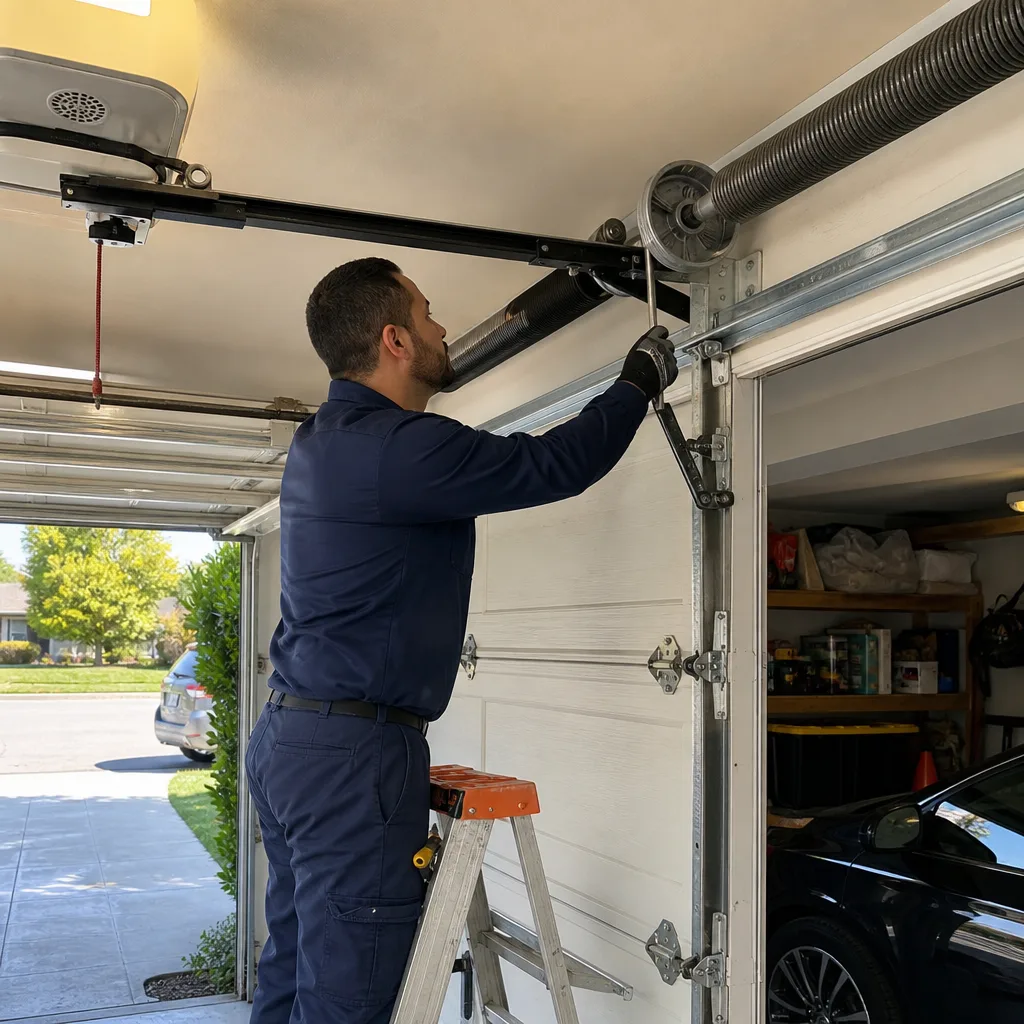 After
After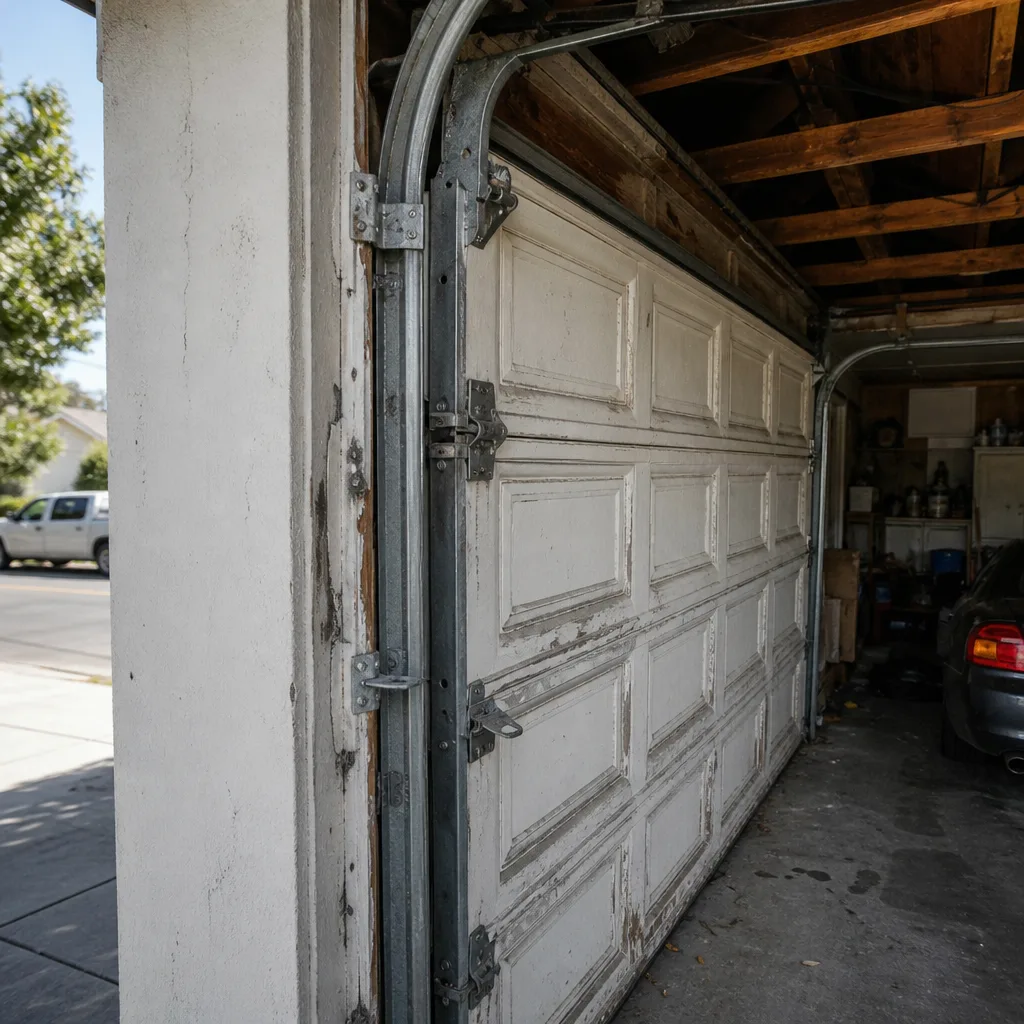 Before
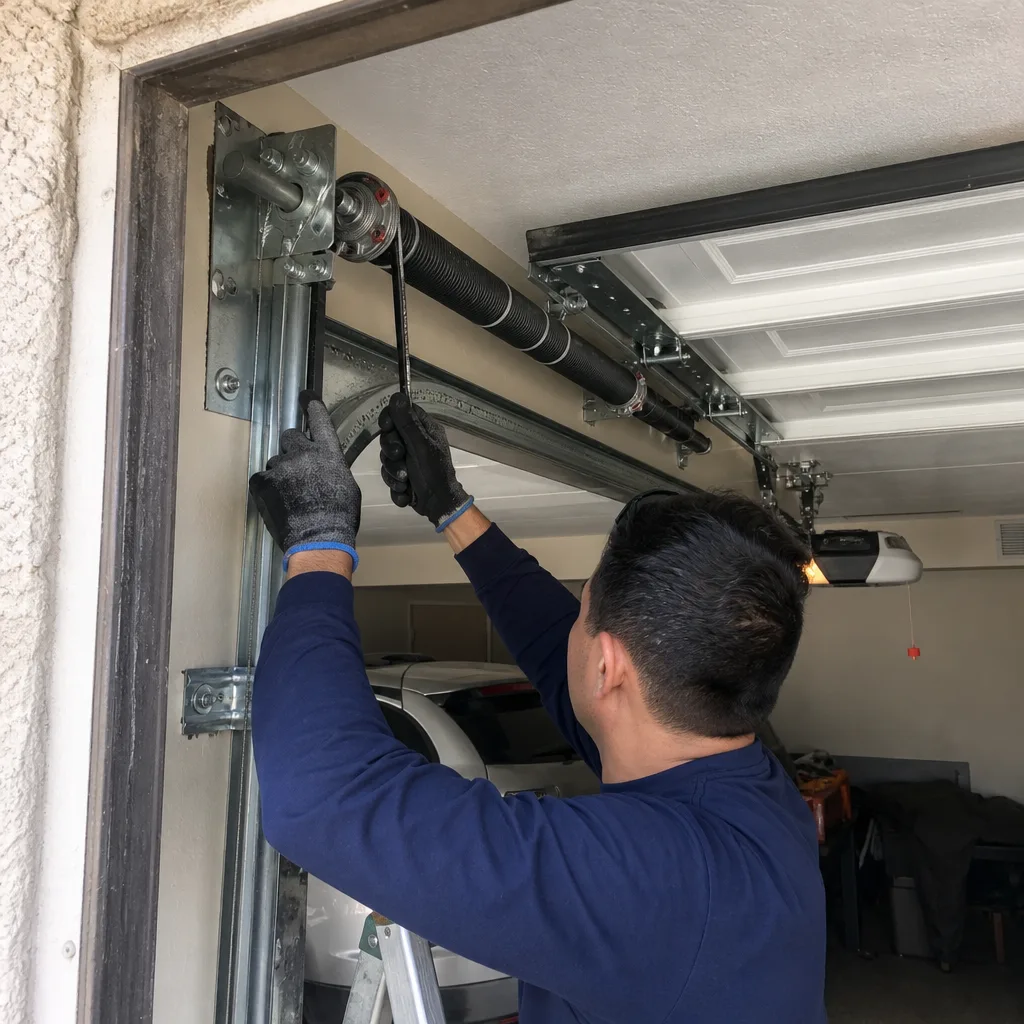 After
AfterGarage Door Repair Maintenance Schedule: What to Do and When
The standard advice to service your garage door “twice a year” was written for a door that opens four times a day. If yours opens twelve, that schedule is already behind. Most garage door maintenance guides hand you a generic calendar and call it done. This one doesn’t. We’re going to show you how to calculate what your specific door actually needs based on how often it cycles, what it’s made of, and where it lives, because a steel door in Sherman Oaks has a different maintenance reality than a wood door in Santa Monica. By the end, you’ll know exactly what to check monthly, what to do seasonally, and which tasks actually extend your door’s life versus which ones just keep the hardware store in business.
Quick Answer
A garage door maintenance schedule should be built around your door’s annual cycle count, not a calendar. Most doors need a 5-minute visual inspection every month, lubrication every 3-4 months or 3,000 cycles, and a balance test every 6 months. In Los Angeles, coastal aluminum doors need more frequent hardware checks than inland steel doors due to salt air, and doors used 8+ times daily should be serviced twice as often as doors used 4 times daily.
Table of Contents
- How to Calculate Your Door’s Real Maintenance Interval
- The Five-Minute Monthly Visual Checklist
- Lubrication: What Actually Extends Component Life
- The Balance Test: The Annual Check That Predicts Opener Failure
- Material-Specific Maintenance: Wood, Steel, and Aluminum in Los Angeles
- Seasonal Tasks That Matter (and Ones That Don’t)
- Common Mistakes to Avoid
- When to Call a Professional
How to Calculate Your Door’s Real Maintenance Interval
Here’s the thing most maintenance guides won’t tell you: a garage door isn’t maintained by the calendar. It’s maintained by cycles. One cycle equals one open and one close. The average American garage door runs about 1,500 cycles per year, which is roughly four opens and closes per day. But in Los Angeles, where garages double as home gyms, workshops, storage units, and the primary entry point for a lot of households, that number climbs fast.
Think about your own routine. You leave for work at 7:15 a.m. (open, close). Your partner leaves at 8:40 (open, close). The dog walker comes at noon and parks in the driveway, but grabs supplies from the garage (open, close). You come home at 6:10 (open, close). You run to Trader Joe’s at 7:30 (open, close, open, close). That’s not four cycles. That’s ten. Now multiply by 365.
Here’s the formula we use with our customers across Los Angeles:
- Count your cycles for three typical days. Include every open and every close. Be honest about weekends, which often run higher than weekdays.
- Average those three days, then multiply by 365. That’s your annual cycle count.
- Set your maintenance interval:
- Under 1,500 cycles per year: inspect monthly, lubricate every 6 months, balance test annually.
- 1,500 to 3,000 cycles per year: inspect every 2 weeks, lubricate every 3-4 months, balance test every 6 months.
- Over 3,000 cycles per year: inspect weekly, lubricate every 2-3 months, balance test quarterly.
A door that cycles 3,000 times a year puts double the wear on its rollers, hinges, and springs as the “average” door every maintenance guide assumes you own. Your springs are rated for a specific number of cycles, usually 10,000 for standard torsion springs. If you’re running 3,000 cycles a year, those springs are doing their full rated life in just over three years. If you’re running 1,200, you’ve got eight years. Same door, same spring, wildly different maintenance needs.
In our experience across Los Angeles, doors in areas like Silver Lake and Echo Park, where garages are often converted to creative workspaces or ADU entrances, cycle far more than homeowners realize. A band practice space, a ceramics studio, a home office that requires constant access: these doors open fifteen times a day without anyone thinking about it. That door needs a different schedule than the door on a house in Pacific Palisades where the garage holds a car that leaves twice a week.
The Five-Minute Monthly Visual Checklist
You don’t need to be a technician to catch most garage door problems before they become Garage Door Repair emergencies. You need five minutes and a willingness to actually look. This checklist catches roughly 80% of the issues we see on service calls in Los Angeles, and most of them are visible weeks or months before they cause a failure.
- Watch the door move through one full cycle. Stand inside the garage and watch it rise, then lower. It should move smoothly with no jerking, hesitating, or visible wobble. If one side lags or the door shudders halfway up, that’s a balance or track issue forming.
- Listen while it runs. A healthy door is quiet: a low hum from the opener and a soft rumble from the rollers. Grinding means dry rollers or bearings. Squealing means a stressed spring or hinge. Rattling means loose hardware. Any new noise is information.
- Check the cables on both sides. Look at the lift cables that run up the sides of the door. They should be straight, tight, and free of fraying or rust. If you see strands separating or a kink in the cable, that’s a garage door cable repair situation before it becomes an emergency.
- Look at the rollers. Nylon rollers should be intact and round. Steel rollers should show no visible wear on the wheel surface or the stem. A worn roller puts lateral stress on the track and the hinges, and once one goes, it accelerates the wear on everything around it.
- Check the track alignment. The vertical and horizontal tracks should be parallel and clean. Gaps, bends, or buildup of dirt and grime change how the door rides and put uneven load on the springs.
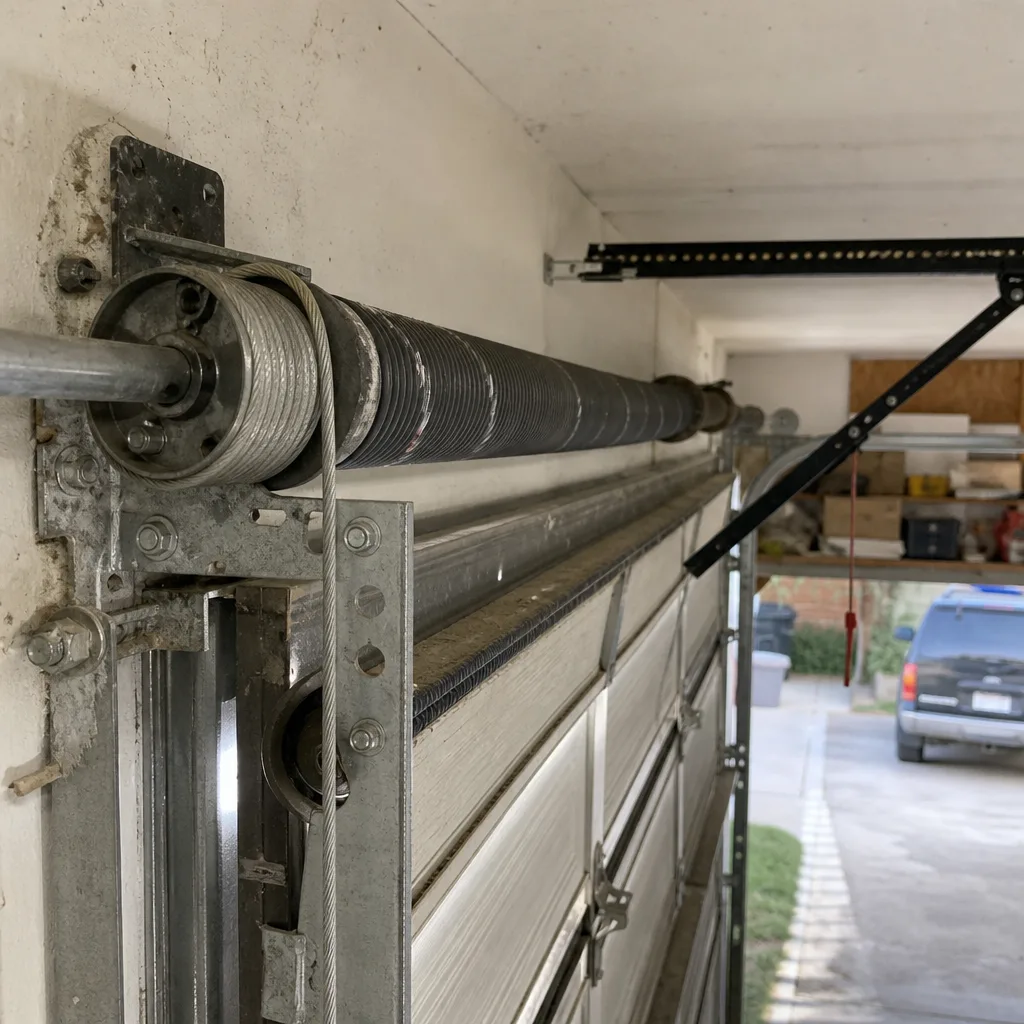
- Look at the springs. If you have torsion springs (the horizontal coil above the door), look for visible gaps in the coil, rust, or any separation. Extension springs (the long springs on the sides) should be straight and connected at both ends. Do not touch them. Just look.
Five minutes, once a month. That’s the interval for most Los Angeles homes. If your door cycles more than eight times a day, do this every two weeks. Write down anything that looks off, even if it seems small. Photograph it with your phone. When you eventually call for a tune-up or repair, having a record of when you first noticed the issue saves diagnostic time and often means the difference between a $120 fix and a $450 replacement. For Garage Door Repair Warning Signs Every Homeowner Should Know, check our dedicated guide.
Lubrication: What Actually Extends Component Life
Lubrication is the single highest-value maintenance task on a garage door, and it’s also the one most people do wrong. The wrong product or the wrong application can attract dirt, gum up bearings, and actually shorten component life. Here’s what matters.
Use the right product. You want a silicone-based or lithium-based spray lubricant designed for garage doors. Avoid WD-40 for anything except cleaning. It’s a solvent, not a long-term lubricant, and it strips the protective film from your rollers and hinges. Genie and Clopay both sell garage-door-specific lubricants that we’ve seen perform consistently well in Los Angeles heat. Where a lot of homeowners go wrong with lubrication is applying it in dry, dusty conditions where it picks up grime before it can set. In a city like Los Angeles with real dust, a quick wipe of each component before lubricating is the step that keeps your lubrication from turning into grinding paste.
What to lubricate:
- Rollers: Focus on the bearing at the center of the wheel, not the wheel surface itself. A drop on each roller bearing, twice a year minimum.
- Hinges: Every hinge pivot point, which is where the metal plates meet. This is where squeaks come from.
- Springs: A light, even coat along torsion springs. This reduces friction between coils and slows rust. Do not soak them.
- Track: Skip it. Lubricating the track is a common mistake. The track should stay clean and dry so the rollers grip properly. Grease on the track attracts dirt and creates a sticky surface that fights the rollers on every cycle.
What not to do: Don’t lubricate the opener rail if you have a belt-drive opener (Chamberlain and LiftMaster belt rails are designed to run dry). Chain-drive rails need light lubrication, but belt-drive rails don’t. If you’re not sure which you have, look at the rail: a chain looks like a bicycle chain; a belt looks like a wide black rubber strap.
Frequency still ties back to your cycle count. A door cycling 1,500 times a year needs lubrication every 6 months. A door cycling 3,000 times needs it every 3 months. The lubricant itself costs about $12. The parts it protects cost considerably more, and in Los Angeles, where a snapped spring or seized roller means a same-day emergency call rather than a “whenever you can make it” appointment, lubrication is the cheapest insurance you can buy.
The Balance Test: The Annual Check That Predicts Opener Failure
Every garage door has a balance point. It’s the line where the door stays in place on its own, held by the counterforce of the springs against the force of gravity. A properly balanced door will hold at about waist height when you release it manually. A door that’s lost its balance will either fall or climb on its own.
Why does this matter? Because your opener motor is not designed to lift your door. It’s designed to nudge it. The springs do the actual lifting. When the springs weaken, the opener starts doing more and more work. You won’t notice it at first, because the opener just gets a little louder and a little slower. Then the motor starts running hot. Then the gear wears. Then one morning, six to twelve months after the balance first went off, the opener quits entirely.
The balance test is how you catch that before it happens.
How to do it safely:
- Close the door. Pull the red emergency release cord to disconnect the opener from the door.
- Lift the door manually to about waist height, then let go. Don’t throw it. Release it gently.
- Watch what happens.
What the results mean:
- Door stays put: Your springs are doing their job. Reconnect the opener and move on.
- Door drifts down: Your springs are losing tension or have stretched past their rated cycle life. This is a spring issue, not an opener issue, and it’s telling you that a garage door spring repair is in your future, probably sooner than later.
- Door climbs up: Your springs are over-tensioned or the door was never properly balanced after a previous repair. It’s less common, but it puts upward strain on the opener’s travel limits and can cause the door to bounce off the top and reverse.
If your door drifts or climbs, do not reconnect the opener and continue using the door as if nothing happened. Every cycle with a failing balance chips away at the opener motor. In our work across Los Angeles, we regularly see openers that died young, not from any defect, but because they spent a year fighting a door with dead springs. Replace the springs, and the opener gets a second life. A balance test takes 60 seconds. It’s the single best predictor of a garage door emergency, and it’s the one test most homeowners never do. See our Garage Door Repair Troubleshooting: Common Problems and How to Fix Them for step-by-step guidance.
Material-Specific Maintenance: Wood, Steel, and Aluminum in Los Angeles
Your door’s material dictates what breaks, when it breaks, and how to prevent it. The manufacturer’s generic maintenance card assumes a mild, dry climate. Los Angeles is not that. Here’s what each material actually needs here.
Wood doors. Wood absorbs moisture and moves. In Los Angeles, wood doors in hillside neighborhoods like Mount Washington or the Hollywood Hills deal with morning fog and strong afternoon sun, which means the wood expands and contracts daily. Check the panels for warping and the joints for separation every month. Repaint or reseal every two to three years, and be honest with yourself: a wood door on the west side of the house takes UV damage that a north-facing steel door simply doesn’t. Amarr and Clopay both make wood composite doors that handle Los Angeles conditions better than solid wood, but even those need seal maintenance. Wood doors are also heavier, which means their springs wear faster. Expect spring replacement roughly 20-30% sooner than a comparable steel door.
Steel doors. Steel doors are the workhorses of Los Angeles garages, and they’re the lowest-maintenance option, but they’re not zero-maintenance. The real enemy is rust, and it shows up in two places: the bottom edge where the door meets the driveway, and any scratch that cuts through the paint or powder coat. In Los Angeles, where driveways are sloped and water pools at the door base after rain, inspect that bottom edge monthly during the rainy season. A scratch that exposes bare steel will rust within a season, and rust spreads under the paint. Touch up scratches with automotive touch-up paint or rust-inhibiting primer within a month. Wayne Dalton and Clopay both make steel doors with factory rust-resistant coatings, but no coating survives a deep scratch forever.
Aluminum doors. Aluminum is popular in Los Angeles because it’s light and rust-proof, and you’ll see it everywhere from Venice to Long Beach. But aluminum has two specific vulnerabilities. First, it’s soft; it dents more easily than steel, and a dented panel can bind against the track. Second, in coastal areas like Santa Monica, Marina del Rey, and Playa del Rey, salt air corrodes aluminum hardware badly. The door panel itself won’t rust, but the hinges, brackets, and fasteners will, often faster than the manufacturer’s maintenance schedule anticipates. If you’re within two miles of the coast, inspect your door’s hardware monthly and expect to replace hinges and fasteners every three to four years. Inland, aluminum doors are genuinely low-maintenance. Coastal, they need more attention than the manual tells you.
Seasonal Tasks That Matter (and Ones That Don’t)
Los Angeles doesn’t have seasons the way Minnesota does, but we do have rhythms that affect garage doors. Here’s what to do, and what to skip.
What matters in Los Angeles’s actual seasons:
- Rainy season (November through March): Check the weather seal along the bottom of the door. It compresses over time and stops sealing, which means water, leaves, and the occasional confused lizard make their way into the garage. A replacement seal costs $15-30 and takes 20 minutes. In neighborhoods like Hancock Park or Los Feliz where garages sit below street grade, a failed seal means standing water, and standing water means rust on your track, your opener, and anything you store on the floor.
- Santa Ana season (September through November): Dry winds mean fine dust. Dust gets into rollers, hinges, and the opener rail, and it combines with lubricant to create a grinding compound. After Santa Ana events, wipe down your track and rollers, then re-lubricate.
- Heat waves (July through September): Extreme heat softens some plastic components and stresses the opener’s motor if it sits in an uninsulated garage. On the hottest days, your opener runs hotter. That’s not a call to service it, but it is a reminder why the balance test matters. A well-balanced door makes the opener’s job easy, even at 100 degrees. A poorly balanced door is asking the motor to struggle at the exact moment it’s already running hot.
What doesn’t matter (but guides keep telling you to do):
- Panel repainting as “preventive maintenance.” Repainting a garage door that doesn’t need it is an upsell. If your steel door’s coating is intact, repainting adds nothing. Paint when you see wear, not on a schedule.
- Decorative hardware tightening as a monthly task. If you have decorative hinges and handles, they vibrate loose over time, but checking them annually is plenty. Anything more frequent is busywork.
- Weekly track cleaning. Unless you live on a dirt road or park a car that drips oil, your tracks don’t need weekly attention. Monthly inspection plus wiping when you see buildup is plenty, even in dusty Los Angeles.
The difference between a task that extends component life and a task that wastes your time comes down to this: does it keep a moving part moving, or does it keep a static part pretty? Lubrication, balance testing, and cable inspection keep things moving. Repainting and decorative tightening keep things pretty. Both have their place. One matters more.
Common Mistakes to Avoid
- Following a calendar instead of a cycle count. “Twice a year” is fine for a door that opens four times a day. If yours opens twelve, you’re under-servicing your door by roughly 50%, and you won’t know it until a spring snaps on a Tuesday morning. Calculate your actual cycle count and service to that.
- Using WD-40 as a lubricant. WD-40 is a solvent and water displacer. It cleans, then evaporates, then leaves your rollers and hinges drier than before. In dry Los Angeles air, that means metal-on-metal wear within weeks of application.
- Disconnecting the opener without securing the door. If you pull the emergency release while the door is open, and the springs are weak, the door can drop. A falling garage door weighs 150-400 pounds depending on the material. Always run the balance test from the closed position, and always keep your body clear of the door’s path while the release is pulled.
- Ignoring a noisy door because it still works. “It’s been grinding for six months but it still opens” is the most expensive sentence we hear in Los Angeles. Noise is the earliest warning sign of mechanical failure. A grinding roller that gets replaced costs $20. A grinding roller that shatters its bracket and bends the track costs $300 plus an afternoon without access to your car.
- Lubricating the track. Greasy tracks collect dust and grime, and in a city as dusty as Los Angeles, that turns into a sticky sludge that fights your rollers on every cycle. Keep tracks clean and dry. Lubricate the moving parts, not the rails they ride on.
- Testing, but not acting on, a failed balance test. The balance test tells you your springs are weakening. If you know your door drifts and you keep using it anyway, you’re not deferring a repair, you’re transferring the cost to your opener motor. The spring replacement costs $150-290. The opener replacement costs $350-500. Deferring the cheaper fix guarantees the more expensive one.
When to Call a Professional
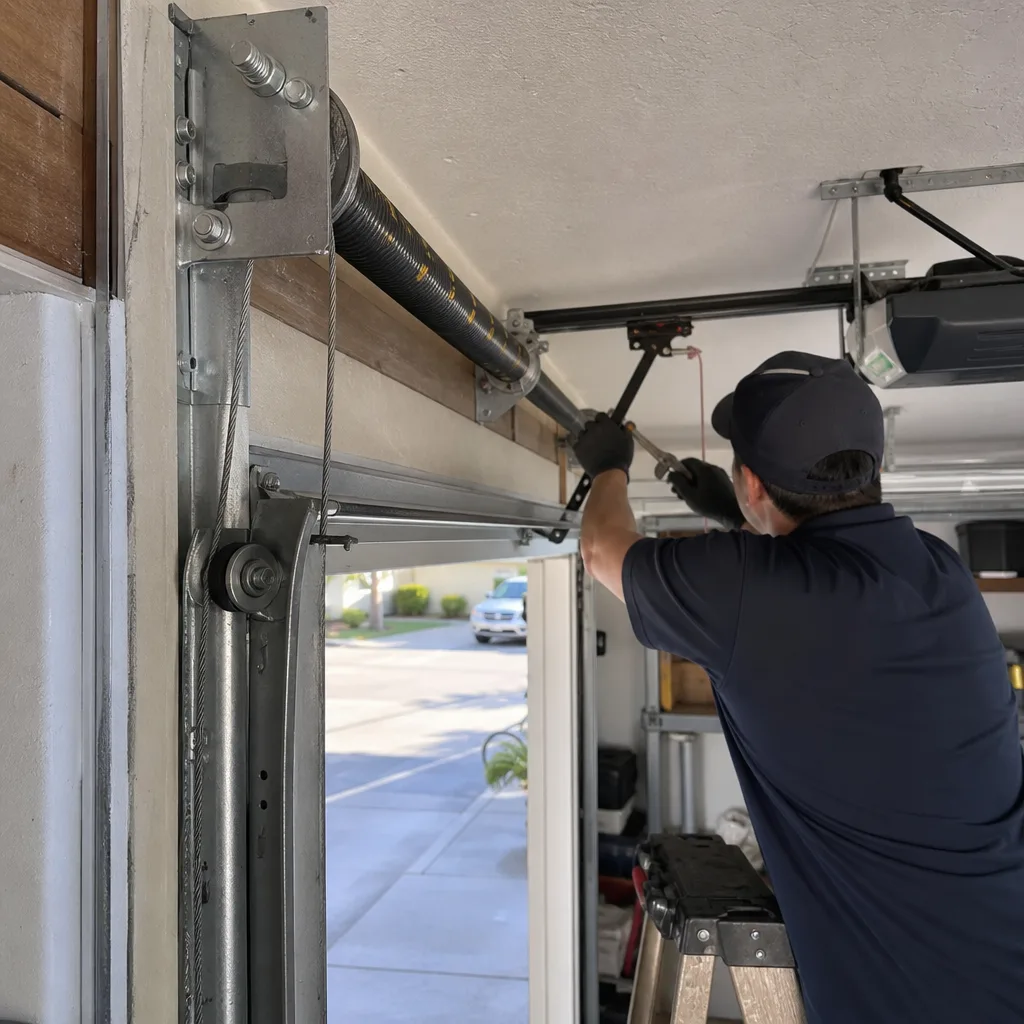
Some maintenance tasks are DIY-friendly. Others are not. Anything involving torsion springs, lift cables under tension, or track realignment is a professional job, full stop. These components are under hundreds of pounds of stored force, and when they fail, they fail fast. If your balance test shows a drifting door, if your cables are frayed, or if your door has come off its track, don’t improvise. Garage door repair in Los Angeles is a call away, and a trained technician can diagnose the problem, quote a written price before any work starts, and have it fixed the same day. Marlow Garage Door Repair started serving Los Angeles in 2002, and we offer free estimates for every repair, installed or not. Call (512) 883-4374 any time, day or night, and you’ll get a live person on the phone, not a recording.
Frequently Asked Questions
Service frequency depends on how many cycles your door runs per year. A door that opens and closes four times a day needs a tune-up every 12 months. A door cycling eight to ten times a day needs service every 6 months. Calculate your actual cycle count by counting opens and closes over three typical days, then averaging and multiplying by 365. Most Los Angeles households we visit cycle at the higher end.
A basic tune-up in Los Angeles typically runs $80 to $150, depending on the parts replaced and the condition of the door. That includes lubrication, hardware tightening, balance testing, and a safety inspection. If the tune-up reveals worn parts like rollers or a cracked hinge, those are quoted separately, and you’ll see a written price before any work starts. Call (512) 883-4374 for an exact quote, estimates are free.
Yes, for the inspection and lubrication tasks. The monthly visual checklist and lubrication routine are safe for any homeowner with basic awareness. The balance test is safe if done correctly from a closed position. What’s not safe is any work involving torsion springs, lift cables, or track removal, which are under high tension and require specialized tools and training.
The balance test is the most reliable indicator. If your door drifts down when released at waist height, your springs have lost tension and are approaching the end of their cycle life. You may also notice the door feeling heavier to lift manually, the opener straining or slowing down, or visible gaps in the coils of your torsion spring. Springs typically last 7 to 12 years for a Los Angeles door averaging four cycles a day, but high-cycle households may see failure in 3 to 5 years.
Yes. Homes within about two miles of the coast in neighborhoods like Santa Monica, Venice, and Playa del Rey deal with salt air that accelerates corrosion on hinges, brackets, and fasteners, even on doors with aluminum panels. Plan to inspect hardware monthly and replace fasteners every three to four years. Inland homes in the Valley or central Los Angeles don’t face the same salt exposure and can follow a standard schedule.
Yes, provided it catches wear before it becomes failure. A $120 tune-up that catches a $20 roller before it shatters and bends a track has paid for itself several times over. The tune-up itself extends component life through lubrication and tightening, but its real value is the inspection: finding the small problem now instead of the big problem on a Monday morning. Call (512) 883-4374 to schedule, and you’ll get a live person, a written price, and no surprises.
The Bottom Line
A garage door maintenance schedule only works if it matches the way you actually use your door. Count your cycles, not your months. Watch your door every month, lubricate the moving parts every three to six months depending on use, and run the balance test at least twice a year. Those three habits catch the vast majority of problems before they become emergencies. In Los Angeles, where a garage door is often the busiest entry point in the house, a door that gets maintenance on its actual schedule, not the manufacturer’s generic one, lasts years longer and breaks down far less. The choice isn’t whether to maintain your door. It’s whether you do it on your schedule or the door’s. For more guides & resources, explore our blog.
Written by Jaylen Ross, Owner at Marlow Garage Door Repair, serving Los Angeles since 2002.