
Last updated October 9, 2026
Full 25-point door and opener safety check with every visit - springs, cables, rollers, tracks, and your LiftMaster or Chamberlain opener included
You get a price before we start. It does not change when the truck arrives.
 Before
 After
After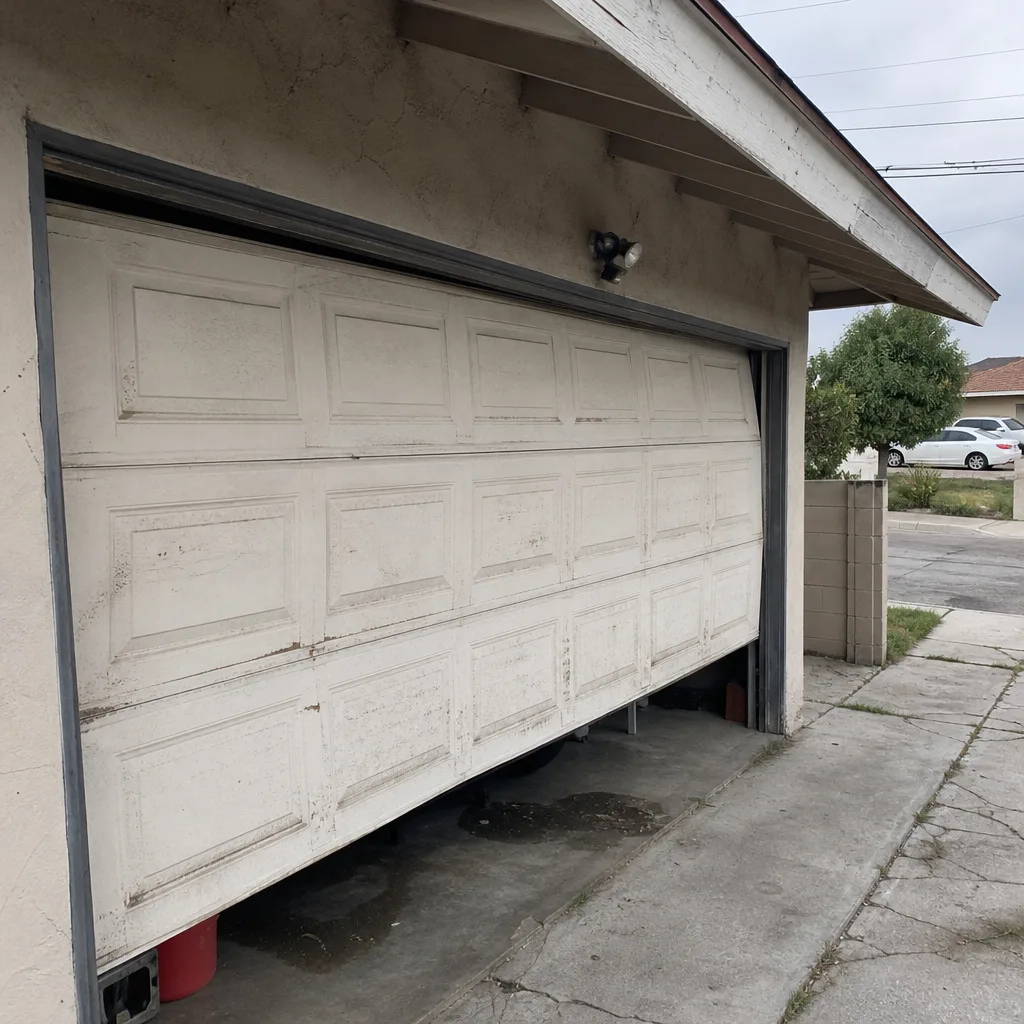 Before
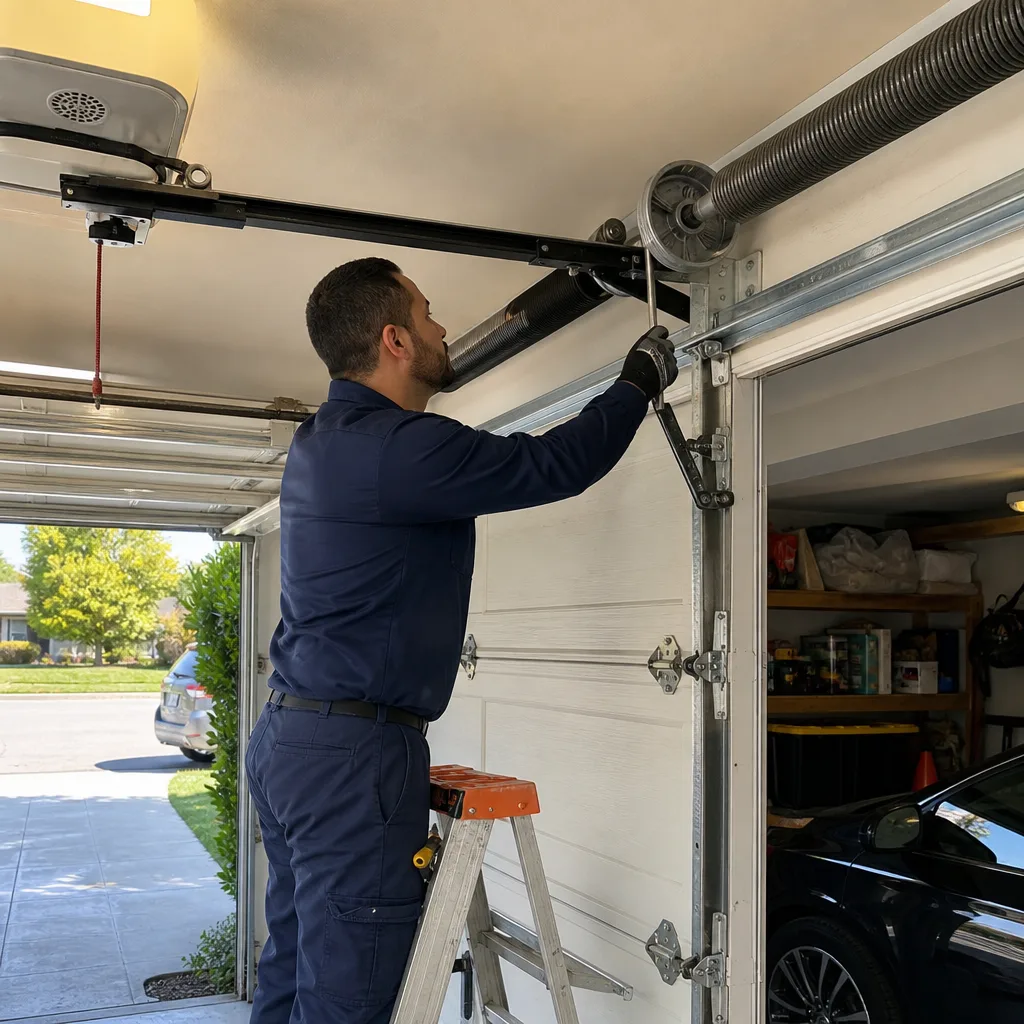 After
After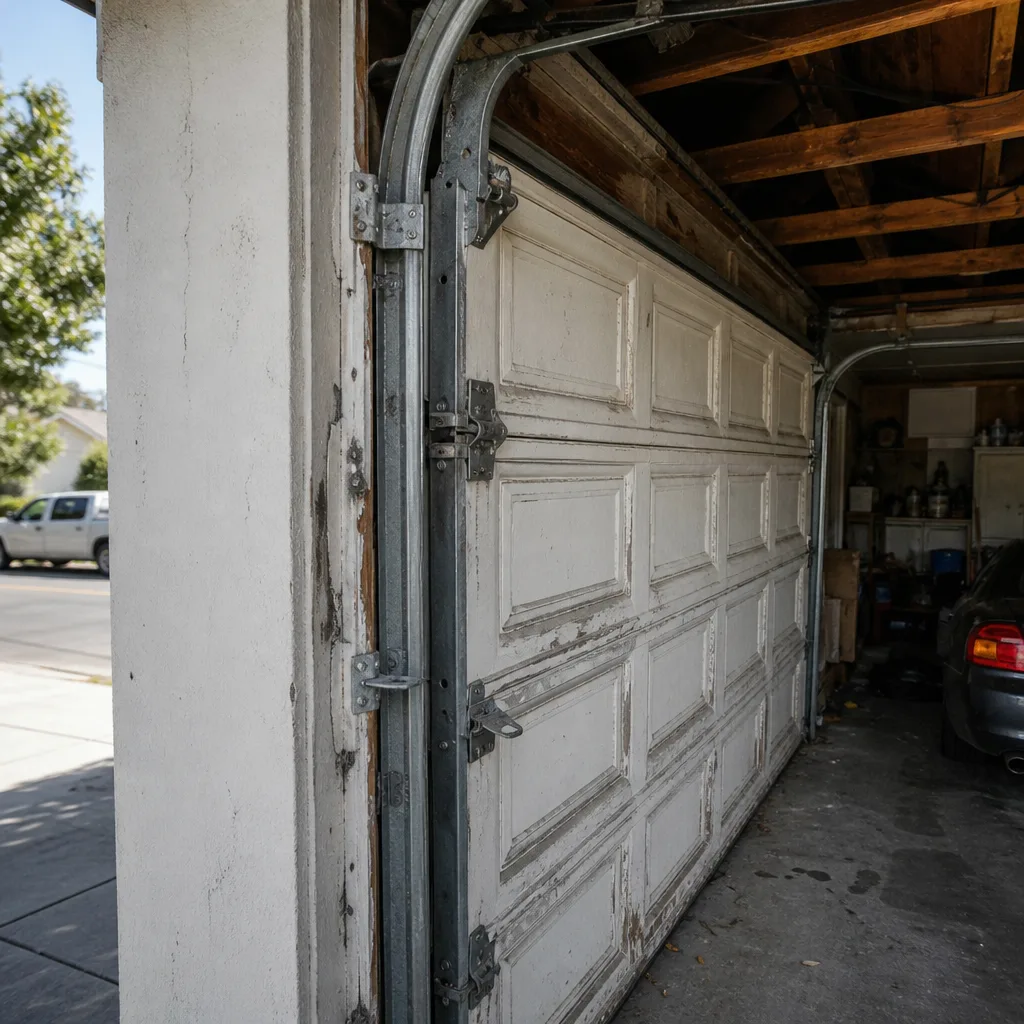 Before
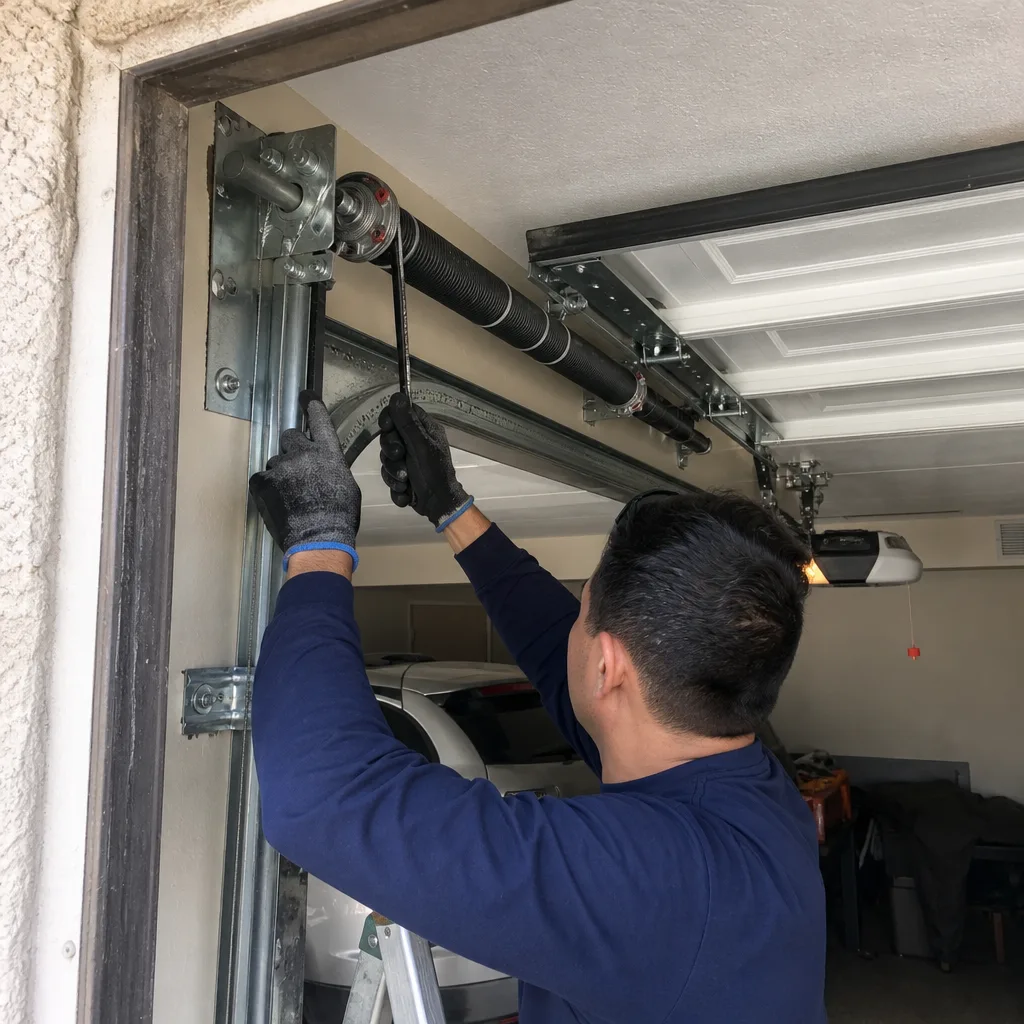 After
AfterGarage Door Spring Repair Maintenance Schedule: What to Do and When
A standard torsion spring is rated for 10,000 cycles. Open your garage door four times a day, and that spring lasts roughly seven years. Open it ten times a day because you’ve got teenagers coming and going, and you’re looking at under three years before failure. Most homeowners in Los Angeles have no idea which math applies to them, and that’s exactly why springs snap without warning. This guide teaches you how to calculate exactly where your springs sit in their rated lifespan, which two maintenance actions actually extend that lifespan, and when proactive replacement costs less than waiting for the snap. For more detail, see our dedicated Garage Door Spring Repair services.
Quick Answer
A garage door spring needs a visual inspection every three months, lubrication every six months with a spray-on white lithium grease, and proactive replacement when it reaches roughly 7,000 to 8,000 cycles on a standard 10,000-cycle spring. A standard torsion spring lasts seven to ten years in the average Los Angeles household, but heavy-use doors with ten or more daily cycles can wear out a spring in under three years. If your springs are nearing the end of their rated cycle count, replacement before failure costs less than an emergency call after the door comes down.
Table of Contents
- The Cycle Math: Calculate Your Spring’s Real Age
- What Actually Extends Spring Life (and What’s a Waste of Time)
- The Seasonal Inspection Checklist for Los Angeles Springs
- High-Cycle Springs: When the Upgrade Pays Off
- The Proactive Replacement Window: Why 80% Is the Number
- How to Lubricate Your Springs: A 7-Step Routine
- Common Mistakes to Avoid
- When to Call a Professional
- Frequently Asked Questions
- The Bottom Line
The Cycle Math: Calculate Your Spring’s Real Age
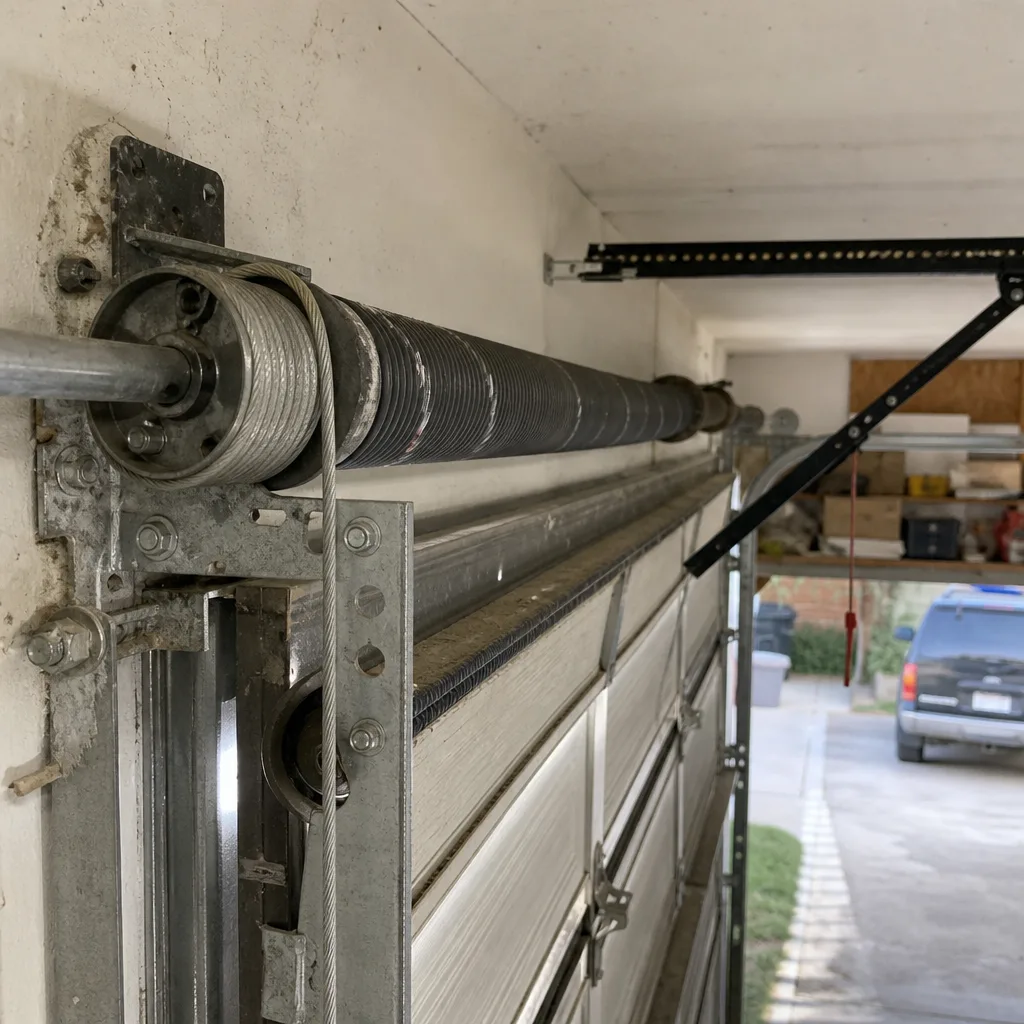
Your torsion spring, the horizontal coil above the door that does most of the lifting, doesn’t care about calendar years. It cares about cycles. One cycle equals one full open and one full close. A standard torsion spring carries a 10,000-cycle rating, and once you cross that line, the steel inside has been flexed past its engineered fatigue limit. Failure isn’t a question of if. It’s a question of the next week or month.
Here’s the math that tells you where you stand right now:
- Count your daily cycles. Count every full open and close for three typical days. Include every family member’s comings and goings, deliveries, and the morning rush. Average them. A two-car household in Los Angeles with two working adults and one teen driver often lands between 8 and 12 cycles per day.
- Multiply by 365. Ten daily cycles becomes 3,650 cycles per year. Four daily cycles becomes 1,460 per year.
- Divide 10,000 by your annual number. That’s your spring’s expected lifespan in years. Ten cycles a day gives you 2.7 years. Four cycles a day gives you 6.8 years.
- Adjust for age. If your door was installed in 2018 with standard springs and you run eight cycles a day, you’re at roughly 23,000 cycles by 2026. That spring has been living on borrowed time for a while.
In Los Angeles specifically, we see a second variable: garage use as primary entry. In neighborhoods like Sherman Oaks and Silver Lake where street parking is tight, many families enter and exit through the garage exclusively, pushing cycle counts well past suburban norms. If your garage door is your front door, your springs are aging roughly twice as fast as a neighbor who parks in a driveway and uses the garage for storage.
Most springs we replace in Los Angeles fail between 7,500 and 11,000 actual cycles. The rating isn’t a cliff, it’s a zone. The smart move is knowing where you stand before the zone arrives.
What Actually Extends Spring Life (and What’s a Waste of Time)
There are exactly two maintenance actions that measurably extend torsion spring life. Everything else you see recommended online or in more guides & resources falls somewhere between harmless folklore and a waste of a Saturday afternoon.
The two actions that work
- Lubrication every six months with the right product. A clean, well-lubricated spring coils and uncoils with less internal friction. Less friction means less heat, less wear on the coil surfaces, and fewer micro-abrasions that become fracture points. Use a spray-on white lithium grease or a garage door specific silicone spray. Not WD-40, which is a solvent that strips lubricant. We’ve opened springs with visible rust furrows from years of unmaintained friction, and we’ve opened springs from the same year, same brand, in the same Los Angeles block, that were lubricated on schedule and still looked new at cycle 8,000. The difference is real.
- Balance-tested door operation. A door that travels smoothly, without shaking or jerking, transfers less shock load into the spring on every cycle. The spring is doing its designed job, not absorbing misalignment. Twice a year, check that your door opens at roughly a consistent speed all the way up, no hesitation, no visible shake.
What does nothing
- Spraying the springs with anything that isn’t lubricant. There’s a persistent myth that spraying springs with a rust converter or painting them with Rust-Oleum prolongs life. It doesn’t. The spring flexes thousands of times a day and any coating that hardens is going to crack and create grit in exactly the places you don’t want grit.
- Trying to “rest” the springs. Manually operating the door, leaving it half-open, or disconnecting the opener doesn’t reduce the cycle count. One open and close, however it’s performed, is one cycle. The steel doesn’t know who lifted the door.
- Adjusting the tension as “maintenance.” A torsion spring’s tension is set at installation based on the door’s measured weight. Changing it later because the door feels slower is treating a symptom, not maintaining the spring. And winding a torsion spring without proper tools and training is genuinely dangerous; the stored energy in a wound spring is enough to break bone.
The honest, slightly uncomfortable truth: a torsion spring is a wear item. You maintain it to get the full rated life out of it, not to make it last forever. Every spring has a final cycle.
The Seasonal Inspection Checklist for Los Angeles Springs
Los Angeles doesn’t freeze, but that doesn’t mean your springs aren’t affected by the seasons. Summer heat above 95 degrees warms the steel and can accelerate fatigue in springs already near their cycle limit. Winter, especially the damp marine-layer months close to the coast, introduces condensation that speeds up surface corrosion on unprotected coils. Here’s the four-times-a-year visual inspection that catches problems before the spring gives out.
- Look at the gap between coils. A healthy torsion spring has a uniform, even gap between each coil along its entire length. If you see a gap widening or a visible separation opening up, that’s early-stage deformation and it will not self-correct. This is the number one pre-failure signal we see in Los Angeles homes along the 405 corridor near Westchester and Culver City, where the coastal moisture works year-round on exposed steel.
- Run your finger (or a rag) along the coils and check for rust. Surface rust is common and not urgent, especially on older springs. Deep pitting, flaking, or an orange brown dust that transfers onto your finger is more serious. Pitted steel has lost material at the microscopic level, and those pits are where fracture cracks begin.
- Watch the spring while the door opens and closes once. It should coil and uncoil cleanly, without a visible hitch or slip. A spring that jerks at one point in the cycle is binding, often due to a dry spot on the center bearing or rust accumulating between specific coils.
- Listen for novelty sounds. A creak that wasn’t there last month, a pop when the door starts moving, a grind when it stops: all are the spring telling you something has changed. Springs don’t naturally get noisier with age when they’re lubricated and balanced. Noise is friction, and friction is a maintenance problem with a known fix.
This inspection takes four minutes. It doesn’t require tools, it doesn’t require detaching anything, and it will catch the vast majority of pre-failure conditions early enough to matter. We recommend doing it with the door closed, standing to the side, and keeping your face and body out of the direct path of the springs just in case.
High-Cycle Springs: When the Upgrade Pays Off
When you’re replacing springs anyway, you’ll hear about high-cycle springs: torsion springs rated for 25,000, 50,000, or even 100,000 cycles instead of the standard 10,000. The upgrade typically costs an additional $50 to $120 per spring, installed. Is it worth it? As with everything in this guide, the answer is math.
A high-cycle spring doesn’t feel different. It doesn’t make the door quieter or faster. It just has a longer engineered fatigue life because it uses a thicker gauge of wire wound to a larger diameter. What you’re buying is a larger number on the cycle rating.
Run the numbers for your house
If you run four cycles a day, a standard spring lasts about seven years. A 25,000-cycle spring lasts about seventeen years. For a $90 upgrade, you’re buying a decade of coverage. That math works if you plan to be in the house that long, and if you don’t want to schedule another spring replacement while your kids are still in school.
If you run ten cycles a day, a standard spring lasts about 2.7 years. A 25,000-cycle spring lasts about 6.8 years. The upgrade is almost a no-brainer, and a 50,000-cycle spring stretches it to over thirteen years. In our experience installing springs across Los Angeles, the households on the east side, Silver Lake, Echo Park, Highland Park, where garage-first entries are normal, are the ones where the high-cycle upgrade pays off fastest.
Here’s the other side: if you’re in a two-car driveway home in Tarzana or Woodland Hills where the garage stores Christmas decorations and a gym bench, and the door moves four times on a weekend and zero during the week, a standard 10,000-cycle spring may outlast your time in the house. Buying a 50,000-cycle spring in that situation is an upsell that doesn’t pencil out.
The key is counting your actual cycles before you decide. The number tells you whether the upgrade is insurance you need or a product you’ll never collect on. Our Garage Door Spring Repair in Los Angeles page covers spring replacement costs in more detail if you want current pricing before you decide.
The Proactive Replacement Window: Why 80% Is the Number
Springs don’t announce their final cycle. They just stop, often with a sound like a gunshot, and the door becomes a 200-pound dead weight that’s either stuck down or, worse, stuck in an unpredictable position. The repair itself costs the same whether the spring fails on a Tuesday at noon or a Sunday at 11 p.m. What changes with failure is the urgency: you’re now calling around for someone who can come now, rather than getting three written prices and choosing the best one.
Which is why we recommend a proactive replacement window of 80% of rated life. Here’s what that looks like on a standard 10,000-cycle spring:
- Four cycles a day (1,460 per year): 80% of 10,000 is 8,000 cycles, which arrives at roughly 5.5 years. Proactive replacement between year five and year six.
- Seven cycles a day (2,555 per year): The 8,000-cycle mark arrives at roughly 3.1 years. Proactive replacement in year three.
- Ten cycles a day (3,650 per year): The 8,000-cycle mark arrives at roughly 2.2 years. Proactive replacement in year two.
Replacing at 80% does a few things for you. First, you choose the date. You’re not waiting for a failure that might come at the worst possible moment, like the morning rush to get kids to school or the moment you’re leaving for a flight out of LAX. Second, you can compare prices without the clock running. Third, the old spring often shows visible signs at 80% that a trained eye can use to confirm the timing: slight coil separation, early-stage rust pitting, or a door that’s running a touch slower than it did at installation.
The cost math matters too. A planned spring replacement in Los Angeles is a scheduled job: you get a written price before anyone starts, and the work happens on your timeline. An emergency spring replacement after a failure is the same job but you’re buying speed and availability, and you’ll likely take the first opening that fits rather than the price that’s best for you. The spring itself costs the same. The conditions under which you’re buying it are very different.
How to Lubricate Your Springs: A 7-Step Routine
Lubrication is the single highest-ROI maintenance task on a garage door, and it takes about ten minutes twice a year. Here’s how we do it, step by step, using the same procedure we’d walk any Los Angeles homeowner through on the phone.
- Get the right product. Pick up a can of spray-on white lithium grease or a garage door specific silicone lubricant, available at any hardware store for under $12. Avoid WD-40, penetrating oils, and anything labeled as a rust remover.
- Close the door completely. This releases most of the tension on the spring and makes the full length of each coil visible and accessible.
- Wipe down each spring with a clean, dry rag. You’re removing loose dirt, dust, and any old, sticky lubricant that’s accumulated. You don’t need to scrub; a firm wipe along the length of each spring is enough.
- Apply the lubricant along the full length of the spring. Spray the entire coil surface, top and sides, keeping the nozzle about four to six inches away. You want an even sheen, not a dripping coat.
- Open and close the door once. This works the lubricant into the spaces between the coils, which is where friction actually concentrates during winding.
- Apply a second, lighter pass to any visible gaps between coils. If you see a thin dry line running through the middle of the spring after the first cycle, hit that spot again.
- Done. Wipe off any overspray on the wall or the door, mark it on your calendar, and schedule the next application six months out.
If you’re doing this on a door in a Los Angeles neighborhood like Mar Vista or Playa Vista, where ocean air carries salt and moisture, consider a third lubrication each year. The extra five minutes of work is cheap insurance against the coastal rust we see on unprotected springs in those areas.
Common Mistakes to Avoid
- Using WD-40 on torsion springs. It’s a solvent, not a lubricant, and it strips the protection the spring had. Once the solvent flashes off, the spring is drier than before you sprayed it. You’ve not just wasted the effort; you’ve made the spring more vulnerable.
- Ignoring a new creak or pop for more than a week. Springs don’t get noisier as a normal part of aging when they’re lubricated and balanced. A new noise is a signal. The longer it goes untreated, the more likely it develops into a fracture, and the difference between a creak and a snap is sometimes three weeks.
- Manually lifting a door that feels heavier than it should. If the door suddenly takes real effort to lift, or the opener strains, the spring is likely losing tension or approaching failure. Forcing the door open puts the entire load on the opener and your lower back. Stop and have it looked at.
- Treating the spring as a permanent part of the house. Most homeowners in Los Angeles track the age of the roof, the water heater, and the HVAC. Almost none track the springs, even though a spring failure is far more disruptive to a typical week than a water heater issue. Write the installation date on the spring with a permanent marker or put it in your phone.
- Comparing quotes by phone number alone without checking cycle rating. A standard spring and a high-cycle spring look identical from the outside, but one is rated for 10,000 cycles and the other for 25,000 or more. A lower price that quotes a standard spring when your old one was high-cycle is not a better deal; it’s a shorter-lived product.
- Attempting to wind or adjust a torsion spring yourself. The stored energy in a wound torsion spring can break a forearm or worse if the winding bar slips. This is not a YouTube-worthy DIY project, and no amount of prep makes it safe without the right tools and experience.
When to Call a Professional
Call a professional when you see visible coil separation, deep rust pitting, or the door is running noticeably slower or heavier than it did six months ago. Call when you hear a sound you haven’t heard before. Call if your calculation up above puts you over 7,000 cycles and you’ve never inspected the springs. And if the spring has already snapped, don’t run the opener again; the motor will strain against the dead weight and you’ll add a new problem to a known one. Marlow Garage Door Repair offers free estimates in Los Angeles, with a written price before any work starts, so you’ll know exactly what the repair costs before we turn a wrench. Call (512) 883-4374.
Frequently Asked Questions
Most standard 10,000-cycle torsion springs need replacement every seven to ten years in an average Los Angeles home, but high use with ten or more daily cycles can wear them out in under three years. Calculate your daily cycles, divide 10,000 by your yearly total, and that’s your specific answer. If you’re inside the last 20% of rated life, replacing proactively costs less overall than waiting.
Standard torsion springs typically last seven to ten years in Los Angeles for a household running four to five cycles a day, but heavy-use households in neighborhoods like Silver Lake or Echo Park, where the garage is the primary entry, often see failure in two to three years. High-cycle springs rated for 25,000 cycles extend that to somewhere between seven and seventeen years depending on use.
Yes, lubrication is a safe DIY task any homeowner can do with a can of spray-on white lithium grease and about ten minutes. Do it every six months with the door closed, wipe the springs down first, apply a light even coat, and run the door once to work the lubricant between the coils. Skip the WD-40; it’s a solvent, not a lubricant, and it leaves the spring drier than before.
The earliest reliable sign is visible coil separation, where the gap between two coils starts to widen. Other signs include new creaking or popping sounds, deep rust pitting on the coil surface, and a door that suddenly feels heavier when you lift it manually. If you spot any of these, have the spring inspected promptly; a known problem is always cheaper than a failure at the worst moment.
Garage door spring replacement in Los Angeles typically runs $200 to $450 for a standard pair of torsion springs including labor, with high-cycle upgrades adding roughly $50 to $120 per spring. The final number depends on spring type, door weight, and whether it’s a planned replacement or an emergency call. You’ll always see a written price before any work starts, so the quote is locked and the invoice matches.
Yes, whenever possible. The two springs on a double-wide door wear at the same rate from the day they’re installed, and if one has failed, the other is statistically not far behind. Replacing both resets the cycle count on the entire system, and you’ll pay less for the combined job than you would for two separate service visits.
The Bottom Line
A torsion spring is a wear item with a known, countable lifespan, and the maintenance schedule is really just a way of tracking where you are in that count. Count your daily cycles, do the math, lube the springs every six months with the right product, inspect them every three months, and plan for replacement at 80% of rated life. That routine gets you the full life out of standard springs and turns a surprise failure into a scheduled, budgeted job. In Los Angeles, where garage-first living pushes cycle counts higher than most homeowners expect, knowing your number is the difference between a planned Tuesday repair and a Sunday-night emergency. Call (512) 883-4374 when you’re ready for a written price, or explore our Garage Door Repair in Los Angeles page for a fuller look at what a full service visit covers. If you’re dealing with a snapped cable alongside your spring, our Garage Door Cable Repair in Los Angeles page walks through that repair, and the Marlow Garage Door Repair home page has the full picture on who we are and how we work.
Written by Jaylen Ross, Owner at Marlow Garage Door Repair, serving Los Angeles since 2002.