
Last updated October 9, 2026
Full 25-point door and opener safety check with every visit - springs, cables, rollers, tracks, and your LiftMaster or Chamberlain opener included
You get a price before we start. It does not change when the truck arrives.
 Before
 After
After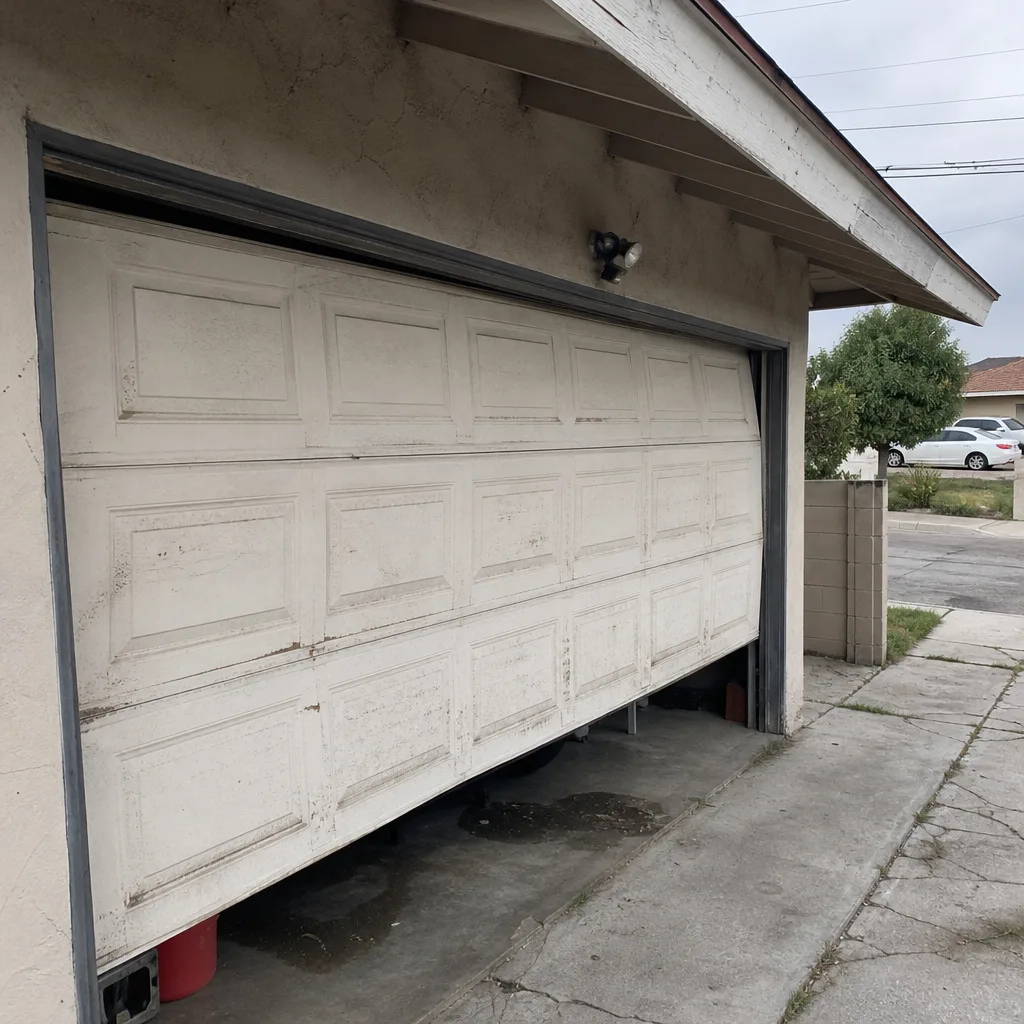 Before
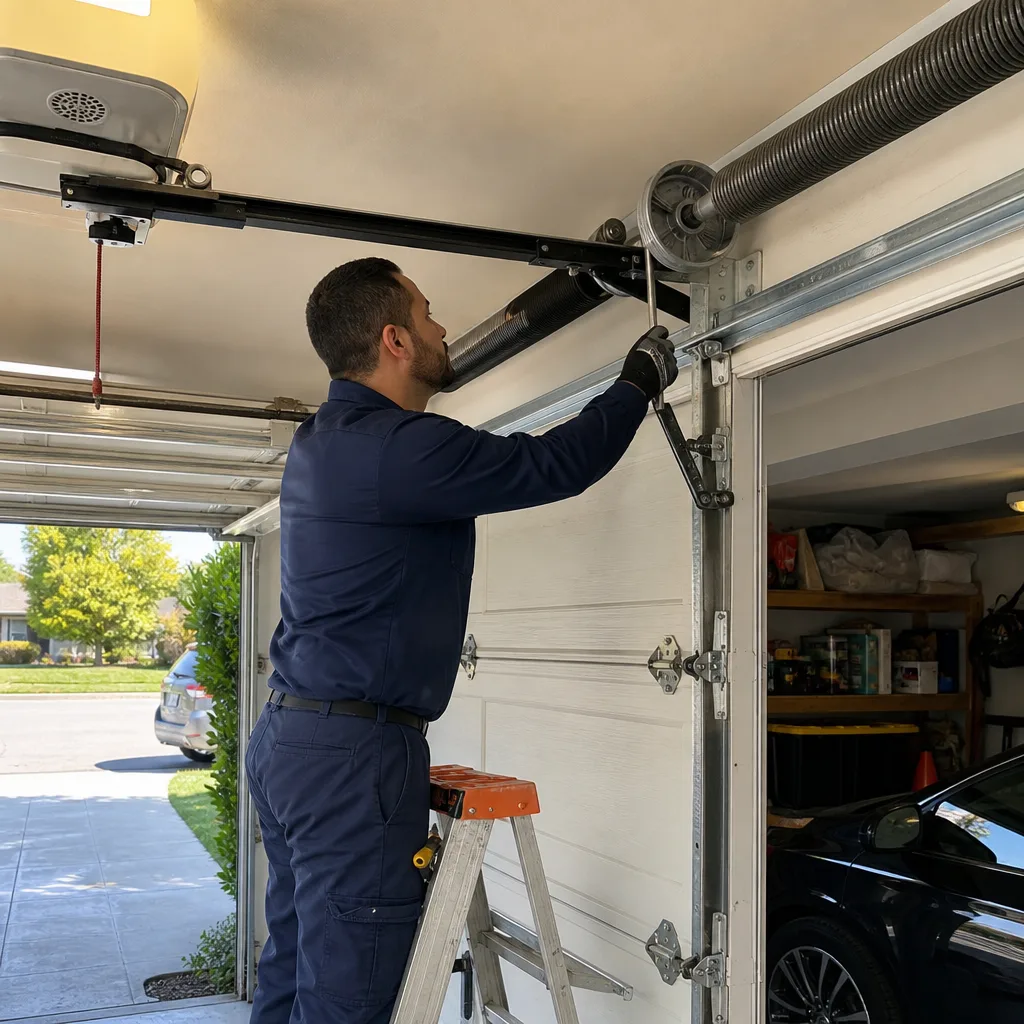 After
After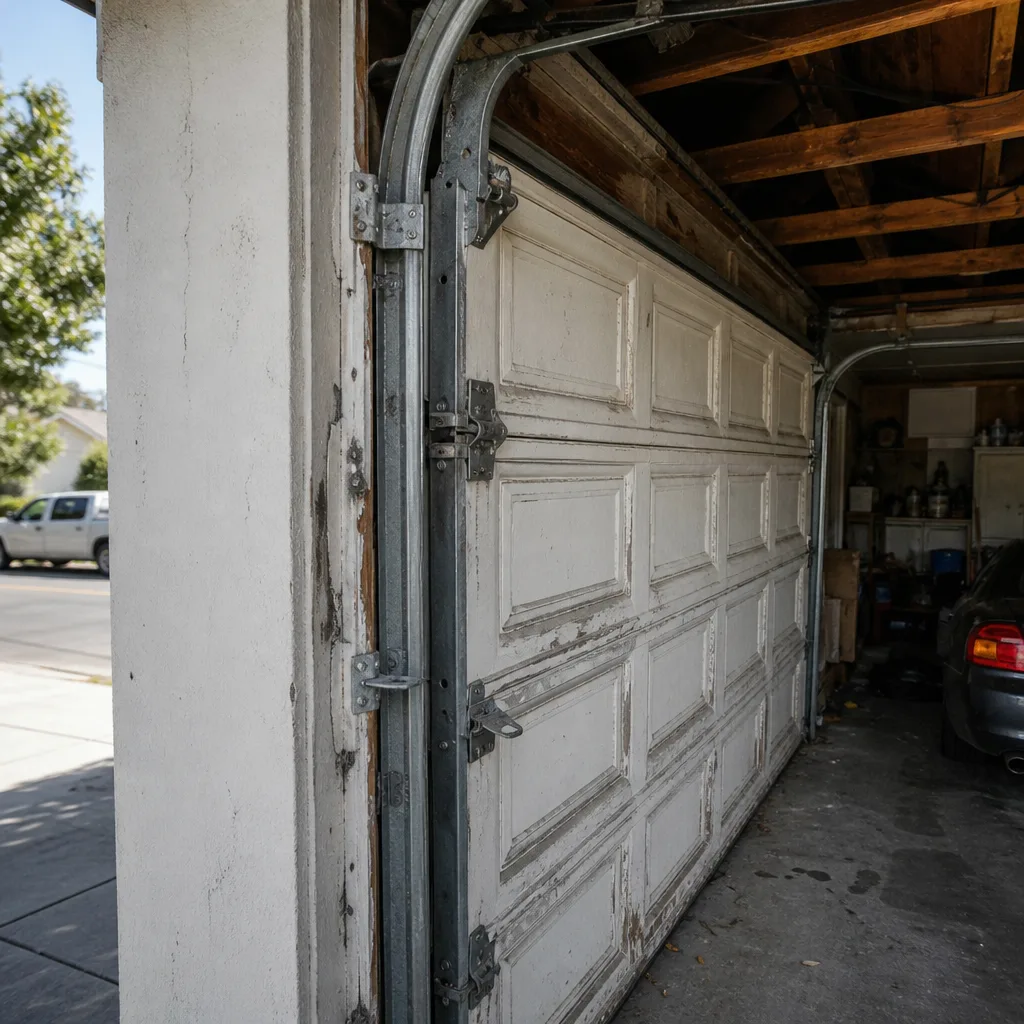 Before
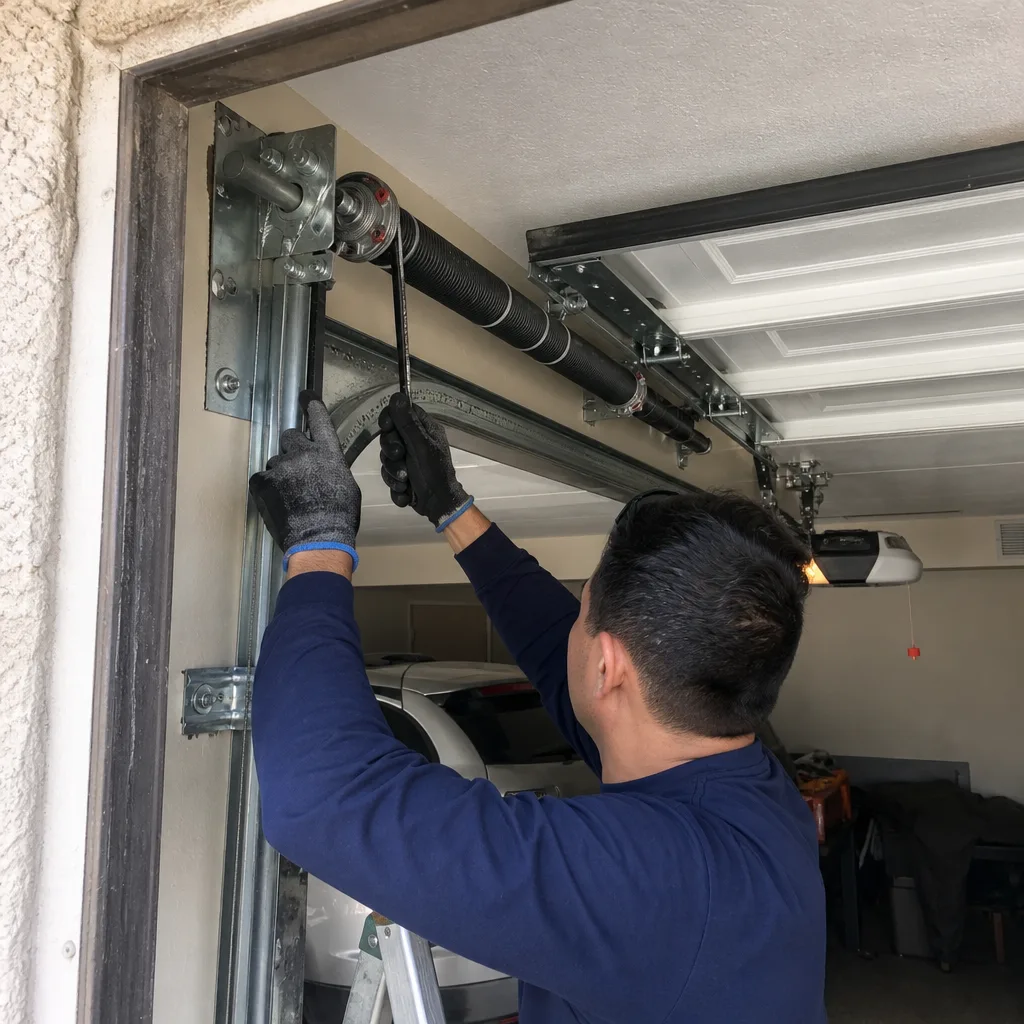 After
AfterGarage Door Spring Repair Troubleshooting: Common Problems and How to Fix Them
When a torsion spring breaks, the door doesn’t just stop. It usually still responds to the opener button, moves an inch or two, then reverses back down. That single behavior convinces roughly 70% of homeowners that their opener motor is failing, and they call the wrong repair. In Los Angeles, where most homes have attached garages used daily, this misdiagnosis happens constantly across every neighborhood from Echo Park to Woodland Hills. This guide teaches you to identify a spring problem before you pay for an opener, cable, or track repair you don’t need. For professional help, see our Garage Door Spring Repair services.
Quick Answer
The most common garage door spring problems are a broken torsion spring, a snapped extension spring, worn springs that have lost tension, and springs that slipped out of their mounting cones. A broken torsion spring leaves a visible gap in the coil above the door, while a broken extension spring makes the door feel violently heavy and lopsided when you try to lift it by hand. If your door opens two inches and reverses, or feels like it weighs 200 pounds when you disconnect the opener, you’re almost certainly looking at a spring failure, not an opener problem. Learn the full warning signs in our guide to Garage Door Spring Repair Warning Signs Every Homeowner Should Know.
Table of Contents
- How to Tell a Torsion Spring from an Extension Spring (and Why It Matters)
- The Visual Signature of a Broken Spring: What to Look For and Where
- The Manual Lift Test: How Heavy Should Your Door Feel?
- Spring vs. Cable vs. Drum: Three Problems That Look Identical
- Why Your Opener Reverses Right After Pressing the Button
- What NOT to Do After a Spring Breaks: Three Fixes That Make It Worse
- How Spring Cycles Work and Why LA Doors Wear Out Faster Than You’d Expect
- Common Mistakes to Avoid
- When to Call a Professional
- Frequently Asked Questions
- The Bottom Line
How to Tell a Torsion Spring from an Extension Spring (and Why It Matters)
Before diagnosing anything, you need to know which spring system your door uses. The difference determines what you’ll see when it fails, what parts get damaged in the process, and what the repair will cost.
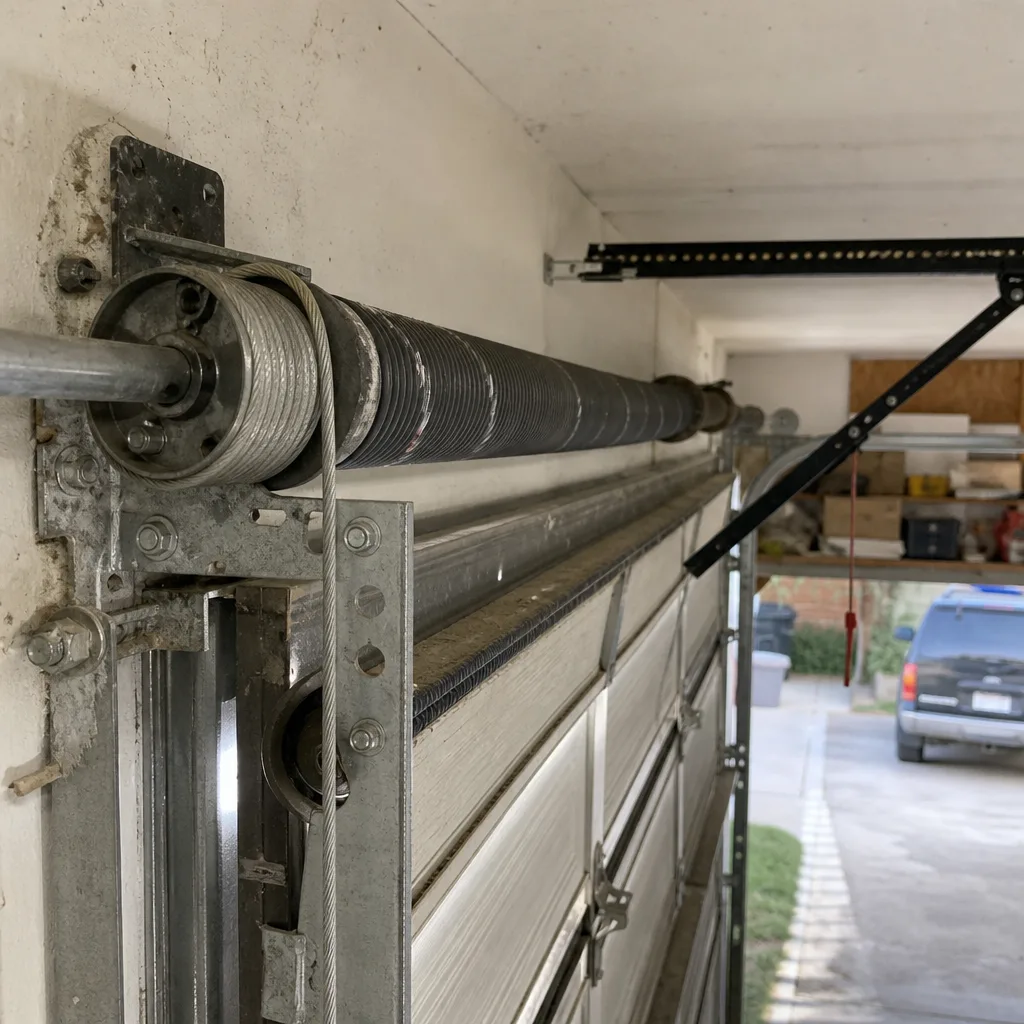
A torsion spring is the horizontal coil mounted on a metal tube directly above the closed door. It stores energy by twisting, not stretching. Most Los Angeles homes built after the early 1990s use torsion systems, and virtually all newer construction in the San Fernando Valley, Pasadena, and the South Bay does too. When a torsion spring breaks, it makes a sound like a gunshot or a car backfiring. You’ll usually find a visible gap in the coil, often right in the middle of the spring.
An extension spring runs vertically along the horizontal track on each side of the door. These springs stretch and contract as the door moves. They’re common on older Los Angeles homes, particularly pre-1980 bungalows in Highland Park, Eagle Rock, and parts of Long Beach. Extension springs break differently: the spring itself snaps and separates, but because it’s tucked alongside the track and often partially hidden by the door when closed, you may not see the break at first. What you’ll notice instead is that one side of the door drops suddenly or the door hangs crooked by several inches.
Why does this distinction matter for troubleshooting? Because a broken torsion spring is visible from the center of the garage with almost no effort, while a broken extension spring hides behind the track and misleads homeowners into thinking a cable snapped or a roller came off. We’ve responded to calls in Los Angeles where the customer had already replaced two rollers and a hinge based on internet advice, and the actual problem was a snapped extension spring they couldn’t see from where they were standing.
The Visual Signature of a Broken Spring: What to Look For and Where
Each spring type has a distinct failure signature. Knowing what to look for takes about 30 seconds and saves you from calling for the wrong repair.
Broken torsion spring: the two-and-a-half-inch gap
Stand inside the garage, door closed, and look directly above the center of the door. The torsion spring sits on a tube there. If the spring is intact, you’ll see one continuous coil from end to end. If it’s broken, you’ll see a clean break with a gap, usually between two and three inches wide. The coil ends will look jagged but sharp-edged, like a snapped metal rod. Sometimes you’ll see two gaps if the spring broke into three pieces, though that’s less common.
In our experience across Los Angeles, the break lands dead center roughly 60% of the time. That’s where metal fatigue accumulates fastest after thousands of open-close cycles. A break near the end cone, where the spring mounts to the bracket, is the other common location and often points to a cone that was installed slightly off-angle years ago.
Broken extension spring: the crooked door test
For extension springs, don’t bother looking at the spring itself first. Look at the door. Is it level when closed? If one side sits an inch or more lower than the other, the spring on the low side has likely failed. Now pull the emergency release cord and try to lift the door by hand. A door with one broken extension spring will lift unevenly, bind in the track, and feel dramatically heavier on one side.
To actually see the broken extension spring, you need to look along the horizontal track above the door, behind where the track meets the wall. A safety cable should run through the center of the spring. If the spring has snapped, you’ll see the two broken ends dangling or resting on the track, and the safety cable may be the only thing keeping the spring from flying across the garage. That safety cable exists because extension springs store enormous tension and can become projectiles when they break. If yours is missing, address that at the same time as the spring replacement.
The reason this visual distinction gets missed so often is simple: nobody tells you where to look. A torsion break is visible from ten feet away in the center of the garage. An extension break requires you to look behind the door track, which almost no one does until someone points it out. That’s why we still get calls from Los Angeles homeowners who’ve been living with a broken extension spring for weeks, convinced their door is just “off track.”
The Manual Lift Test: How Heavy Should Your Door Feel?
The single most reliable diagnostic you can perform without any tools is the manual lift test. It answers the question that matters most: is the spring doing its job?
Here’s how to do it safely. Pull the red emergency release cord hanging from the opener rail. That disconnects the door from the opener carriage. Now grip the door handle or bottom edge and lift.
A properly balanced door should feel like it weighs between 8 and 15 pounds. You should be able to lift it with one hand. It should stay put when you release it at chest height, or drift only slightly. A door with healthy springs hangs in place because the springs are counterbalancing the door’s actual weight, which on a double-car steel door in Los Angeles runs 150 to 180 pounds.
A door with one broken spring (on a two-spring system) will feel like it weighs 70 to 90 pounds. You can lift it, but it takes real effort, and it will not stay up when you let go. It will sink or slam back down, sometimes with enough force to hurt you if your hand is in the wrong place.
A door with both springs broken feels like it weighs the full 150 to 180 pounds. Most people cannot lift it more than a few inches. If you’re testing a single-car door, the numbers are lower, but the experience is the same: a door without functioning springs feels immovable.
Run this test with the door completely closed. A door that’s fully open when a spring breaks can come down fast enough to injure or kill someone standing beneath it, which is why we tell every Los Angeles homeowner the same thing: if the door is open and you suspect a spring break, do not walk under it. Lower it by hand only if you can do so from the side, and only if you have a clear path back.
Spring vs. Cable vs. Drum: Three Problems That Look Identical
Here’s the problem every homeowner faces: a broken spring, a snapped cable, and a slipped drum all produce the same symptoms from the outside. Door jerks when opening. Door hangs crooked. Door makes a grinding noise. Door won’t stay up. If you diagnose by feel alone, you’ll guess wrong a third of the time.
Let’s separate them.
Spring failure
The door feels uniformly heavy when you do the manual lift test. On a torsion system, you see the visual gap. On an extension system, one side of the door sags. The opener, if you try it, strains audibly and usually reverses. The problem is the spring, full stop.
Cable failure
The cable is the thin steel wire that runs from the bottom roller bracket up to the drum at the top of the shaft. When a cable snaps or slips off the drum, the symptom is completely different from a spring failure: one side of the door rises while the other stays down. The door goes up crooked, not just heavy. You’ll see a loose cable hanging near the track or a frayed end near the bottom bracket. The spring is often still intact and under full tension. This is not a DIY fix, because the cable wraps around a drum that’s still loaded with spring torque. One wrong move and that cable becomes a razor-sharp whip.
Drum failure
The drum is the grooved wheel at each end of the torsion tube that the cable winds around. A drum can slip, strip, or seize. When it does, the cable either unwinds unevenly or the door binds as it moves. The tell is usually visible: the cable is wrapped unevenly on the drum, or you can see the drum itself wobbling as the door moves. The spring may look perfectly fine. The manual lift test may also feel normal if the drum is only partially failing. This is the rarest of the three, but it gets misdiagnosed as a spring problem all the time because the symptoms are so close.
The diagnostic order that works in Los Angeles, where we see all three daily, is: check the spring visually first, run the manual lift test second, then check the cables and drums only if the spring looks intact and the door still misbehaves. Spring first, because it’s the easiest to see and the most common failure. We’ve found that a straightforward visual check resolves the question in about 80% of service calls without any further investigation. For additional troubleshooting help, browse our more guides & resources.
Why Your Opener Reverses Right After Pressing the Button
This is the symptom that sends most Los Angeles homeowners down the wrong path. You press the button. The opener motor runs. The door starts to lift. Two seconds later, the door reverses and settles back onto the ground. The homeowner assumes the opener is dying.
What’s actually happening: your opener has a built-in force sensor. It measures how much resistance the door puts up while moving. When a spring breaks, the opener suddenly has to lift the full weight of the door alone. The force sensor reads that spike, decides something is wrong, and reverses the door to protect the motor and anyone standing underneath. The opener isn’t broken. It’s working exactly as designed. It’s telling you something upstream is broken.
Here’s how to confirm it’s the spring and not something else tripping the sensor:
- Disconnect the opener with the emergency release cord.
- Lift the door by hand. If it’s dramatically heavy, that’s a failed spring.
- If the door lifts easily by hand but the opener still reverses, look for a different cause: a misaligned track, a broken roller, or a door that’s binding on one side.
- Check the spring visually anyway. A spring can crack partially and still support some weight for a day or two before it snaps completely.
The practical value of this test is that it tells you what to say when you call for service. If you tell the dispatcher “the opener reverses and the door is heavy when I lift it by hand,” the technician arrives with torsion springs on the truck. If you say “my opener is broken,” the tech may arrive with an opener motor and have to make a second trip for the spring. In Los Angeles traffic, that second trip can cost you a full extra day with a dead garage door.
And when you do call, telling them you’ve already run the manual lift test changes the conversation. It tells them you know the difference between an opener problem and a spring problem, and it means the right parts show up the first time. At Marlow Garage Door Repair, we ask every customer who mentions a reversing opener to run this exact test on the phone with us, and it’s remarkable how often it confirms a spring failure before we even dispatch the truck.
What NOT to Do After a Spring Breaks: Three Fixes That Make It Worse
When a garage door won’t open, people try things. Here are the three attempts we see most often in Los Angeles, and why each one turns a straightforward spring replacement into a larger, more expensive repair.
1. Forcing the door open with the opener button
The logic seems sound: maybe if I hold the button, the door will power through. It won’t. What you’ll do instead is strip the opener gear, burn out the motor, or snap the opener’s internal carriage. A worn gear in a Chamberlain or LiftMaster opener costs $60 to $120 to replace on its own. Burn out the motor and you’re looking at a full opener replacement. The door will still need a spring. Now you’re paying for both.
2. Lifting the door manually and propping it open with a ladder or 2×4
This is the one that lands people in the ER. A door without spring support weighs 150 to 180 pounds. If it slips off whatever you propped it with, it comes down with enough force to crush whatever is underneath it. Cars have been damaged and people seriously hurt this way. And even leaving the door open for a day with a broken spring puts constant strain on the cables and hinges, which were never designed to hold a fully loaded door by themselves. We’ve replaced cables on Los Angeles doors where the homeowner propped the door open for a weekend and the cables stretched beyond safe use.
3. Disconnecting the opener and using the door manually for daily access
This seems harmless but it isn’t. Every time you lift a spring-broken door by hand, you’re putting 150-plus pounds of uneven stress through the rollers, hinges, and track. Over a week of daily use, you’ll almost certainly strip a hinge or bend a track section. That turns a $150 to $290 spring replacement into a spring replacement plus a track realignment plus new rollers. The door is not designed to be operated without working springs, even by hand.
The alternative is simpler than any of these: leave the door closed, park the car on the street if you need to, and call a professional who carries the right springs on the truck. In Los Angeles, where most homes rely on the garage as the primary entry and everyone needs their car, the instinct to jimmy the door open is strong. It’s also the most expensive instinct in garage door repair.
How Spring Cycles Work and Why LA Doors Wear Out Faster Than You’d Expect
A garage door spring is rated in cycles: one full open and close equals one cycle. Most standard torsion springs sold at retail are rated for 10,000 cycles. That sounds like a lot until you do the math. If you open your garage door four times a day (leave for work, come home, leave for dinner, come back), that’s about 1,460 cycles per year. A 10,000-cycle spring lasts roughly six to seven years.
In Los Angeles, the math is often worse. Many homes use the garage as the primary entry. Kids come and go, deliveries go through the garage, bikes come in and out. It’s not unusual to see 8 to 10 cycles per day on a busy household door. At 10 cycles a day, a standard spring gives out in under three years. We’ve replaced springs in Los Angeles neighborhoods that were only two years old, and the homeowner was convinced they’d bought a defective product. They hadn’t. They’d simply used the door more than the spring’s cycle rating allowed.
When you buy a replacement spring, cycle rating matters more than price. A high-cycle spring rated at 25,000 or 50,000 cycles costs more upfront but lasts three to five times longer. For a homeowner in a high-usage household, that’s the difference between a spring replacement every two years and one every eight. Ask your technician what cycle rating they’re installing. If they can’t answer, that’s a signal they’re installing the cheapest spring on the shelf, not the right spring for your door. Every tech we send in Los Angeles can tell you the cycle rating on the spring they’re quoting, because it’s the single biggest factor in how long your repair actually lasts.
Common Mistakes to Avoid
- Assuming the opener is broken because the door reverses. The reversing behavior is the opener’s force sensor doing its job. Test the door by hand before you replace anything. Nine times out of ten in Los Angeles, that reversing door has a broken spring, not a dead motor.
- Replacing only one spring on a two-spring system. The springs wear together. The unbroken one has the same cycle count as the broken one and will fail within months. Replacing just one means paying for labor twice. Replace both, and ask for a matched pair.
- Buying springs online and installing them yourself. Torsion springs store enough energy to snap a bone or launch a winding bar through a wall. The savings are not worth the risk, and most DIY spring replacements we see in Los Angeles end with a service call anyway because the door won’t balance properly.
- Ignoring a door that’s become heavy over several months. A gradual loss of lift usually means the springs are nearing the end of their cycle life. Catching it early lets you schedule a replacement on your timeline instead of discovering the spring snapped at 7 a.m. on a Monday with your car trapped inside.
- Lubricating a broken spring. Lubrication helps a healthy spring move smoothly. It does nothing for a spring with a visible gap and a snapped coil. If you see the break, no amount of spray lube will close it.
- Operating the door after hearing the “gunshot” sound. That sound is the torsion spring snapping. Continuing to run the opener after that damages the cables, the drums, and eventually the opener itself. Stop using the door the moment you hear it.
- Propping the door open and leaving it that way. Covered above, but it bears repeating: an unsupported door under full weight is a loaded weapon. If you need to leave the house, exit through the front door and leave the garage door closed.
When to Call a Professional
Call a professional the moment you’ve confirmed or strongly suspect a spring failure. That means: you see the visual gap in a torsion spring, your door is dramatically heavy on the manual lift test, or you heard a loud bang from the garage and the door won’t open. These are not conditions that resolve themselves, and every day you wait adds strain to the cables, drums, and opener. A spring replacement is also the one garage door repair you should never attempt yourself. The torsion on a wound spring is measured in foot-pounds, and the tools used to wind and unwind it can turn your hand into the pivot point if you slip. This is the repair where training matters more than any other. Garage Door Spring Repair in Los Angeles is what we do every day, and we do it with the proper tools, the right spring ratings, and a process designed to keep you and your door safe. Marlow Garage Door Repair offers free estimates in Los Angeles, call (512) 883-4374.
Frequently Asked Questions
Spring replacement in Los Angeles typically runs between $150 and $290 for a standard single torsion spring, including labor, and $250 to $450 for a pair on a double-spring system. Extension springs run cheaper, usually $120 to $220 per pair. The final number depends on spring size, cycle rating, and whether your door needs additional hardware. At Marlow, you’ll receive a written price before any work begins, so the number never changes after you’ve agreed to it.
Yes. Most spring replacements are completed in a single visit because the springs are standard sizes that a well-stocked truck carries. If you call in the morning, we can usually have a technician at your Los Angeles home the same day with the right spring on board. Call (512) 883-4374 and a live person will answer, not a recording.
Technically yes, if you have a two-spring system and you’re willing to lift the door manually. But operating the door, even by hand, with one spring broken puts uneven stress on the cables, rollers, and track, and it accelerates wear on the remaining spring. The door also becomes a crushing hazard because the unbroken spring is now doing twice its rated work. It’s a temporary situation at best, and should be fixed within a day or two. In our Los Angeles service area, we’ve seen too many doors damaged by running on a single spring for a week. Don’t do it.
If the spring is broken, the door feels uniformly heavy when you lift it by hand. If the cable is broken, one side of the door lifts while the other stays down, and you’ll see a loose or frayed cable near the bottom bracket. Check the spring visually first: a torsion spring break shows as a gap in the coil, while a cable break leaves the spring looking intact. When in doubt, call and describe what the door does when you lift it. With that description, a good tech can often tell you which part failed before they even arrive.
Because the opener’s force sensor is detecting too much resistance and reversing the door to protect the motor and anyone beneath it. The most common cause is a broken spring, which forces the opener to lift the full door weight alone. Disconnect the opener and lift the door by hand. If it’s heavy, the spring has failed and the opener is fine. If the door lifts easily, the problem may be in the track, rollers, or opener itself.
No. Spring replacement is a repair, not an installation, and Los Angeles does not require a permit for replacing springs on an existing door. If the entire door assembly is being replaced, a permit may be required depending on the scope, but a spring swap itself is straightforward. Your technician should still follow manufacturer torque specs and install springs properly wound for your door’s weight.
Standard torsion springs from Clopay, Genie, and LiftMaster are all reputable options. More important than brand is cycle rating and correct sizing for your door’s weight and height. A mismatched spring, even from a top brand, will fail early and throw the door out of balance. Our technicians in Los Angeles are trained on eight major brands including LiftMaster, Chamberlain, Genie, and Clopay, so the spring that goes on your door is the one engineered for that specific door.
The Bottom Line
Spring problems are the most misdiagnosed issue in garage door repair because they mimic opener failures, cable breaks, and track problems from the outside. The manual lift test cuts through the confusion: a door that feels heavy is a spring problem, and no opener repair will fix it. Check the spring visually, run the test, and stop using the door the moment you suspect a break. Springs wear out on a predictable cycle, and in Los Angeles’s high-use households they fail faster than most people expect. When yours goes, replace both springs on a two-spring system, ask about cycle rating, and get the work done by someone who carries the parts on the truck and gives you the price before touching the door. Whether you need Garage Door Repair in Los Angeles, spring work, or Garage Door Cable Repair in Los Angeles, the right diagnosis changes everything.
Written by Jaylen Ross, Owner at Marlow Garage Door Repair, serving Los Angeles since 2002.