
Last updated October 9, 2026
Full 25-point door and opener safety check with every visit - springs, cables, rollers, tracks, and your LiftMaster or Chamberlain opener included
You get a price before we start. It does not change when the truck arrives.
 Before
 After
After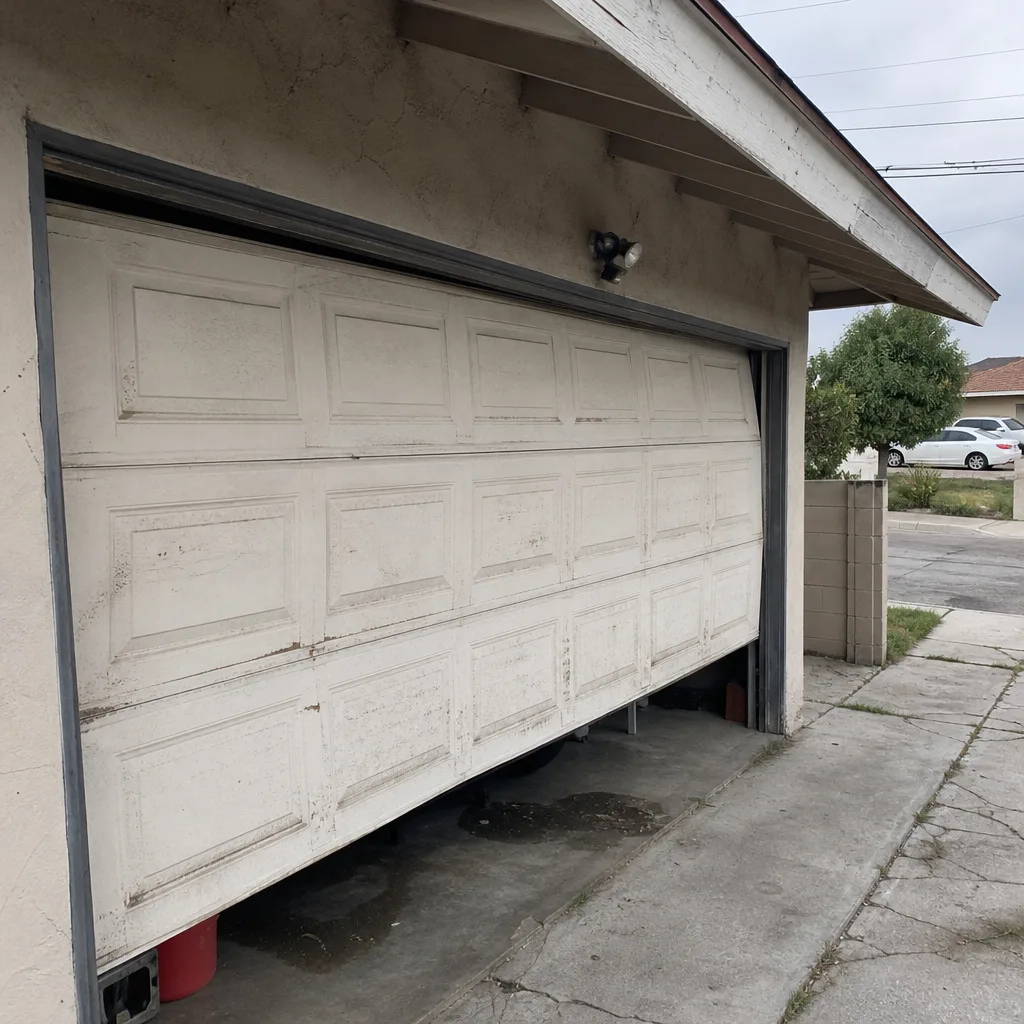 Before
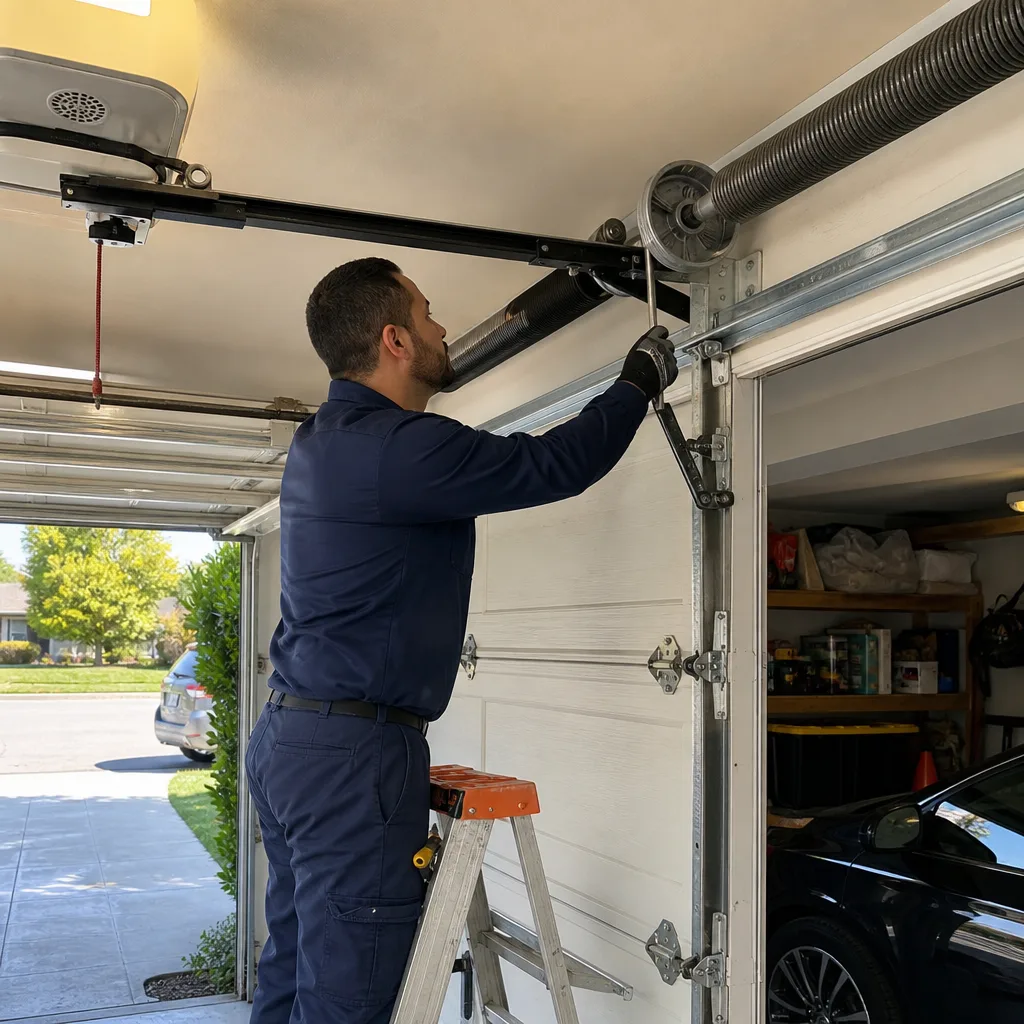 After
After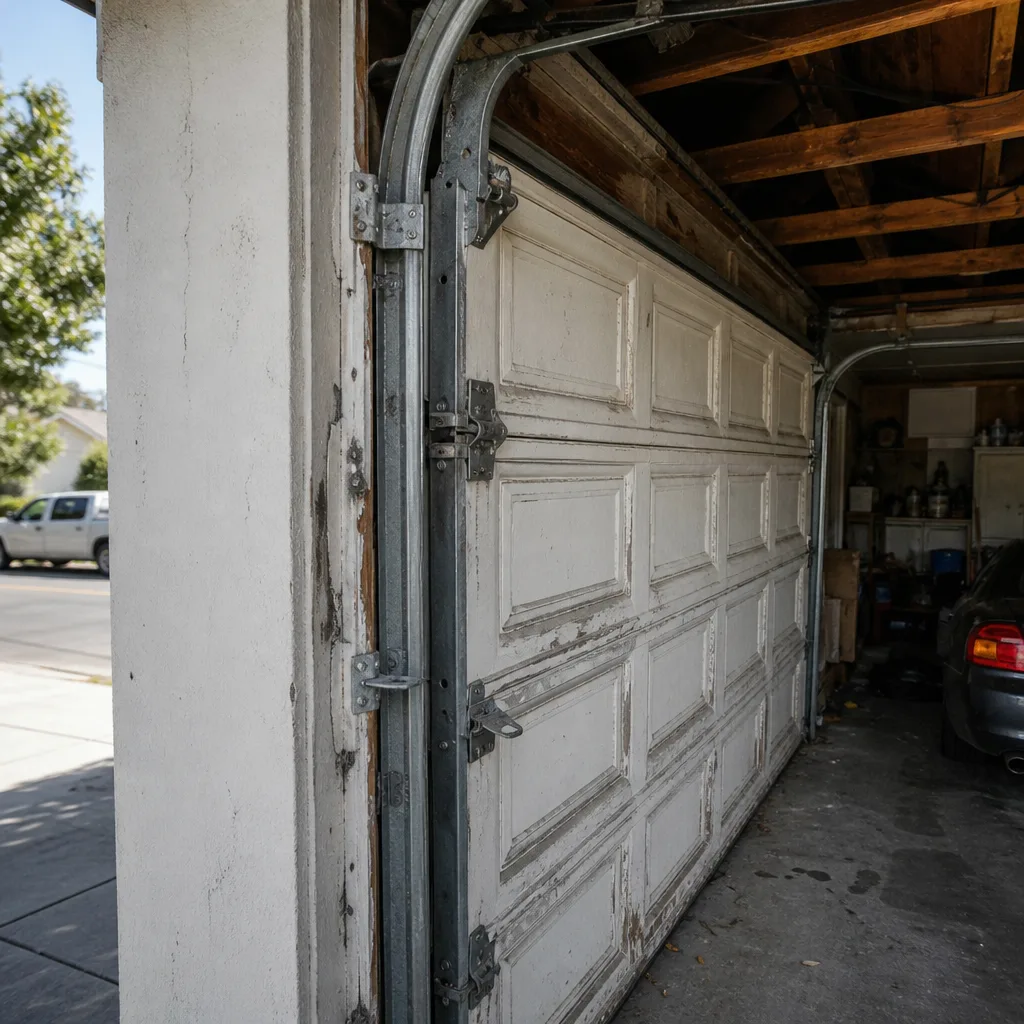 Before
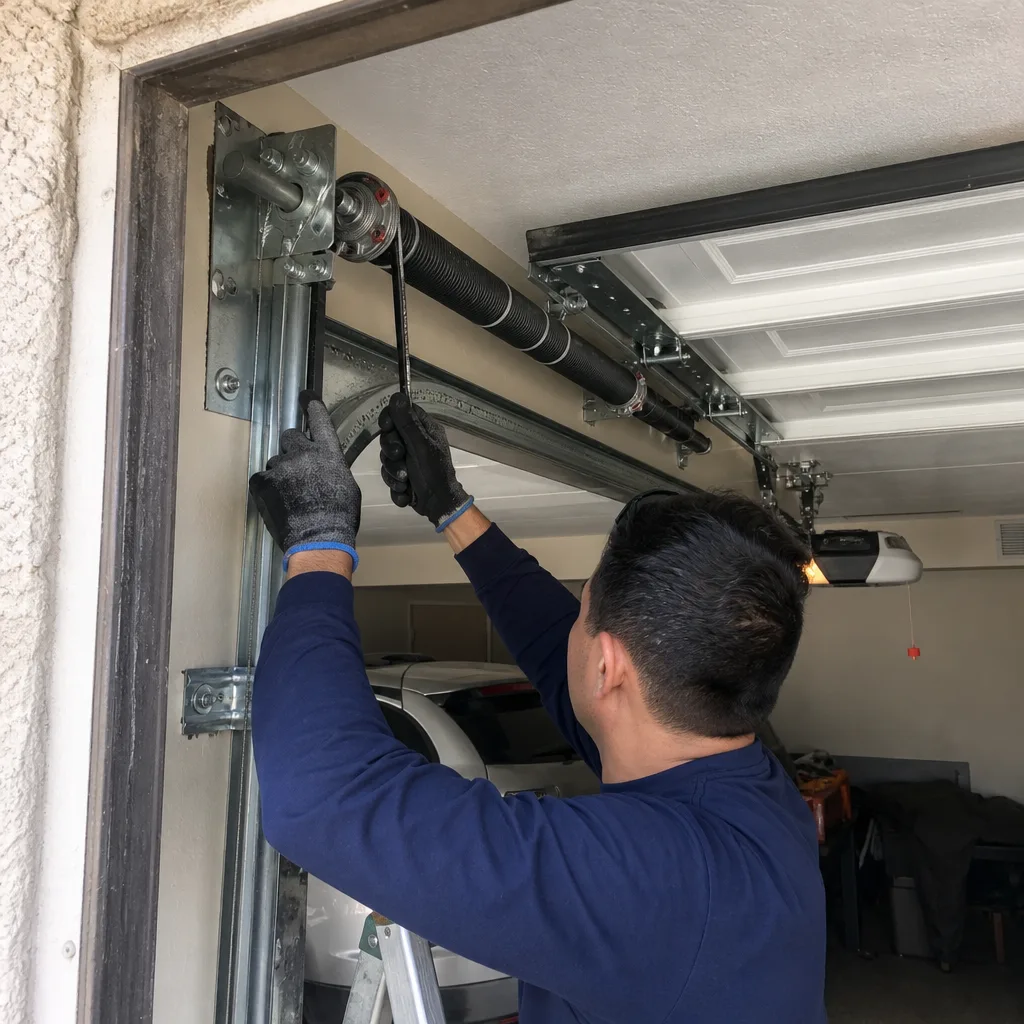 After
AfterGarage Door Warning Signs: A Los Angeles Homeowner’s Reference Guide
The grinding sound your garage door makes on a hot September morning is not the same problem as the grinding sound it makes in January, and treating them the same way is why so many Los Angeles homeowners end up replacing parts that didn’t need replacing. Your garage door talks. Most people just don’t know how to listen yet. This reference guide teaches you the sounds, the silences, the lags, and the visual clues that separate a $12 fix from a $400 catastrophe, with more guides & resources available on our blog. By the time you finish reading, you’ll know more about your garage door’s health than most people know about their car’s, and you’ll have a Los Angeles homeowner’s field manual for deciding when to ignore something, when to watch it, and when to pick up the phone.
Quick Answer
The early warning signs of garage door failure in Los Angeles fall into five categories: sound changes (grinding, popping, rhythmic squeaking), speed changes (a door that opens slower than it did a month ago), visual wear (rust at panel bottoms, paint bubbling, frayed cables), opener behavior (remote lag, hesitation, mid-cycle reversal), and balance shifts (a door that drops faster than it rises). Any one of these is worth investigating. Two or more usually mean something is actively wearing out, and catching it early in Los Angeles typically costs $80 to $200 instead of the $350 to $600 you’ll pay after a full failure.
Table of Contents
- The Sound-by-Sound Diagnosis Guide
- Why Your Door Is Slow: Opener Wear vs. Failing Springs
- Visual Warning Signs Specific to Los Angeles Homes
- Opener Behavior Changes and What They Actually Mean
- The One-Minute Balance Test Every LA Homeowner Should Run
- Santa Ana Winds and Seasonal Stress Patterns
- Common Mistakes to Avoid
- When to Call a Professional
- Frequently Asked Questions
- The Bottom Line
The Sound-by-Sound Diagnosis Guide
Garage doors are mechanical systems under constant tension, and every component has a signature sound when it starts to fail. In Los Angeles, where temperature swings between inland valleys and coastal neighborhoods put different stress patterns on the same hardware, learning these sounds saves you from guessing. Here’s what we tell homeowners across the city when they describe a noise over the phone.
Grinding with a metallic edge is almost always the rollers. Your door runs on small wheels inside metal tracks, and when those wheels lose their bearings or the tracks get misaligned, metal drags on metal. In beach-adjacent neighborhoods like Playa del Rey or Venice, salt air accelerates roller corrosion, so a grinding sound often appears years earlier than it would in Sherman Oaks or Pasadena. The fix is usually roller replacement, and it’s one of the least expensive repairs a garage door repair in Los Angeles tech performs.
Squeaking that follows the door’s movement rhythm points to dry hinges or rollers that need lubrication. This is the most benign sound on the list, and it’s also the most commonly ignored. Here’s the catch: in Los Angeles’s dry climate, especially during late summer and early fall, hinges dry out faster than they do in humid regions. What starts as a squeak becomes friction, and friction becomes wear on the hinge pins themselves. A $10 can of garage-door-specific lubricant applied twice a year prevents most of these failures. Skip the WD-40, it’s a solvent, not a lubricant, and it actually strips away the grease your hinges need.
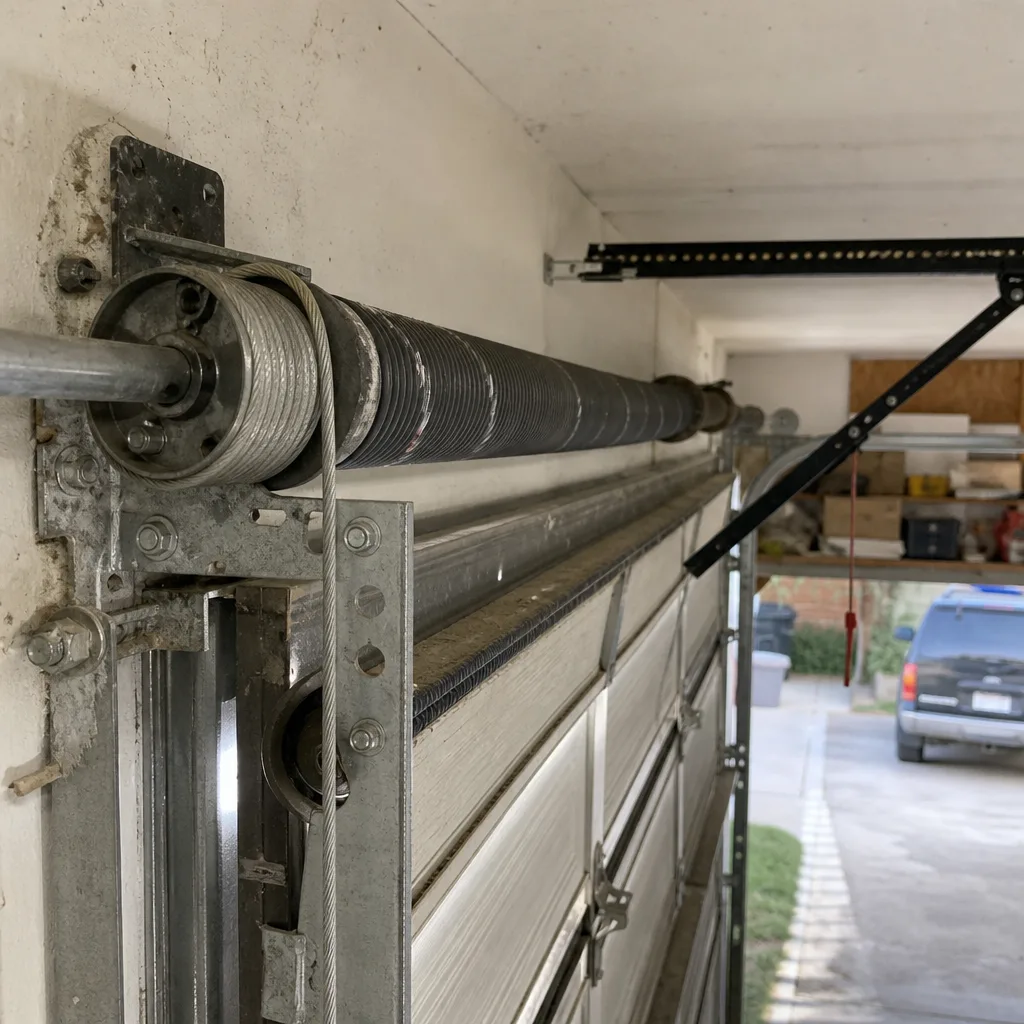
A single loud pop followed by the door refusing to move is the torsion spring, the horizontal coil above your door that does most of the lifting. This is the sound of springs under lethal tension releasing all at once. If you hear it, do not attempt to open the door manually and do not stand under it. The spring has snapped, and while the door may still open a few inches with the opener straining, it’s now a dead weight of 130 to 180 pounds held only by a cable system not designed for solo lifting. Spring replacement in Los Angeles typically runs $150 to $290 for a standard torsion spring, depending on the spring’s cycle rating and door weight, and you can learn what to expect in How Long Does Garage Door Spring Repair Take? Timelines and What to Expect. At Marlow, you’ll see the written price before any work starts, and every spring replacement is covered by the 365-Day Done Right Promise.
Rhythmic thumping or a rattling chain on the opener rail usually means the chain or belt has stretched and needs tensioning. This is common on openers that are 8 to 12 years old, and in Los Angeles’s stop-and-go garage traffic patterns, openers actually cycle more frequently than in suburban garages where cars sit for days. More cycles means faster chain wear. The tension adjustment is often quick, but a stretched chain that’s ignored will eventually skip teeth on the sprocket and chew up the gear inside the opener, turning a minor adjustment into a full opener replacement.
One more sound worth learning: a sharp cracking or snapping from the tracks themselves when the door passes a certain point. That’s a track section that’s bent or a bracket that’s worked loose from the wall. In older Los Angeles homes with wood framing, especially in neighborhoods like Silver Lake or Echo Park where garages are often converted or aging, wall brackets pull loose over decades of thermal expansion and contraction. The sound is the track flexing under load. Left alone, that flexing becomes a derailment, and a derailed door is dangerous.
Why Your Door Is Slow: Opener Wear vs. Failing Springs
A garage door that opens sluggishly is the most commonly misdiagnosed warning sign in Los Angeles. Homeowners assume the opener motor is dying when, in half the cases we see, the springs are the actual problem. Here’s how to tell the difference without calling anyone.
Your springs are rated for a specific number of open-and-close cycles, and as they approach the end of that rating, they don’t always snap dramatically. Some lose tension gradually, meaning they lift less and less of the door’s weight each week. The opener motor compensates by working harder, which is why the door moves slower. If your opener is less than 5 years old and the door suddenly feels heavy or moves at half speed, the springs are the prime suspect. In LA’s climate, springs typically last 7 to 10 years, but homes in coastal areas like Palos Verdes or Manhattan Beach often see shorter lifespans because salt-laden air accelerates metal fatigue.
True opener wear shows up differently. An aging motor struggles evenly through the entire travel, makes a labored humming sound, and often fails to move the door at all on the first attempt. Remote lag, where you press the button and the door waits a beat before responding, is almost always an opener logic board issue, not a spring issue. The two problems sound similar to a homeowner, but they’re entirely different repairs at entirely different price points.
Here’s a quick self-test we give to Los Angeles homeowners:
- Disconnect the opener from the door with the red emergency release cord (the handle hanging from the rail).
- Lift the door manually by the handle.
- A healthy door lifts smoothly to waist height with one hand, stays put, and descends smoothly when you guide it down.
- If the door feels heavy, drops quickly, or won’t stay at waist height, the springs are failing and the opener has been doing all the work.
- If the door lifts easily but the opener still moves it slowly when reconnected, the opener motor or gearbox is the problem.
Spring replacement on a door with failing tension typically runs $150 to $290 in Los Angeles. Replacing an opener motor runs $300 to $550 installed, depending on model and features. Knowing which one you’re dealing with before you call for a garage door spring repair in Los Angeles saves you from authorizing an opener replacement you didn’t need.
Visual Warning Signs Specific to Los Angeles Homes
Los Angeles is not one climate, it’s several stacked on top of each other, and your garage door wears differently depending on which one you park under. The visual checks below take five minutes and catch failures weeks before they turn into service calls.
Paint bubbling or blistering near the bottom panel is not a paint defect, it’s moisture wicking up from a failed bottom seal. When the rubber weatherstrip along the bottom edge cracks or tears, morning dew in coastal Los Angeles and winter rains in the foothills seep under the door. That moisture climbs into the steel panel, and the paint separates from the metal. In neighborhoods like Brentwood or Westwood, where low overnight temperatures combine with marine air, we see this pattern constantly. The fix is a new bottom seal, usually $80 to $120 installed, which is far cheaper than replacing a rusted-through panel later.
Rust staining that runs down from the bottom edge or horizontal seams signals coastal exposure damage, and it moves fast once it starts. In Santa Monica, Marina del Rey, and Long Beach, salt in the air accelerates oxidation, and those reddish streaks mean the steel inside the panel is actively corroding. Surface rust can be addressed with sanding and re-sealing, but if the rust has pitted the metal deeply, that panel is structurally compromised and needs replacement. Catching this early on a Wayne Dalton or Clopay door is routine. Waiting until the panel rusts through means replacing multiple panels or the whole door.
Fraying cables are the most urgent visual warning sign on any door, in any Los Angeles neighborhood. Look at the steel cables that run along both sides of the door, connecting the bottom brackets to the spring system. If you see broken wire strands poking out, or the cable looks fuzzy, that cable is failing. These cables are under extreme tension, and when one snaps, the door slams down unevenly, often pulling the other side out of its track. This is a dangerous condition. We train our technicians to replace cables in pairs because when one fails, the other has been carrying uneven load and is close behind. Cable replacement with the garage door cable repair in Los Angeles service we provide typically runs $120 to $180 for both cables.
Gaps of daylight around the door edges are a weather seal problem and, in some cases, a track alignment problem. Take a minute at dusk, close the door, and look at the perimeter from inside the garage. Light leaking through means weather sealing is degraded, which matters in Los Angeles for two reasons: heat wave days push hot air into your garage, and smoke season pushes particulates through those gaps into your home. If the gap is uneven, wider at the top than the bottom, the door has shifted in its track and needs realignment before the seals will ever sit right.
Opener Behavior Changes and What They Actually Mean
Your garage door opener has a small computer inside it, and like any computer, it tells you when something’s wrong through behavior changes rather than error messages. Learning to read those behaviors saves Los Angeles homeowners from unnecessary opener replacements every week.
Hesitation between wall button press and door movement is a logic board or capacitor issue, not a mechanical problem. The door should respond within a second of the button press. A two or three second delay means the opener’s brain is struggling. On a LiftMaster or Chamberlain opener, this often appears in the third or fourth year of service, and in Los Angeles’s heat-heavy inland neighborhoods like Woodland Hills or Burbank, capacitor failure is accelerated by garage temperatures that routinely exceed 110 degrees in summer. Replacing the capacitor or logic board runs $120 to $220. Replacing the whole opener because of a slow response is overkill.
Remote lag that only happens in summer is usually thermal, not electrical. The receiver inside the opener and the transmitter in your remote both lose efficiency as temperatures climb. If your remote works perfectly in the morning and gets flaky at 3 PM on a hot day in Encino, the opener is overheating. The fix is sometimes as simple as ensuring the opener motor housing has clearance around it, or it may mean replacing an aging unit with a better-insulated model. If the lag happens year-round or worsens in winter, you’re looking at a receiver issue or remote battery degradation, both cheap to address.
Mid-cycle reversal is always a sensor or force-setting issue, never random. If the door reverses while closing, the safety sensors at the bottom of the track detect something in the way, or they’ve been knocked out of alignment. In Los Angeles garages, sensors get misaligned by everything from a broom leaning against the track to a bicycle handlebar brushing them as a car pulls in. Check that the small lights on both sensors are lit. One lit and one unlit means misalignment or a broken wire. Both lit but the door still reverses means the close-force setting is too sensitive, or there’s actual resistance on the track. If the door reverses while opening, that’s the open-force limit, usually tied to the springs wearing out and the opener sensing it’s working too hard.
Self-opening or ghost operation, where the door activates without anyone pressing a button, is almost always a short somewhere or a stuck wall button. In older Los Angeles homes, wiring that’s been in place for 30 years degrades, and a nick in the insulation from decades of garage activity can cause intermittent contact. Isolate it by disconnecting the wall button and testing the remote. If the ghost operation stops, replace the wall button. If it continues, a tech needs to trace the low-voltage wiring.
The One-Minute Balance Test Every LA Homeowner Should Run
There is no single diagnostic more valuable than the balance test, and it takes less time than checking your phone. Your garage door’s springs are designed to counterbalance the door’s weight, and a properly balanced door holds its position at waist height indefinitely. A door that’s lost its balance has already started the slide toward spring failure.
- Close the door completely.
- Pull the red emergency release cord to disconnect the opener. This doesn’t damage anything, and reconnecting is just a matter of cycling the opener once.
- Lift the door manually to waist height, around three feet off the ground.
- Let go. Don’t guide it down, just let go.
- Watch what happens for five seconds.
Reading the result: A healthy door stays roughly where you left it, maybe drifting an inch either way. A door that drops quickly toward the floor has lost spring tension, which means the springs are no longer lifting their share of the weight. This is the most common finding we see on doors in Los Angeles homes that are 8 to 12 years old. A door that shoots upward on its own is over-tensioned, which is rarer but means the springs were wound too tight at installation or a previous repair didn’t account for the door’s full weight. Both conditions strain the opener. Both warrant a service call.
Run this test twice a year. Los Angeles homeowners who mark it on their calendars for April and October catch spring degradation months before the pop. The cost difference is real: re-balancing or replacing springs before catastrophic failure runs $150 to $290 for the spring work, while a snapped spring that takes out cables, bends panels, or damages the opener easily runs triple that.
Santa Ana Winds and Seasonal Stress Patterns
Every October through January, Los Angeles gets Santa Ana wind events, and we can predict the week our phones start ringing before the forecast even airs. Doors that have been marginal all year fail during these winds, not because the wind blows them down, but because they expose every weakness the door was hiding.
Santa Ana winds create pressure differentials across a closed garage door. The door bows inward under gusts, and that flexing puts load on hinges, brackets, and the spring system in ways they were never designed to handle continuously. A door that’s properly balanced and in good mechanical shape shrugs this off. A door with a weakening spring, a rusted hinge, or a track that’s a quarter inch out of alignment suddenly works loose under the repeated stress.
The neighborhoods we hear from first are the foothill communities: Pasadena, Altadena, La Cañada, Glendale, and the San Fernando Valley corridor. These areas get the strongest sustained winds, and a door that “works fine” is often one Santa Ana event from failure. If you live in these neighborhoods, and your door makes any unusual sound during a wind event, that’s the time to schedule an inspection, not after the springs snap at 7 AM on a Sunday.
Heat is the other seasonal stressor, and it operates differently. Los Angeles summers push garage temperatures into the 100s, and the thermal expansion of a steel door against steel track creates binding at the worst possible moments. A door that opens fine in the morning and hesitates mid-afternoon is telling you the track clearance is too tight. The metal swells, the rollers bind, and the opener strains. If your home is in the Valley or inland, where summer garage temperatures exceed 110 degrees, pay attention to afternoon behavior specifically.
Common Mistakes to Avoid
- Lubricating everything with WD-40. WD-40 strips grease from hinges and rollers, leaving metal on metal contact that wears components faster. Use a proper lithium-based garage door lubricant, or a silicone spray on nylon parts.
- Ignoring a popping sound because “it still opens.” A torsion spring that pops has released all its tension. The door may climb a few feet with the opener fighting harder, but the cables are now the only thing holding 150 pounds of dead weight. This is the scenario where catastrophic failures happen, not gradual ones.
- Replacing the opener when the springs are dead. We see this in Los Angeles constantly. The door is slow, the homeowner assumes the motor is failing, and a new opener gets installed while the real problem, 12-year-old springs, goes unaddressed. The new opener burns out within a year doing work it was never meant to do.
- Running the door while it makes a new sound. Sounds are diagnostic data. Every cycle you run with a grinding roller or a popping spring causes additional wear, and the repair cost climbs each time. The first time you hear something new, stop cycling the door and assess.
- Skipping the twice-yearly balance test. It takes sixty seconds. Most Los Angeles homes go years without it. The balance test catches springs before they fail, and springs caught early are a $180 repair instead of a $600 emergency.
- Attempting DIY spring work. Torsion springs hold enough stored energy to cause serious injury or death. The winding and unwinding process has killed experienced mechanics who made one small mistake. This is the one repair on your home where the professional fee is cheap compared to the risk of doing it yourself.
- Waiting until the door stops working entirely to learn about your door. The guide you’re reading is preventative maintenance in text form. Every warning sign listed here is cheaper to address now than after the failure. Los Angeles service calls are fastest and least expensive when the problem is caught early.
When to Call a Professional
Some garage door issues are watch-and-wait situations. A squeaky hinge can be lubricated next weekend. A chain that needs tensioning can wait for a convenient appointment. But certain conditions demand immediate attention: a snapped torsion spring, a frayed cable, a door that’s come off its track, any situation where the door hangs unevenly, and any time you hear a pop followed by unusual movement. These are active safety hazards, not maintenance items. The door is a 150-pound moving wall, and when it fails, it fails fast. Marlow Garage Door Repair offers free estimates in Los Angeles, call (512) 883-4374, and every job gets a written price before any work starts, covered by the 365-Day Done Right Promise.
Frequently Asked Questions
Spring replacement in Los Angeles typically runs $150 to $290 for a standard torsion spring, depending on the spring type, cycle rating, and door weight. You’ll see the exact number before any work starts, and our spring replacements are covered by the 365-Day Done Right Promise. Call (512) 883-4374 for a free estimate.
Yes, same-day garage door repair is available across Los Angeles, and a live person answers our phones 24/7 to schedule it. We service the entire city, from the Valley to the Westside to South LA, and our techs arrive with the parts to handle most spring and cable failures in a single visit.
No. The written price we give you before starting work is the price you pay, and that’s a Relay Standard we don’t bend. If the tech discovers additional issues during the repair, a new written price is provided and agreed upon before any additional work happens. You’ll never see a bill that’s higher than what you approved.
Thermal expansion changes the clearance between your door’s steel panels and its tracks, and in Los Angeles summers, garage temperatures above 100 degrees cause the metal to swell enough to create binding and new sounds. Squeaking that appears only on hot afternoons usually means track alignment or lubrication is marginal, and the fix is simpler than it sounds.
Short-term, likely yes, but every grinding cycle accelerates roller and track wear, so the repair cost increases with each use. Grinding means metal on metal somewhere, and the components involved are relatively inexpensive to replace now. Continued use can turn a $100 roller replacement into a $300 track repair.
We’re trained on eight major garage door brands, including LiftMaster, Chamberlain, Genie, Clopay, Amarr, Wayne Dalton, Craftsman, and Raynor, so the tech who arrives already knows your specific door. Whether you have a builder-grade Amarr or a custom Clopay, we diagnose and repair it with the correct parts, not generic substitutes.
The Bottom Line
Your garage door tells you when it’s failing, but only if you know how to listen. The sounds, speeds, visual cues, and behavioral changes in this guide are the same diagnostics a professional uses, translated into checks any Los Angeles homeowner can run in five minutes. Catch these warning signs early, and most repairs are measured in the low hundreds. Ignore them, and a snapped spring or a jumped cable turns into emergency service at the worst possible moment. If anything in this guide matches what you’re seeing on your own door, Marlow Garage Door Repair home inspection is free, the written price comes before any work, and the 365-Day Done Right Promise means the repair either lasts or we return. The fastest way to get answers is a phone call, and someone picks up every time, day or night.
Written by Jaylen Ross, Owner at Marlow Garage Door Repair, serving Los Angeles since 2002.