
Last updated October 9, 2026
Full 25-point door and opener safety check with every visit - springs, cables, rollers, tracks, and your LiftMaster or Chamberlain opener included
You get a price before we start. It does not change when the truck arrives.
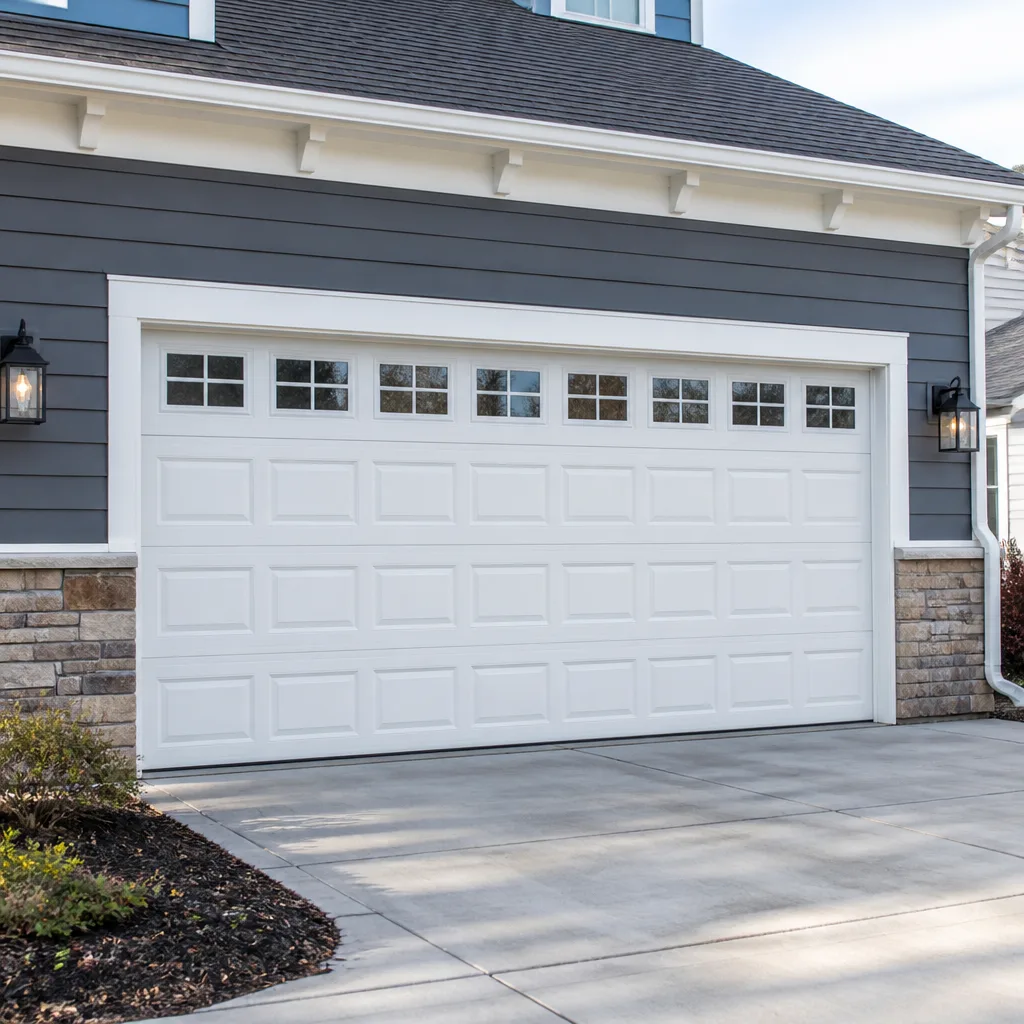
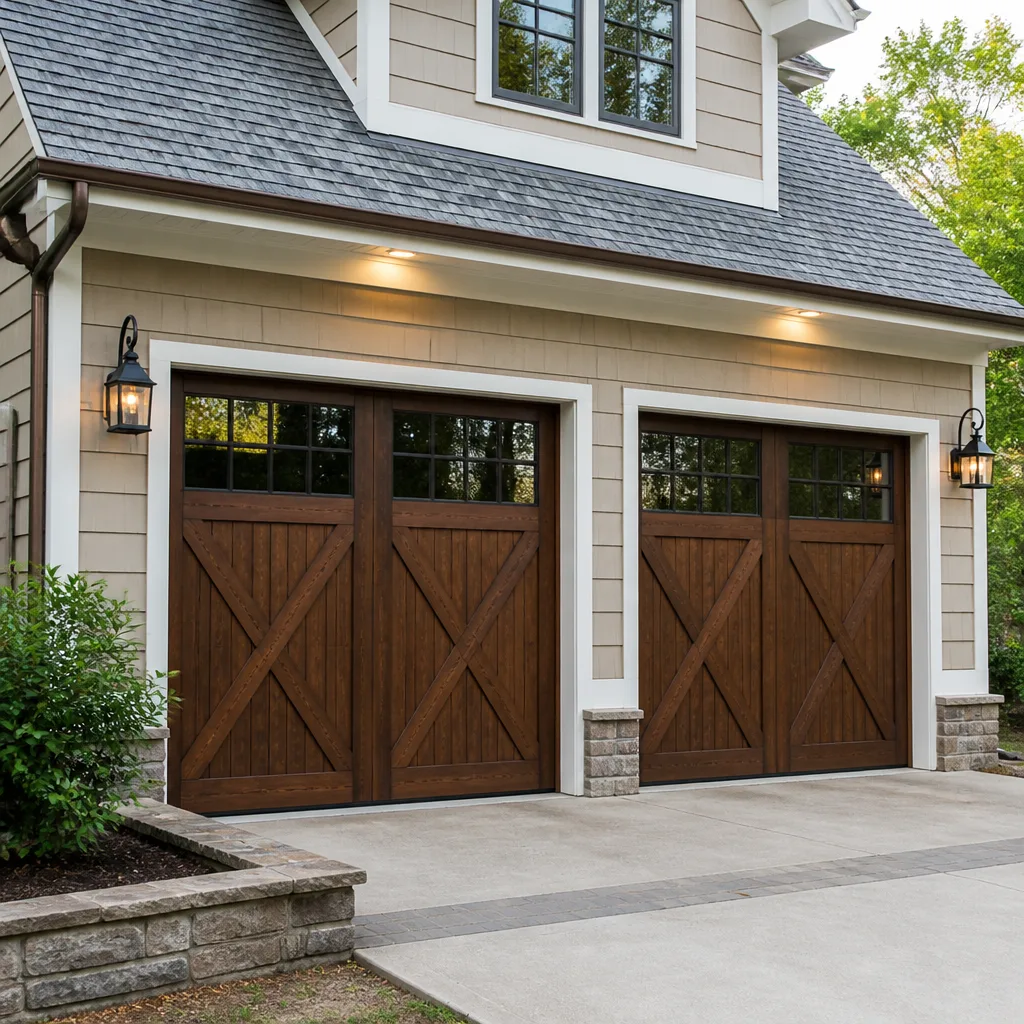
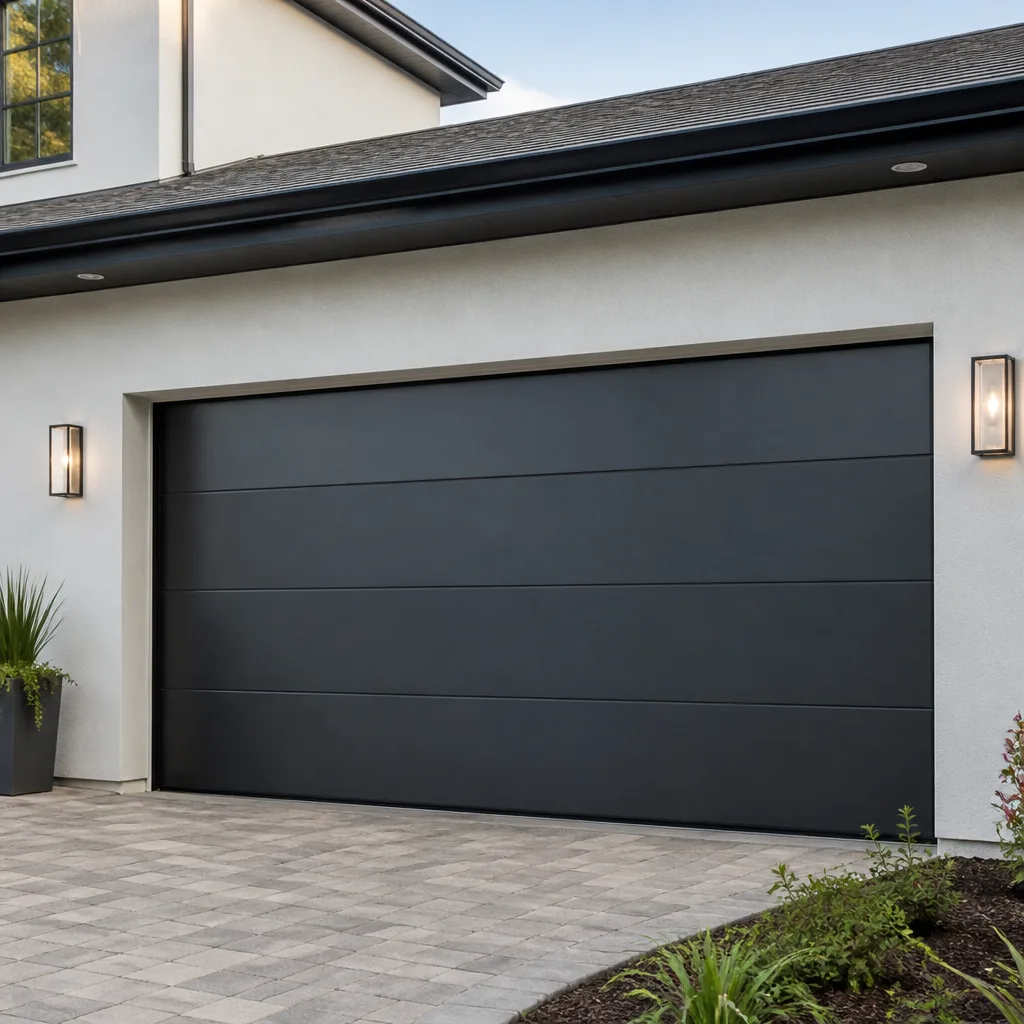
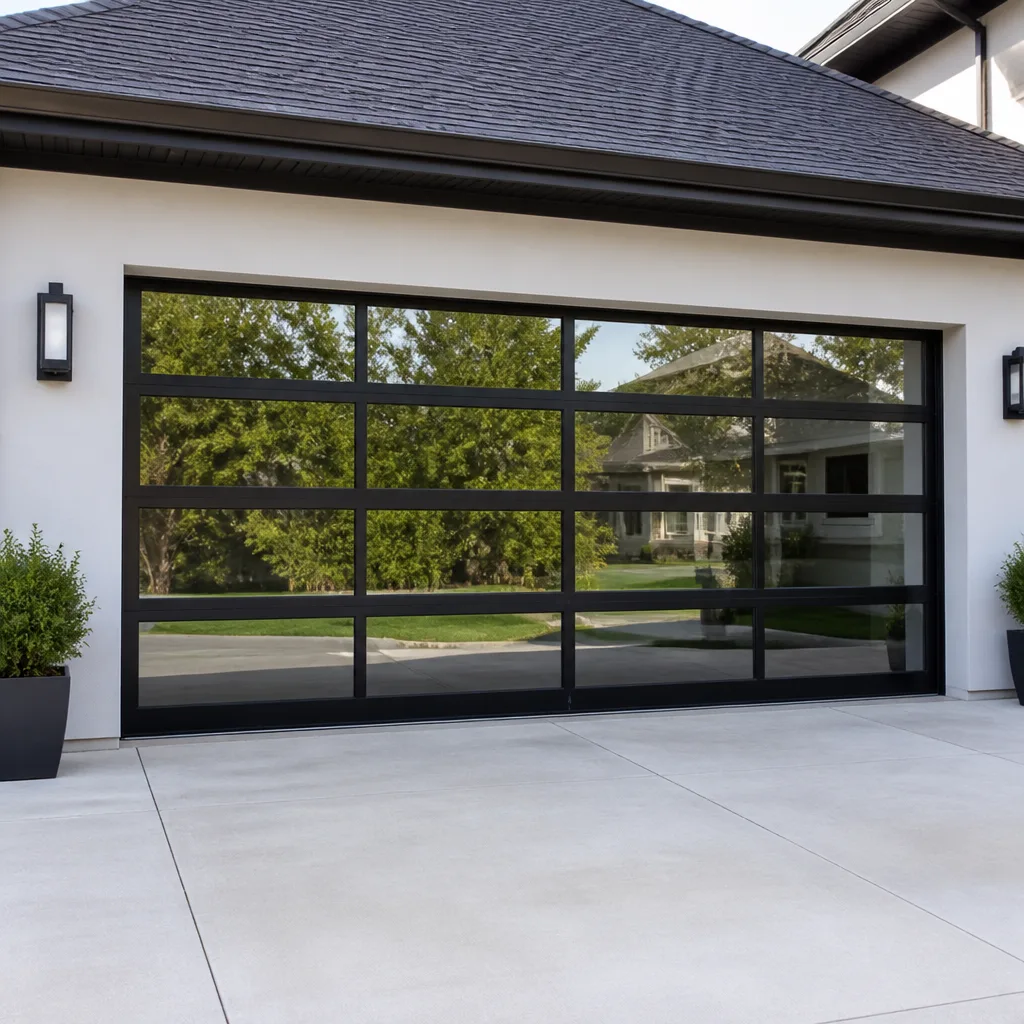
 Before
 After
After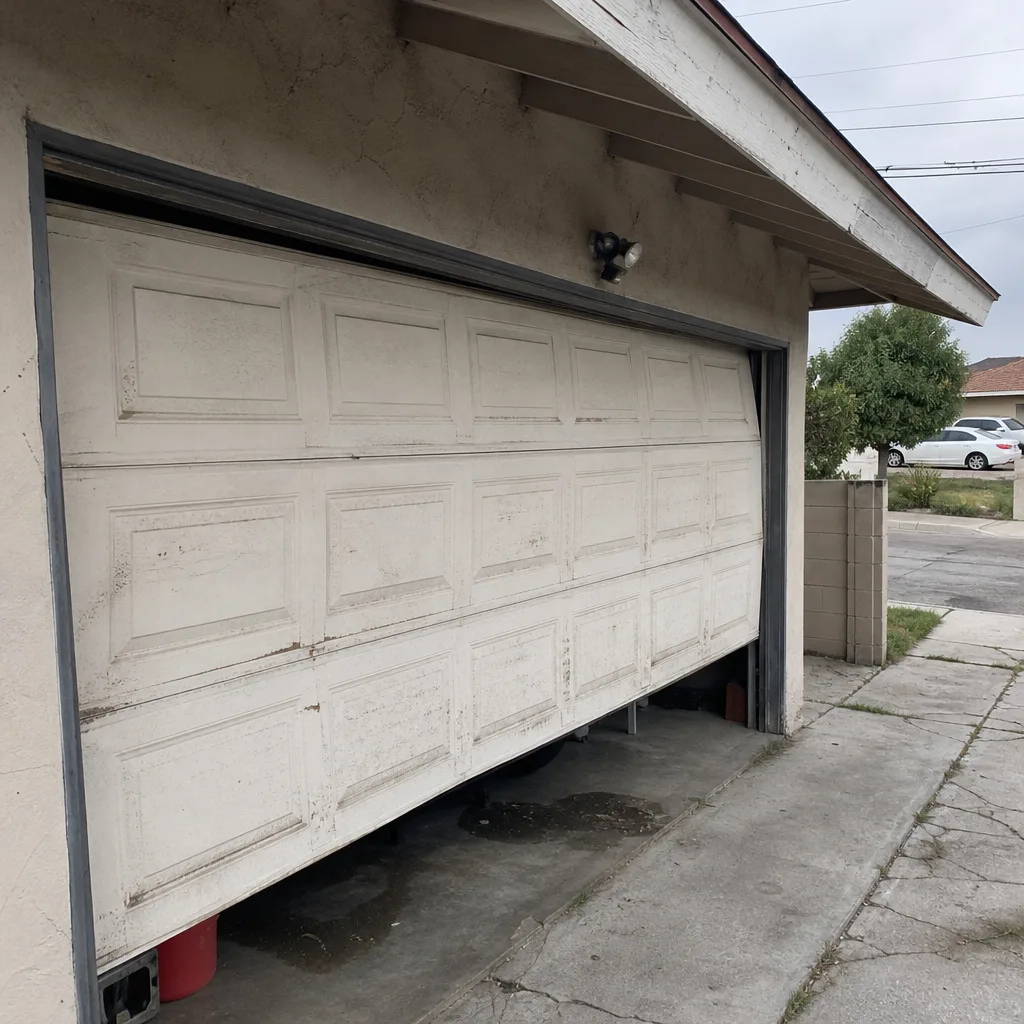 Before
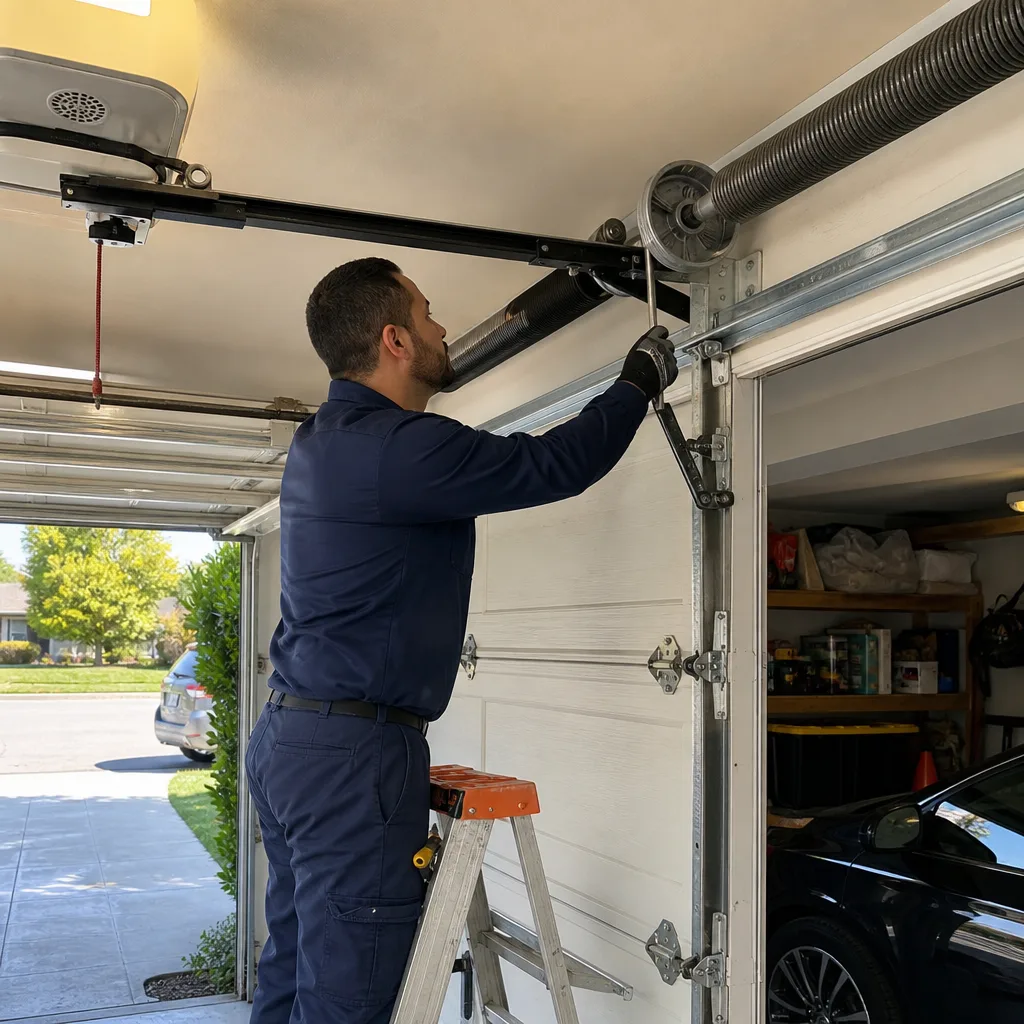 After
After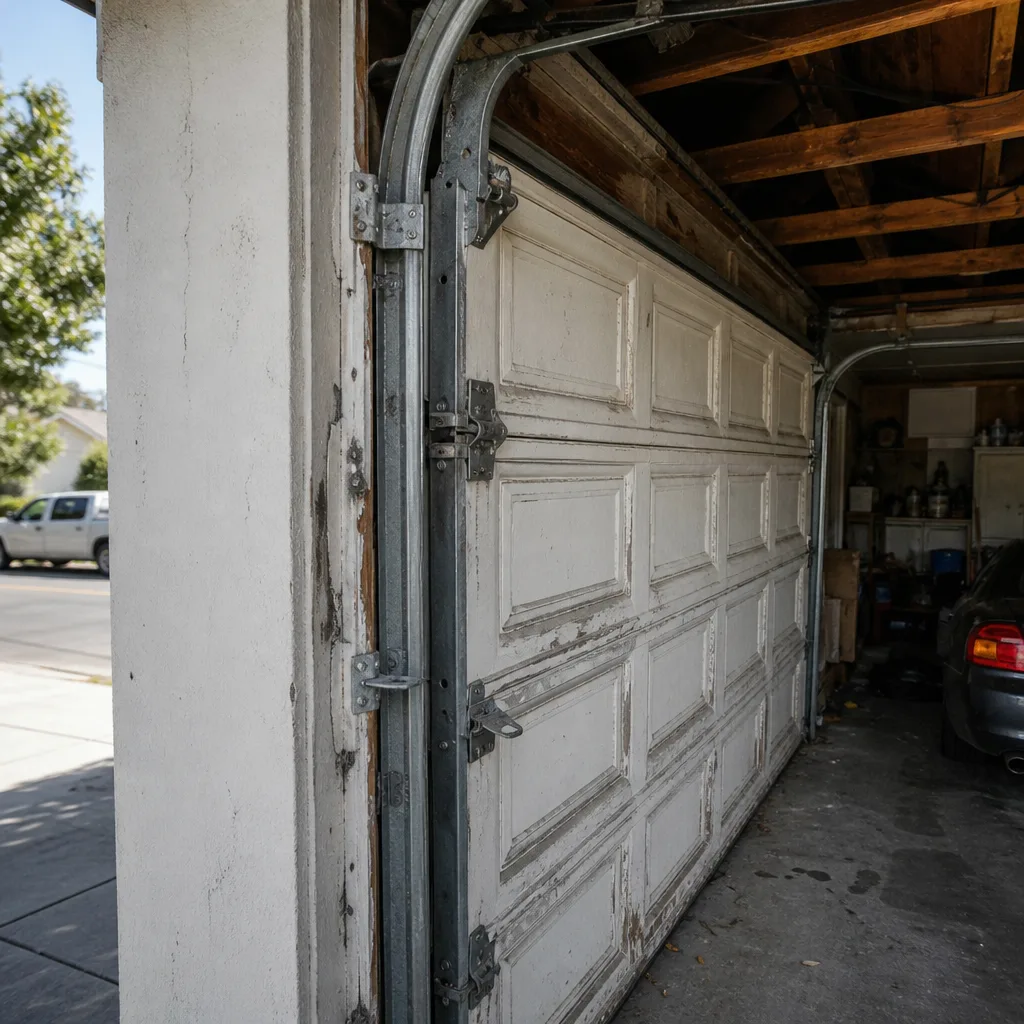 Before
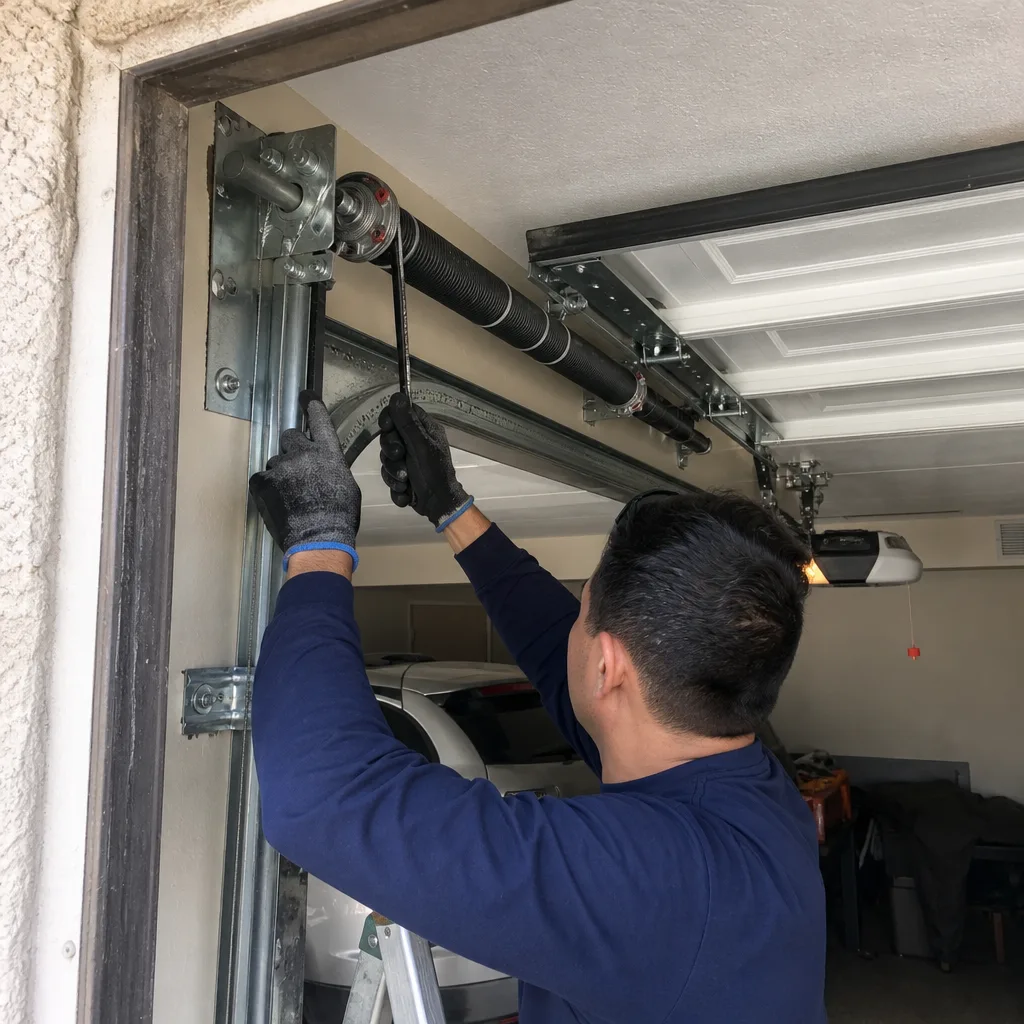 After
AfterGarage Door Spring Repair Warning Signs Every Homeowner Should Know
That slow, grinding moan your garage door makes on the way up isn’t “just an old door.” It’s a torsion spring telling you it has maybe 200 cycles left before it snaps. Most Los Angeles homeowners replace a spring only after it breaks, usually at 7:42 a.m. on a Monday with the car trapped inside. But springs almost always telegraph their failure weeks in advance. You just need to know which sounds and behaviors belong to the spring, not the opener or the cables. Our Garage Door Warning Signs: A Los Angeles Homeowner’s Reference Guide teaches you that diagnostic vocabulary so you catch the problem when it’s a $180 replacement instead of a $600 emergency call with a bent track and a stranded vehicle.
Quick Answer
The clearest warning signs of a failing garage door spring are a door that feels unusually heavy when you lift it manually, a visible gap in the torsion spring above the door, loud bangs or pops when the door moves, and a door that opens crooked or stops halfway. In Los Angeles, spring replacement typically runs $150 to $290 depending on spring type and door weight, and catching these signs early prevents the more expensive damage that happens when a spring snaps under load.
Table of Contents
- How Garage Door Springs Actually Fail
- The 10-Second Heavy Door Test
- Spring Sounds vs. Opener Sounds: What You’re Actually Hearing
- The Visual Gap in a Broken Torsion Spring (And Why You Missed It)
- Cycle-Life Math: Estimating How Much Spring You Have Left
- Why Los Angeles Temperature Swings Eat Springs Faster
- Spring Problem or Cable Problem? How to Tell Them Apart
- Common Mistakes to Avoid
- When to Call a Professional
- Frequently Asked Questions
How Garage Door Springs Actually Fail
A garage door spring is a coiled steel bar that stores mechanical energy. Every time your door opens, the spring winds tighter. Every time it closes, it unwinds. One open-and-close sequence equals one cycle. Most residential springs are rated for 10,000 cycles, which sounds like a lot until you do the math: a family that opens the garage four times a day burns through 1,460 cycles a year. That spring is done in under seven years.
The failure is rarely sudden from the spring’s perspective. It’s metal fatigue. Each cycle stresses the steel at a microscopic level. Over thousands of cycles, tiny fractures form inside the wire. The spring doesn’t “decide” to break one morning. It has been dying for months, and it’s been telling you the whole time.
What are those signals? They fall into four categories:
- Auditory: popping, creaking, or grinding sounds that come from directly above the door opening, not from the opener motor housing.
- Physical resistance: the door feels heavier than it used to when you disconnect the opener and lift by hand.
- Visual: a gap in the spring coil, rust accumulation, or a spring that looks stretched or uneven.
- Behavioral: the door slows down partway through its cycle, reverses unexpectedly, or doesn’t stay fully open.
We’ve replaced springs in neighborhoods across Los Angeles, from Sherman Oaks to Silver Lake to Torrance, and the story is almost always the same: the homeowner noticed something odd weeks ago but chalked it up to an aging door. By the time we arrive, the spring has snapped and the door has slammed onto whatever was underneath it.
The 10-Second Heavy Door Test
This is the single most reliable diagnostic a homeowner can do without any tools, and it takes about ten seconds. Here’s how it works:
- Close the garage door completely.
- Pull the red emergency release cord hanging from the opener rail. This disconnects the door from the motorized opener.
- Lift the door by hand using the handle. Lift it to about waist height and let go.
A properly balanced door, meaning a door with healthy springs doing their job, will stay roughly where you release it. It might drift slightly up or down, but it won’t slam shut or fly open. If the door feels like dead weight, or you genuinely struggle to lift it, the springs are no longer counterbalancing the door’s weight. In Los Angeles, a standard 16-by-7-foot steel door weighs 150 to 200 pounds. The springs are supposed to offset all of that. When they don’t, your opener is doing the work alone, and openers are not built for sustained heavy lifting.
This test matters because it isolates the spring from the opener. If you only ever interact with the door via the wall button or remote, you can’t feel the spring failing. The opener masks the problem until the moment the spring snaps and the opener either burns out or drops the door. Do the heavy door test once every few months. It’s the difference between a $200 planned replacement and a $600 emergency repair with collateral damage.
Spring Sounds vs. Opener Sounds: What You’re Actually Hearing
Garage doors make noise. That’s true of every door. But the location and character of the noise tell you which component is complaining. Here’s the vocabulary you need:
Spring-specific sounds
- A loud bang or pop when the door is opening or closing. This is the sound of a spring snapping, or a coil binding and releasing. If you hear this once, inspect the spring immediately.
- A metallic grinding or groaning that comes from directly above the door opening. This is the torsion spring friction against itself or its mounting brackets. It means the spring is losing its internal lubrication or developing surface fractures.
- A creaking sound that happens even when the opener is disengaged. Springs creak when they’re dry or when rust has started forming between the coils. In coastal Los Angeles neighborhoods like Playa del Rey or San Pedro, salt air accelerates this.
Opener-specific sounds
- A humming or whirring from the motor housing at the back of the garage ceiling. This is the motor running, not the spring.
- A rattling chain or belt sound from the rail above your head. This is the drive mechanism, not the spring.
- A grinding from the motor itself suggests worn gears inside the opener unit, which is a separate repair from spring work.
The key distinction is location: spring sounds originate from the wall above the door opening. Opener sounds originate from the motor unit and the rail that runs perpendicular to the door. If you stand in the doorway and listen, the difference becomes obvious quickly. In our experience across Los Angeles, homeowners who call about a “grinding opener” are often actually hearing a torsion spring that’s a few weeks from failure.
The Visual Gap in a Broken Torsion Spring (And Why You Missed It)
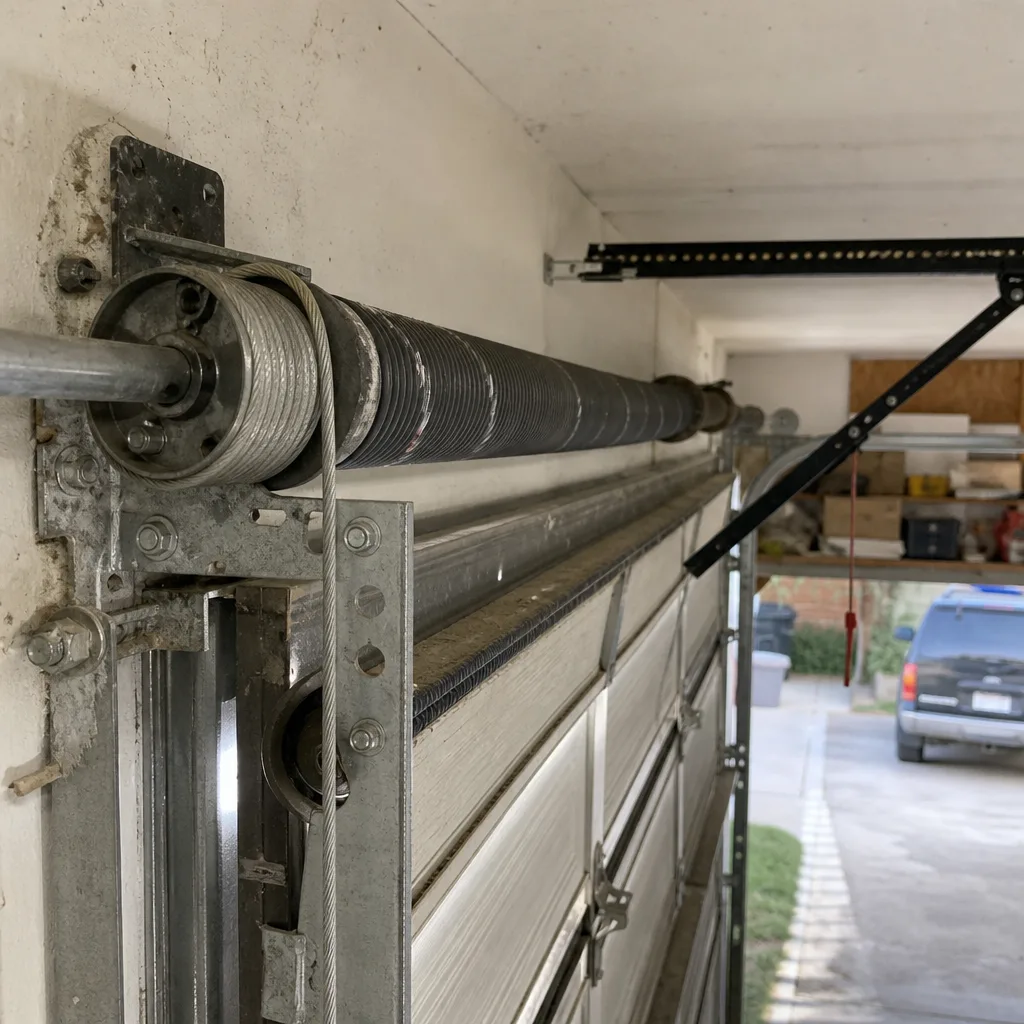
A torsion spring is the horizontal coil mounted on a metal bar directly above your closed garage door. It’s under enormous tension at all times, even when the door is closed. When it breaks, it typically snaps cleanly in one spot, and the two halves separate by a visible gap of one to four inches.
So why do so many Los Angeles homeowners miss it? Three reasons:
- They don’t look up. Most people interact with the garage door at eye level. The torsion assembly sits overhead, often in shadow, and is easy to ignore.
- The door still opens. If only one of two springs breaks (most doors have two), the remaining spring and the opener can sometimes still lift the door. The system is grossly overloaded, but it moves. Homeowners assume movement equals health.
- Confusion with extension springs. Older Los Angeles homes, particularly in neighborhoods like West Adams or Highland Park with mid-century construction, often have extension springs that run along the horizontal tracks on either side of the door. These stretch and snap differently, and homeowners looking for a torsion spring gap won’t find it because there is no torsion spring to inspect.
The inspection is simple: with the door closed, look at the spring or springs directly above the center of the door opening. If you see a gap where the coil should be continuous, the spring is broken. If you have extension springs on the sides, look for a spring that is stretched, dangling, or no longer connected at both ends. A flashlight helps. So does standing on a step stool. You don’t need to touch anything. Just look.
Cycle-Life Math: Estimating How Much Spring You Have Left
Every garage door spring has a cycle rating. Standard residential springs from major manufacturers like Genie, Clopay, Amarr, and Wayne Dalton are typically rated at 10,000 cycles. Higher-end springs can be rated at 25,000 or even 50,000 cycles, but most builders in Los Angeles install the standard option because it’s cheaper.
Here’s how to estimate your remaining spring life:
- Count your daily cycles. A cycle is one full open and one full close. If you leave for work in the morning (open, close), come home in the evening (open, close), and maybe run one errand during the day (open, close), that’s three cycles. A busy household with multiple drivers, teenagers, or a home gym in the garage might hit six to eight cycles daily.
- Check your door’s age. If the door and springs were installed together, the installation date is your baseline. If you don’t know it, look for a manufacturer sticker on the door panel or track.
- Do the arithmetic. Multiply your daily cycles by 365, then divide 10,000 by that number. That’s your expected spring lifespan in years. Here’s the same math in table form:
| Daily Cycles | Annual Cycles | Expected Spring Life (10,000-cycle rating) |
|---|---|---|
| 2 | 730 | 13.7 years |
| 4 | 1,460 | 6.8 years |
| 6 | 2,190 | 4.6 years |
| 8 | 2,920 | 3.4 years |
If your door is older than the lifespan in that table and you’ve never replaced the springs, you’re driving on borrowed time. In Los Angeles, where many homes are older but have been renovated, it’s common to see a 15-year-old door with original springs. The door looks fine. The springs are statistically past due. This is the single most useful number to know about your garage door system.
Why Los Angeles Temperature Swings Eat Springs Faster
Los Angeles doesn’t have brutal winters, but that doesn’t mean the climate is gentle on spring steel. What we have is temperature oscillation, and it’s the oscillation that matters, not the extremes.
Garage door springs are made of hardened steel wire. Steel expands when it’s hot and contracts when it’s cold. Every expansion-contraction cycle adds stress to the metal at a microscopic level. In a climate with stable temperatures, that stress accumulates slowly. In Los Angeles, where a summer day can hit 95°F in the San Fernando Valley and drop to 60°F the same night, the daily swing is 35 degrees or more. Inland neighborhoods like Woodland Hills, Canoga Park, and Chatsworth see the widest swings. Coastal areas like Santa Monica see narrower ones, but they trade that for salt air, which accelerates rust formation on the spring surface.
Rust matters more than most homeowners realize. A rusted spring doesn’t just look bad. The rust creates surface pitting, and surface pitting creates stress concentration points. Think of it like a tiny notch in a rubber band. The notch is where the failure starts. Add Los Angeles’s dry-season humidity swings and occasional coastal fog, and you get springs that fail not from a single dramatic event but from accumulated micro-fractures that the temperature swings keep widening.
This is why we recommend that Los Angeles homeowners in temperature-swing neighborhoods inspect their springs visually every three months, even if the door is functioning normally. A spring with visible rust is a spring that’s already compromised.
Spring Problem or Cable Problem? How to Tell Them Apart
Springs and cables work together, but they fail differently, and how long garage door cable repair takes and costs differs too. Cables are the braided steel wires that run along the sides of the door and spool around drums at the top. They guide the door and transfer spring force to the door itself. A broken cable is typically a $150 to $250 repair in Los Angeles. A broken spring is $150 to $290. But misidentifying which one failed can lead to a dangerous situation because a cable often breaks as a result of a spring problem, not independently.
Here’s how to distinguish the two:
- A door that hangs crooked or sits unevenly in the opening is usually a cable issue. The cable on one side has snapped or slipped, so one side of the door is unsupported.
- A door that feels uniformly heavy but stays straight is usually a spring issue. Both cables are intact, but the counterbalance force from the springs is gone.
- A visible gap in the torsion spring is a spring issue by definition.
- A frayed or dangling cable on one side of the door is a cable issue, but you should also inspect the spring, because the cable failure may have been triggered by a spring that was already failing and putting uneven load on the system.
The practical takeaway: if you see any cable damage, have a professional inspect the entire system, not just the cable. In our experience across Los Angeles, a snapped cable with a healthy spring underneath is rare. Usually the spring was already losing tension, the door started binding, and the cable took the brunt of it. Replacing only the cable means you’ll be calling again within a month when the spring finally goes.
Common Mistakes to Avoid
- Continuing to use the opener after a spring breaks. Every time you run the opener with a broken spring, you force the motor to lift the full weight of the door alone. Openers are not designed for this. You’ll burn out a $300 opener on top of the spring repair you already needed.
- Attempting a DIY spring replacement from a YouTube video. Torsion springs are under enough tension to kill. The winding bars, the set screws, the spring rate calculations: get any of it wrong and you’re not saving money, you’re gambling. This is the one repair where the “I can probably figure it out” instinct is genuinely dangerous.
- Replacing only one spring when two are wearing out. Springs are typically installed in pairs on Los Angeles homes with double-wide doors. If one has broken and the other is the same age, the second is within months of the same fate. Replacing both costs less than two separate service calls.
- Ignoring rust because “the door still works.” A rusted spring is a structurally compromised spring. Surface rust turns into fatigue cracks, and fatigue cracks turn into a loud bang at an inconvenient time.
- Lubricating the spring with WD-40. WD-40 is a solvent, not a lubricant. It will strip whatever grease remains on the coil and accelerate wear. Use a dedicated garage door spring lubricant, or have a professional apply it during a tune-up.
- Disconnecting the opener and leaving the door half-open after a spring failure. Without a functioning spring, the door has no counterbalance. If it’s not locked in place, it can slam shut with enough force to damage the door panels, the track, or anything underneath it.
When to Call a Professional
Call a professional for Garage Door Spring Repair services the moment you confirm or strongly suspect a spring problem. A broken or failing spring is not a “wait and see” situation. Every cycle you run on a compromised spring adds stress to the opener, the cables, and the door panels themselves. The repair cost climbs the longer you defer.
Marlow Garage Door Repair offers free estimates across Los Angeles. Our technicians arrive with the springs needed for all eight major brands we’re trained on: LiftMaster, Chamberlain, Genie, Clopay, Amarr, Wayne Dalton, Craftsman, and Raynor. Every repair includes a written price before any work starts, and every job is backed by the 365-Day Done Right Promise. If the repair isn’t right, we come back and make it right, free, for a full year. Call (512) 883-4374 to speak with a live person, 24/7, no voicemail.
Frequently Asked Questions
Garage door spring replacement in Los Angeles typically costs $150 to $290 depending on the spring type (torsion vs. extension), the door weight, and whether you’re replacing one spring or a pair. At Marlow Garage Door Repair, you receive a written price before any work starts, so the number you agree to is the number you pay. Call (512) 883-4374 for an exact quote, free.
The fastest confirmation is the 10-second heavy door test: close the door, pull the red emergency release cord, and try to lift the door by hand. If it feels extremely heavy or won’t stay up, the spring is broken or nearly gone. You can also check for a visible gap in the torsion spring coil above the door. If you see a space where the coil should continue, the spring has snapped.
You can sometimes open the door with the opener, but you shouldn’t. Running the opener with a broken spring forces the motor to do the spring’s job, and that’s how you destroy an opener. If you absolutely must get a car out, pull the emergency release and lift the door manually only with help from another adult. The door can weigh 200 pounds without spring support.
Most standard springs are rated for 10,000 cycles, which translates to about 3.5 to 7 years for a typical Los Angeles household that opens the door 4 to 8 times a day. Temperature swings in inland neighborhoods like the San Fernando Valley accelerate metal fatigue, so springs in those areas may fail on the earlier end of that range.
Yes. Marlow Garage Door Repair answers every call live, 24 hours a day, 7 days a week, and we prioritize spring failures because a broken spring means a car trapped in a garage. Call (512) 883-4374 and we’ll get a technician to your Los Angeles home as quickly as possible, with a written price in hand before the first wrench turns.
Almost always, yes. If your door has two springs and both were installed at the same time, the unbroken spring has the same cycle count as the broken one. It’s statistically close to failing as well. Replacing both at once costs less than two separate service visits and keeps the door balanced.
The Bottom Line
Garage door springs talk before they break. The weight of the door, the sounds from above the opening, the rust on the coil, the cycle math you can do on the back of an envelope: all of it points to a failure window you can act on. Most Los Angeles homeowners never learn this vocabulary or read our more guides & resources, so they meet their springs on the worst possible morning. You don’t have to. Check your springs this weekend. Do the heavy door test. Look for the gap. And if anything seems off, call a professional before the spring makes the decision for you.
Written by Jaylen Ross, Owner at Marlow Garage Door Repair, serving Los Angeles since 2002.