
Last updated October 9, 2026
Full 25-point door and opener safety check with every visit - springs, cables, rollers, tracks, and your LiftMaster or Chamberlain opener included
You get a price before we start. It does not change when the truck arrives.
 Before
 After
After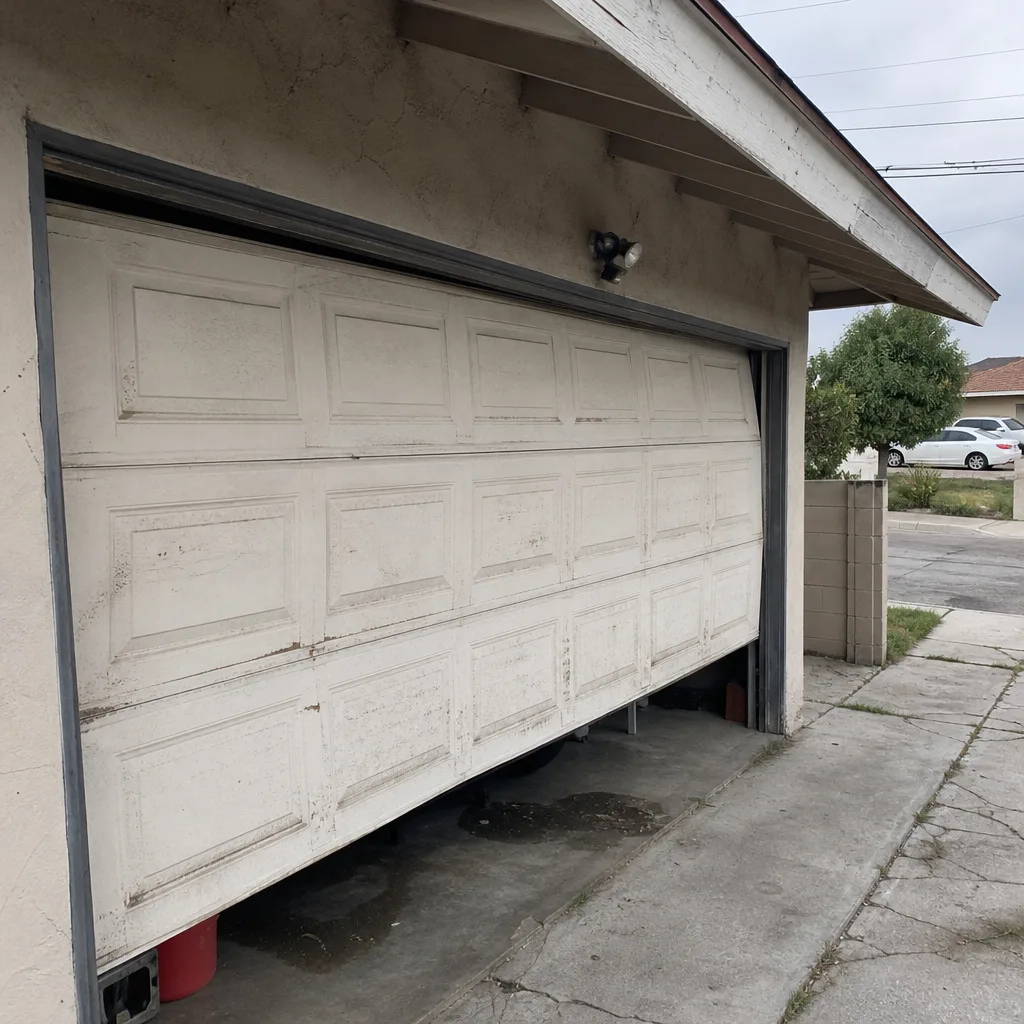 Before
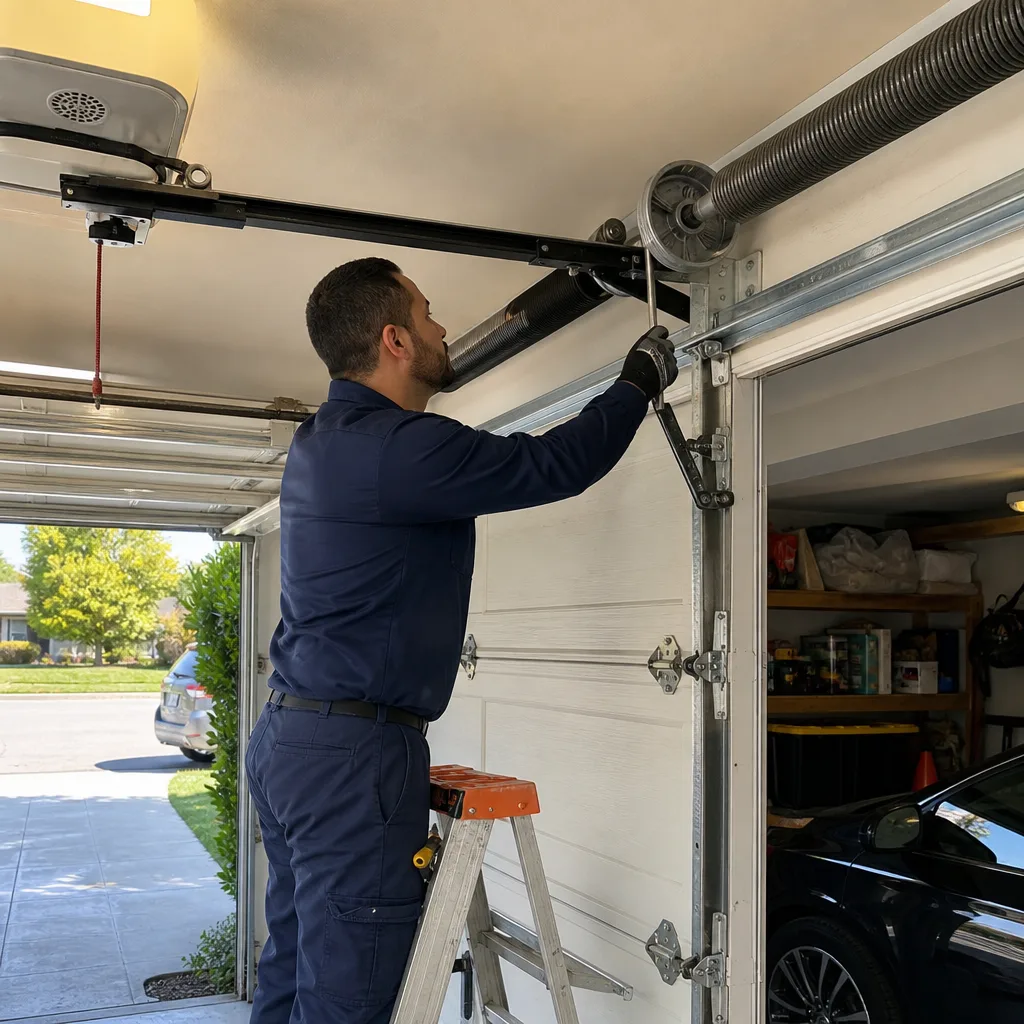 After
After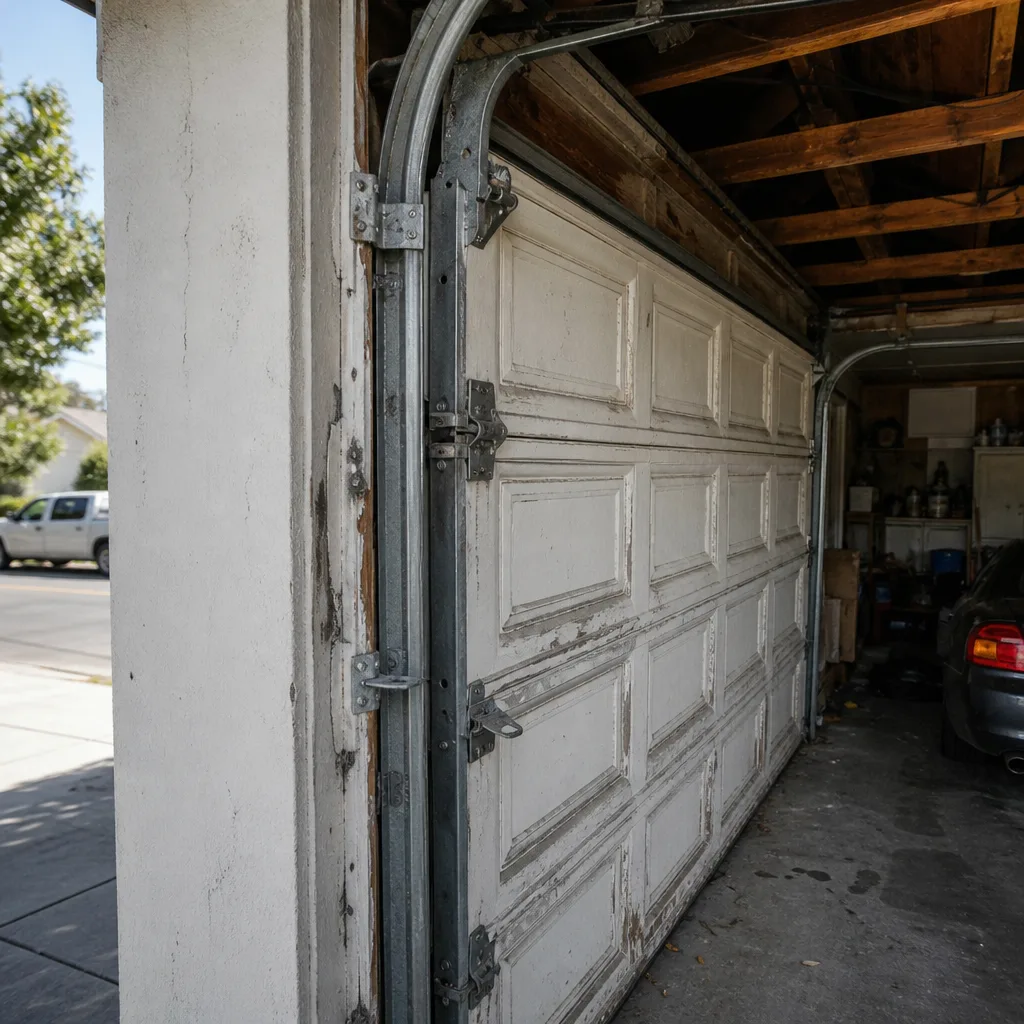 Before
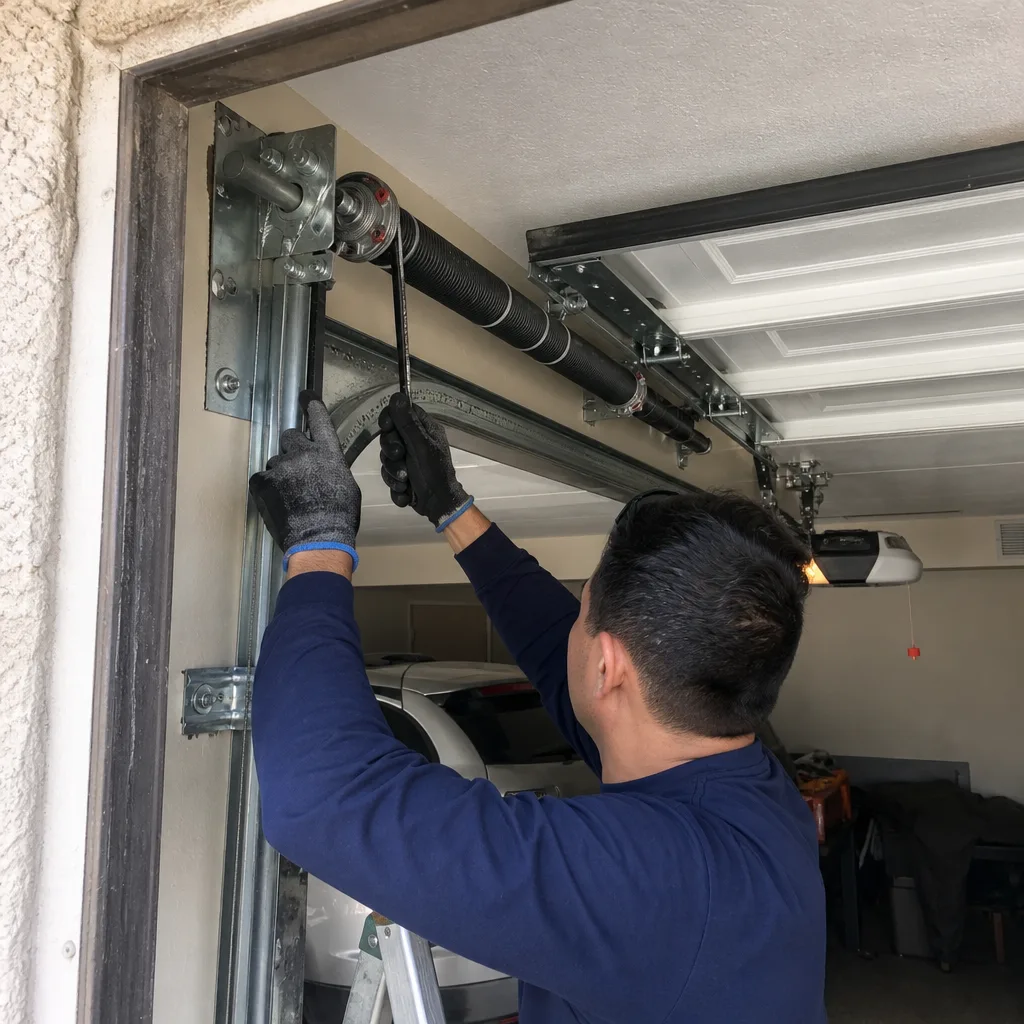 After
AfterGarage Door Repair Warning Signs Every Homeowner Should Know
The grinding noise you’ve been ignoring for three months isn’t the door “just being old.” It’s a worn roller bearing that costs roughly $15 per roller to fix now and closer to $300 in track damage after it seizes. Homeowners in Los Angeles tell us this constantly: the door sounded like that for a year, and then one morning it wouldn’t open at all. This guide retrains your ear and your eye. You’ll learn what a healthy door actually sounds like, which noises map to which failing parts, what to check from the outside that you can’t see from inside, and the 60-second test that reveals whether your opener is quietly working itself to death. By the end, you’ll know exactly which warning signs need a same-week repair call and which ones mean stop using the door today.
Quick Answer
The most common garage door warning signs are grinding or scraping sounds (worn rollers or bearings), a popping or banging noise (broken or failing torsion spring, the horizontal coil above the door), slow or uneven movement (opener strain or cable wear), visible cable fraying, and a door that sags or drops when released from the opener. Clopay, Amarr, and Wayne Dalton doors all show the same failure patterns regardless of brand. Any of these signals means a component is already wearing out, and catching it early typically means a repair under $150 instead of a replacement over $500. See our Garage Door Spring Repair Maintenance Schedule: What to Do and When for a seasonal plan.
Table of Contents
- What a Healthy Garage Door Actually Sounds and Moves Like
- The Five Sounds That Map to Specific Failing Components
- Visual Warning Signs You’ll Miss From Inside the Garage
- The 60-Second Speed and Balance Test
- Same-Week Service vs. Stop Using the Door Immediately
- How Los Angeles Climate and Housing Stock Affect Warning Signs
- Common Mistakes to Avoid
- When to Call a Professional
What a Healthy Garage Door Actually Sounds and Moves Like
Most guides skip this step, and that’s why they fail. You can’t recognize a warning sign if you don’t know what normal looks like. Here’s the baseline for a properly maintained door in Los Angeles, whether it’s a Wayne Dalton steel door in Silver Lake or a Craftsman wood door in Pasadena.
- Sound: A healthy door produces a low, consistent hum from the opener with a soft rhythmic click as each roller passes through the track. That’s it. You hear the opener motor, not the door itself. If you hear anything metallic, sharp, or intermittent, something is wearing.
- Speed: From fully closed to fully open takes 12 to 15 seconds, and the door travels at a constant rate the entire way. No hesitations, no sudden accelerations, no slow creep at the bottom.
- Balance feel: When you pull the red emergency release cord and lift the door manually, it should move smoothly with roughly equal effort from bottom to top and stay put when you let go at waist height. A door that drops, drifts, or fights you on the way up has a spring or cable problem, not an opener problem.
- Sightline: When closed, the door should sit flush against the jamb on both sides. When open, the bottom panel should be level with the header, not sagging at one end.
- Vibration: Place a hand on the door itself while it moves. You should feel very little. A healthy door does not rattle its panels or shake the track brackets.
Anything outside this baseline is a flag. The door won’t get better on its own. In our experience serving the Marlow Garage Door Repair home area across Los Angeles County, doors that get adjusted at the first sign of drift typically last three to five years longer than doors that get pushed until failure.
The Five Sounds That Map to Specific Failing Components
Sound is your first diagnostic tool, and each noise points to a different problem. Here are the five you’re most likely to hear, what they mean, and what they cost to fix in the Los Angeles market before they cascade.
1. Scraping or metal-on-metal dragging
Scraping means a roller is no longer rolling. Either the bearing inside the roller has seized, or the track has bent enough to force the roller against its edge. You’ll usually hear it near one side of the door. Fix it now: $15 to $35 per worn roller. Ignore it: the seized roller files down the track until the door jumps out of alignment, which runs $150 to $300 in realignment and track work.
2. Grinding or gravelly churning
Grinding is the sound of a bearing that’s dry and spinning on damaged races. It’s common in older openers, but we hear it on doors less than five years old when the torsion spring has lost tension and the opener is straining harder than it was built to. Grinding from the opener itself often means the gear and sprocket assembly is failing. Repair cost if caught early: $80 to $180. Replacement if ignored: $350 to $600.
3. A loud pop or bang while the door is moving
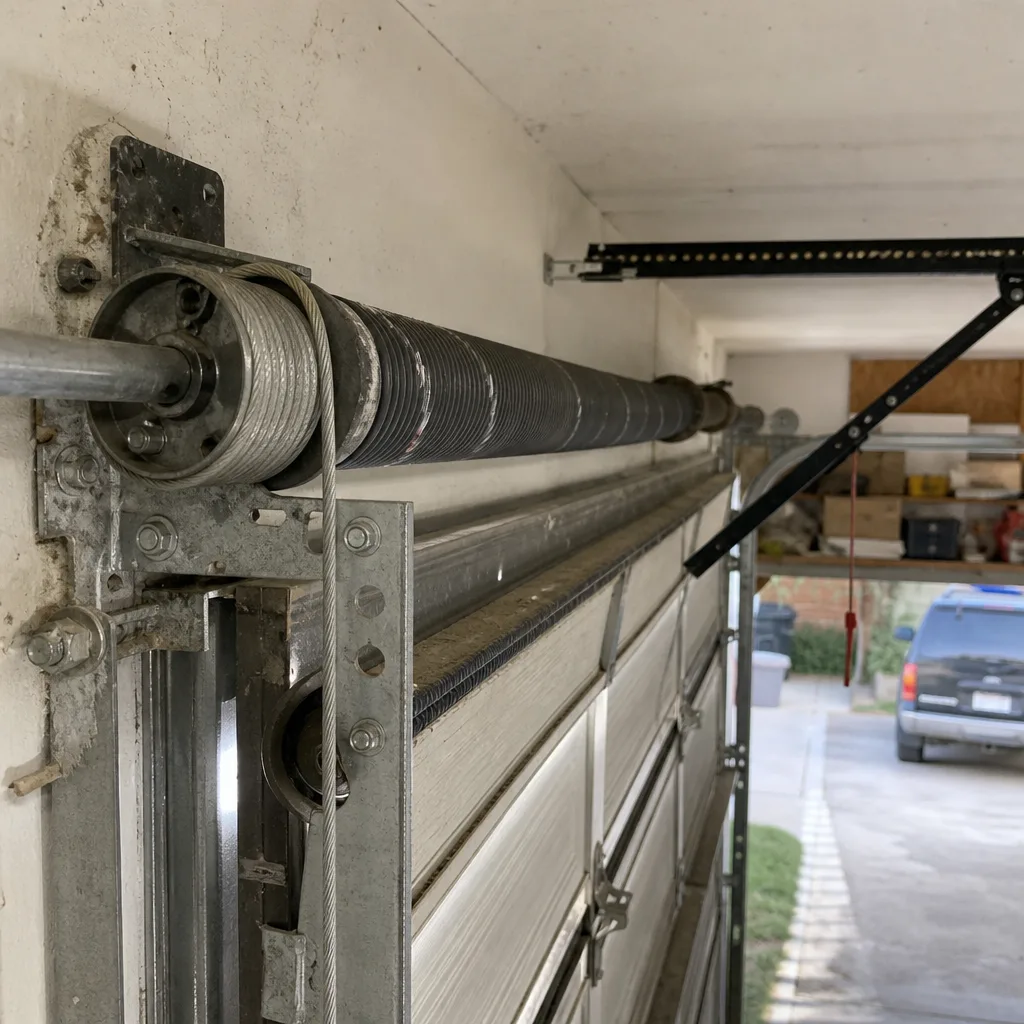
This is the one you never want to ignore, and it’s a sound we hear about constantly after the fact. A single loud pop usually means a torsion spring snapped, which is the coil mounted horizontally above the door that does most of the lifting. The door suddenly gets very heavy. Stop using it immediately. Spring replacement in Los Angeles typically runs $150 to $290 depending on spring size, and it’s a same-day fix for a trained tech. If you keep cycling the door on one spring, you’ll bend the track and burn out the opener motor.
4. Rhythmic banging or thumping at regular intervals
If the door bangs at the same point in its travel every time, something is hitting something. The usual culprits: a loose hinge, a bent panel edge catching the jamb, or a roller that’s worn flat on one side and slamming into a track seam. Get it checked the same week. The part itself is cheap; the frame and panel damage it causes is not.
5. High-pitched squealing that gets worse in cold weather
Squealing points to dry metal on metal, most often the torsion spring coils rubbing against themselves or a roller bearing that’s lost its lubrication. A quick service call with proper lubrication and roller replacement clears it up. Skip the WD-40. It’s a solvent, not a lubricant, and it will strip the grease that’s keeping the spring from binding. Los Angeles mornings in December and January are cold enough to make a dry spring squeal loudly, even though our climate spares you the freeze-thaw extremes.
Visual Warning Signs You’ll Miss From Inside the Garage
Most people stand inside the garage and watch the door go up. That’s the wrong angle. Here’s what to check from the outside and from the side profile, where the early warning signs actually show up.
From the outside, with the door closed
- Gaps at the top corners: If you can see daylight or feel a draft at the top of either side, the door has shifted in its tracks or a spring has weakened unevenly.
- Sagging panels: A steel door should be flat. Panels that bow inward, especially on south-facing doors in Los Angeles heat, indicate the panel structure is fatiguing. Raynor and Amarr steel doors handle sun well, but no door is immune to all-day exposure.
- Rust staining at the bottom panel: Rust isn’t cosmetic. It means the weather seal has failed and water is sitting against the steel. Once the bottom panel rots through, you’re not repairing it, you’re replacing panels.
- Cables hanging loose: If you can see the cable that runs up the side of the door and it’s slack, heavily frayed, or off the drum, that’s a same-day call. A cable under tension is what keeps the spring from launching. A frayed cable is a cable repair, and it’s not a DIY job.
From the side, with the door moving
- Stand to one side, not under the door, and watch the gap between the door edge and the jamb as it travels.
- The gap should stay consistent the entire way up. If it narrows, widens, or the door visibly shifts sideways at the halfway point, the door is binding.
- Watch the lift cables on both sides. They should wind evenly onto the drums at the same rate. If one side lags, the spring tension is imbalanced, and the door is twisting every time it moves.
- Watch the top panel. It should stay perfectly level. A door that tilts one way even an inch is telling you one spring is working harder than the other, and the weaker one is close to failure.
None of these checks requires tools, and all of them take under two minutes. The side profile is where we catch the problems that would otherwise show up as a snapped spring at 7 a.m. on a Monday.
The 60-Second Speed and Balance Test
This is the single most useful diagnostic you can do yourself, and it tells you whether your opener is compensating for a mechanical problem. Most Los Angeles openers are LiftMaster or Chamberlain units, but this works the same on Genie, Craftsman, or any other brand.
- Time the full travel (15 seconds): Press the wall button and count how long the door takes to go from closed to open. If it’s under 10 seconds or over 20, the travel limit is set wrong, or the spring is no longer matched to the door’s weight.
- Watch for hesitation (10 seconds): Does the door pause, stutter, or lurch at any point? Any interruption in smooth motion means the motor is fighting resistance. The opener is doing work the spring should be doing.
- Listen for strain (10 seconds): A healthy opener hums. A straining opener groans. If the pitch changes midway through travel, the load is unevenly distributed, and one spring is likely sagging or failing.
- Do the release test (15 seconds): Close the door, pull the red emergency release, and lift the door by hand. It should rise smoothly and hold when you let go at waist height. If it slams down, the springs are shot. If it flies up, the springs are overtensioned. Both are problems, and both mean the opener has been working against physics every single cycle.
- Reconnect and run one full cycle (10 seconds): Press the wall button. If the door runs smoothly after you’ve verified the manual weight, your mechanical side is fine and the opener is healthy. If not, you’ve just found the failing component.
This test takes one minute, and it tells you more than any inspection you can do from the driveway. If the door fails the release test, that’s a same-week professional call. The opener is burning itself out compensating for a spring or cable problem, and replacing an opener because a $200 spring was ignored is a $500 mistake.
Same-Week Service vs. Stop Using the Door Immediately
Not every warning sign is an emergency, but a few genuinely are. Here’s how to sort them mentally so you don’t panic over a squeak and don’t ignore a snap.
Stop using the door immediately and call a pro
- A snapped torsion spring: You’ll hear the pop. The door becomes extremely heavy and the opener may not lift it at all. Continued use bends tracks and destroys the opener. Spring replacement is a same-day fix for a trained technician.
- A frayed or loose lift cable: The cable is what keeps the spring’s tension safely contained. A snapped cable can whip, and the door can drop suddenly. Do not open the door manually if you see fraying.
- The door came off its tracks: If the rollers are out of the C-channel, the door is no longer supported. The weight of a 150 to 300 pound door hanging on one track will bend the other panel, and it can fall.
Same-week service is appropriate
- Grinding, scraping, or squealing sounds without any visible cable or spring damage
- Slow or uneven movement that hasn’t failed completely
- A door that’s drifting when left half-open in the release test
- Loose hinges or rollers that are worn but still seated in the track
- Visible sagging or cosmetic panel rust that hasn’t breached the steel
The rule we give every homeowner: if the door still moves smoothly and quietly and you haven’t heard a pop or seen a frayed cable, same-week service is fine. If something snapped, dropped, or left the track, stop using it now.
How Los Angeles Climate and Housing Stock Affect Warning Signs
Los Angeles has a specific combination of conditions that accelerates certain garage door failures, and it’s worth understanding because the same door in Seattle or Chicago would age differently.
Sun exposure is the silent killer. South-facing garage doors in Los Angeles absorb direct sun for six to eight hours a day, and the metal skin can reach 150 degrees or more in summer. That heat breaks down weather seals, fades finishes, and causes steel panels to expand and contract daily. Over a decade, this thermal cycling fatigues the panel metal and loosens hinge screws. We see more loose hinge and panel warping issues on west-side doors in Venice and Santa Monica than anywhere else simply because the sun is relentless and the salt air adds corrosion on top of it.
Older housing stock means older tracks and less standardization. Los Angeles has a huge inventory of homes built between 1940 and 1980, and many still have original hardware. Those older wooden doors are heavier, their tracks are often hand-bent, and they place real strain on modern openers. A Craftsman opener installed in the 2000s may have spent fifteen years lifting a solid redwood door it was never rated for. When we hear about a door that sags in Laurel Canyon or Eagle Rock, the weight of the original door is usually the root cause.
Earthquakes do more than rattle nerves. Even minor seismic activity nudges doors, shifts tracks, and loosens mounting brackets over time. After a series of small quakes, a door that was perfectly aligned can suddenly bind at one point in its travel. If you noticed a new scraping sound after an earthquake, it’s not coincidence. The track has moved a fraction of an inch, and the fix is usually quick.
Common Mistakes to Avoid
- Lubricating everything with WD-40. WD-40 is a solvent, not a garage door lubricant. It strips grease from roller bearings and spring coils, leaving them dry and louder. Use a silicone or lithium-based lubricant on hinges and springs, and replace rollers rather than lubing worn ones.
- Ignoring the release test because “the opener still works.” The opener is the last thing to fail in a chain of mechanical problems. By the time the opener motor dies, the spring or cable has usually been failing for months. Test the door’s manual weight every season.
- Waiting to replace a worn roller until it’s noisy enough to notice. By the time you hear the roller, it’s already scoring the track. Track replacement is three to five times the cost of roller replacement, and in older Los Angeles homes with non-standard track sizes, that’s a custom order.
- Painting over rust on the bottom panel. Paint hides the symptom and does nothing for the structural steel underneath. If rust has pitted the panel, the metal is compromised and the panel needs replacing, not painting.
- Continuing to use the door after a spring pops. Every cycle with a broken spring puts the full weight of the door on the opener and the remaining spring. You’re converting a $200 spring replacement into a $600 opener replacement and a possible track realignment.
- Assuming a sagging door is normal age-related wear. Doors don’t sag because they’re old; they sag because a spring has lost tension or a cable has stretched. It’s fixable now and expensive later.
When to Call a Professional
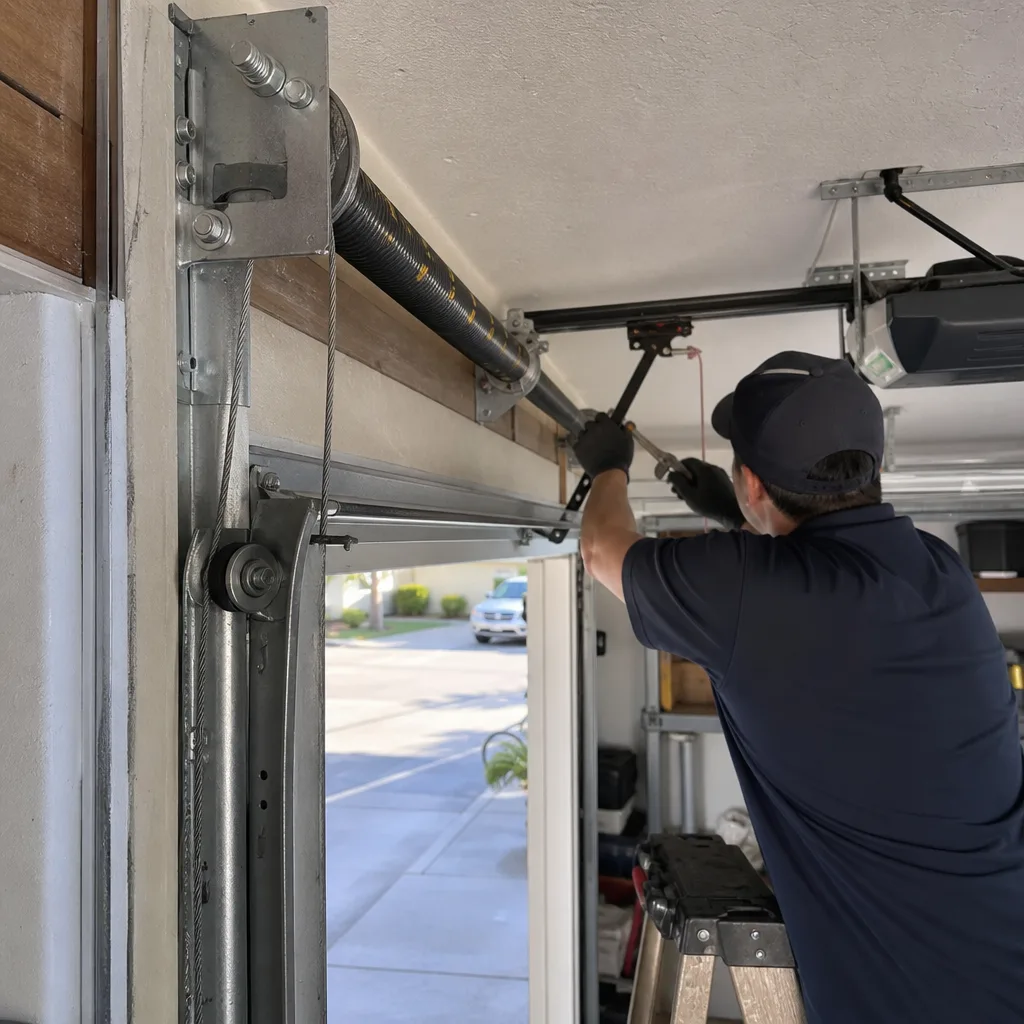
Any of the stop-immediately signs we covered, a snapped spring, a frayed cable, or a door off its tracks, requires a trained technician. Same goes for any time you’re uncomfortable doing the release test on a heavy door, or if the door fails it. Garage door springs and cables are under enough tension to cause serious injury, and they’re not the place to learn as you go. We say this as a company that would rather talk you through a simple fix on the phone than charge for a service call: if it involves a spring, a cable, or the track, call a pro. Marlow Garage Door Repair offers Garage Door Repair services with free estimates in Los Angeles, and we give every customer a written price before any work starts. Call (512) 883-4374 and a live person answers, day or night.
Frequently Asked Questions
The most common warning signs are grinding or scraping sounds from worn rollers, a banging or popping sound from a failing torsion spring, slow or jerky door movement indicating opener strain, frayed lift cables, and a door that sags or drops when the opener is released. In Los Angeles, sun damage and older housing stock make these problems more common than in most markets. If you notice any one of these, call (512) 883-4374 for a free estimate.
Minor repairs like roller replacement or hinge tightening typically run $85 to $150 in the Los Angeles area. Torsion spring replacement usually runs $150 to $290 depending on the spring size, and cable replacement is in a similar range. The exact price depends on your door’s weight, brand, and what’s already worn around the failing part. We give a written price before any work starts, so the number you agree to is the number on the invoice.
Yes. Spring repairs, cable repairs, and roller replacements are typically same-day jobs for us across Los Angeles County, from Downtown to the Valley. We carry parts for Clopay, Amarr, Wayne Dalton, Craftsman, Raynor, LiftMaster, Chamberlain, and Genie on the truck, which means the tech who arrives usually has what the job needs. Call (512) 883-4374 and a live person will tell you when we can be there.
A loud bang while the door is moving almost always means a torsion spring has snapped. The spring is the horizontal coil above the door that counterbalances its weight, and when it breaks, the door instantly gets much heavier and may not open at all. Stop using the door immediately and call a professional. This is a same-day fix for a trained tech, and continuing to use the door will damage the opener and the track.
A well-maintained opener should last 10 to 15 years, but Los Angeles heat and older, heavier doors shorten that lifespan significantly. An opener lifting a heavy 1960s wooden door in Silver Lake may fail in 7 or 8 years, while the same model on a modern aluminum door in a newer development lasts 12 or more. The opener’s lifespan is usually cut short by a failing spring, which forces the motor to work harder than it was designed to. That’s why we recommend testing your door’s balance every season.
The most commonly missed sign is a door that drifts downward when you release it from the opener and leave it half open. Homeowners rarely do the release test, so they don’t notice the spring losing tension until it snaps. A door that won’t hold its position at waist height is telling you the spring is failing, and catching it now means a spring replacement instead of a spring replacement plus an opener repair. In our experience across Los Angeles, this is the single most valuable one-minute check a homeowner can do, and almost no one does it until after a breakdown.
The Bottom Line
Garage door warning signs don’t announce themselves with sirens. They show up as a grinding sound you’ve gotten used to, a door that’s a little slower than it used to be, a sag you assume is normal age. The fix is to know what normal sounds, looks, and feels like, then check once a season and act at the first drift. That means a $15 roller instead of a $300 track, a $200 spring instead of a $600 opener. Los Angeles heat, salt air, older housing stock, and seismic activity all accelerate these failures, and the homeowners who stay ahead of them are the ones who test before the door tests them. If you’re seeing or hearing anything we’ve described, get it checked while the fix is still small, and explore more guides & resources to stay ahead of problems.
Written by Jaylen Ross, Owner at Marlow Garage Door Repair, serving Los Angeles since 2002.